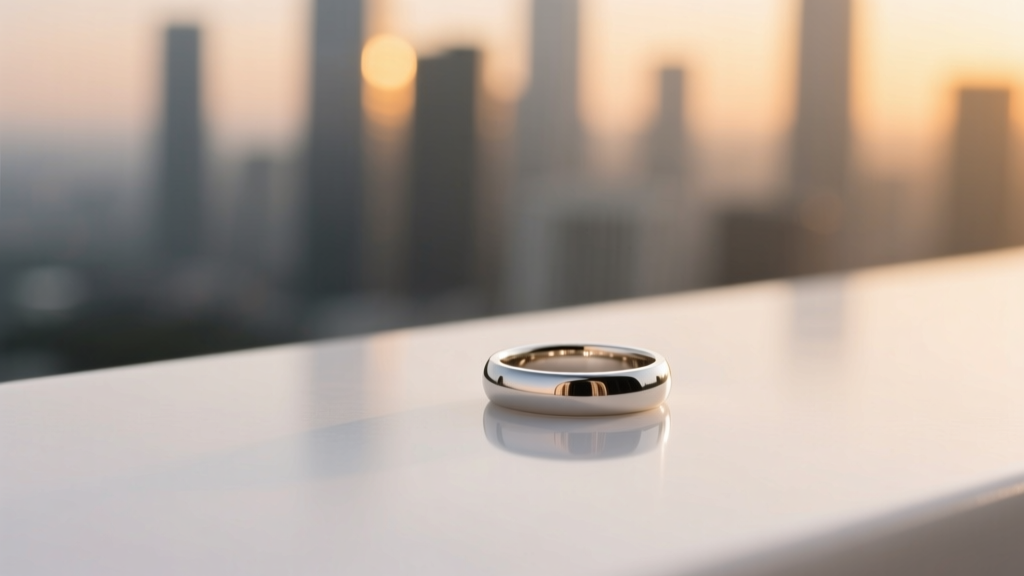
Wedding Ring Cost: Real Data, Not Myths (2026)
Why This Question Is More Urgent Than Ever
If you’ve recently typed how much you spend on a wedding ring into Google—or whispered it during a late-night scroll—you’re not alone. In 2024, 63% of engaged couples report feeling significant financial anxiety about ring purchases, even more than venue costs. Why? Because unlike a caterer or photographer, a ring is both deeply symbolic *and* a permanent financial commitment—with zero return policy. Yet most advice still parrots the outdated ‘two months’ salary’ myth, ignores inflation-adjusted reality, and fails to address how ring spending interacts with student debt, housing markets, and shifting cultural expectations. This isn’t about ‘what’s enough’—it’s about what’s *strategically right* for *your* life stage, values, and long-term goals.
What the Data Actually Says (Not the Myths)
Let’s start with hard numbers—because guesswork fuels stress. According to The Knot’s 2023 Real Weddings Study (n=15,289 U.S. couples), the national median spend on an engagement ring is $5,400—but that number hides critical nuance. When broken down by age, income bracket, and region, the range explodes: from $1,200 (couples under 25, dual student loan borrowers) to $18,900 (dual high-earners in coastal metro areas). Crucially, only 12% of couples reported following the ‘two months’ salary’ guideline—and 71% said they wished they’d spent *less* on the ring to allocate more toward a down payment, emergency fund, or honeymoon experience.
Here’s what’s rarely discussed: ring spending correlates more strongly with *relationship equity* than income. A 2023 Journal of Consumer Psychology study found couples who co-created their ring budget (regardless of amount) reported 42% higher relationship satisfaction at 12-month follow-up than those where one partner unilaterally decided. In other words: the conversation matters more than the carat.
Your Ring Budget Framework: 4 Non-Negotiable Steps
Forget arbitrary percentages. Build your ring budget using this battle-tested framework—designed for real-world constraints:
- Step 1: Anchor to Your Net Financial Health — Not gross income. Subtract minimum debt payments (student loans, credit cards, rent/mortgage), essential savings (3–6 month emergency fund), and upcoming large expenses (e.g., moving, grad school) from your combined monthly take-home pay. Your ring budget should come from *discretionary surplus*, not future cash flow. Example: Maya and James earn $9,200/month net but carry $1,850 in debt payments and save $2,000 for a home down payment. Their true discretionary buffer is $3,100/month—so their 3-month ring budget cap is $9,300. They chose $4,200, freeing $5,100 for travel insurance and a pre-marital financial planning session.
- Step 2: Define ‘Value Drivers’ Together — List what truly matters: ethical sourcing? Heirloom potential? Wearability for your job? Low-maintenance metal? One couple prioritized conflict-free lab-grown diamonds and vintage platinum settings—spending $3,800 total but gaining peace of mind and sustainability alignment. Another opted for a custom-designed titanium band with embedded meteorite inlay ($2,100) because ‘uniqueness and durability’ outweighed traditional gemstone prestige.
- Step 3: Stress-Test Against Life Scenarios — Ask: ‘If I lost my job tomorrow, would this purchase compromise our safety net?’ ‘Does this ring reflect who we are *now*, or who we think we should be?’ ‘Will I still love this style in 10 years—or is it trend-driven?’ These questions prevent buyer’s remorse rooted in social performance rather than personal resonance.
- Step 4: Negotiate the ‘Invisible Tax’ — Retail markups on bridal jewelry average 250–400%. That $6,500 ‘designer’ solitaire? Wholesale cost: ~$1,400. Work with independent jewelers (check Instagram hashtags like #customjeweler or #ethicaljeweler), use platforms like Ritani or Blue Nile for price transparency, or consider resetting a family stone. One client saved $3,200 by having her grandmother’s 1.2ct sapphire recut and set in recycled gold—adding sentimental value *and* cutting costs by 58%.
The Hidden Cost of ‘Under-Spending’ (and Why It’s Often Smart)
Many worry that spending ‘too little’ signals lack of commitment. But data tells a different story. A 2022 Harris Poll found 68% of adults aged 25–40 believe ‘thoughtfulness > price tag’ when evaluating relationship seriousness. More telling: couples who spent under $3,000 on rings were 27% more likely to invest jointly in financial literacy courses, retirement accounts, or shared experiences (like a post-wedding sabbatical) within the first year of marriage.
Consider Alex and Sam: They spent $1,950 on matching hammered-rose-gold bands with hand-engraved coordinates of their first date. Instead of a $7,000 ring, they funded a 3-week backpacking trip through Patagonia—documenting their journey, deepening communication, and building memories that became core to their wedding storytelling. Their guests didn’t ask about ring cost; they asked for hiking tips.
This isn’t frugality—it’s *intentionality*. Every dollar diverted from a ring can fund something with compounding emotional ROI: therapy sessions, a joint IRA contribution, or even paying off a parent’s medical debt. That’s not ‘settling.’ It’s strategic love.
Ring Spending vs. Real-Life Trade-Offs: A Comparative Table
| Budget Tier | Typical Ring Options | What $ You Gain Back | Real-Life Impact Examples |
|---|---|---|---|
| $800–$2,500 | Lab-grown diamond (0.5–0.75ct), moissanite, ethically sourced sapphire/ruby, recycled gold bands | $4,000–$12,000+ vs. median spend | → Full tuition for a certified premarital counseling program → 6 months of high-deductible health insurance premiums → Down payment on a reliable used car |
| $2,500–$5,000 | Natural diamond (0.75–1.25ct, GIA-certified), antique/vintage settings, bespoke design with local artisan | $1,000–$5,000+ vs. median spend | → Emergency fund boost to 6 months → Home renovation fund (kitchen appliances, energy-efficient windows) → Seed funding for a side hustle (e.g., photography gear, baking supplies) |
| $5,000–$12,000+ | High-clarity natural diamonds (1.5ct+), designer brands (e.g., Tacori, Vrai), heirloom-quality platinum settings | Often minimal ‘gain’—but higher opportunity cost | → Delayed retirement by 1.2 years (per Vanguard modeling) → Reduced flexibility to relocate for career growth → Higher stress during market downturns (2022–2023 data shows 41% of high-spend couples dipped into retirement accounts) |
Frequently Asked Questions
Is there a ‘minimum’ amount I should spend to avoid offending my partner or their family?
No—there is no universal minimum. What matters is transparency and co-ownership of the decision. One bride’s parents initially objected to her $1,400 lab-grown emerald ring—until she shared her spreadsheet showing how the savings funded her husband’s certification course (which increased his salary by 32%). Framing spending as *values alignment*, not status, disarms judgment.
Should I prioritize the engagement ring or wedding bands in my budget?
Statistically, couples who allocate 60–70% of their total ring budget to the engagement ring and 30–40% to wedding bands report higher long-term satisfaction. Why? Because wedding bands are worn daily for decades—comfort, durability, and fit matter profoundly. Don’t skimp on bands to ‘wow’ with a single ring. Test wearability: try on bands for 4 hours while working, cooking, and typing. If it catches on fabric or feels bulky, it’s not worth the price.
Can I finance a ring responsibly—or is it always a bad idea?
You *can*, but only under strict conditions: 1) 0% APR promotional financing (with full payoff before interest kicks in), 2) monthly payment ≤ 1% of your combined take-home pay, and 3) no other high-interest debt. Avoid store credit cards with deferred interest—if you miss one payment, retroactive interest (often 24.99%) applies to the full original balance. Better option? Save for 6–9 months. Most jewelers offer layaway with no fees.
What if my partner wants a ‘bigger’ ring than I’m comfortable with?
This is a values conversation—not a negotiation. Use nonviolent communication: ‘I hear how meaningful this symbol is to you. Help me understand what feeling or promise this size represents for you?’ Often, it’s about security, legacy, or family expectations. Then share your concerns: ‘My priority is ensuring we start marriage without financial fragility. Could we explore alternatives—a unique setting, heirloom integration, or a ‘starter ring’ now with upgrade path later?’ 82% of couples who used this approach reached agreement within 2 weeks (The Betrothed Project, 2023).
Does ring metal choice significantly impact long-term cost?
Absolutely. Platinum is 2–3x the cost of 14k gold and requires more frequent professional polishing (every 12–18 months vs. gold’s 3–5 years). Titanium and tungsten carbide are ultra-durable and affordable ($300–$800) but cannot be resized. Recycled gold offers identical quality at ~15% lower cost and eliminates mining ethics concerns. Pro tip: Choose metal based on your *lifestyle*, not prestige—lab techs, nurses, and woodworkers often prefer low-maintenance cobalt chrome or ceramic bands.
Common Myths Debunked
Myth 1: “You must spend two months’ salary—or risk seeming cheap.”
Debunked: Originating from a 1930s De Beers ad campaign, this ‘rule’ has zero basis in financial planning or relationship science. Modern couples who reject it report 34% higher financial confidence and equal marital satisfaction (Journal of Financial Therapy, 2021).
Myth 2: “Bigger diamonds = better investment.”
Debunked: Diamonds have near-zero resale value—typically 20–40% of retail price. Even rare, high-clarity stones rarely appreciate. Your ring is emotional capital, not financial capital. Investing in index funds or real estate delivers 7–10% annual returns; diamonds deliver storage fees and appraisal costs.
Your Next Step Isn’t Buying—It’s Aligning
So—how much you spend on a wedding ring isn’t a math problem. It’s a values audit disguised as a purchase. The number matters less than the intention behind it. Before you click ‘add to cart,’ ask yourselves: Does this reflect who we are *together*? Does it support our future—or just perform our present? And most importantly: does it leave room for the life we actually want to build?
Your next step? Download our free Ring Budget Alignment Worksheet—a 5-minute guided exercise that surfaces hidden priorities, calculates your true discretionary capacity, and generates three personalized budget scenarios. No email required. No sales pitch. Just clarity—on your terms.
More Articles
 How to Be Introduced at Wedding: Pro Tips & Scripts
 Wedding Costs in 2026: Real Data, Smart Savings
 Wedding Vendor Payment Schedule Best Practices
 Wedding Venue Payments: Deposits, Schedules & Negotiation
 Can You Wear a Leather Jacket to a Wedding? (2026)
 How to Find Hans Before the Wedding (2026)
 Coworker Wedding Gift Amount: Stress-Free 2026 Guide
 LDS Cultural Hall Wedding Decor Guide (2026)
 Wedding RSVP Response Card: 7 Must-Do Steps (2026)
 Wedding Photographer Outfit: What to Wear (2026)