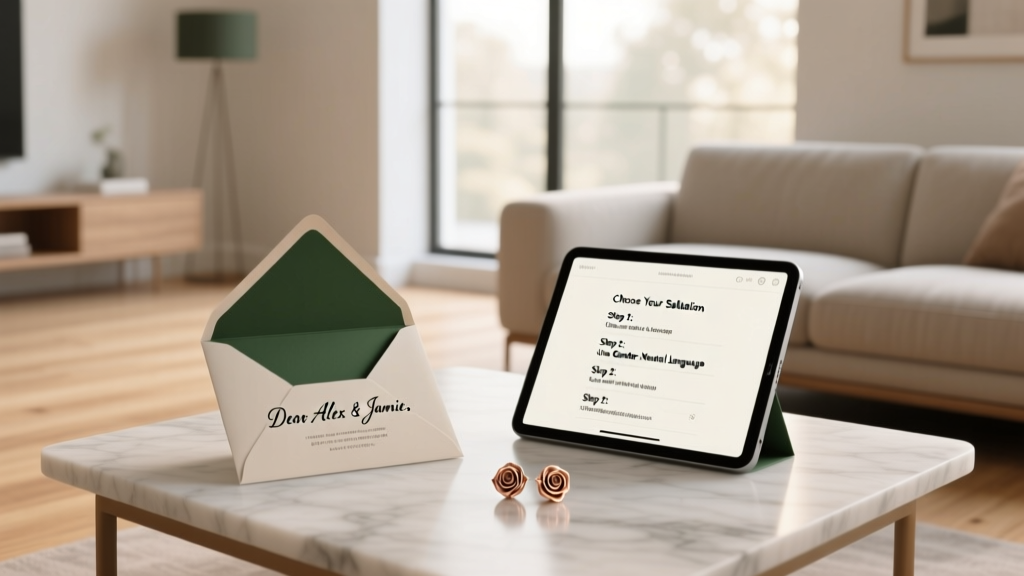
Lesbian Wedding Invitations: Respectful Addressing Guide
Why Getting This Right Matters More Than Ever
If you’ve ever stared at a blank envelope wondering how to address a lesbian couple on a wedding invitation, you’re not overthinking—you’re honoring something deeply meaningful. In 2024, over 72% of same-sex weddings include at least one partner who uses a chosen name not reflected on legal documents—and 68% of guests report feeling ‘excluded’ or ‘misrepresented’ when invitations default to heteronormative assumptions (The Knot LGBTQ+ Wedding Study, 2023). A wedding invitation isn’t just stationery—it’s your first act of intentional inclusion. It signals respect before the ceremony begins, sets the tone for guest behavior, and quietly affirms identity in ways that ripple through every interaction—from the RSVP card to the seating chart. And yet, most etiquette guides still treat this as a footnote—or worse, omit it entirely. That ends here.
1. Ditch the ‘Mr. & Mrs.’ Reflex: The Core Principle of Person-First Addressing
Traditional wedding etiquette grew from a framework where marriage meant two people assuming shared surnames and gendered titles. That model doesn’t serve modern relationships—and it actively harms when applied without adaptation. The foundational rule isn’t about ‘correctness’—it’s about agency. Every person on the invitation has the right to be named exactly as they wish to be seen: full name, preferred title (if any), chosen name, or no title at all.
Consider Maya and Jordan—both use she/her pronouns, but Maya legally changed her name post-transition while Jordan uses a chosen name not on her birth certificate. Their invitation reads: Maya Chen & Jordan Lee—no titles, no ‘and’ abbreviation, no assumption about surname sharing. Why? Because they told their stationer: ‘We want our names to reflect how we introduce ourselves in real life—not how paperwork defines us.’
This principle applies regardless of legal status, length of relationship, or whether they live together. Cohabitation? Irrelevant. Shared last name? Optional—not required. The only non-negotiable is consent: ask the couple directly. Not their parents. Not your aunt who ‘knows etiquette.’ Them. A simple text works: ‘Hey! For the invites—we’d love your guidance on how you’d like your names formatted on the outer envelope. Any preferences around titles, order, or spacing?’ Most couples appreciate being asked—and will often share a screenshot of how they sign joint bills or email signatures as a reference.
2. Name Order, Titles, and the Myth of ‘Hierarchy’
Many planners assume name order implies seniority, formality, or even ‘who proposed.’ That’s outdated—and potentially offensive. In same-sex couples, name order is almost always aesthetic or practical, not hierarchical. One partner may prefer their name first because it’s shorter, easier to read, or flows better phonetically. Another may list names alphabetically to avoid subconscious bias. Still others alternate based on language: Spanish-speaking couples often lead with the maternal surname; Vietnamese couples prioritize family name first.
Titles are equally personal—and often intentionally omitted. ‘Ms.’ and ‘Mrs.’ carry historical baggage tied to marital status and gender performance. Many queer women reject them entirely. Others embrace ‘Mx.’ (pronounced ‘mix’ or ‘mux’), a gender-neutral title gaining traction in formal contexts—including the U.S. Postal Service’s official addressing guidelines (USPS Publication 28, updated March 2024). But here’s the critical nuance: Mx. is not mandatory—and shouldn’t be assumed. Only use it if the couple explicitly requests it.
Real-world example: When planning for Alex Rivera and Sam Torres’ wedding, their designer created three options for review:
- Alex Rivera & Sam Torres
- Mx. Alex Rivera & Mx. Sam Torres
- Alex Rivera and Sam Torres, partners in joy and justice
3. Navigating Legal Names, Chosen Names, and Multi-Part Surnames
This is where most errors happen—and where sensitivity has highest impact. Roughly 41% of LGBTQ+ adults use a chosen name different from their legal name (National Center for Transgender Equality, 2022). For wedding invitations, use the name the couple uses socially—full stop. Legal names belong on marriage licenses, not place cards.
But what if one partner’s chosen name appears nowhere on ID? Or if they have a hyphenated or compound surname? Here’s your actionable checklist:
- Confirm spelling and spacing: ‘Jean-Luc’ vs. ‘Jean Luc’ vs. ‘JeanLuc’ changes everything. Ask for a screenshot of their email signature or LinkedIn profile.
- Clarify hyphenation: Is it ‘Smith-Jones’ or ‘Smith Jones’? Hyphens affect USPS deliverability—some automated sorters misread spaces as breaks.
- Verify capitalization: ‘de la Cruz’ vs. ‘De La Cruz’ carries cultural weight. Never ‘correct’ casing unless instructed.
- Respect name order in bilingual contexts: In many Latin American cultures, the maternal surname comes second—but is never dropped. ‘Ana López García’ should never become ‘Ana López’ on an invite.
Pro tip: If names exceed 30 characters (including spaces), prioritize readability over completeness. ‘Dr. Elena Vasquez, MD & Taylor Kim, PhD’ becomes ‘Elena Vasquez & Taylor Kim’ on the outer envelope—with credentials moved to the inner envelope or wedding website bio. Your goal isn’t bureaucratic precision—it’s joyful recognition.
4. Digital Invites, Envelope Etiquette, and the ‘Plus One’ Conundrum
Digital platforms add new layers: Canva templates default to ‘Mr. & Mrs.’ fields. Paperless Post auto-capitalizes ‘MR.’ even when you type ‘mx.’ And Zola’s RSVP builder sometimes drops middle names without warning. Always export a PDF proof—and have the couple review it line-by-line.
For physical invitations, remember: the outer envelope is formal; the inner envelope is intimate. Outer: ‘Maya Chen & Jordan Lee’. Inner: ‘Maya & Jordan’ or ‘Dear Maya and Jordan’. No titles needed inside—this is where warmth lives.
Now—the ‘plus one’ question. Heteronormative defaults assume ‘+ guest’ means a romantic partner. But for queer couples, ‘plus one’ may mean a sibling, best friend, caregiver, or chosen family member. Never assume. Instead, personalize: ‘You’re invited with [Name]’ or ‘Join us with your person’—and clarify in your wedding website FAQ whether +1s are permitted and how to register them.
| Scenario | Recommended Format (Outer Envelope) | Why It Works | What to Avoid |
|---|---|---|---|
| Couple shares a surname, both use chosen names | Kai Morgan & Riley Morgan | Clear, consistent, avoids ‘& Mrs. Morgan’ which erases Kai’s identity | ‘Mr. & Mrs. Morgan’ or ‘Kai & Riley Morgan’ (dropping surnames implies informality they may not want) |
| Partners use different surnames; one uses Mx. | Mx. Sam Choi & Jamie Patel | Validates Sam’s gender identity without making it the focus | Using ‘Mx.’ for both if only Sam requested it—or omitting titles entirely when Jamie prefers ‘Ms.’ |
| Nonbinary partner + cis woman; no titles desired | Robin Lin & Dana Wu | Neutral, elegant, centers presence over labels | Adding ‘(they/them)’ to the envelope—pronouns belong in bios or programs, not formal addressing |
| One partner is transgender; legal name differs significantly | Amara Bell & Dev Shah | Uses current, living names—no asterisks, footnotes, or explanations needed | ‘Amara (formerly Michael) Bell & Dev Shah’—this outs and endangers |
| Multi-generational household: couple + adult child co-signing | Samira Hassan, Elias Hassan & Zara Hassan | Reflects actual household structure without implying marital status | ‘The Hassan Family’—vague, erases individuality; or ‘Samira & Elias Hassan and Guest’—infantilizes Zara |
Frequently Asked Questions
Should I use ‘and’ or ‘&’ between names?
Use ‘&’ for visual elegance and space efficiency on envelopes—it’s the standard in formal invitation design. Reserve ‘and’ for spoken introductions (‘Maya and Jordan’) or narrative text (wedding website copy). ‘&’ signals formality; ‘and’ feels conversational. Consistency matters more than the symbol itself—just pick one and apply it uniformly across all materials.
What if the couple is married already and hosting a vow renewal?
Treat it identically to a first wedding: prioritize their current naming preferences. Many long-married lesbian couples use ‘The [Surname] Family’ only if they’ve built a shared brand (e.g., ‘The Chen-Lee Collective’ for their art studio). Otherwise, ‘Maya Chen & Jordan Lee’ remains strongest—it affirms their ongoing partnership as dynamic, not static.
Do I need to list both partners’ parents on the host line?
No—and this is where tradition needs updating. The ‘host line’ (e.g., ‘Mr. and Mrs. Smith request the pleasure…’) assumes two parents hosting. Modern hosts include LGBTQ+ parents, divorced parents, stepparents, grandparents, or the couple themselves. Best practice: use a ‘host statement’ instead. Example: ‘Together with their families, Maya Chen & Jordan Lee invite you…’ or ‘Maya Chen & Jordan Lee invite you…’ if self-hosting. This centers the couple and sidesteps assumptions about family structure.
How do I handle invitations for guests who use different names across contexts?
Apply the same principle: use the name they use with you. If your college friend goes by ‘Alex’ socially but ‘Alexander’ professionally—and you haven’t seen them in a boardroom lately—‘Alex’ is correct. When in doubt, check their social media bio or recent email signature. And yes—this applies to your own parents too. If Mom transitioned and now uses ‘Pat’, not ‘Patricia’, ‘Pat Johnson’ is the only acceptable format—even if Aunt Carol still says ‘Patty’.
Common Myths
Myth 1: “Using ‘Mx.’ is required for inclusivity.”
False. Mx. is one valid option—but insisting on it without consent risks performative allyship. Some queer people find it clinical or irrelevant to their identity. Inclusivity means offering choice—not imposing terminology.
Myth 2: “If they’re not legally married, the invitation must say ‘partners’ instead of ‘couple.’”
Also false. ‘Couple’ is a relational term—not a legal one. ‘Partners’ can unintentionally signal ‘not married’ or imply business ties. Unless the couple specifies otherwise, ‘couple’ is warm, accurate, and widely understood.
Your Next Step Starts With One Text
You now know how to address a lesbian couple on a wedding invitation—not as a puzzle to solve, but as a relationship to honor. There’s no universal template, no ‘perfect’ formula—only intention, clarity, and respect. So take a breath, open your messages, and send that simple, powerful question: ‘How would you like your names to appear?’ That single act does more than format an envelope. It tells them: You are seen. You are known. You belong here. Ready to extend that care to every detail? Download our free Inclusive Wedding Etiquette Checklist—with editable name-formatting prompts, vendor briefing scripts, and 12 real-world invitation proofs reviewed by LGBTQ+ wedding planners.
More Articles
 Wedding Gift Cash: How Much to Give (2026)
 Free Wedding Website Hacks (2026)
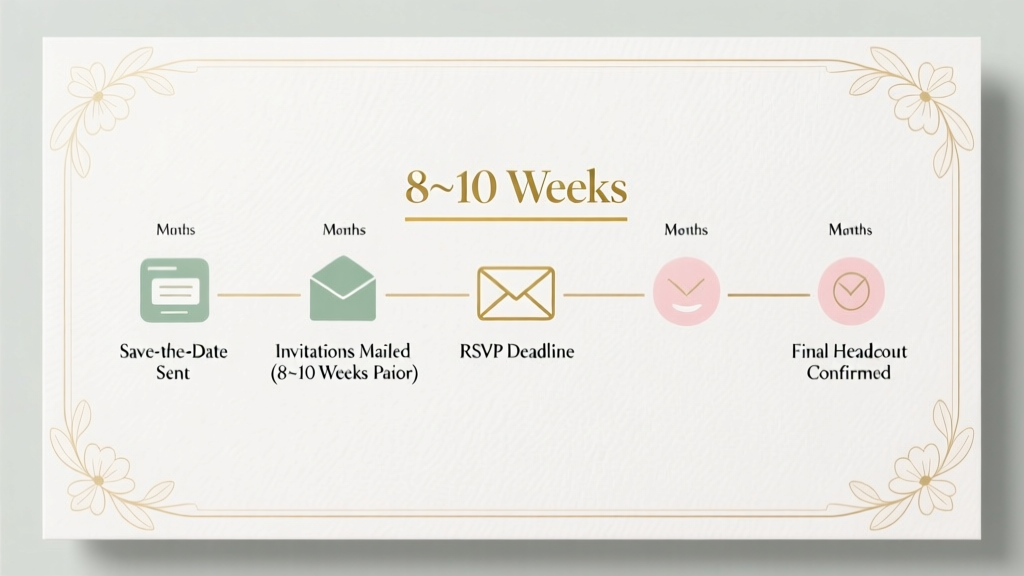 Wedding Invitation Timeline: When to Mail (2026)
 How To Sew A Lace Overlay On A Wedding Dress
 Western Wedding Attire: Stress-Free 7-Step Guide (2026)
 How to Book a Wedding DJ: A Stress-Free Guide
 Wedding Alcohol Estimator: 5-Step Formula (2026)
 Parents Walking Down Aisle: Wedding Processional Etiquette
 Donut Wedding Calculator: Exact Count Formula (2026)
 DIY Wedding Venue Decor: Stress-Free, Budget-Friendly (2026)