Wedding Programs: When They’re Worth It (2026)
Why This Question Matters More Than Ever in 2024
Are wedding programs necessary? That simple question lands with surprising weight for couples juggling 200+ decisions—from venue deposits to seating charts—and feeling the quiet pressure to ‘do it all right.’ In an era where micro-weddings, elopements, and hybrid ceremonies are surging (The Knot 2023 Real Weddings Study shows 68% of couples now prioritize personalization over tradition), the wedding program sits at a fascinating crossroads: a relic of formality or a quietly powerful tool for storytelling, inclusion, and intentionality? The truth? There’s no universal answer—but there *is* a strategic framework. And if you’re asking this question, you’re not indecisive—you’re thoughtful. You’re recognizing that every element should earn its place. Let’s cut through the etiquette noise and build that framework together.
What a Wedding Program Actually Does (Beyond ‘Just Listing Names’)
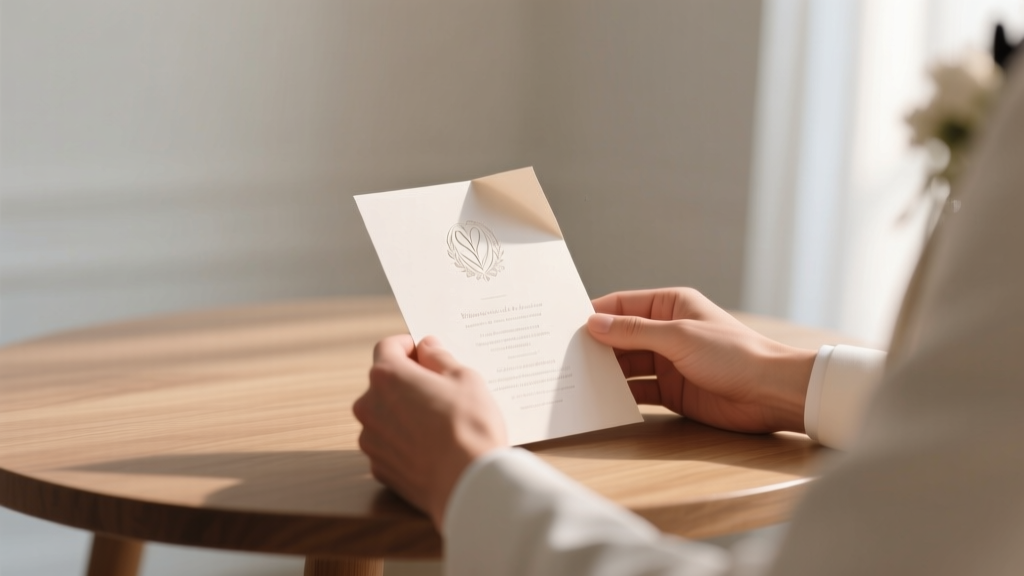
A wedding program isn’t just a folded sheet of paper handed out at the door. At its best, it’s your first intentional act of hospitality—a curated welcome packet that does four critical jobs: contextualizes (explaining non-traditional elements like unity ceremonies or cultural rituals), honors (giving meaningful recognition to officiants, readers, musicians, and family members who aren’t on the main stage), guides (clarifying flow—‘When do we stand? What’s happening next?’—especially for multi-faith or intercultural ceremonies), and connects (weaving narrative threads so guests feel part of something cohesive, not just observers). A 2023 survey by The Wedding Report found that 79% of guests who received a well-designed program reported feeling ‘more emotionally engaged’ during the ceremony—versus 52% without one. That’s not about formality; it’s about psychological safety and shared meaning.
Consider Maya and David’s backyard ceremony in Portland. Their program included a brief note explaining their ‘tree-planting unity ritual’ (symbolizing growth and shared roots) and bios of their two grandmothers—one Korean, one Irish—who co-officiated. Guests told them later, ‘We finally understood why that moment felt so sacred.’ Without the program, that nuance would’ve been lost. Contrast that with Alex and Sam’s 30-person mountain elopement—just the two of them, their photographer, and a celebrant. No program was printed, but they gifted each guest a tiny engraved wooden token with the ceremony date and a QR code linking to a private video message they’d recorded the night before. The ‘program’ wasn’t paper—it was personalized, digital, and deeply resonant. The medium changed; the intent didn’t.
When a Program Adds Tangible Value (and When It Doesn’t)
The necessity of a wedding program hinges entirely on your ceremony’s complexity, audience, and goals—not on rigid rules. Let’s break it down with real-world thresholds:
- High-Value Scenarios: Ceremonies with 3+ cultural or religious elements (e.g., blending Hindu saptapadi with Christian vows and Jewish breaking of the glass); events with 50+ guests where at least 30% aren’t close to the couple (colleagues, distant relatives, friends-of-friends); weddings featuring non-traditional roles (a sibling reading poetry, a mentor officiating, live instrumental solos with composer credits).
- Low-Value Scenarios: Intimate elopements (<15 people, all deeply familiar with the couple’s story); same-day ‘sign-and-celebrate’ courthouse weddings followed by a reception-only party; fully secular ceremonies with zero readings, musical interludes, or special roles beyond the couple and officiant.
Here’s what most planners won’t tell you: the biggest ROI of a program isn’t guest satisfaction—it’s reducing last-minute panic. A study of 127 wedding coordinators (WeddingWire 2024 Coordinator Confidence Index) revealed that 82% cited ‘guest confusion about ceremony flow’ as a top-3 stressor for couples during rehearsal dinner prep. A clear, well-timed program cuts that anxiety dramatically. One coordinator shared how a bride avoided tears mid-ceremony because her program clarified that the ‘silent moment’ after the vows was intentional reflection—not an awkward pause.
Your No-Stress Decision Framework (With a Built-In Checklist)
Forget yes/no. Use this 5-question filter to determine if a program serves *your* vision:
- Will at least 3 guests need context to understand a key moment? (e.g., ‘Why is Grandma lighting a candle? Why is there a sand-pouring *and* a wine-blending?’)
- Do you want to publicly honor people who aren’t standing up front? (e.g., a late parent mentioned in a reading, a friend who helped write vows, a musician who composed original music)
- Is your ceremony longer than 20 minutes with multiple transitions? (Guests mentally check out without subtle cues.)
- Are you including elements that could be misinterpreted? (e.g., a ‘first look’ photo session pre-ceremony might confuse guests who assume it happens after vows.)
- Does your venue lack clear signage or audio support? (Outdoor gardens, historic churches with poor acoustics, or industrial lofts often need visual anchors.)
If you answered ‘yes’ to 3+ questions, a program delivers measurable value. If ‘yes’ to 0–2, consider alternatives: a verbal welcome from your officiant, a digital slideshow looped in the cocktail hour, or even a beautifully designed table tent at the entrance with just the ceremony order and a warm note.
| Program Option | Best For | Time Investment | Cost Range (for 100 guests) | Key Trade-Off |
|---|---|---|---|---|
| Traditional Printed Program (2-panel fold) | Couples wanting elegance + full control over content & design | 5–8 hours (writing, editing, proofing, printing) | $120–$380 | Higher waste risk if guest count changes; less eco-friendly |
| Digital Program (QR code + web page) | Tech-savvy couples, hybrid/destination weddings, sustainability-focused | 2–3 hours (designing simple webpage, testing QR) | $0–$45 (domain/hosting) | Requires guest smartphone access; less tactile experience |
| Hybrid: Minimal Print + Digital Deep Dive | Most couples (balances tangibility & flexibility) | 3–4 hours | $60–$180 | Slight coordination complexity (printing + link management) |
| Verbal Ceremony Guide (Officiant-Led) | Intimate, highly personalized ceremonies; budget-constrained | Negligible (15-min briefing with officiant) | $0 | Relies entirely on officiant’s delivery; no take-home keepsake |
| Reception-Only ‘Story Card’ | Elopements or ceremonies with zero guests; focus on post-ceremony connection | 1–2 hours | $25–$90 | No real-time guidance; purely retrospective storytelling |
Frequently Asked Questions
Do wedding programs have to match my invitations?
No—they don’t need to match, but cohesion strengthens brand consistency. A 2023 Design Hill survey found that 63% of guests subconsciously associate visual harmony (fonts, colors, paper texture) with ‘thoughtful planning.’ If your invites are minimalist navy and cream, a program in vibrant coral feels jarring. But matching doesn’t mean identical: try using the same font family with a different weight, or pulling one accent color from your palette. Pro tip: Print a test run on the same paper stock as your invites—it reveals texture mismatches instantly.
Can I skip the program if I’m having a non-religious ceremony?
Absolutely—and many do. But ‘non-religious’ doesn’t equal ‘low-context.’ Secular ceremonies often include deeply personal elements: custom vows referencing inside jokes, readings from favorite novels, tribute songs for lost loved ones, or symbolic acts like planting a tree. Without explanation, these moments can land flat. A program transforms ‘What was that about?’ into ‘I get it—and it moved me.’ One couple used their program to quote the opening line of their favorite film, then wrote, ‘This is our ‘I do’—not borrowed, but born from 7 years of shared popcorn and hard conversations.’ Guests kept those programs for years.
How early should I finalize my wedding program content?
Finalize text 4–6 weeks pre-wedding, but start drafting *before* you book your officiant. Why? Because your program reflects your ceremony’s structure—and your officiant may suggest edits, additions, or cultural nuances you hadn’t considered. We recommend sharing a draft with them at the 8-week mark. Then, lock copy by Week 6 to allow time for printing (most vendors need 10–14 days) or digital setup. Last-minute changes to reader names or song titles cause more reprints than any other error.
Are wedding programs eco-friendly? How can I make them sustainable?
Traditional programs *can* be wasteful—but sustainability is easily achievable. Choose recycled cotton paper (like Mohawk Loop) or seed paper (guests plant it post-wedding). Skip plastic-wrapped bundles; use biodegradable twine or kraft paper bands. For digital options, embed your program on your wedding website with a clean, mobile-optimized design—no logins needed. Bonus: Digital programs let you update content instantly (e.g., correcting a typo or adding a last-minute thank-you) and track engagement (how many guests clicked the ‘Meet the Officiant’ bio link). One couple added a ‘Scan to Hear Our Vows’ audio clip—37% of guests listened.
What if I want to include humor or personality? Is that appropriate?
Yes—when it’s authentic and inclusive. Avoid inside jokes only 3 people will get, sarcasm that could offend elders, or self-deprecating lines that undermine your joy. Instead, lean into warm, universal wit: ‘Please silence devices (unless you’re texting your mom ‘I’m crying’—that’s encouraged).’ Or explain a quirky tradition with charm: ‘This ‘jumping the broom’ isn’t about sweeping away old life—it’s about leaping into ours, broomstick in hand and zero chore plans.’ Humor builds connection when it humanizes, not alienates.
Debunking Common Myths
Myth #1: “No program = rude or unprepared.”
Reality: Etiquette authorities like Emily Post Institute explicitly state programs are ‘optional, not obligatory.’ What’s truly rude is inconsistency—e.g., handing out elaborate programs at a bare-bones backyard ceremony while skipping them at your formal ballroom event. Authenticity > obligation.
Myth #2: “If I don’t print one, guests won’t know what’s happening.”
Reality: Clarity comes from intentional design—not paper. A skilled officiant can narrate transitions smoothly. Seating cards can double as mini-agendas (‘Table 3: Ceremony Start → Cocktail Hour → Dinner’). And your wedding website’s ‘Ceremony Details’ page, shared via group text 48 hours prior, often reaches guests more reliably than a physical handout.
Your Next Step Starts Now—No Printing Required
So—are wedding programs necessary? Not as a checkbox. But as a strategic, empathetic tool for shaping how your love story is witnessed? Absolutely, when aligned with your values and guests’ needs. You now have a framework—not dogma—to decide. Your action step? Grab your phone and open a notes app. Answer those five questions from the decision framework. Circle the ‘yes’ answers. If you have three or more, download our free Printable Program Planning Kit (includes editable templates, vendor script prompts, and a timeline tracker). If you have two or fewer, breathe easy—and invest that time into writing heartfelt thank-you notes instead. Because the most unforgettable weddings aren’t defined by perfect stationery. They’re defined by presence, clarity, and the quiet confidence that every choice—even the decision to skip the program—was made with love and intention.
More Articles
 Wedding Welcome Sign: First Impressions & Guest Experience
 Botanical Gardens Wedding: 7 Must-Do Steps (2026)
 Cocktail Wedding: Save 32% Without Sacrificing Style
 Wedding Email Invites: Warm, Effective & 2026-Proof
 Wedding Dress Train Attachment: 7 Foolproof Methods (2026)
 Wedding Band Finder: Style, Budget & Values (2026)
 Wedding Bouquet Framing: 7 Mistakes to Avoid (2026)
 Wedding Dress Quiz: Find Your Perfect Silhouette in 7 Min
 Alcohol Calculator for Weddings: How Much to Buy (2026)
 Wedding Cookies: Foolproof Recipe & Packaging Guide