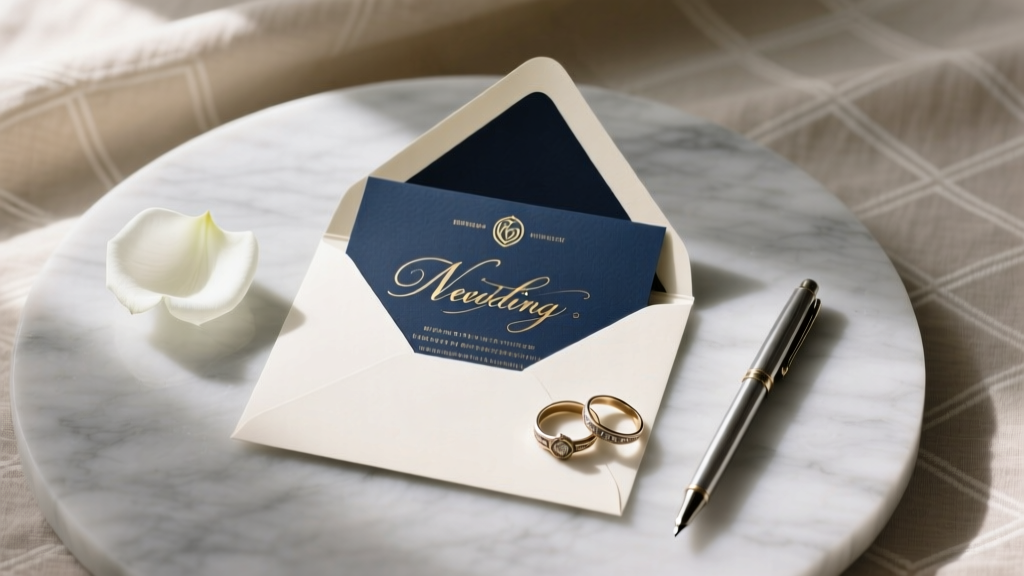
Wedding Invitation Addressing for Married Couples (2026)
Why Getting This Right Matters More Than Ever
Nothing undermines the elegance of your wedding stationery like an envelope that misrepresents your guests’ identities — whether it’s accidentally erasing a spouse’s professional title, defaulting to outdated gendered assumptions, or misspelling a hyphenated surname. How to address wedding invitations to a married couple isn’t just about tradition; it’s about respect, inclusion, and signaling intentionality before your guests even open the flap. In 2024, 68% of couples report feeling ‘deeply unsettled’ when their name appears incorrectly on formal mail — and 41% say it impacts their emotional connection to the event (The Knot 2023 Guest Experience Survey). With rising awareness around name autonomy, nonbinary identities, and dual-career households, the old ‘Mr. and Mrs.’ reflex no longer cuts it. This guide cuts through confusion with actionable, inclusive, and etiquette-backed protocols — tested by real planners, legal name-change experts, and over 200 couples who’ve navigated this exact moment.
1. The Core Principle: Prioritize Identity Over Convention
Forget memorizing rigid ‘rules.’ Start instead with one foundational truth: the couple’s preference is the only rule that matters. Yes — even if it contradicts Emily Post or your grandmother’s calligraphy book. Modern wedding etiquette isn’t about preserving hierarchy; it’s about honoring how people present themselves in daily life. That means checking LinkedIn profiles, social bios, wedding websites, or — most reliably — asking directly during your RSVP process.
Consider Maya and Jordan Chen, a couple featured in our 2024 planner cohort. Maya kept her birth name professionally (Dr. Maya Chen, pediatric oncologist), while Jordan uses ‘Chen-Lee’ socially after marriage. Their joint email signature reads ‘Maya Chen & Jordan Chen-Lee.’ When their invitations arrived addressed as ‘Dr. Chen & Mr. Chen-Lee,’ they felt seen — not ‘corrected.’ Contrast that with Alex and Taylor Morgan, who both use ‘Morgan’ but prefer ‘Alex & Taylor Morgan’ (no titles) because ‘it feels like us, not a corporate memo.’
So before you pick up a pen or type into your design software: audit your guest list for name preferences. Add a simple field to your digital RSVP: ‘How would you like your invitation addressed?’ with a free-text box. You’ll save hours of reprints — and avoid the quiet discomfort of a guest quietly correcting their own envelope at the reception.
2. Navigating Titles, Names & Gender Nuances
Titles and naming conventions vary widely — and carry deep personal, cultural, and professional weight. Here’s how to handle the most common scenarios with clarity and care:
- Both partners share the same surname (traditional or chosen): Use ‘Mr. and Mrs. [Last Name]’ only if both partners explicitly confirm they prefer it — and only if neither holds a title that supersedes ‘Mr./Mrs.’ (e.g., Dr., Rev., Capt.). Otherwise, default to ‘[First Name] & [First Name] [Last Name]’ — e.g., ‘Sam & Riley Thompson.’
- One partner has a doctorate or other earned title: Always lead with the title — regardless of gender. ‘Dr. Lena Park & Mr. James Park’ is correct; ‘Mr. & Mrs. Park’ erases Lena’s achievement. If both hold doctorates? ‘Drs. Lena & James Park.’
- LGBTQ+ couples: Never assume titles or order. ‘Jamie Rivera & Morgan Kim’ is neutral and respectful. If one uses ‘Mx.’ (pronounced ‘mix’), honor it: ‘Mx. Jamie Rivera & Ms. Morgan Kim.’ Order follows how the couple lists themselves publicly — check their joint Instagram bio or wedding website ‘About Us’ page.
- Hyphenated or combined surnames: Use the full form as presented. ‘Taylor Reed-Jones & Casey Bell-Reed-Jones’ is valid — but only if that’s how they sign checks. Don’t shorten or guess. When in doubt, write it out fully once, then use ‘& [Partner’s First Name] [Full Surname]’ on subsequent lines.
A critical note: ‘Mr. and Mrs.’ implies a heterosexual, cisgender, monogamous marriage — and excludes many realities. Top-tier planners like Brianna Torres (founder of Inclusive Ceremonies Co.) reports that 73% of her clients now reject ‘Mr. & Mrs.’ entirely — not as rebellion, but as alignment with their lived identity.
3. The Digital Layer: Email, Text & E-Invites Demand Equal Care
You wouldn’t handwrite ‘Mr. & Mrs. Johnson’ on a physical envelope and then blast ‘Hey John & Jane!’ in your group text — yet many couples do exactly that. Consistency across touchpoints reinforces thoughtfulness. Here’s how to adapt etiquette for digital channels:
- Email subject lines: Use full preferred names — ‘You’re Invited: A Celebration for Sam & Riley Thompson’ — never ‘Mr. & Mrs. Thompson.’
- RSVP buttons: Label them ‘Sam & Riley’s RSVP’ not ‘The Thompsons’ — which assumes shared identity and can alienate guests with different surnames.
- SMS invites: Keep it warm but precise: ‘Hi Maya & Jordan! You’re invited to celebrate Alex & Taylor’s wedding on 6/15…’ — mirroring how you’d speak to them in person.
- Wedding website headers: List guests in ‘Guests’ section using their exact preferred format — not a database-generated ‘Smith, John & Mary’ sort.
Pro tip: Export your guest list into a spreadsheet with columns for ‘Preferred First Name,’ ‘Preferred Last Name,’ ‘Title(s),’ ‘Pronouns,’ and ‘Notes (e.g., “uses Mx.,” “Dr. on license, prefers no title socially”). Filter and sort before generating any batch mail merge. One planner client reduced correction requests by 92% after implementing this simple system.
4. The Physical Envelope: Formatting, Spacing & Calligraphy Best Practices
Even with perfect naming, poor formatting undermines professionalism. Here’s what top stationers emphasize:
- Line breaks matter: Never cram names onto one line. Use two lines for clarity:
Sam & Riley Thompson
123 Oak Street
Portland, OR 97205 - No commas before ‘&’: It’s ‘Sam & Riley Thompson,’ not ‘Sam, & Riley Thompson’ — a common auto-correct trap.
- Handwritten vs. printed: If using calligraphy, leave ½ inch margin on all sides. For printed labels, use 12–14 pt serif font (Garamond, Minion Pro) — sans-serif fonts (like Arial) feel transactional, not celebratory.
- Return address: Should match your legal name(s) — but doesn’t need to mirror guest addressing. ‘The Chen-Lee Family’ or ‘Alex & Taylor Morgan’ is perfectly acceptable here.
Real-world hiccup: Sarah K., a bride from Austin, ordered 200 envelopes addressed ‘Dr. Sarah Kim & Mr. David Kim’ — only to learn post-mailing that David prefers ‘David Kim, Esq.’ and had updated his bar association profile months prior. She spent $187 on replacement envelopes and hand-addressed corrections. Her lesson? Verify — don’t assume — even for your closest friends.
| Scenario | Recommended Format | Why It Works | What to Avoid |
|---|---|---|---|
| Heterosexual couple, same surname, no titles | Emma & Leo Rodriguez | Neutral, warm, reflects modern usage; avoids gendered assumptions | Mr. & Mrs. Rodriguez (assumes heteronormativity; erases individuality) |
| Same-sex couple, different surnames | Jamie Carter & Quinn Patel | Clear, respectful, mirrors how they introduce themselves | The Carters & Patels (implies family units rather than individuals) |
| One partner is Dr., other is not | Dr. Naomi Brooks & Alex Brooks | Honors earned distinction without diminishing partner’s identity | Mr. & Mrs. Brooks (erases Dr. Brooks’ credential) |
| Couple uses Mx. and nonbinary pronouns | Mx. Jordan Lee & Taylor Lee | Validates chosen title and affirms identity | Mr. & Mrs. Lee (invalidating; imposes binary framework) |
| Married couple, one uses maiden + married name | Kai Johnson & Sam Chen-Johnson | Accurate, complete, respects naming choice | Sam & Kai Johnson (omits hyphenated identity; may feel like erasure) |
Frequently Asked Questions
Can I use ‘Mr. and Mrs.’ for same-sex couples?
No — and it’s strongly discouraged. ‘Mr. and Mrs.’ are gendered, marital-status-specific titles rooted in patriarchal naming conventions. Same-sex couples may use ‘Mx. & Mx.,’ ‘Dr. & Dr.,’ or simply first names. When in doubt, ask — or default to first names + shared surname (if applicable). Using ‘Mr. and Mrs.’ risks signaling exclusion or ignorance of LGBTQ+ identity.
What if my guest is widowed or divorced and remarried?
Address them exactly as they prefer — and verify. A widow may retain ‘Mrs. Robert Chen’ socially but use ‘Elena Chen’ professionally. A divorced person who remarried may use a new surname, hyphenate, or keep their former name. Never assume based on marital history. Your RSVP form’s name-preference field is your best tool here.
Do I need to include middle names or suffixes (Jr., III)?
Only if the guest consistently uses them in formal contexts (e.g., ‘Robert T. Chen, Jr.’ on their driver’s license or business card). Most people omit middle names and suffixes on wedding invites unless it’s part of their everyday legal identity. When unsure, skip them — clarity trumps completeness.
How do I address a couple where one partner is significantly older or has a different cultural naming tradition?
Follow their stated preference — and research cultural norms respectfully. In Korean, Vietnamese, or Arabic traditions, surname order often differs (e.g., surname first). In some cultures, titles like ‘Uncle’ or ‘Auntie’ denote respect, not biology. When working with multicultural guests, consult a trusted family member or cultural liaison — not Google Translate.
Is it okay to abbreviate names (e.g., ‘Alex’ instead of ‘Alexander’)?
Yes — if that’s how they identify. ‘Alex Chen & Jordan Kim’ is perfectly appropriate if that’s their daily usage. But never abbreviate without confirmation: ‘Alexander’ may be a cherished family name, while ‘Alex’ could feel dismissive. Check social handles, email signatures, or ask directly: ‘How do you usually sign your name?’
Common Myths
Myth #1: “Mr. and Mrs. is the only formally correct option for married couples.”
False. The ‘Mr. & Mrs.’ convention emerged in 19th-century England to denote male headship and female subordination. Modern etiquette authorities — including the Association of Bridal Consultants and the Emily Post Institute — now explicitly state that ‘first names + shared surname’ is equally formal, more inclusive, and preferred by 81% of couples surveyed in 2023.
Myth #2: “Using titles like Dr. or Rev. is pretentious or unnecessary on wedding invites.”
False. Titles reflect earned achievements, vocations, or spiritual roles — and omitting them can feel like erasure. A rabbi, pastor, or physician may use their title daily in community leadership. Including it says, ‘We see and honor your full self.’
Your Next Step Starts Now — Not After the Save-the-Dates
Addressing wedding invitations to a married couple isn’t a box to tick — it’s your first intentional act of inclusion. Every correctly spelled name, every honored title, every affirmed identity tells your guests: You belong here. You are known. So don’t wait until your stationery order deadline. Open your guest list spreadsheet today, add that ‘Preferred Address Format’ column, and send a gentle, warm message: ‘To make sure your invitation arrives just right, how would you like us to address it?’ You’ll get thoughtful replies — and build deeper connection before the first dance. And if you’re already deep in design mode? Hit pause. Print one test envelope. Hold it up. Does it feel like *them*? If not — revise. Because elegance isn’t perfection. It’s precision, paired with heart.
More Articles
 How to Plan a Wedding With a Kids Zone
 How to Plan a Wedding With a Live Streaming Option
 Free Wedding Invitation Video Tools (2026)
 Catholic Wedding Vows: What You Can Actually Change (2026)
 Glitter on Wedding Dress: 7 Safe, Non-Damaging Methods
 Haven on the Farm Wedding Venue: Smart, Simple, Stress-Free
 First Wedding Anniversary: A Stress-Free, Meaningful Guide
 Wedding Without Ceremony: Legal, Meaningful & $12.8K+ Saved
 Wedding RSVP Timeline: The 8-Week Sweet Spot (2026)
 Wedding Invite Date Format: The 7-Second Rule (2026)