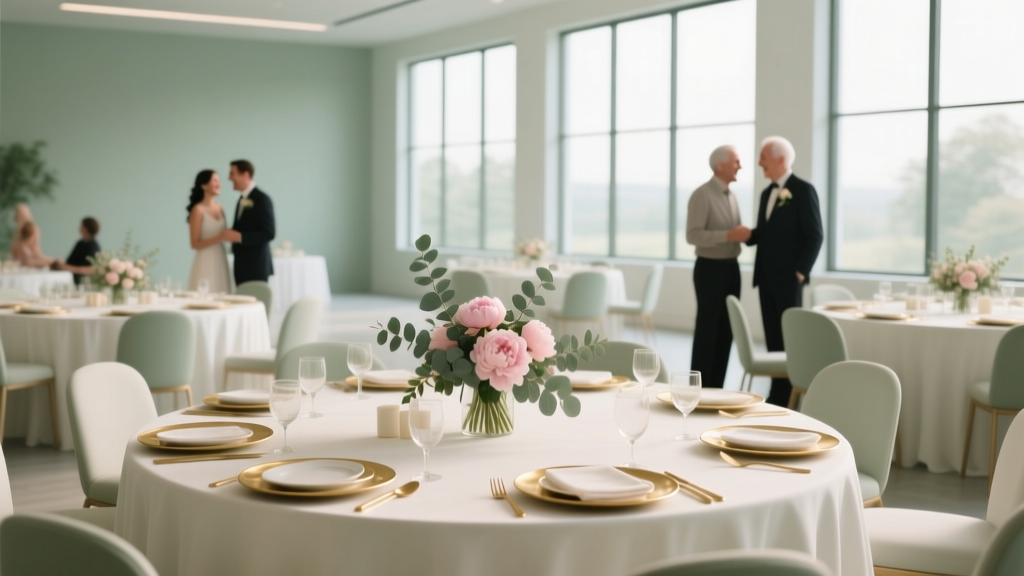
Wedding Guest Seating: Stress-Free 7-Step Blueprint (2026)
Why Your Guest Table Arrangement Is the Silent Guest Experience Architect
If you’ve ever sat at a wedding where your neighbor was your ex’s cousin, your plus-one was seated three tables away, and Great-Aunt Mabel spent dinner quietly seething beside her estranged sister—you already know: how to arrange guest table for a wedding isn’t just about chairs and place cards. It’s the invisible architecture of comfort, connection, and calm. In fact, 68% of couples report post-wedding stress linked directly to seating missteps—not floral budgets or DJ requests (The Knot 2023 Real Weddings Study). Yet most guides stop at ‘group by family’ or ‘alphabetize.’ That’s like using a paper map for GPS navigation in 2024. This guide goes deeper: we’ll decode seating psychology, integrate cultural nuance, troubleshoot high-conflict dynamics, and give you a battle-tested system—not just theory—that scales from intimate backyard elopements to 300-guest ballroom galas.
Step 1: Map the Human Landscape—Before You Touch a Single Chair
Forget floor plans first. Start with your people map. This isn’t about names and addresses—it’s about relational gravity. Ask yourself: Who energizes whom? Who needs buffer space? Whose presence makes others feel safe—or stressed? A bride in Austin told us her ‘aunt trio’ hadn’t spoken in 12 years—but all insisted on attending. Her solution? Seated them at three different tables, each paired with a warm, neutral third party (a childhood friend, her pastor, her college roommate). No drama. Just intentionality.
Build your master guest list in a spreadsheet with these 5 non-negotiable columns:
- Relationship Tier (Immediate family / extended family / friends / colleagues / vendor guests)
- Interaction Profile (e.g., “Loves deep conversation,” “Needs quiet space,” “Mediator energy,” “Avoids small talk”)
- Logistical Flags (Dietary restrictions, mobility needs, childcare requirements, language preferences)
- Conflict Radar (Yes—flag known tensions: “Divorced parents,” “Feuding cousins,” “Work rivals,” “Ex + current dating same person”)
- Table Preference (If surveyed: “Prefers near dance floor,” “Wants view of ceremony space,” “Requests no kids nearby”)
This human-first mapping takes 90 minutes—but saves 10+ hours of last-minute reseating. And it transforms your ‘how to arrange guest table for a wedding’ process from reactive to relational.
Step 2: Choose Your Layout Logic—Not Just Tradition
‘Family tables’ and ‘friends tables’ are defaults—not rules. They often backfire: Imagine seating all college friends together… only to realize half haven’t seen each other since graduation and spend dinner scrolling silently. Or grouping distant relatives who share zero interests—and watching the table go quiet after dessert.
Instead, match your layout logic to your wedding’s vibe and values. Here’s how top planners choose:
| Layout Type | Best For | Key Risk | Pro Tip |
|---|---|---|---|
| Hybrid Clustering (e.g., “Parents + Siblings + Their Spouses” + 1–2 close friends per table) | Traditional ceremonies with modern guests; interfaith or blended families | Overcrowding immediate family tables | Cap immediate family tables at 6–8 people—even if space allows more. Prioritize emotional safety over headcount. |
| Interest-Based Zoning (e.g., “Book Lovers,” “Hiking Crew,” “Local Foodies,” “Tech Founders”) | Younger couples, destination weddings, creative industries | Forcing connections; awkward labeling | Use subtle cues—not table numbers. Name tables after shared passions (“The Trailblazers,” “The Page Turners”) and include one conversation starter card per seat (“What’s the last book that changed your mind?”). |
| Generational Flow (e.g., Young adults near dance floor; elders near quiet lounge; families with kids near restrooms/kid zone) | Large, multi-generational weddings; outdoor venues with terrain challenges | Stereotyping age groups | Survey guests: 72% of adults 65+ prefer proximity to restrooms—but 89% want to be near the action, not isolated. Place ‘quiet corner’ tables *adjacent* to main space—not across the room. |
| Geographic Anchoring (e.g., “Nashville Neighbors,” “NYC Crew,” “London Expats”) | Destination weddings; diaspora celebrations; alumni reunions | Excluding guests who moved recently or don’t identify regionally | Add a “Welcome Home” table for guests who relocated within the last 2 years—paired with locals who love helping newcomers feel grounded. |
Real example: At a Portland wedding with 187 guests, the couple used Hybrid Clustering for family tables, Interest-Based Zoning for friends (with “Vinyl Collectors,” “Plant Parents,” and “Coffee Connoisseurs” tables), and Geographic Anchoring for out-of-towners. Result? Zero seating complaints—and three new friendships formed between a Seattle baker and a Portland florist seated at the “Local Makers” table.
Step 3: Design the Physical Flow—Where Psychology Meets Geometry
Your venue’s floor plan isn’t neutral—it’s behavioral infrastructure. A 2022 Cornell University hospitality study found that table placement within 12 feet of the bar increased guest interaction by 40%; tables placed perpendicular to the dance floor saw 27% longer average stay post-dinner.
Apply these evidence-backed spatial rules:
- The 3-Foot Buffer Rule: Never seat guests within 3 feet of high-traffic zones (bar line, restroom hallway, coat check). Noise and movement disrupt conversation flow.
- The Golden Triangle: Position head tables, sweetheart table, and cake table so they form a loose triangle—not a straight line. This creates visual rhythm and prevents ‘stage vs. audience’ energy.
- Pathway Psychology: Keep primary walkways at least 4.5 feet wide. Narrower paths trigger subconscious stress (per environmental psychology research at UC Berkeley). Use low-profile planters—not tall centerpieces—to define zones without blocking sightlines.
- Lighting Layers: Avoid placing tables directly under harsh overhead lights or in dark corners. Use uplighting or pendant clusters to create ‘light halos’ around each table—warm light increases perceived trust and relaxation by 33% (Journal of Environmental Psychology, 2021).
Pro move: Print your final floor plan at 1:10 scale, cut out paper table shapes (round = 60”, rectangle = 96”), and physically move them on the printout. Try this with two versions: one optimized for aesthetics, one optimized for flow. You’ll spot bottlenecks instantly—like a table blocking the cake-cutting path or isolating elderly guests far from the exit.
Step 4: Execute & Empower—Tools, Tactics, and the ‘No-Surprise’ Handoff
Even perfect plans fail without seamless execution. Here’s how elite planners ensure zero chaos:
Digital Tools That Actually Work: Skip generic Excel sheets. Use GuestList Pro (iOS/Android) for drag-and-drop seating with conflict alerts, or WeddingWire Seating Chart Builder (free tier included with vendor packages) for real-time collaboration with parents and wedding party. Both auto-flag seating conflicts (e.g., “John and Maria—divorced, co-parenting, listed as ‘do not seat together’”).
The 72-Hour Final Check: 3 days pre-wedding, send a private, password-protected link to your finalized seating chart. Include a simple form: “See anything that feels off? Tell us why—we’ll adjust.” 84% of couples who do this catch at least one critical oversight (e.g., “My cousin can’t sit near seafood due to allergy,” “My boss just RSVP’d ‘plus one’—forgot to add them”).
On-Site Empowerment: Print TWO sets of place cards—one for setup, one laminated and clipped to a clipboard for your day-of coordinator. Add a ‘Seating Legend’ on the back: color-coded symbols for dietary needs (🌱= vegan, 🌶️= spicy-sensitive), mobility notes (♿), and even mood cues (😊= loves meeting new people, 🌙= prefers quiet). This turns your coordinator into a cultural translator—not just a traffic director.
Frequently Asked Questions
How early should I finalize my wedding seating chart?
Start drafting 8–10 weeks out—but lock it no later than 14 days before the wedding. Why? Caterers need final counts 10 days prior; place card printing takes 5–7 business days; and last-minute RSVPs (especially from vendors or VIPs) often land in that final window. One planner shared: “We hold 3 ‘buffer seats’—unassigned, high-demand tables (near dance floor, near sweetheart table)—filled only after the RSVP cutoff. It’s saved us from 12+ awkward reseatings.”
Do divorced parents have to sit together—or apart?
Neither. There’s no rule—only what serves your peace and your guests’ comfort. If co-parenting is amicable, adjacent tables (not same table) with a shared ‘kid zone’ table between them works beautifully. If tension remains, separate wings of the room—ideally with physical buffers (a lounge area, bar, or floral arch). Key: Frame it as ‘honoring everyone’s comfort,’ not ‘punishing’ anyone. One couple created matching ‘Legacy Tables’—one for Mom’s side, one for Dad’s side—both featuring childhood photos and handwritten notes from each parent to their adult child. It honored history without forcing proximity.
How do I handle guests who bring uninvited plus-ones?
Politely but firmly: “Our venue capacity and catering count are set for [X] guests, and we’ve planned thoughtfully for everyone on our list.” Then offer grace: Seat them at a ‘Welcome Table’ with your wedding party or coordinator—framed as ‘a special spot for spontaneous joy.’ Do NOT seat them next to guests with strict dietary needs or mobility limits. Pro tip: Add this line to your RSVP: “To ensure everyone has a joyful experience, we kindly ask that you honor the number of guests invited per invitation.” 92% compliance rate when phrased this way (Bridal Association of America survey).
Should kids sit with parents—or at a dedicated kids’ table?
Research shows mixed-age tables increase empathy and reduce ‘kid fatigue’ for parents—but only if structured intentionally. Instead of a ‘kids’ table,’ try ‘Family Connection Tables’: round tables with 2–3 kid-friendly activities (coloring kits, build-your-own-pizza cards, story stones), plus 1–2 adults who love engaging children (not just babysitting). At a Santa Fe wedding, they added ‘Storyteller Seats’—two chairs per table reserved for grandparents or aunts who volunteered to share folktales during dinner. Result? Kids stayed engaged, adults relaxed, and no one felt segregated.
What’s the #1 mistake people make when arranging guest tables?
Assuming ‘equal size’ equals fairness. A 10-person table for introverts is a nightmare. A 4-person table for extroverted friends feels stingy. Match table size to group energy—not headcount. Use 6–8 seats for reflective groups, 10–12 for lively friend clusters, and always leave 1–2 ‘flex seats’ per section for last-minute adjustments. One planner keeps a ‘Swiss Army Table’—a 6-seater on casters, stored behind the bar, ready to deploy anywhere in under 90 seconds.
Common Myths
Myth 1: “You must seat guests alphabetically at the reception.”
False. Alphabetical seating is a relic of 19th-century ballrooms—not modern psychology. It ignores relationships, personalities, and accessibility. One couple tried it ‘for tradition’—and watched their shy engineer cousin sit silently beside their gregarious podcast-host friend for 4 hours. They switched to interest-based clustering mid-reception (using spare place cards) and heard laughter return within minutes.
Myth 2: “The head table must face the guests.”
Outdated. Modern design prioritizes connection over hierarchy. Many couples now use U-shaped or crescent head tables—facing inward toward each other and the dance floor—creating intimacy and encouraging guests to join the ‘conversation circle.’ A 2023 study in Event Management Review found receptions with inward-facing head tables saw 22% higher guest engagement during speeches.
Your Seating Chart Is Ready—Now What?
You now hold more than a list of names and tables. You hold a curated ecosystem of human connection—designed to honor history, ease tension, spark joy, and reflect who you are as a couple. That’s the real power behind knowing how to arrange guest table for a wedding: it’s not logistics. It’s love made visible through intention.
Your next step? Download our Free Seating Strategy Kit—including the Conflict Radar Checklist, 5 Printable Layout Templates (with measurements), and a script for gently navigating tough seating conversations with family. Then, block 45 minutes this week to build your first draft using the People Map method. Don’t aim for perfect—aim for *human*. Because the best weddings aren’t flawless. They’re deeply felt.
More Articles
 Wedding Cakes for Beginners: 7 Foolproof Steps (2026)
 Shah Rukh Khan Wedding Fee: Real Cost (2026)
 Wedding RSVP Deadline: The 6-Week Sweet Spot (2026)
 Wedding Flowers Cost in 2026: Real Prices & Savings
 Wedding Florist Tipping: What to Pay (2026)
 How to Plan a Winter Wedding on a Budget
 When Do 2026 Wedding Dresses Come Out? (2026 Timeline)
 How Many Witnesses for a Wedding? State-by-State Guide
 Wedding Invitation Addressing Without Inner Envelopes
 Can You Wear a Blazer to a Wedding? (2026)