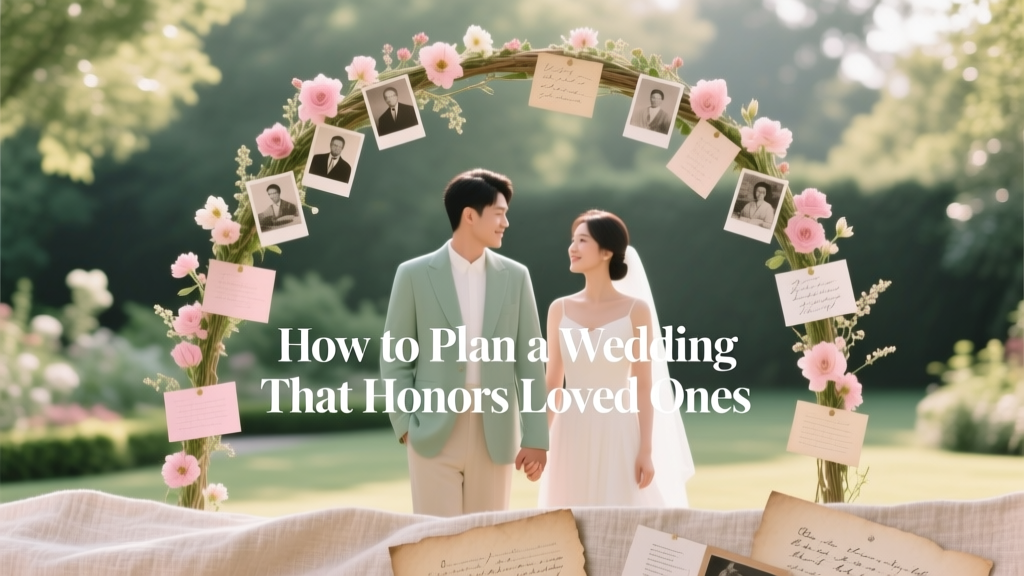
How to Plan a Wedding That Honors Loved Ones
Weddings are joyful by nature, but they’re also full of memory. As you plan a day that celebrates your future, it’s completely normal to feel the presence of the people who helped shape your story—parents, grandparents, siblings, mentors, and friends who may not be able to attend, or who are no longer here.
If you’re hoping to honor loved ones at your wedding, you’re not alone. Many engaged couples want a celebration that feels true to their relationship while also making space for the people and traditions that brought them to this moment. The goal isn’t to turn your wedding into a memorial—it’s to create a day that feels grounded, meaningful, and personal.
This planning guide walks you through thoughtful ways to honor loved ones (living or deceased), with practical timeline tips, budget-friendly ideas, and examples you can adapt to your ceremony and reception. Think of it as support from a wedding planner friend who wants your wedding to feel like you—complete with the people you love woven gently into the day.
Start With Your “Why”: What Does Honoring Loved Ones Mean to You?
Before you add a memorial table or rewrite your ceremony script, take 30 minutes together to define what you want this to feel like. Couples often skip this step and end up with a tribute that feels performative or overwhelming.
A quick conversation prompt (10 minutes each)
- Who are we honoring? (Name 1–5 people or groups.)
- Why do they matter to our story?
- How public do we want this to be? (Private, subtle, or spoken aloud.)
- What emotions do we want guests to feel? (Warmth, gratitude, nostalgia, quiet remembrance.)
- What’s off-limits? (Certain songs, wording, photos, religious elements, etc.)
Real-world example
Scenario: Maya lost her dad two years ago and wanted to include him without feeling like she was “put on display.” She chose a private moment: she carried a handkerchief made from one of his shirts, and the officiant included one line about “those who couldn’t be here today but are always with us.” Guests felt the love—without Maya feeling spotlighted.
Choose the Right Type of Tribute: Subtle, Shared, or Spotlight
Not every tribute needs to be announced or visible. Choose the style that fits your comfort level and family dynamics.
1) Subtle tributes (private or low-key)
- Sew a small piece of fabric (tie, dress, blanket) into your outfit
- Carry a locket charm in your bouquet
- Wear inherited jewelry or a watch
- Add a handwritten note inside a jacket, veil, or shoe
- Use a loved one’s recipe for your dessert table
2) Shared tributes (noticed, but not announced)
- Signature cocktails named after loved ones (“Grandpa Joe Old Fashioned”)
- A photo in a family collage rather than a separate memorial display
- Using their favorite flowers in your wedding bouquet or centerpieces
- A song included in dinner service (not as a “dedication” moment)
3) Spotlight tributes (public and intentional)
- A moment of remembrance during the ceremony
- A candle lighting or “reserved seat” sign
- A toast or speech that acknowledges someone by name
- A special dance (parent dance alternative, family dance, or group dance)
Timeline: When to Plan Each Tribute (So It Doesn’t Become Stressful)
Honoring loved ones often involves family conversations, photo gathering, and vendor coordination. Here’s a simple wedding planning timeline to keep it manageable.
6–9 months before
- Decide who you’re honoring and what style of tribute feels right
- Talk with key family members (especially if the loved one was closely connected)
- If cultural or religious traditions are involved, consult your officiant or faith leader
3–5 months before
- Order or customize items (bouquet charm, signage, memorial candles, photo prints)
- Confirm ceremony wording with your officiant
- Coordinate music choices with your DJ/band
4–8 weeks before
- Finalize photos and frames, create a display layout if needed
- Assign setup responsibilities (planner, coordinator, trusted friend, venue team)
- Rehearse any spoken moment so it feels natural
Week of
- Pack tribute items in a labeled box (include tape, extra frames, matches/lighter if allowed)
- Confirm where displays will go and who will place them
- Decide if you want a private pause before guests arrive
Ceremony Ideas That Honor Loved Ones (Without Taking Over the Moment)
Your wedding ceremony is powerful because it’s the heart of the day. A small addition can mean a lot.
Meaningful ceremony options
- Reserved seat: A single chair with a sign such as “In loving memory” or “Reserved for those in our hearts.”
- One-line acknowledgment: Ask your officiant to include a brief sentence: “We also hold space for loved ones who couldn’t be here today.”
- Candle lighting: A unity candle can include a remembrance candle (check venue rules for open flame).
- Reading or poem: Choose something that reflects love and legacy without sounding like a eulogy.
- Incorporate cultural tradition: A family blessing, ancestral acknowledgment, or heritage ritual that feels authentic.
Pro tip from wedding planners
Keep ceremony tributes short. If you want to name multiple people, consider listing names elsewhere (program, memorial table, or wedding website). In the ceremony, aim for one concise moment so the tone stays balanced.
Reception Ideas: Welcoming Their Spirit Into the Celebration
The reception gives you more flexibility. You can honor loved ones through food, music, and shared stories—often in a way that feels uplifting and communal.
Reception tribute ideas guests genuinely enjoy
- Memory table: Photos, a framed note, and a simple sign. Add florals to blend with your decor.
- Family history display: A timeline of family wedding photos (yours, parents, grandparents).
- Recipe or heritage menu: Serve a late-night snack inspired by a loved one (“Aunt Linda’s pierogi”).
- Music moments: Play a loved one’s favorite song during dinner or cocktail hour.
- Toast with intention: A short toast acknowledging someone who influenced your relationship.
Real-world example
Scenario: Chris and Jordan wanted to honor Jordan’s grandmother, who taught her to bake. Instead of a formal memorial, they served “Grandma Rose’s lemon cake” as one of their dessert options, with a small framed recipe card near the cake stand. Guests asked about it all night, and it sparked sweet stories without feeling heavy.
Honoring Living Loved Ones, Too (Especially When Dynamics Are Complicated)
Sometimes the most meaningful honoring is for the people who are present—step-parents, guardians, siblings, or friends who supported you through hard seasons. This can also be delicate when family relationships are strained.
Thoughtful ways to honor living loved ones
- Invite a loved one to do a reading during the ceremony
- Include them in a “family blessing” moment before dinner
- Ask them to get ready with you or share a first look
- Write a private letter and give it during a quiet moment
- Recognize them in speeches (with your approval and a quick outline)
When family dynamics are sensitive
- Decide as a couple what feels fair and authentic—then communicate clearly.
- Avoid “surprise tributes” that might trigger conflict (especially involving ex-step-parents or estranged relatives).
- Use neutral language like “those who raised and supported us” if titles are complicated.
Budget Considerations: Meaningful Doesn’t Have to Mean Expensive
Honoring loved ones can be beautiful on any wedding budget. Here are realistic cost ranges so you can plan without surprises.
Common tribute costs (approximate)
- Memorial table signage: $15–$60 (DIY print to custom acrylic)
- Photo prints + frames: $30–$150 depending on quantity and style
- Bouquet charm/locket: $25–$100
- Custom handkerchief or fabric keepsake: $20–$80
- Specialty dessert or cultural dish: varies; often $2–$8 per person add-on
- Extra floral touches for a display: $25–$150 depending on your florist
Budget-friendly alternatives
- Use digital photo frames or a simple printed collage in one frame
- Repurpose ceremony flowers on a memory table
- Choose one statement tribute rather than many small ones
- Ask a family member to lend frames, heirlooms, or photos
Checklist: Plan a Wedding Tribute That Feels Good (Not Stressful)
- Pick your tribute style: subtle, shared, or spotlight.
- Limit the scope: choose 1–3 tribute moments total.
- Confirm comfort levels: discuss with your partner and any key family members.
- Choose placement: ceremony, cocktail hour, reception, getting-ready, or all-private.
- Write the wording: keep it short and warm; avoid overly formal language.
- Assign a point person: someone other than you to set it up.
- Share with vendors: planner/coordinator, officiant, DJ/band, photographer.
- Plan for emotions: decide where you can take a breath if it hits hard.
- Do a final check: pack items together and label everything.
Common Mistakes to Avoid (And What to Do Instead)
- Mistake: Doing too many tributes and creating a heavy tone.
Instead: Choose one meaningful ceremony moment and one reception detail, max. - Mistake: Springing a tribute on family members without warning.
Instead: Give a heads-up, especially if naming someone publicly. - Mistake: Putting delicate photos/heirlooms in high-traffic areas.
Instead: Use a secure, supervised spot and consider duplicates for displays. - Mistake: Forgetting venue rules (candles, sparklers, open flames).
Instead: Ask early; use LED candles if needed. - Mistake: Asking the couple to set up the memorial display day-of.
Instead: Assign setup to your coordinator, planner, or a trusted friend.
Planner Pro Tips for Keeping It Warm and Wedding-Focused
- Use “gratitude language”: “We’re grateful for the love that shaped us,” rather than focusing on loss.
- Consider the guest experience: If you’re doing a memory table, add a short sign that explains it gently.
- Tell your photographer: List any tribute items you want captured (reserved seat, charm, table) so they don’t miss it.
- Build in a private moment: A 2-minute pause before the ceremony can help you feel steady and present.
- Keep the spotlight where you want it: If you don’t want questions all night, choose subtle tributes or place displays away from the entrance.
FAQ: Honoring Loved Ones at Your Wedding
How do we honor someone who passed away without making the day feel sad?
Choose a small, intentional tribute and keep the wording focused on love and gratitude. A single line in the ceremony plus a reception detail (like a favorite song or recipe) often feels uplifting and balanced.
Is a memorial table still common at weddings?
Yes—especially when it’s styled to match the wedding decor and kept simple. A few framed photos, a small sign, and a floral accent is usually enough.
What if one partner wants a tribute and the other feels uncomfortable?
Talk about what “public” vs. “private” means to each of you. A compromise could be a private keepsake (bouquet charm, sewn fabric, letter) that doesn’t require an announcement.
Should we mention loved ones in our wedding program?
If you’d like to acknowledge several people but keep the ceremony short, a program note is a great option. Keep it brief and respectful, and double-check name spellings with family.
What are alternatives to a parent dance when a parent has passed away?
You can do a group “family dance,” invite a mentor/guardian to join you, dance with siblings, or skip the formal moment entirely and play the song during dinner. There’s no rule that says you must replace it.
How do we handle divorced or blended families when honoring loved ones?
Use inclusive language (“our parents and those who raised us”), avoid ranking relationships, and communicate expectations early. If you’re doing speeches, give speakers a quick outline of what topics are welcome and what to avoid.
Next Steps: Make a Simple Plan You’ll Feel Good About
Here’s a practical way to move forward this week:
- Pick one ceremony tribute (or decide to keep it private).
- Pick one reception tribute that feels joyful and personal.
- Write the exact wording you want used (2–3 sentences max).
- Assign a point person for setup and share the plan with your coordinator or venue.
- Add any tribute items to your wedding packing list so nothing gets forgotten.
Your wedding can hold both celebration and remembrance—without losing the lightness of the day. When the tribute is chosen with care, it won’t distract from your love story. It will deepen it.
Looking for more supportive, practical planning tips? Explore our other wedding planning guides on weddingsift.com to help you build a day that feels meaningful, organized, and completely yours.
More Articles
 How Far Out Do I Send Wedding Invitations
 How to Arrange Flowers on a Wedding Arch (2026)
 Wedding Invitation Timeline: Evidence-Based Guide (2026)
 10-Month Wedding Planning: Smart, Stress-Free & Affordable
 Wedding Hair Comb DIY: 7-Step $120+ Savings (2026)
 Charity Wedding Gifts: 7 Respectful Steps (2026)
 Wedding Hair or Makeup First? The Evidence-Based Answer
 Wedding Invitation Design Costs (2026) | DIY to Bespoke
 How Long Do Wedding Receptions Last? (2026)
 Hair Color Before Wedding: Pro Timeline (2026)