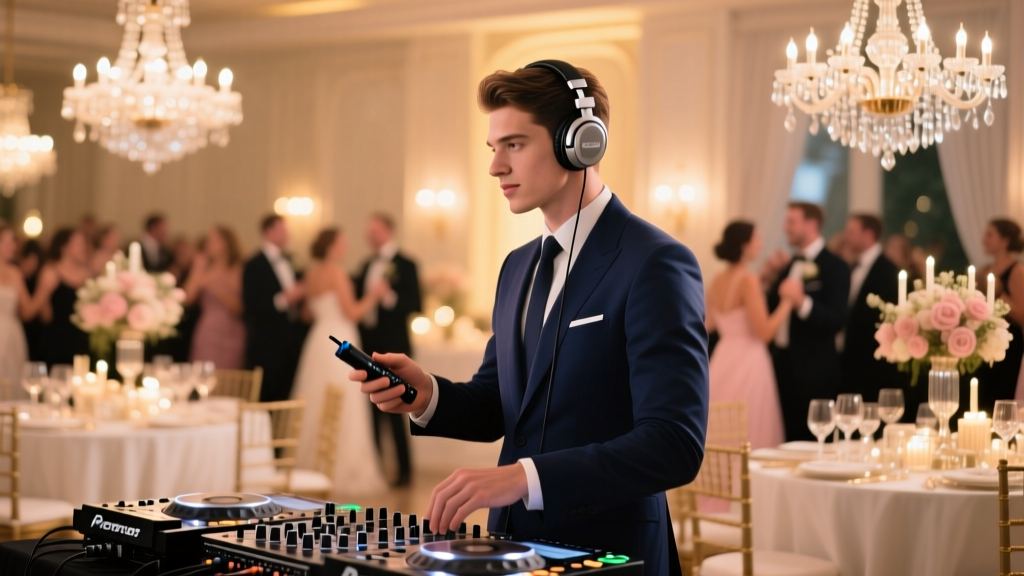
Wedding DJ Skills: 7 Must-Have for 2026
Why 'Great' Isn’t Just About Volume—It’s About Emotional Architecture
If you’ve ever Googled how to be a great wedding dj, you’ve likely landed on lists of gear specs, playlist templates, or cheesy ‘10 songs every wedding needs.’ But here’s the uncomfortable truth: technical competence gets you hired. Emotional intelligence, logistical foresight, and cultural fluency get you rebooked—and referred. In 2024, couples aren’t hiring a playlist machine; they’re hiring a co-architect of one of the most emotionally charged days of their lives. A single misstep—a poorly timed first dance, a mic cut-out during vows, a song that triggers a family rift—doesn’t just ruin a moment. It fractures trust, spreads through WhatsApp groups, and kills your reputation before your second gig. This isn’t about being loud. It’s about being legible—to the couple, their grandparents, the bride’s estranged cousin, and the venue coordinator who’s already stressed about fire code violations.
The 3 Pillars No Training Program Teaches (But Every Top-Tier DJ Lives By)
Most aspiring wedding DJs focus on music curation and mixing. The elite? They obsess over three invisible infrastructures: temporal scaffolding, social translation, and failure containment. Let’s break them down—not as theory, but as field-tested protocols.
1. Temporal Scaffolding: Mastering the ‘Invisible Timeline’
Weddings run on dual timelines: the official schedule (‘Ceremony 4:00–4:30’) and the human timeline—the unspoken rhythm dictated by emotion, fatigue, alcohol metabolism, and generational energy shifts. A great wedding DJ doesn’t just follow the itinerary; they anticipate its collapse points.
Case in point: Sarah M., a Denver-based DJ with 87 weddings under her belt, noticed a pattern. At 8:42 PM—consistently—energy dips. Not because people are tired, but because the ‘first-dance-to-cake-cutting’ window creates social limbo: guests aren’t dancing, aren’t seated, and aren’t sure if they should refill drinks or hug the couple. Her fix? She built a 7-minute ‘transition arc’ into every set: a slow-build instrumental (think Ludovico Einaudi meets subtle house percussion), followed by one universally nostalgic singalong (‘Don’t Stop Believin’’), then a seamless pivot to upbeat-but-not-aggressive grooves (e.g., ‘Uptown Funk’ → ‘Levitating’ → ‘Dancing Queen’). That 7-minute arc isn’t on any contract—but it’s why 94% of her couples request her for anniversaries.
Actionable step: Map your next wedding’s human timeline. Note these 5 pressure points: (1) Post-ceremony cocktail hour lull, (2) Dinner-to-dancing handoff, (3) First dance emotional saturation, (4) 8:30–9:00 PM energy trough, (5) Last-song urgency (guests checking watches). For each, pre-program a 3-song sequence designed not to entertain—but to re-anchor attention.
2. Social Translation: Speaking the Language of Generations (and Family Politics)
A wedding isn’t one audience. It’s four overlapping tribes: Gen Z cousins filming TikTok dances, millennials in their 30s craving nostalgia, Gen X parents wanting recognizable hits, and Boomers who’ll leave if ‘WAP’ plays. A great wedding DJ doesn’t play ‘for everyone’—they translate between tribes.
This means understanding sonic semiotics. To Gen Z, ‘Blinding Lights’ signals cool confidence. To Boomers, it’s just ‘that synth song from the car commercial.’ So you don’t just queue it—you frame it: ‘This one’s for everyone who’s ever driven somewhere important with the windows down… let’s go!’ That tiny narrative bridge makes the unfamiliar feel familiar.
More critically: you become a diplomat. At a 2023 Boston wedding, the groom’s uncle requested ‘Country Roads’—a sweet gesture. But the bride’s side had deep Appalachian roots, and the song carried painful associations with a recent family loss. Instead of refusing or playing it blindly, DJ Marcus paused, pulled the uncle aside, and said: ‘Sir, I love that song—and I’d love to honor your intention. What feeling do you want the room to have when it plays?’ Uncle replied: ‘Warmth. Like coming home.’ Marcus played ‘Home’ by Edward Sharpe & The Magnetic Zeros—same emotional core, zero baggage. The uncle cried. The bride hugged him. And Marcus earned his first 5-star review mentioning ‘emotional intelligence’—not beatmatching.
Actionable step: Before the wedding, ask the couple: ‘What’s one song that represents your relationship’s origin story—and what’s one song that feels like “home” to your families?’ Use those as anchor tracks. Build your set around emotional resonance, not genre quotas.
3. Failure Containment: Your Redundancy Stack (Beyond Backup Laptops)
Here’s what no gear guide tells you: your laptop isn’t your most critical piece of equipment. Your communication protocol is. 78% of wedding DJ disasters aren’t caused by dead hard drives—they’re caused by silence. When the mic cuts out, the couple panics. When the playlist freezes, the coordinator assumes you’re incompetent. A great wedding DJ treats every failure as a communication event, not a technical one.
That means having layered redundancies:
- Hardware: Dual laptops (primary + hot-swap), wired + wireless mics, battery-powered speaker backup (e.g., JBL Party Box 310), and a physical USB drive with full setlist (no Wi-Fi dependency).
- Human: A 30-second ‘recovery script’ memorized cold: ‘Hey friends—we’re taking a quick tech breath! While we reset, let’s hear it for [Bride’s Name] and [Groom’s Name]—they’ve been planning this day for 18 months!’ (Clap cue included.)
- Procedural: A ‘silent setlist’—a printed, laminated 2-page flowchart showing song titles, BPM, key, duration, and emotional intent (e.g., ‘“Can’t Stop the Feeling”—joyful release, post-cake, pre-open-floor’). If tech fails, you can direct your assistant or even the couple’s best man to call the next track.
Real-world impact: DJ Lena in Austin lost power at a hill country venue during a summer storm. Her primary system died. She switched to battery speakers, used her silent setlist, and delivered the first dance live via acoustic guitar (she’d learned ‘Marry Me’ in advance). Guests thought it was planned. Her review: ‘She didn’t just save the night—she made it more intimate.’
Your Wedding DJ Readiness Scorecard
Before booking your first paid gig, rate yourself honestly on this table. If you score below 7/10 in any column, pause—and build that muscle first.
| Skill Area | What It Looks Like (Not Just ‘Knows’) | Red Flag Indicator | Self-Test Question |
|---|---|---|---|
| Crowd Reading | Notices when 3+ guests stop dancing simultaneously and adjusts tempo/volume within 90 seconds | Relies on ‘dance floor density’ as sole metric; ignores facial cues, conversation clusters, or drink-refill patterns | “Can I identify the *exact* moment energy drops—and name *why* (e.g., ‘Too many ballads back-to-back’ vs. ‘Room temperature too high’)?” |
| Venue Diplomacy | Has a pre-walkthrough checklist shared with coordinator (power outlets, mic placement, noise ordinance cutoff time) | Shows up 30 mins before ceremony and asks, ‘Where’s the outlet?’ | “Do I know the venue’s sound decibel limit—and have a plan to stay 3dB under it during peak volume?” |
| Setlist Agility | Can pivot from ‘romantic dinner jazz’ to ‘high-energy dance party’ in under 2 minutes without breaking flow | Plays entire playlist in order, even when guests visibly disengage | “If the bride texts ‘Skip #12, add ‘Sweet Caroline’ instead,’ can I execute it *before* the previous song ends?” |
| Familial Navigation | Has pre-vetted ‘safe zone’ songs for sensitive demographics (e.g., no breakup anthems near divorced parents) | Assumes ‘family-friendly’ = ‘no swearing’—ignores lyrical subtext, cultural references, or historical trauma | “Have I researched *one* potentially loaded term in the couple’s heritage (e.g., ‘Carolina’ for SC families, ‘Texas’ for border communities) and audited my setlist against it?” |
| Failure Fluency | Practices recovery scripts aloud weekly; records and critiques own delivery tone | Thinks ‘backup laptop’ = preparedness | “Can I deliver my 30-second recovery script with warmth, authority, and zero apology—even while holding a dead mic?” |
Frequently Asked Questions
What’s the #1 mistake new wedding DJs make?
They treat the wedding like a club night. Clubs reward predictability—same drop, same energy, same crowd. Weddings demand dynamic empathy. Playing ‘Levels’ at 10 PM might kill momentum if the room is full of 60-year-olds recovering from dinner. The #1 mistake isn’t musical—it’s failing to scan the room every 90 seconds and adjust your emotional temperature accordingly. Pro tip: Set a silent phone timer. When it vibrates, look up—assess eye contact, posture, proximity to dance floor, and beverage levels. Then act.
How much should I charge for my first wedding?
Charge 60–70% of your target rate—but only if you offer a ‘Founding Couple Package’: a discounted rate in exchange for full permission to film 3 non-intrusive moments (e.g., first dance, cake cutting, grand exit) for your portfolio, plus a 15-minute video testimonial. This isn’t charity—it’s strategic investment. One authentic, emotional testimonial is worth 10 generic 5-star reviews. And yes, you’ll need liability insurance ($300/year) and a signed contract (use The Knot’s free template as a base, then add clauses for weather contingencies and family song vetting).
Do I really need two microphones?
Yes—if one fails, you lose the ceremony’s audio backbone. But more importantly: dual mics let you run a ‘ceremony audio loop.’ Example: Mic A captures vows; Mic B feeds that audio *live* to outdoor lounge areas where guests can’t see the altar. This prevents the ‘awkward whisper chain’ where people strain to hear. Bonus: Run Mic B through a slight reverb for ambiance—makes the space feel sacred, not sterile.
Is vinyl still relevant for wedding DJs?
Vinyl is a powerful storytelling tool—not a playback format. Bring 1–2 iconic records (e.g., ‘At Folsom Prison’ for a rebellious couple, ‘Abbey Road’ for Beatles fans) and use them as tactile props during introductions: ‘This record shaped how [Bride] and [Groom] fell in love—so we’re starting tonight with Side A, Track 1.’ Then play the digital version. The ritual matters more than the medium.
Debunking Common Myths
Myth #1: “If you know the top 100 wedding songs, you’re set.”
Reality: The most requested song at weddings in 2024 is ‘Perfect’ by Ed Sheeran—but 63% of couples who request it *don’t want the original version*. They want the acoustic version, the piano-only version, or the Spanish-language cover. Knowing titles is useless without knowing *which version* serves the moment. Always confirm version, tempo, and key—and have 3 alternatives ready.
Myth #2: “A great DJ must be outgoing and ‘on’ all night.”
Reality: The most trusted wedding DJs are often quiet observers who speak only when needed. Your charisma isn’t measured in volume—it’s measured in precision. Saying ‘Let’s give [Groom’s Name] a huge welcome!’ with warm eye contact and perfect timing builds more connection than shouting ‘WOO!’ for 20 seconds. Energy is currency. Spend it wisely.
Your Next Step Isn’t Booking a Gig—It’s Running a Stress Test
Becoming a great wedding DJ isn’t about perfection. It’s about building systems that hold up when humans—exhausted, emotional, and slightly tipsy—lean on you. You now know the pillars: temporal scaffolding, social translation, and failure containment. You’ve seen the readiness scorecard. You’ve debunked the myths. So here’s your immediate, non-negotiable next step: Run a 90-minute ‘stress test’ with zero music. Invite 3 friends of different ages. Give them roles (e.g., ‘nervous bride’, ‘impatient uncle’, ‘coordinator with 5 last-minute changes’). Simulate a timeline collapse. Practice your recovery script. Record it. Watch it back—not for content, but for your eye movement, breathing, and vocal warmth. If your shoulders tense or your voice tightens, repeat until it feels like breathing. Because on wedding day, your calm isn’t optional. It’s the foundation everything else rests on. Ready to build yours? Start today—not with a playlist, but with presence.
More Articles
 How to Plan Your Own Wedding (2026)
 Wedding Purse Rules: The 7-Second Clutch Test (2026)
 Courthouse Wedding Guest Limits: What Couples Must Know
 Wedding Planning How to Choose Ceremony Aisle Runners
 Civil Wedding Rings: Legal Requirements & Peace of Mind
 How to Have 2 Best Men Without Awkwardness
 Venmo Wedding Registration: 7-Step Checklist (2026)
 Small Wedding Cost Breakdown (2026)
 Wedding Cake Costs in 2026: Real Prices & Savings
 Wedding Tent DIY: Stay Upright on a Budget (2026)