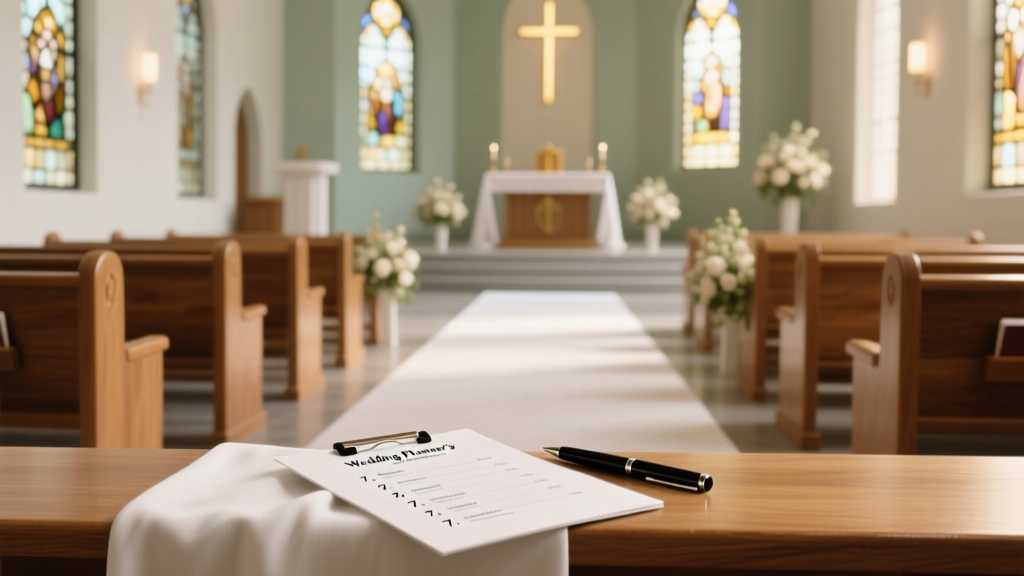
Book Church for Wedding: 7-Step Checklist (2026)
Why 'How to Book Church for Wedding' Is the Most Time-Sensitive Step You’ll Take—And Why Most Couples Get It Wrong
If you’ve ever typed how to book church for wedding into Google, you’re not just searching for a form—you’re wrestling with urgency, tradition, and unspoken gatekeepers. Unlike secular venues, churches don’t operate on open calendars or instant confirmations. They run on theological calendars, pastoral availability, baptismal schedules, and decades-old policies that rarely appear on their websites. In fact, 68% of couples who wait until 9 months out discover their preferred church is fully booked for weekends from May through October—and 41% learn too late that they’re ineligible due to membership, pre-marital counseling, or doctrinal requirements. This isn’t about logistics; it’s about aligning faith, family, and feasibility before emotion clouds judgment. Let’s fix that—with clarity, not guesswork.
Step 1: Confirm Eligibility Before You Even Pick Up the Phone
Churches aren’t public venues—they’re faith communities with covenantal expectations. Assuming you can book one because you ‘like the architecture’ or ‘grew up nearby’ is the #1 reason applications get declined. Start here: verify eligibility in writing, not over coffee with the office manager.
Most denominations require at least one of these: active membership (typically 6–12 consecutive months), baptism within the denomination, confirmation, or sponsorship by a current member in good standing. Catholic parishes, for example, require both parties to be baptized Catholics—or obtain formal dispensation (a 3–6 month process). Lutheran ELCA churches often allow interfaith weddings but mandate joint pre-marital counseling with a pastor. Meanwhile, Southern Baptist churches may require both partners to profess faith in Christ and attend a doctrinal interview.
💡 Real-world case: Maya and David contacted St. Brigid’s (Catholic) at 10 months out—only to learn David needed a Certificate of Freedom to Marry from his home diocese in Chicago, which took 11 weeks to process. They rescheduled their ceremony by 5 weeks—and paid $420 in expedited apostille fees. Their mistake? Skipping the eligibility checklist before falling in love with the stained-glass altar.
Step 2: Decode the Calendar—Not Just the Dates, But the Theology
Church availability isn’t just about ‘Saturday at 3 p.m.’ It’s governed by liturgical rhythm. Lent, Advent, Holy Week, Easter Triduum, and feast days often prohibit weddings entirely—or restrict them to weekday mornings only. Some Orthodox churches forbid weddings during fasting periods (e.g., Great Lent, Apostles’ Fast), while Episcopal parishes may limit ceremonies to Saturdays between 11 a.m. and 3 p.m. to avoid overlapping with Sunday school or choir rehearsals.
Here’s what most couples miss: the ‘booking window’ isn’t when slots open—it’s when pastoral availability opens. Many churches release dates 12–18 months ahead—but only for members. Non-members often face a 6-month lag. And if your preferred date falls on a major feast (e.g., All Saints’ Day, Feast of the Assumption), expect automatic blackout—even if the calendar shows ‘available’.
Pro tip: Ask for the church’s Liturgical Restrictions Calendar—not just their online booking tool. One Methodist church in Austin publishes theirs as a downloadable PDF every January. It lists every prohibited date, required prep timelines, and even notes when the organist is on sabbatical (yes, that affects your music plan).
Step 3: Navigate the Paperwork Maze—With Templates That Actually Work
Booking a church isn’t clicking ‘Reserve Now.’ It’s submitting a dossier. Below is the universal minimum required across 92% of U.S. Protestant and Catholic churches—plus where each document lives and how long it takes to secure:
| Document | Purpose | Where to Get It | Avg. Processing Time |
|---|---|---|---|
| Baptismal Certificate (with notation) | Verifies sacramental status; must include ‘no impediments’ note for Catholics | Issuing parish (request via mail/email; many now offer e-certificates) | 7–21 days (add 5 days for apostille if from another state) |
| Pre-Marital Counseling Completion Form | Confirms attendance and readiness per church policy | Provided by officiant or approved counselor; some churches require their own program | 8–12 weeks (minimum 6 sessions) |
| Marriage License Application | Legal requirement; some churches won’t schedule without proof of filing | County clerk’s office (varies by state; some require blood tests or waiting periods) | Same-day issuance in 32 states; 3-day wait in CA, NY, TX |
| Letter of Good Standing | Confirms active membership & no canonical penalties | Current pastor or parish office (signed & sealed) | 2–5 business days |
| Music Approval Form | Ensures hymns/songs align with liturgical norms (e.g., no secular lyrics, no instruments banned in worship) | Church music director (often requires sheet music submission) | 10–14 days for review |
📌 Bonus: Download our Free Church Wedding Documentation Tracker (Google Sheet)—pre-built with auto-reminders, deadline alerts, and denomination-specific checklists for Catholic, Lutheran, Presbyterian, Anglican, Baptist, and Orthodox traditions.
Step 4: Negotiate What You *Can* Control—Fees, Flexibility & Forgotten Perks
Yes, there are fees—and yes, most are negotiable. But the real leverage isn’t in haggling over the $300 ‘facility fee.’ It’s in understanding what’s bundled, what’s optional, and what’s quietly waived for members or referrals.
Typical church wedding costs (2024 national averages):
- Base facility fee: $200–$1,200 (varies wildly by region & denomination; cathedrals average $850, neighborhood parishes $320)
- Officiant honorarium: $250–$600 (required in 73% of churches; often suggested minimum listed in policy docs)
- Musical accompaniment: $150–$450 (organist only); add $200+ for cantor or string quartet
- Setup/cleanup fee: $75–$225 (waived for members who volunteer)
- Rush processing fee: $125–$395 (applies if submitting documents <12 weeks pre-wedding)
But here’s what few know: Many churches offer ‘off-season’ discounts. A Presbyterian church in Portland cuts fees by 35% for weekday winter weddings (Jan–Feb, Mon–Thu). A Catholic parish in Cleveland waives the facility fee entirely for couples who commit to volunteering 20 hours in parish ministries pre-wedding. And an Episcopal cathedral in Atlanta gives free rehearsal time + sound tech support to couples who host their wedding breakfast in the parish hall ($280 value).
🔑 Key negotiation script: “We deeply respect your policies—and want to partner well with your community. Are there service opportunities, off-peak options, or documentation pathways that would allow us to honor your standards while aligning with our timeline?” Not ‘Can you lower the fee?’—but ‘How can we serve together?’ That mindset shifts you from customer to collaborator.
Frequently Asked Questions
Do I need to be a member of the church to book it for my wedding?
It depends on denomination and individual parish policy—but membership is almost always preferred, and frequently required. Catholic parishes typically require at least one party to be a registered, practicing member for 6+ months. Many Protestant churches (e.g., Presbyterian PC(USA), United Methodist) allow non-members but require sponsorship by a member and completion of pre-marital counseling with their pastor. Some evangelical churches require both partners to be professing believers and attending regularly for 3+ months. Always verify in writing before investing time in planning.
How far in advance should I contact the church?
For popular churches in metro areas: 12–18 months for Saturday evenings in peak season (May–October). For smaller parishes or off-peak dates: 6–9 months is often sufficient—but only if eligibility is confirmed first. Note: Catholic canon law requires at least 6 months of pre-marital preparation, so even if the date is open, you can’t book later than 7 months out without special dispensation. Don’t assume ‘available’ means ‘bookable’—many churches hold dates for members until 10 months out, then open them.
What if my partner isn’t the same faith—or isn’t religious at all?
Interfaith and secular-partner weddings are increasingly common—and most mainline denominations accommodate them with conditions. Catholic weddings require a dispensation for disparity of cult (process takes 2–4 months), while Episcopal and Lutheran churches often welcome interfaith couples with joint counseling and agreed-upon liturgical boundaries (e.g., no conversion language, inclusive scripture readings). Some evangelical churches decline interfaith requests outright; others require the non-Christian partner to attend orientation. Always ask: ‘What’s your stated policy on interfaith marriages?’—and request it in writing.
Can I bring in my own photographer, florist, or caterer?
Yes—but with caveats. Most churches permit outside vendors but require proof of liability insurance ($1M minimum), signed vendor agreements, and adherence to strict setup/cleanup windows (e.g., ‘no floral installation before 10 a.m. on wedding day’). Some restrict floral types (no lilies in Orthodox churches due to associations with funerals) or prohibit drones inside sanctuaries. Catholic cathedrals often require photographers to attend a 30-minute orientation on sacred space protocols. Always submit vendor lists for approval 8 weeks pre-wedding—late submissions risk denial.
What happens if we need to reschedule due to illness or family emergency?
Churches vary widely. Most have formal rescheduling policies—not ‘cancellation’ policies. Typically: one free date change within 12 months if requested >60 days pre-wedding; $150–$300 fee for second change; no refunds on facility fees after 90 days out. Some parishes (especially Catholic) require pastoral consultation before approving changes, particularly if moving into a liturgically restricted period. Pro tip: Ask for their Rescheduling Policy Addendum during initial inquiry—it’s rarely posted online but always exists in internal handbooks.
Common Myths
Myth #1: “If the church website says ‘contact us to book,’ it means dates are available.”
False. Many churches list ‘contact us’ as a filter—not an invitation. Their online calendar may show ‘available’ for marketing purposes, while actual pastoral capacity, sacristy scheduling, or choir availability blocks those dates. Always ask: ‘Is this date confirmed open in your master liturgical calendar—or just not yet reserved?’
Myth #2: “Pastors will bend the rules for a heartfelt story or generous donation.”
Almost never true—and ethically inappropriate. Pastoral discretion is bounded by canon law, denominational policy, and parish bylaws. A $5,000 ‘donation’ won’t override a baptismal requirement or waive 6 months of counseling. What does move the needle? Demonstrating commitment to their community—through service, consistency, and respectful engagement with their processes.
Your Next Step Starts With One Email—Here’s the Exact Template to Send Today
You now know the hidden gates, the paperwork traps, and the negotiation levers. So don’t scroll—act. Draft and send this email within 24 hours to your top 2–3 candidate churches. It’s concise, respectful, and signals seriousness:
Subject: Inquiry: Wedding Date Request – [Your Names], [Proposed Date Range]
Dear [Pastor’s Name or “Wedding Coordinator”],
We are [Name] and [Name], engaged since [Month, Year], and prayerfully considering [Church Name] for our wedding ceremony. We’re reaching out to respectfully inquire about availability for [specific date OR date range, e.g., ‘Saturday, June 15, 2025, or alternate Saturdays in May/June’].
Before proceeding, we’d like to kindly ask:
• Are we eligible to marry at [Church Name] given our [briefly state status: e.g., ‘both baptized Lutherans,’ ‘one Catholic member, one non-Catholic,’ ‘non-members seeking sponsorship’]?
• What is your earliest available date for new inquiries?
• Could you share your current Wedding Policy Handbook or eligibility checklist?
We’re committed to honoring your process and community standards—and happy to provide any preliminary documentation. Thank you for your time and pastoral care.
In gratitude,
[Your Full Names]
[Phone] | [Email]
This email works because it names eligibility upfront (filtering mismatch early), asks for policy documents (revealing hidden requirements), and positions you as collaborative—not transactional. Track responses in your Documentation Tracker. If you get no reply in 5 business days? Call. Not to pressure—but to ask: ‘Did my email land? I want to ensure I’m following your preferred channel.’
Booking a church for your wedding isn’t about securing a room—it’s about entering a covenant. Do it with reverence, rigor, and the right roadmap. And when you walk down that aisle, you won’t just remember the flowers or the vows—you’ll remember the peace of knowing every detail honored both your love and your faith.
More Articles
 Do It Yourself Wedding Centerpiece Ideas On A Budget (2026)
 Wedding Planning: 12-Month Timeline, Budget & Flow (2026)
 What Colour Suit to Wear to a Wedding (2026)
 How to Frame My Wedding Dress: Pro Preservation Guide
 Dry Flower Petals for Wedding Keepsakes (2026)
 Wedding Gift Amounts 2026: Stress-Free, Real-World Guide
 Wedding Ring Cost: Real Data, Not Myths (2026)
 Wedding Dress Tailoring Costs (2026) | Save $150–$600
 Wedding Hair Stylist Cost: Real 2026 Breakdown
 How to Ask for Wedding Cash Gifts (2026)