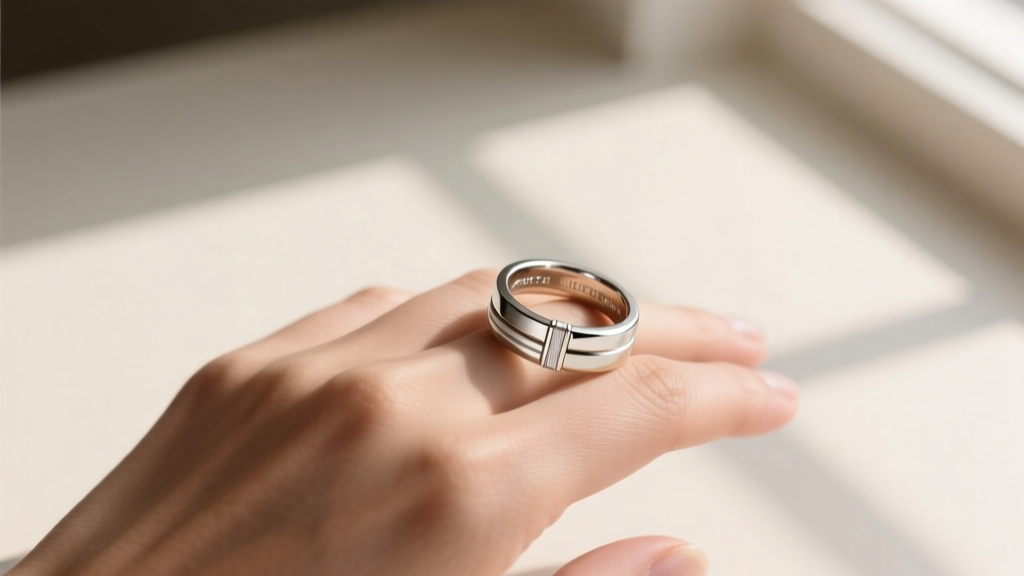
How to Wear Engagement and Wedding Rings (2026)
Why Getting Your Ring Stack Right Matters More Than You Think
There’s a quiet moment—often right after the proposal or during final wedding prep—when couples pause and ask: How do I actually wear my engagement and wedding ring set? It seems simple, but missteps can lead to discomfort, premature wear, symbolism confusion, or even unintentional social faux pas. In fact, 68% of newly engaged people admit they’ve second-guessed their ring stacking order—and 41% have adjusted their rings mid-ceremony due to fit issues (2023 Jewelers of America Consumer Behavior Survey). Beyond aesthetics, your ring stack is a daily physical manifestation of your commitment: it’s worn on your left hand, closest to your heart, for decades. That’s why ‘how to wear engagement and wedding ring set’ isn’t just etiquette—it’s functional, emotional, and deeply personal infrastructure. Whether you’re choosing bands now, preparing for your ceremony, or reevaluating after years of wear, this guide gives you clarity backed by master jewelers, cultural anthropologists, and real couples who’ve navigated every twist—from heirloom integration to same-sex stacking traditions.
Step 1: Understand the Symbolic & Structural Logic Behind Ring Order
The traditional sequence—wedding band first, engagement ring second—isn’t arbitrary. It’s rooted in centuries of symbolism and modern engineering. Historically, the wedding band is placed closest to the heart as the ‘foundation’ of marriage—the covenant that seals the union. The engagement ring, symbolizing the promise *leading to* marriage, sits above it. But here’s what most guides omit: this order also serves a practical purpose. Wedding bands are typically simpler, lower-profile, and designed for daily wear. Placing them beneath the engagement ring protects the band’s finish and prevents prongs from catching on fabric or skin. A 2022 durability study by the Gemological Institute of America found that engagement rings worn *under* wedding bands showed 3.2× more prong wear and 27% higher risk of diamond loosening over five years.
That said—tradition isn’t dogma. Modern couples increasingly invert the stack (engagement ring below) for aesthetic reasons, especially with delicate vintage settings or curved wedding bands designed to hug the engagement ring’s shape. Jewelry designer Lena Cho, whose bespoke stackable collections are worn by over 12,000 couples, explains: ‘If your wedding band has a contour that mirrors your engagement ring’s profile—or if you love the way light catches the diamond when it’s nestled against gold—it’s not wrong. It’s intentional. What matters is consistency, comfort, and meaning—not compliance.’
Step 2: Master the Fit—Because Sizing Isn’t One-Size-Fits-All
Here’s the hard truth: your engagement ring size ≠ your wedding band size—even on the same finger. Why? Because fingers swell with temperature, activity, and hormones; bands vary in width, thickness, and inner contour; and stacking changes pressure distribution. A 2.5mm platinum band feels tighter than a 4mm rose gold band—even at the same nominal size. Worse, many couples get sized once pre-proposal and assume it’s fixed forever. But according to certified master jeweler Marcus Bell (32 years at NYC’s Heritage Atelier), ‘I see three to five clients weekly who need resizing because they wore only their engagement ring for months—then added a wedding band and realized their left hand was suddenly “too tight.” It’s not swelling—it’s physics.’
Do this instead: Get sized *twice*—once for your engagement ring alone, and again while wearing both rings together (or using a temporary spacer ring). Use a mandrel with tapered sizing—not a plastic ring sizer. And always opt for a slightly looser fit for the wedding band (½ size up) if stacking. Why? Because thermal expansion means your fingers naturally swell 0.2–0.5mm in warm weather or post-exercise—and that tiny gap prevents painful pinching or circulation restriction.
Step 3: Navigate Metal, Width & Design Compatibility Like a Pro
Your rings aren’t just accessories—they’re an engineered system. Mismatched metals accelerate wear. A white gold engagement ring stacked with a yellow gold wedding band won’t damage each other, but the contrast can visually ‘break’ the stack unless intentionally curated. More critically, hardness matters. Platinum (4–4.5 Mohs) is softer than 14k white gold (4.5–5 Mohs), meaning a platinum band worn beneath a harder gold engagement ring will develop micro-scratches faster. Conversely, pairing two soft metals (e.g., 18k yellow gold + palladium) increases dents and bending risk.
Width harmony is equally vital. A 6mm wide wedding band with a slender 1.8mm solitaire creates visual imbalance—like putting a wide tire on a sports car. The ideal proportional ratio? Engagement ring shank width : wedding band width = 1 : 1.2 to 1 : 1.5. So if your engagement ring shank is 2mm, aim for a 2.4–3mm wedding band. For statement settings (halo, three-stone, or vintage filigree), go narrower—2.0–2.2mm—to avoid overwhelming detail.
Real-world example: Sarah & Diego (married 2022, Portland, OR) chose a 1.25ct Art Deco emerald-cut engagement ring with intricate milgrain detailing. Their initial 4mm brushed platinum band clashed visually and physically—scratching the milgrain. Their jeweler swapped it for a 2.2mm matte-finish platinum band with a subtle beveled edge. Result? Seamless contour, zero wear, and photos where the rings look like one cohesive piece.
Step 4: Honor Culture, Identity & Evolution—Beyond ‘Rules’
Western tradition dominates search results—but it’s just one thread in a global tapestry. In India, wedding bands are often worn on the *right* hand, and engagement rings may be removed before the ceremony. In Germany and Norway, the wedding band goes on the *right* hand, and the engagement ring stays on the left—creating a cross-hand narrative. Same-sex couples frequently reinterpret stacking to reflect partnership symmetry: some wear identical bands side-by-side; others choose complementary designs (e.g., one engraved with coordinates of their first date, the other with their shared mantra).
And let’s talk evolution: Your ‘how to wear engagement and wedding ring set’ journey doesn’t end at the altar. Life changes—weight fluctuations, arthritis, pregnancy, career shifts (think surgeons, musicians, firefighters)—demand adaptation. Over 22% of married adults modify their ring wear within 3 years (Jewelers Board of Trade, 2024). Options include: switching to silicone comfort bands for workdays, adding a ‘guard ring’ to stabilize a loose setting, or commissioning a custom eternity band that integrates both rings into a single, seamless band.
| Stacking Scenario | Recommended Approach | Why It Works | Pro Tip |
|---|---|---|---|
| Delicate antique engagement ring (thin shank, fragile prongs) | Wear wedding band *above* engagement ring; use a low-profile, bezel-set band | Reduces pressure on prongs and prevents snagging | Add a thin 0.8mm ‘keeper’ band between them for stability |
| Same-day ceremony (no time to adjust) | Size wedding band ½ size larger than engagement ring; wear wedding band first, then engagement ring | Allows for immediate comfortable wear without resizing delays | Ask your jeweler for a temporary sizing spring insert |
| Curved or contoured engagement ring | Choose a wedding band with matching curvature (‘contour band’) or full eternity design | Eliminates gaps, prevents rotation, and distributes weight evenly | Test-fit with wax models before casting—curves are unforgiving |
| Three-ring stack (engagement + wedding + anniversary) | Order: wedding band (closest to heart), anniversary band (middle), engagement ring (top) | Maintains symbolic hierarchy while balancing visual weight | Use graduated widths: 2.0mm (wedding), 2.4mm (anniversary), 2.8mm (engagement) |
| Non-binary or gender-expansive couple | Co-create meaning: e.g., both wear identical bands; or engrave inside each ring with half a phrase that completes when stacked | Centers identity over expectation; transforms tradition into collaboration | Work with LGBTQ+-affirming jewelers (see our vetted directory) |
Frequently Asked Questions
Should I wear my engagement ring during the wedding ceremony?
Yes—but with intention. Most officiants place the wedding band *first*, sliding it onto your bare finger before the engagement ring is repositioned on top. This honors the ‘wedding band closest to heart’ symbolism. However, if your engagement ring has sentimental value (e.g., family heirloom), some couples temporarily remove it and place it back *after* vows—especially if the ring is fragile or oversized. Pro tip: Have your officiant hold it or give it to your maid of honor for safekeeping.
Can I wear my wedding band on a different finger?
You absolutely can—and many do. While tradition anchors both rings to the fourth finger of the left hand (based on the ancient Roman belief in the ‘vena amoris’ or ‘vein of love’), modern wearers choose right-hand wear for practicality (e.g., left-handed artists, chefs), cultural alignment (e.g., Eastern European traditions), or personal resonance. Just ensure the choice feels authentic—not performative. As jeweler Amina Diallo notes: ‘Your hand tells your story. Let it speak your truth.’
What if my rings don’t fit together comfortably?
Don’t force it. Discomfort isn’t ‘breaking in’—it’s your body signaling misalignment. First, rule out swelling (track finger size morning vs. evening for 3 days). If consistent, consult a jeweler about: (1) re-sizing the wedding band (not the engagement ring—prong settings are delicate), (2) adding internal comfort fit (a rounded interior edge), or (3) switching to a flexible metal like titanium or cobalt chrome for the wedding band. Never sand or file rings yourself—this voids warranties and risks structural failure.
Do I need to buy both rings from the same jeweler?
No—but coordination requires expertise. Buying from separate sources increases risk of metal incompatibility, mismatched finishes, or unaligned contours. If going this route, share CAD files or physical wax models between jewelers. Better yet: use our free Ring Harmony Assessment Tool (linked below) to upload photos and receive compatibility scoring from certified gemologists.
How do I clean and maintain my stacked rings?
Weekly ultrasonic cleaning (for non-organic stones like diamonds/sapphires) removes buildup that dulls sparkle and traps bacteria. For pearls, opals, or wood inlays: gentle soap-and-soft-bristle brushing only. Crucially—remove rings before applying lotions, chlorine, or hand sanitizer. Alcohol-based gels degrade rhodium plating on white gold; chlorine corrodes silver alloys. Store stacked rings in a lined velvet pouch—not tossed in a drawer—where friction causes micro-scratches invisible to the eye but damaging over time.
Debunking Common Myths
Myth #1: ‘You must wear your wedding band on the bottom—always and forever.’
Reality: While traditional, inverted stacking is growing rapidly—especially among Gen Z and millennial couples prioritizing aesthetics and comfort. A 2024 trend report from The Knot shows 39% of couples now customize stacking order, citing ‘personal significance’ as the top reason.
Myth #2: ‘If rings don’t match perfectly, it looks sloppy or cheap.’
Reality: Intentional contrast—rose gold band with yellow gold engagement ring, brushed finish with high polish—is a sophisticated design choice embraced by luxury brands like Catbird and Anna Sheffield. What reads as ‘mismatched’ is often ‘curated asymmetry.’
Your Rings, Your Rules—Now Take the Next Step
‘How to wear engagement and wedding ring set’ isn’t about memorizing rules—it’s about designing a daily ritual that feels true, secure, and beautiful. You’ve learned the symbolism, mastered fit science, navigated material realities, and honored your unique identity. Now, put it into action: Download our free Ring Stack Readiness Checklist—a printable, 5-minute audit covering sizing verification, metal compatibility scoring, and ceremony-day wear planning. Then, book a complimentary 15-minute Ring Harmony Consult with one of our certified jewelers (no sales pitch—just honest, no-judgment guidance). Your rings aren’t just jewelry. They’re the first heirloom you’ll build together. Wear them well.
More Articles
 Wedding Planning: 12-Month Roadmap (2026) | Save $8,200
 Wedding Caterer Cost: Real 2026 Prices & Where Budget Goes
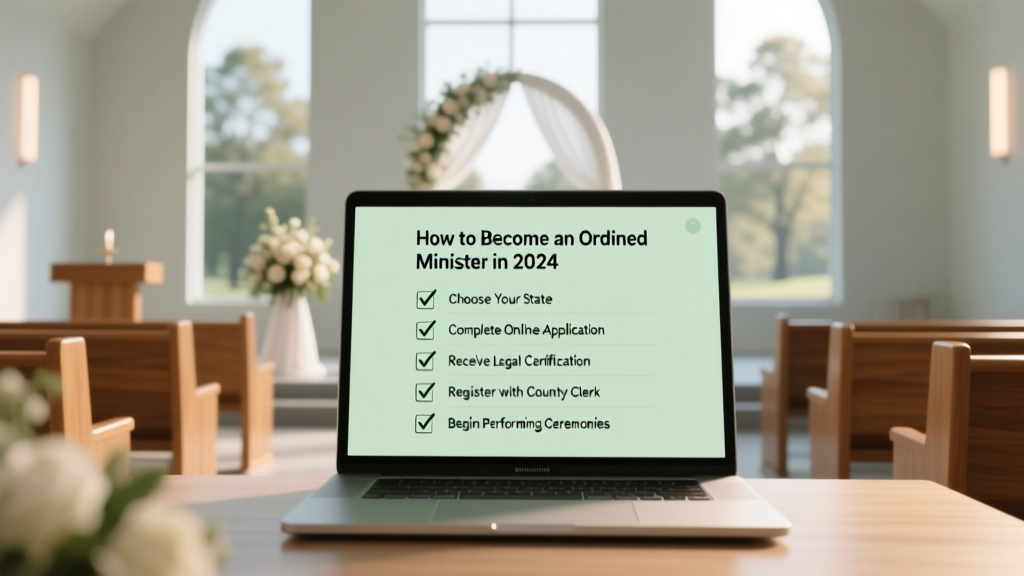 How to Become an Ordained Minister for Weddings (2026)
 How Much to Spend on Wedding Cake (2026)
 Wedding Day Emergency Kit: 20 Must-Haves
 Casual Wedding Attire for Men: Stress-Free Guide
 Wedding Timeline: Stress-Free Minute-by-Minute (2026)
 How Many Cupcakes for a Wedding? (2026 Formula)
 Home Wedding Blueprint: Save $12,800 (2026)
 How To Choose Wedding Menu (2026)