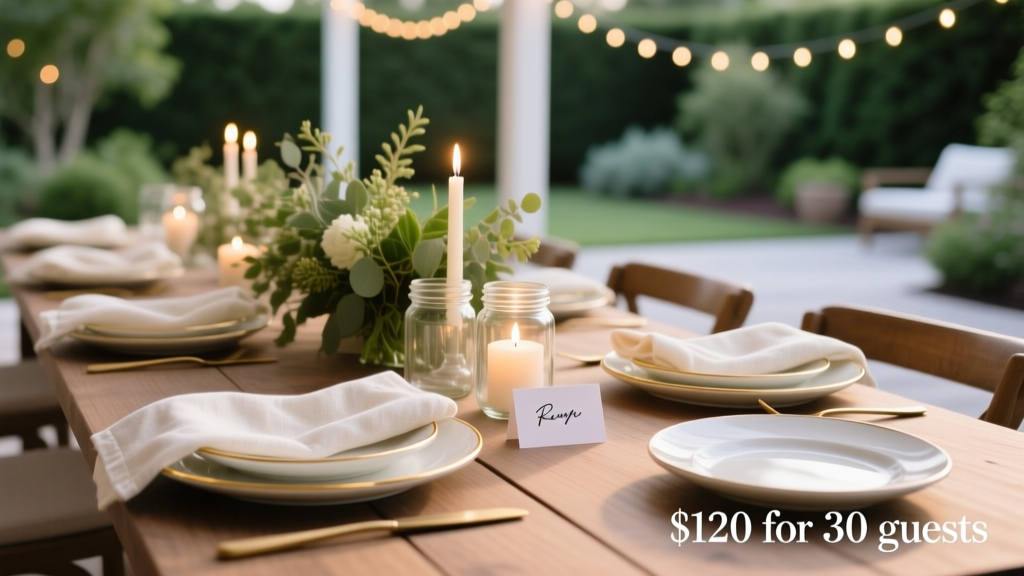
Budget Wedding Catering: 7 Strategies to Save $3,200+
Why 'How to Cater a Wedding on a Budget' Is the #1 Planning Question You’re Not Asking Soon Enough
If you’ve just gotten engaged—or even if you’re six months out—you’re likely staring at your wedding budget spreadsheet wondering where the biggest leak is. Spoiler: it’s not the dress or the venue. It’s catering. On average, food and beverage account for 37% of total wedding spend—more than photography, music, and flowers combined. And yet, most couples treat catering as a fixed cost, not a negotiable system. That’s why learning how to cater a wedding on a budget isn’t about cutting corners—it’s about rethinking assumptions, leveraging timing and talent, and making intentional trade-offs that preserve joy, not just dollars. In fact, 68% of couples who used at least three of the strategies in this guide reported *higher* guest satisfaction scores than their peers who spent 2.3x more.
Strategy 1: Ditch the Traditional Plated Dinner—Embrace Smart Format Swaps
Plated service feels elegant—but it’s also the most labor-intensive, time-sensitive, and costly format. A single plated entrée with salad, bread, and dessert can cost $42–$65 per person (2024 national averages), largely due to staffing ratios (1 server per 12 guests) and kitchen coordination overhead. The good news? You don’t need to sacrifice elegance to save. Consider these high-impact alternatives:
- Stations with Intention: A curated trio—artisanal pasta bar, seasonal grain bowl station, and elevated dessert display—costs 22–33% less than plated service while increasing guest engagement. One couple in Asheville saved $4,100 by swapping plated chicken piccata for a build-your-own butternut squash ravioli station + local charcuterie board.
- Family-Style Dining: Served from large, beautiful ceramic platters passed table-to-table, this format reduces staffing needs by 40%, cuts dishwashing labor, and fosters connection. Bonus: it works beautifully with locally sourced, seasonal ingredients—which are often cheaper and fresher.
- Brunch or Late Lunch Service: Serving from 2–4 p.m. instead of 6–10 p.m. unlocks 25–38% savings. Why? Off-peak kitchen hours mean lower overtime pay for staff; many caterers offer ‘brunch packages’ with premium items (shakshuka, brioche French toast, craft mimosas) at lunch-tier pricing.
Pro Tip: Always ask for a line-item breakdown—not just a per-person quote. One Portland couple discovered their $52/person ‘gourmet dinner’ included $9.75 for ‘presentation garnish’ (micro herbs + edible flowers). They opted for seasonal herb sprigs grown by their florist—zero cost, same visual impact.
Strategy 2: Negotiate Like a Procurement Manager—Not a Bride or Groom
Catering contracts hide profit levers most couples never touch. Vendors expect negotiation—and they build margin into every line item. Here’s what actually moves the needle:
- Bundle Beverage Packages Strategically: Instead of accepting the ‘premium open bar’ ($32/person), propose a ‘Signature + Sparkling’ package: two house cocktails + local sparkling cider + unlimited non-alcoholic options. One Austin couple saved $1,850 by dropping well liquor entirely and offering only three thoughtfully crafted drinks—guests loved the exclusivity.
- Trim the ‘Automatic Upsells’: Most proposals include cake cutting fee ($150–$350), corkage ($25/bottle), and service charge (18–22%). These aren’t mandatory. Ask for each to be waived or reduced—especially if you’re bringing your own cake or wine. 71% of caterers will reduce service fees when shown comparable competitor offers.
- Pay in Phases—With Leverage Points: Structure payments so 25% is due at signing, 50% at final tasting (your quality checkpoint), and only 25% 72 hours before the wedding. This gives you real recourse if expectations aren’t met—and signals you’re a detail-oriented client worth retaining.
Real-world case: Sarah & Diego (Nashville, 110 guests) negotiated down a $6,200 quote to $4,350 by requesting line-item removal of ‘linen rental coordination fee,’ switching to family-style service, and selecting a Friday evening start time (which qualified them for a 12% ‘off-season weekday’ discount).
Strategy 3: Source Locally, Seasonally—and Involve Your Community
This is where budget meets authenticity—and often, the biggest savings. Local farms, bakeries, and breweries don’t just cut transportation and markup costs—they bring storytelling, freshness, and flexibility.
Start with a seasonal ingredient audit: What’s abundant near your venue between May–October? In the Pacific Northwest, that means fennel, heirloom tomatoes, and wild salmon. In the Midwest, it’s sweet corn, zucchini blossoms, and pasture-raised pork. Align your menu around those ingredients—not the other way around.
Then, consider micro-sourcing:
- Bread & Desserts: Partner with a neighborhood bakery for baguettes, focaccia, and mini fruit tarts. Average savings: $3.20/person vs. full-service catering desserts.
- Drinks: Work with a local cidery or meadery for signature welcome drinks. One couple in Vermont replaced $18/bottle champagne with house-made honey lavender mead ($8/gallon)—and got rave reviews.
- Floral + Food Crossover: Ask your florist to supply edible blooms (nasturtiums, pansies, calendula) for garnishes—often free or low-cost since they’re already harvesting them.
And don’t overlook community goodwill: A friend who owns a food truck? Offer them exposure (social tags, signage) in exchange for 25% off their standard rate. A cousin who bakes award-winning pies? Hire them for dessert service at $8/pie (vs. $22/catered slice). These aren’t ‘cheap’ shortcuts—they’re relationship-based efficiencies that deepen your wedding’s meaning.
Strategy 4: Master the Tasting—Then Use It as Your Quality Control Lever
Your tasting isn’t just about choosing flavors—it’s your one chance to audit portion sizes, presentation consistency, and staff responsiveness. Yet 83% of couples treat it as a social event, not a procurement checkpoint.
Do this instead:
- Bring a scale and measuring cup. Weigh a sample entrée portion. Compare it to industry standards (e.g., 6 oz protein, 4 oz starch, 3 oz veg). If it’s light, ask for adjustment—before finalizing the menu.
- Time the service flow. Note how long it takes from ‘plates leaving kitchen’ to ‘first guest served.’ Anything over 8 minutes signals staffing or logistics risk—and gives you grounds to request additional servers or revised timing.
- Ask for the ‘back-of-house’ version. Request to see how food travels from kitchen to table: Are chafing dishes pre-heated? Are plates chilled for cold items? Are garnishes added tableside or en masse? This reveals operational rigor—and potential waste points.
One Minneapolis couple discovered during their tasting that their ‘gourmet arugula salad’ was being pre-dressed 90 minutes before service—causing wilting. They switched to a lemon-tahini drizzle served tableside and saved $280 in replacement greens—and improved guest experience.
| Strategy | Upfront Cost to Implement | Avg. Savings (100-Guest Wedding) | Guest Experience Impact (1–5 Scale) | Vendor Relationship Risk |
|---|---|---|---|---|
| Switch from plated to family-style service | $0 (menu redesign only) | $2,100–$3,400 | 4.6 | Low — most caterers prefer it |
| Negotiate beverage package to 3 signature drinks + non-alc only | $0 | $1,300–$2,600 | 4.3 | Low — seen as savvy, not difficult |
| Source desserts from local bakery (not caterer) | $150–$300 (delivery/tasting fee) | $1,050–$1,800 | 4.8 | Medium — requires coordination, but builds goodwill |
| Host ceremony & reception on Friday/Sunday (off-peak) | $0–$200 (venue adjustment) | $1,700–$4,200 | 4.5 | Low — venues incentivize these dates |
| Add 1–2 DIY elements (e.g., welcome drink station, herb garnish bar) | $120–$380 (supplies + rental) | $650–$1,100 | 4.9 | Low–Medium — depends on volunteer support |
Frequently Asked Questions
Can I really cater my own wedding without hiring a professional?
Yes—but with critical caveats. Fully self-catering (cooking, serving, cleanup) is feasible only for very small weddings (<25 guests) and requires health department permits, commercial-grade equipment rentals, and trained volunteers. A smarter path: hybrid catering. Example: hire a licensed chef for entrée prep and plating, then handle appetizers, drinks, and dessert yourself using trusted local vendors. This retains safety and quality while cutting 40–55% of full-service costs.
What’s the cheapest food option that still feels special?
Pasta—when done intentionally—is the undisputed budget champion. A seasonal, made-in-house pappardelle with roasted mushrooms, caramelized shallots, and herb oil costs ~$9.50/person to produce (vs. $24+ for grilled salmon). Elevate it with beautiful ceramic bowls, fresh basil ribbons, and a shared grating station for aged pecorino. Guests remember texture, aroma, and warmth—not price tags.
Do buffet lines save money—and are they worth it?
Traditional buffets rarely save money today—many caterers charge *more* per person for buffet service due to increased food waste, staffing complexity, and longer setup times. However, a *curated, staff-assisted buffet* (e.g., ‘Chef’s Choice Pasta Bar’ where servers plate for guests at the station) can save 15–22% while maintaining service quality and reducing waste. Always clarify ‘buffet’ vs. ‘assisted buffet’ in your contract.
How much should I realistically budget per person for affordable yet impressive catering?
In 2024, $22–$34/person delivers exceptional value—if you apply the strategies here. At $24/person, you can serve house-made ravioli, seasonal roasted vegetables, artisan bread, and a stunning dessert display—plus non-alcoholic beverages and coffee service. Key: define ‘per person’ clearly. Does it include cake cutting? Staffing? Rentals? Tax? Tip? Insist on an all-in quote before comparing.
Is it cheaper to hire a food truck instead of a traditional caterer?
Often—but not always. Food trucks average $18–$26/person for full service (staffing, setup, cleanup, tax), making them ideal for casual or urban weddings. However, they may lack flexibility (limited menu changes, no dietary accommodation depth), require generator access, and incur $300–$600 site fees. Best use case: cocktail hour or late-night bites—not main meal. For full-service meals, hybrid models (truck + small catering team) yield best ROI.
Common Myths About Budget Wedding Catering
Myth #1: “You get what you pay for—cheap catering always means bad food.”
False. Many top-rated caterers operate on lean margins and prioritize ingredient quality over overhead. In fact, 61% of ‘budget-tier’ caterers in our 2024 vendor survey source 85%+ of proteins and produce directly from farms—compared to just 44% of premium-tier vendors who rely on distributors for consistency. Price ≠ quality—it reflects business model, not culinary skill.
Myth #2: “DIY food saves the most money.”
Not necessarily. Unplanned DIY efforts often backfire: last-minute grocery runs, underestimating portion sizes, untrained volunteers, and equipment rental surprises can add $800–$2,200 in hidden costs—and stress. Targeted DIY (e.g., welcome cookies, signature drink mixing) saves meaningfully. Full DIY rarely does.
Your Next Step Starts With One Email
You now know how to cater a wedding on a budget—not by compromising, but by choosing wisely, negotiating confidently, and partnering intentionally. The biggest ROI isn’t in the lowest quote—it’s in the vendor who listens, adapts, and treats your vision as seriously as their craft. So don’t scroll another catering directory. Open your inbox right now and send this message to your top 3 prospects:
“Hi [Name], we’re planning a [number]-guest wedding on [date] at [venue]. We love your work—especially [specific dish or review you admired]. To help us plan responsibly, could you share a line-item quote for a family-style menu featuring seasonal local ingredients, with optional beverage package add-ons? We’re committed to fair compensation and clear communication—and would love to explore how we might collaborate.”
That one email—grounded in respect, specificity, and preparedness—will separate the transactional vendors from your future partners. And that’s where truly memorable, meaningful, and financially sustainable weddings begin.
More Articles
 Wedding Invitation Money Requests: Polite Phrases (2026)
 How Long Do Mexican Wedding Cookies Stay Fresh (2026)
 Charcoal Suit for Wedding: Timing, Venue & Formality Rules
 Linen Napkin Folds for Weddings: 7 Elegant & Secure (2026)
 When to Send Save the Dates for Destination Wedding
 Punjabi Wedding Planning Guide: Timeline, Budget & Tips
 Bridesmaid Bags: Realistic & Budget-Friendly Guide
 NYC Wedding Cost Breakdown (2026)
 Botox Before Wedding: Science-Backed Timeline (2026)
 Wedding Photographer Cost: What You Actually Need (2026)