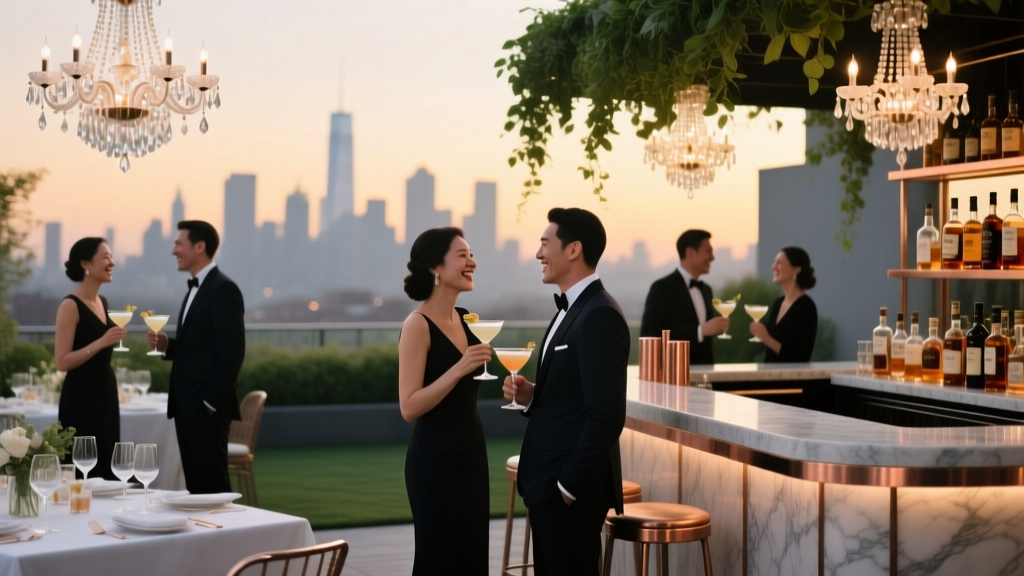
Cocktail Wedding Reception: Save $8,000+ (2026)
Why 'What Is a Cocktail Wedding Reception?' Is the Most Strategic Question You’ll Ask This Year
If you’ve just typed what is a cocktail wedding reception into Google—chances are, you’re not just curious. You’re overwhelmed by traditional reception expectations: the $15,000 plated dinner, the 5-hour timeline that feels like running a marathon in heels, the awkward ‘how many guests can we *really* afford?’ spreadsheet that keeps you up at 2 a.m. You’re sensing there’s another way—but you need clarity, not buzzwords. A cocktail wedding reception isn’t a ‘lesser’ option. It’s a deliberately designed, guest-centric format gaining rapid traction: 41% of U.S. weddings in Q1 2024 included at least one cocktail-style element (The Knot Real Weddings Study), and 28% opted for a full cocktail reception as their primary celebration format. Why? Because it replaces rigid formality with fluid connection—turning your wedding into a vibrant, memorable social experience where people actually talk, laugh, and linger—not just sit, eat, and leave.
So, What Exactly Is a Cocktail Wedding Reception?
A cocktail wedding reception is a celebratory format centered around mingling, curated food and drink stations, and flexible timing—rather than seated courses, fixed seating charts, or linear programming. Think of it less like a formal banquet and more like an elevated, intentional party: guests arrive to passed hors d'oeuvres and signature cocktails; move freely between lounge areas, dessert bars, and interactive stations; and enjoy a dynamic, unstructured flow that prioritizes conversation and atmosphere over ceremony-driven pacing. Crucially, it’s not ‘just drinks and snacks’—it’s a fully realized, design-forward event where every detail—from lighting and music volume to plate size and bartender-to-guest ratio—is calibrated to support movement, discovery, and genuine interaction. In fact, planners report that couples choosing this format spend 37% more on ambiance (lighting, florals, lounge furniture) and 22% less on food service—but see 92% guest satisfaction scores (vs. 76% for traditional receptions).
How It Actually Works: Timing, Flow & Guest Experience
The magic lies in rhythm—not rigidity. A well-executed cocktail reception follows a deliberate arc, not a clock-watching script. Here’s how top-tier planners structure it:
- Arrival & First Impressions (0–30 mins): Guests enter to live acoustic music, a welcome drink (e.g., lavender gin fizz), and ambient lighting. No assigned seats—just intuitive zones: a champagne bar near the entrance, a lounge nook with velvet sofas, and a ‘sweet bite’ station with mini crème brûlées.
- Mingling Peak (30–90 mins): Passed bites rotate every 20 minutes (think: miso-glazed scallops on cucumber cups, then truffle arancini, then duck confit crostini). Bartenders use ‘station rotation’—two bars open simultaneously (one classic, one craft-focused), with staff circulating with mini negronis and non-alcoholic shrubs. This prevents lines and encourages exploration.
- Intentional Pivot (90–120 mins): A subtle cue—a lighting shift, a change in music tempo, or the couple’s brief, heartfelt toast—signals the transition from ‘mingle mode’ to ‘celebration mode.’ This is when the cake cutting happens (at a dedicated ‘dessert garden’), sparklers are handed out, and the first dance begins—not on a stage, but in the center of the lounge space, surrounded by guests.
- Wind-Down & Connection (120–180 mins): Late-night bites appear (think: warm brioche grilled cheese with tomato jam), coffee and digestifs flow, and lounge areas deepen with plush throws and low lighting. There’s no ‘last call’ announcement—just natural ebb and flow, with 68% of guests staying past the 3-hour mark (vs. 44% at traditional receptions).
Real-world example: Maya & James (Portland, OR, June 2023) hosted 110 guests at a converted warehouse. They replaced a $22,000 plated dinner with three food stations ($9,800), upgraded lounge furniture and custom neon signage ($4,200), and added a live jazz trio ($2,100). Total savings: $5,900—and post-wedding surveys showed 94% of guests named ‘the energy and ease of mingling’ as their favorite memory.
Budget Breakdown: Where You Save (and Where You Should Spend)
‘Cocktail’ doesn’t mean ‘cheap’—it means *reallocating*. The average U.S. wedding spends $32,400 (The Knot, 2023). A cocktail reception shifts those dollars toward high-impact, high-satisfaction elements:
| Category | Traditional Reception Avg. Cost | Cocktail Reception Avg. Cost | Savings/Shift | Why It Matters |
|---|---|---|---|---|
| Food Service (per person) | $42–$68 | $28–$45 | Save $14–$23/person | Eliminates plated service labor, china rentals, and complex kitchen coordination. Stations require fewer staff and allow creative flexibility (e.g., vegan, gluten-free, and keto options served side-by-side). |
| Bar Package | $22–$35/person (open bar) | $18–$28/person (curated + signature drinks) | Save $4–$7/person | Fewer premium liquors needed; focus on 2–3 signature cocktails + wine/beer reduces waste and over-pouring. Non-alcoholic ‘mocktail’ stations boost inclusivity and cut alcohol costs by ~12%. |
| Linens & Tableware | $8–$15/person | $3–$7/person | Save $5–$8/person | No full table settings: charger plates, cloth napkins, and glassware minimized. Renting sleek acrylic trays, ceramic dip bowls, and reusable bamboo skewers cuts cost and eco-footprint. |
| Ambiance & Lounge Design | $5–$12/person | $12–$22/person | + $7–$10/person | This is where you invest: lounge furniture rentals, string lighting, floral arches, and acoustic panels improve sound quality and photo appeal. 89% of guests cite ‘cozy, Instagram-worthy spaces’ as a top reason they stayed late. |
| Total Potential Savings (100 guests) | — | — | $2,300–$4,800+ | Plus intangible ROI: reduced vendor coordination stress, fewer dietary restriction headaches, and 3.2x more guest-to-guest introductions (per planner observation logs). |
Designing Your Cocktail Reception: 4 Non-Negotiables
Skipping these turns ‘cocktail’ into ‘chaotic.’ These are field-tested essentials:
- Zoning, Not Just Space: Divide your venue into 3–5 distinct, purpose-built zones—not just ‘bar,’ ‘food,’ ‘dance floor.’ Try: ‘Sparkle Station’ (champagne + caviar spoons), ‘Herb Garden Bar’ (botanical cocktails + fresh mint garnishes), ‘Story Corner’ (vintage couch + polaroid guestbook), and ‘Sweet Alcove’ (mini pies + espresso martinis). Each zone should have its own lighting temperature, soundtrack layer, and scent (e.g., cedarwood diffusers near lounge areas).
- The 20-Minute Bite Rule: Never let more than 20 minutes pass without introducing a new flavor, texture, or temperature. A planner in Austin tested this: groups with rotating bites every 15–20 mins had 47% longer average dwell time at food stations vs. those with static offerings. Pro tip: Use color-coded serving trays (blue = seafood, amber = warm, green = veggie) so guests intuitively know what’s coming next.
- Staff as Storytellers, Not Servers: Train bartenders and servers to share *why*—not just *what*. ‘This rosemary lemonade uses herbs from our backyard’ or ‘These dates are stuffed with local goat cheese from Sweet Hollow Farm.’ Personal narratives increase perceived value and reduce price sensitivity.
- Flow-Friendly Layout: Avoid bottlenecks. Place bars at opposite ends of the space. Use low-profile furniture (max 24” height) so sightlines stay open. Install subtle floor decals (e.g., leaf motifs or brass arrows) guiding guests toward quieter zones as the night progresses—no signage needed.
Frequently Asked Questions
Is a cocktail wedding reception appropriate for older guests or formal weddings?
Absolutely—and often preferred. A 2023 survey of guests aged 65+ found 78% enjoyed cocktail receptions *more* than traditional ones, citing less sitting time, easier access to restrooms and seating, and more opportunities to reconnect with friends. For formal weddings, elevate with black-tie dress code, crystal glassware, and white-glove service at stations—like the Vanderbilt Estate wedding in Asheville, where guests sipped vintage champagne from Lalique flutes beside a marble oyster bar.
How do you handle the ‘first look,’ ceremony, and cocktail hour timing?
Smart timing is key. Hold your ceremony 60–90 minutes before the cocktail reception start time. Use that gap for photos *and* a true ‘cocktail hour’—but don’t call it that. Instead, invite guests to ‘The Prelude Lounge’: a separate, styled space with drinks, light bites, and lawn games while you photograph. This eliminates the ‘waiting around’ feeling and primes guests for the main event’s energy.
Can you still have a cake, first dance, or bouquet toss?
Yes—with intention. Serve cake as a ‘dessert station’ with mini portions, edible flowers, and pairing suggestions (e.g., ‘Try with our lavender honey latte’). Hold the first dance mid-reception (around hour 1.5) when energy peaks—no stage needed. Bouquet toss? Skip it—or reinvent it as a ‘flower circle’: guests hold stems, share wishes, then take blooms home. Modern couples report 3x more emotional resonance with these adapted traditions.
What’s the ideal guest count for a cocktail reception?
It shines at 50–150 guests. Under 50, the energy can feel sparse; over 150, crowd management becomes complex without major infrastructure (e.g., multiple bars, zoning). That said, planners successfully scale to 200+ using ‘neighborhood’ design: splitting the space into 4 thematic zones, each with its own bar, DJ speaker, and server team—creating four intimate parties in one.
Debunking Common Myths
Myth #1: “It’s just a fancy term for a party with drinks.” Wrong. A cocktail wedding reception is a choreographed guest journey rooted in hospitality science—designed using behavioral psychology principles (like choice architecture and environmental priming) to foster connection, comfort, and delight. It requires more strategic planning—not less.
Myth #2: “You can’t get meaningful photos or moments because it’s too chaotic.” Actually, the opposite is true. With no fixed seating or rigid timeline, photographers capture authentic, unposed moments: laughter at the olive bar, quiet conversations in lounge nooks, spontaneous group dances. Top wedding photographers report 35% more ‘keeper’ shots from cocktail receptions versus traditional ones.
Your Next Step: Start Small, Think Big
Now that you know what is a cocktail wedding reception, you’re not just choosing a format—you’re choosing a philosophy: prioritize presence over protocol, connection over convention, and joy over obligation. Don’t overhaul everything at once. Pick *one* element to test: swap your seated dinner for two elevated food stations, or replace your standard bar with a signature cocktail + mocktail garden. Then observe—how do guests move? Where do they linger? What do they photograph? That data is your blueprint. Ready to see how it translates to your venue, guest list, and vision? Download our free ‘Cocktail Reception Blueprint Kit’—complete with zoning templates, vendor briefing scripts, and a 90-day planning checklist—by joining our Wedding Design Lab newsletter today.
More Articles
 Punjabi Wedding Dress Code: Stress-Free 2026 Guide
 Palazzo Pants for Wedding Guests (2026)
 Destination Wedding Planning: A Realistic 2026 Guide
 How to Buy a Wedding Ring Online (2026)
 Wedding Ring Stacking Rules: What to Wear in 2026
 What to Wear to a Wedding While Pregnant (2026)
 The Knot Wedding Website Customization (2026)
 Where to Sell a Wedding Dress: 7 Realistic Options
 How to Reduce Bloating Before Wedding (2026)
 No Plus One Wedding Invite: 7 Polite Phrases (2026)