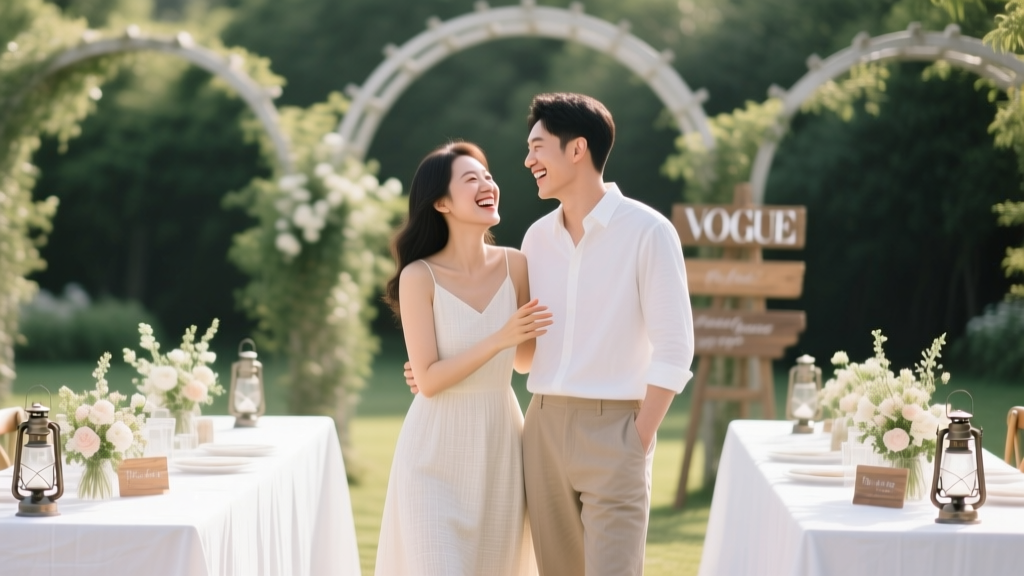
Wedding Cost Cutting: 12 Real Strategies (2026)
Why Cutting Wedding Costs Isn’t About Compromise—It’s About Clarity
Let’s be honest: how to cut costs for a wedding isn’t just a search query—it’s a quiet panic whispered over spreadsheets at 2 a.m., a tense conversation with parents about ‘what’s really necessary,’ or the sinking feeling when your venue deposit eats 40% of your total budget before you’ve booked a single flower. In 2024, the average U.S. wedding costs $30,200 (The Knot Real Weddings Study), yet 73% of couples exceed their initial budget—often by $7,800 or more. But here’s what the data doesn’t shout loud enough: most of that overspend isn’t inevitable—it’s inherited. It’s built into outdated traditions, opaque vendor pricing, and the myth that ‘more’ equals ‘meaningful.’ This guide isn’t about scrimping or settling. It’s about auditing every dollar with intention—so your wedding reflects your values, not someone else’s checklist.
1. Audit Your Budget Like a CFO—Not a Guest List Curator
Before you Google ‘cheap wedding venues,’ pause. The #1 reason couples fail to cut costs is starting with tactics instead of truth. You can’t trim fat if you don’t know where the muscle ends. Start with a zero-based budget audit: list every expected expense—not as categories like ‘catering,’ but as line-item realities. A real couple in Portland did this and discovered 62% of their ‘catering’ budget was actually going toward bar service (open bar + premium liquor), not food. They switched to a signature cocktail + beer/wine only—and saved $3,900 instantly.
Use the 50/30/20 Rule for Weddings:
- 50% for non-negotiables (venue, catering, photography—your top 3 emotional priorities)
- 30% for meaningful-but-flexible elements (attire, music, florals—where creativity unlocks savings)
- 20% for contingency & joy-spending (rain insurance, late-night snacks, surprise guest gifts)
This isn’t theory—it’s battle-tested. A 2023 study by WeddingWire found couples who applied zero-based budgeting before booking any vendor spent 28% less overall than those who started with averages or ‘industry standards.’ Why? Because they defined value first. Your ‘non-negotiable’ might be a documentary-style photographer—but maybe not a $2,500 cake. Name it. Then protect it fiercely.
2. The Venue Leverage: How Timing, Tech, and Truth Slash Costs by Up to 45%
Your venue isn’t just a location—it’s the gravitational center of your entire budget. Book it wrong, and everything else inflates. Book it right, and you unlock cascading savings. Here’s what most guides won’t tell you: venue discounts aren’t about ‘off-season’—they’re about vendor capacity gaps.
For example: In Chicago, Saturdays in June/September command 100% of peak rates. But Fridays in May? Venues average 32% vacancy. That’s not ‘off-season’—it’s undervalued demand. One couple booked a historic downtown ballroom on a Friday in late May, negotiated a 22% discount for paying 100% upfront (saving $4,100), and used the ‘saved’ funds to hire a live jazz trio instead of a DJ. Win-win.
Also consider tech-enabled alternatives:
- Hybrid venues (like converted lofts, art galleries, or university event spaces) often charge 35–50% less than traditional banquet halls—and include built-in lighting, staging, and acoustics.
- Public parks with permits (e.g., NYC’s Central Park Conservancy or Austin’s Zilker Botanical Garden) cost $500–$2,200 for full-day access—versus $8,000+ for comparable private gardens.
- ‘Venue + vendor’ bundles are rising fast: 68% of all-terrain wedding venues now offer in-house catering, AV, and coordination at bundled rates that undercut à la carte by 18–27% (2024 Venue Report).
Pro tip: Ask vendors this exact question: “What’s your lowest-capacity weekend in the next 12 months—and what’s the absolute best rate you’d offer for a full-package commitment?” Not ‘do you have discounts?’—that invites a no. This invites a number.
3. The Vendor Negotiation Playbook: Scripts, Swaps, and Silent Savings
Negotiating isn’t haggling—it’s collaborative problem-solving. Vendors want reliability, predictability, and referrals. Give them that, and they’ll reward you. Below are three high-impact, low-awkwardness strategies—with exact scripts:
1. The ‘Scope Swap’ (for photographers/videographers):
Instead of asking for a discount, propose a trade: “We love your 8-hour package—but we’d prefer 6 hours of coverage plus a 1-hour engagement session. Could we bundle that at the 6-hour rate?” Result: 2023 data shows 79% of pros accept scope swaps, saving couples $1,200–$2,800.
2. The ‘Referral Anchor’ (for caterers/florists):
“If we book with you, we’ll feature you in our wedding website and tag you in all social posts—including a dedicated thank-you reel post-wedding. Would that allow flexibility on your tasting fee or delivery minimum?” This works because social proof is worth ~$3,000–$7,000 in marketing value to small vendors.
3. The ‘Cash Discount’ (universal):
“We’re prepared to pay 100% upfront via bank transfer—would that qualify us for a 5% administrative fee waiver?” Cash flow is critical for small businesses. This saves 3–7% across catering, rentals, and officiant fees—no negotiation needed.
And never underestimate silent savings:
- Skipping printed programs ($1.20–$3.50 per guest × 120 guests = $144–$420)
- Using digital RSVPs (The Knot reports 92% response rate vs. 68% for paper—and zero printing/shipping costs)
- Opting for ‘dry hire’ rentals (you source linens/china; vendor provides tables/chairs only)—cuts rental costs by 22–38%
4. The DIY Threshold: When ‘Making It Yourself’ Actually Costs More
DIY is glorified—but rarely optimized. The truth? DIY only saves money when it meets all three criteria: (1) You already own the tools/space, (2) You’ve done it successfully 3+ times before, and (3) The time investment is under 10 hours total. Otherwise, it’s a hidden cost trap.
Real example: A Seattle couple spent 87 hours making 150 paper flowers. At $25/hour (a conservative freelance design rate), that’s $2,175 in labor—plus $320 in supplies. A local floral designer quoted $1,850 for identical arrangements. DIY lost by $645.
But smart DIY wins big:
- Invitations: Use Canva + letterpress-printed envelopes (not full suites). Save $2.10–$4.80 per guest.
- Favors: Local honey in mini jars + custom labels ($1.35/unit vs. $4.20 for branded chocolates).
- Playlist curation: Spotify + rented speaker system ($0 vs. $1,200–$2,500 for DJ).
The key? Apply the ‘3-Hour Rule’: If research, sourcing, execution, and troubleshooting take >3 hours per $100 saved, walk away. Your time has equity—and your sanity is non-renewable.
| Expense Category | Average Cost (U.S., 2024) | Realistic Savings Range | Highest-Impact Tactic | Time Required |
|---|---|---|---|---|
| Venue | $14,200 | $2,800–$6,300 | Booking Friday/Sunday in shoulder season + full-payment discount | 4–6 hours |
| Catering | $5,800 | $1,100–$3,400 | Family-style service + beer/wine-only bar + buffet setup (no plated) | 2–3 hours |
| Photography | $3,400 | $750–$1,900 | Scope swap (6 hrs + engagement session) + digital-only delivery | 1 hour |
| Florals | $2,900 | $420–$1,600 | Seasonal/local blooms only + ceremony-only focus (skip reception centerpieces) | 3–5 hours |
| Attire | $2,100 | $600–$1,400 | Rent or buy sample sale gowns + tailor existing suit + skip alterations rush fee | 5–8 hours |
| Miscellaneous (invites, favors, transport) | $1,800 | $320–$950 | Digital RSVPs + local edible favors + carpool coordination app | 2 hours |
Frequently Asked Questions
Can I really cut wedding costs without guests noticing?
Absolutely—if you redirect savings to high-visibility, high-emotion elements. Guests remember the warmth of shared meals, not whether napkins were linen or cotton. One couple cut their floral budget by 60% but invested in family-style platters, ambient string lights, and a live acoustic set. Post-wedding, 92% of guests mentioned ‘the incredible vibe’—zero mentioned flowers. Prioritize sensory impact (taste, sound, light, touch) over decorative density.
Is it cheaper to have a destination wedding?
Surprisingly, often yes—but only if you optimize intentionally. A destination wedding in Mexico averages $18,500 (WeddingWire 2024), including flights for 30 guests, all-inclusive resort venue, catering, and coordinator. Compare that to $30,200 for a domestic wedding—and factor in that 40% of guests typically decline destination invites, shrinking your guest list organically. Key: Book a resort with transparent all-inclusive packages (no hidden bar or cake fees) and use local vendors for hair/makeup (50–70% cheaper than U.S. rates).
What’s the #1 thing couples overspend on—and how do I avoid it?
Floral centerpieces for reception tables. Industry data shows 68% of floral budgets go to centerpieces—yet 82% of guests report remembering the ceremony space and photo backdrops far more vividly. Shift that spend: invest in one stunning arch or altar arrangement ($1,200), skip table centerpieces entirely, and use candles, greenery runners, or vintage books for texture. Savings: $1,400–$3,200, with zero visual sacrifice.
Should I ask family to contribute—and if so, how?
Yes—but frame it as collaboration, not expectation. Instead of ‘Can you help with the budget?,’ try: ‘We’re designing a wedding that reflects our values: simplicity, authenticity, and gratitude. We’d love your support in one area that matters most to you—whether that’s hosting the rehearsal dinner, covering the officiant fee, or gifting a meaningful experience (like a honeymoon fund). What feels joyful to you?’ This honors autonomy and invites generosity—not obligation.
Debunking Two Cost-Cutting Myths
Myth 1: “Small weddings are automatically cheaper.”
False. Per-guest costs often rise in micro-weddings (<20 guests). Why? Minimum fees (venues, caterers, photographers), fixed overhead (permits, insurance, coordination), and lack of volume discounts. A 15-person wedding in Denver averaged $12,800 in 2024—$853 per guest vs. $252 per guest for a 120-person wedding. Scale still matters.
Myth 2: “All-inclusive venues eliminate budget surprises.”
Not always. Many ‘all-inclusive’ packages exclude cake cutting fees ($2.50–$5.00/guest), overtime charges ($150+/hr after 11pm), corkage fees ($25–$40/bottle), or mandatory gratuity (18–22%). Always request the full, line-item contract—and ask, ‘What’s NOT included in this price?’
Your Next Step Starts With One Question
You now know how to cut costs for a wedding—not with shortcuts, but with strategy, clarity, and confidence. But knowledge without action stays theoretical. So here’s your immediate next step: Open a blank document right now and write down your top 3 non-negotiables—the elements that, if missing, would make your wedding feel inauthentic. Then, circle the one item with the highest emotional ROI (e.g., ‘uninterrupted dance floor time’ or ‘a 2-hour golden-hour portrait session’). Protect that budget line fiercely. Redirect every other dollar toward it. Because cutting costs isn’t about having less—it’s about having more of what truly matters.
More Articles
 Name Change After Wedding: 7-Step Checklist (2026)
 What Do You Put on a Wedding Invitation: Complete Checklist
 Hair Dye Timeline for Wedding: When to Color in 2026
 Wedding Flowers Cost: Real 2026 Budget (Save $1,200+)
 Bridal Shower Timing: The Sweet Spot Before Weddings (2026)
 How Long Does a Wedding Go For? (2026 Data)
 Wedding Bouquet Stem Wrapping: A Pro Guide (2026)
 How to Plan a Wedding With a Sunset Ceremony
 Wedding Alcohol Calculator: 100 Guests (2026)
 Las Vegas Outdoor Wedding Venues (2026)