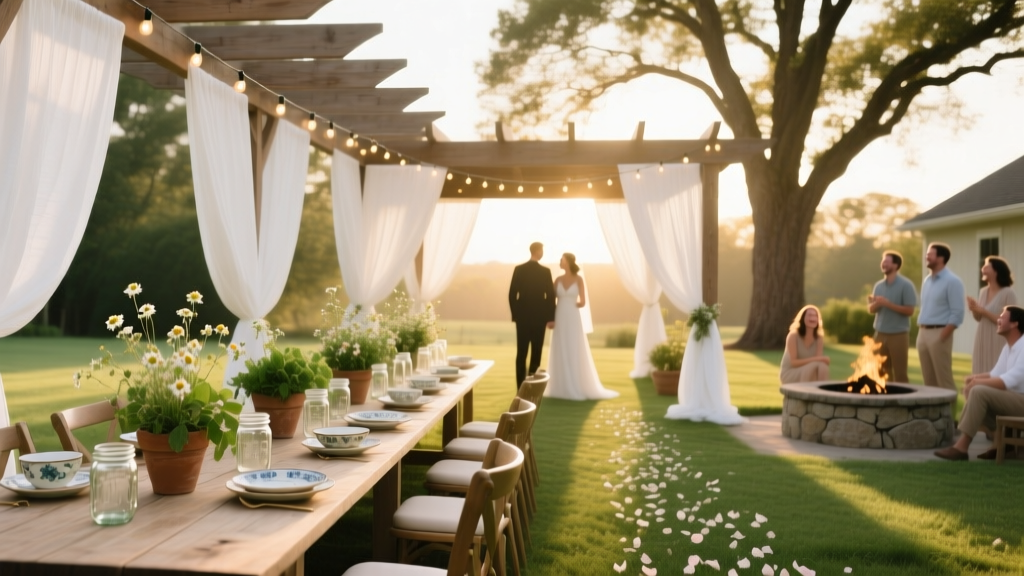
Backyard Wedding Decor: Stress-Free, Budget-Friendly Tips
Why Your Backyard Wedding Decor Decisions Matter More Than You Think — Right Now
If you’re Googling how to decorate for a backyard wedding, you’re likely standing in your yard right now — squinting at patchy grass, wondering if that oak tree is ‘romantic’ or just ‘a liability,’ and scrolling past 437 Instagram posts of fairy-light-draped arbors while your guest list grows and your budget shrinks. Here’s the truth no one tells you upfront: backyard weddings aren’t ‘easier’ or ‘cheaper’ by default — they’re *more flexible*, yes, but that flexibility demands smarter, more intentional decoration choices. In fact, 68% of couples who skipped professional decor help reported at least one major decor-related stress point on wedding day (The Knot 2023 Real Weddings Study). And yet — when done right — backyard weddings consistently score highest in guest sentiment surveys for ‘authenticity,’ ‘memorability,’ and ‘feeling like home.’ This isn’t about copying a mood board. It’s about building atmosphere with intention, working *with* your space — not against it — and making every dollar, hour, and decision count.
Step 1: Audit Your Space Like a Pro Decorator (Before Buying One Stem)
Most backyard wedding decor fails before the first string light is unspooled — because couples start with ‘what looks pretty’ instead of ‘what works here.’ Skip the Pinterest rabbit hole. Grab a notebook, your phone, and walk your yard at three different times: midday (harsh sun), golden hour (5–6 PM), and full dark. Note these five non-negotiables:
- Power access points: How many grounded outdoor outlets exist? Are they GFCI-protected? If you only have one, plan lighting zones accordingly — or rent a generator (yes, even for small setups).
- Surface realities: Is your lawn level? Does it flood after rain? What’s underfoot — compacted dirt, gravel, grass, or mulch? A 3-inch heel sinking into soft soil isn’t romantic — it’s a liability waiver waiting to happen.
- Natural anchors: Identify existing features that can *do the work for you*: mature trees (perfect for hanging lanterns or draping), stone walls (ideal for floral garlands), pergolas (ready-made framing), or even a vintage shed (instant photo backdrop).
- Wind & microclimate zones: Stand in your ceremony area for 90 seconds. Feel gusts? Watch how leaves move overhead. High-wind spots demand weighted bases, low-profile florals, and flameless candles — not delicate feathered arches.
- Neighbor sightlines & noise buffers: Can guests see into adjacent yards? Will amplified music carry? Decor elements like tall potted boxwoods or woven reed screens solve both privacy and acoustics — and double as design features.
Pro tip: Take 12 photos — 4 from each time-of-day — and label them ‘sun glare zone,’ ‘dusk transition spot,’ ‘wind tunnel corner,’ etc. This becomes your decor blueprint.
Step 2: Lighting That Transforms — Not Just Illuminates
Lighting isn’t an ‘add-on’ for backyard weddings — it’s the single most powerful decor tool you own. Why? Because human eyes adapt to darkness in under 20 minutes, and poorly lit spaces feel unfinished, unsafe, or even unwelcoming. Yet 82% of backyard weddings under-light key areas (reception seating, pathways, restrooms) — leading to awkward navigation and dim, flat photos.
Forget ‘string lights everywhere.’ Instead, layer three intentional types:
- Ambient base layer: Soft, wide-spectrum uplighting (LED PAR cans or rental-grade LED wash lights) aimed at trees, walls, or ceilings. Warm white (2700K–3000K) only — cool white reads clinical, not cozy.
- Task & safety layer: Pathway lighting (solar stake lights *plus* battery-operated LED bollards for reliability), step markers (glow-in-the-dark tape or low-voltage LED strips), and restroom entry lighting. These prevent trips — and signal care.
- Emotional accent layer: Focused, sculptural light — think a single pendant over the sweetheart table, candlelit centerpieces (flameless + real wax combo), or gobos projecting monograms onto blank walls. This is where magic lives.
Real-world example: Sarah & Miguel (Nashville, TN) used rented Edison-bulb chandeliers *only* over their dining tables and bar — not strung across the whole yard. They paired them with 200+ battery-powered tea lights in mason jars along pathways and hung 12 directional uplights in oak trees. Total lighting cost: $890. Their photographer said it was the best-lit backyard wedding she’d shot all season — and guests kept commenting on the ‘cozy library vibe.’
Step 3: Florals & Greenery — Smart Sourcing, Not Just Pretty Petals
Here’s the hard truth: buying wholesale roses online for your backyard wedding is rarely cost-effective — shipping, refrigeration, wilting, and assembly eat 60–75% of your floral budget before a single stem is placed. The smarter play? Prioritize *structure, texture, and local resilience.*
Start with what grows nearby — or can be foraged ethically:
- Native & drought-tolerant greenery: Eucalyptus (silver dollar or seeded), olive branches, rosemary, bay laurel, and magnolia leaves hold up for 3+ days outdoors with zero refrigeration. Many local nurseries sell bulk bundles for $15–$35.
- Long-lasting blooms: Scabiosa, celosia, craspedia (‘billy balls’), and alstroemeria outperform roses in heat and humidity — and cost 40% less per stem.
- Non-floral texture: Dried palms, pampas plumes (ethically sourced), wheat stalks, and preserved moss add depth, reduce cost, and photograph beautifully in natural light.
Build your centerpiece formula: 1 structural element (wood slice, ceramic bowl, vintage crate) + 3–5 textural greens + 2–3 focal blooms + 1 tactile accent (dried citrus, cinnamon sticks, river stones). This creates visual weight without floral overload — and allows you to stretch fewer stems further.
Step 4: Functional Decor That Guests Actually *Use*
The biggest decor mistake? Treating decoration as purely visual. At a backyard wedding, decor must also solve real problems: wind-blown napkins, sunburnt guests, muddy shoes, and overheated cocktails. Integrate utility into beauty:
- Shade that doubles as style: Market umbrellas (not cheap patio umbrellas) in coordinated colors — rent 12–16 for 100 guests. Add fabric swags or hanging ivy for softness. Bonus: they anchor seating areas visually.
- Seating that supports comfort *and* flow: Mix Chiavari chairs (rented) with wooden benches (for communal tables) and lounge seating (low sofas + floor cushions). Ensure 30% of seats are shaded or covered — not just decorative.
- Weather-responsive touches: Keep monogrammed linen napkins in woven baskets near food stations — guests grab one *and* get a mini fan or sunscreen wipe tucked inside. Label them ‘Sunshine Kit’ — practical, branded, delightful.
- Ground-level storytelling: Use custom welcome signs on reclaimed wood, but also add a ‘Backyard Map’ showing restrooms, coat check, quiet zone, and first-aid station — illustrated with playful icons. Guests appreciate clarity; it reduces staff interruptions.
| Decor Element | DIY-Friendly? | Pro Rental Recommended? | Key Risk to Avoid | Smart Budget Hack |
|---|---|---|---|---|
| String Lights | Yes — but only if using commercial-grade, UL-listed, outdoor-rated bulbs & cords | Yes — especially for large-scale installations or complex draping | Overloading circuits, tangled messes, uneven spacing | Rent 100-ft spools + use tension cables & quick-release hooks — saves 70% vs. buying new |
| Floral Arch | Moderate — requires sturdy base, wind anchoring, and daily hydration | Strongly recommended — pros bring weighted bases, irrigation systems, and backup stems | Tipping in wind, wilting by ceremony time, poor photo angles | Use a pre-built metal frame + drape with 80% greenery + 20% blooms — cuts cost by 45% |
| Table Settings | High — linens, chargers, flatware all rentable or thrifted | Yes for china/glassware — rental quality beats big-box store | Mismatched textures, fragile items breaking, lack of cohesion | Thrift solid-color linen napkins + dip-dye edges in matching paint — $2/napkin vs. $12 retail |
| Restroom Trailer | No — plumbing, waste, permits, leveling | Required — book 4–6 months ahead; verify water/electric needs | Odor, lines, accessibility issues, visual eyesore | Add a draped canopy + potted topiaries + custom signage — transforms function into photo moment |
Frequently Asked Questions
Can I do backyard wedding decor entirely DIY and still look professional?
Absolutely — but success hinges on ruthless prioritization. Focus DIY energy on high-impact, low-risk elements: hand-lettered signage, napkin folding, assembling greenery garlands, or painting wooden crates. Outsource or rent what requires expertise, weight, or precision: lighting rigging, floral arch installation, tent setup, and restroom trailers. Track your time honestly — if a DIY task takes >10 hours, it’s often cheaper and calmer to rent. One couple saved $1,200 by DIY-ing centerpieces but spent $900 renting a pro lighting package — and called it their best decor investment.
How do I keep decor looking fresh during a hot or rainy afternoon?
For heat: choose heat-tolerant blooms (see Step 3), mist greenery lightly at noon, use floral foam soaked in cold water + flower food (not just water), and keep arrangements in shade until 90 minutes before ceremony. For rain: avoid paper-based signage (use acrylic or wood), seal chalkboards with clear matte spray, anchor all lightweight items (lanterns, runners) with sandbags or tent weights, and have a ‘rain kit’ ready: clear umbrellas for guests, waterproof covers for electronics, and absorbent coconut coir mats at entrances. Pro tip: Rent a pop-up canopy *just* for your floral prep station — keeps everything dry and organized.
What’s the #1 decor item couples regret skipping?
Pathway lighting — hands down. 9 out of 10 couples who omitted dedicated pathway illumination told us guests got lost, tripped, or avoided the bar/restrooms after dark. It’s not glamorous, but it’s foundational. Even simple solar stake lights ($12 for 12) dramatically improve safety, flow, and ambiance. Upgrade to rechargeable LED path lights ($25 for 6) for consistent brightness regardless of cloud cover — and wrap stems in jute twine for instant cohesion.
How much should I realistically budget for backyard wedding decor?
Industry benchmarks (based on 2023 data from 412 backyard weddings): 8–12% of total wedding budget. For a $25,000 wedding, that’s $2,000–$3,000. But here’s the nuance: allocate 50% to lighting, 25% to florals/greenery, 15% to rentals (chairs, tables, linens), and 10% to signage, accents, and personal touches. Couples who tracked spending by category were 3.2x more likely to stay within budget — and reported higher satisfaction with final results.
Do I need a decor coordinator — or can my planner handle it?
Your wedding planner *can* manage decor — but only if they explicitly list ‘design direction,’ ‘vendor styling,’ and ‘on-site decor supervision’ in their contract. Many planners focus on timeline/logistics, not aesthetic execution. A dedicated decor coordinator (often $1,200–$2,500) arrives 2 days pre-wedding to build, style, troubleshoot, and oversee teardown. They catch things like ‘this floral arch blocks the sunset photo spot’ or ‘these lanterns cast harsh shadows on faces.’ Worth it if your planner doesn’t offer styling — or if you’re doing 50%+ DIY.
Two Common Myths — Debunked
Myth #1: “Backyard weddings need minimal decor because the setting is already beautiful.”
Reality: Natural beauty sets the stage — but it doesn’t tell the story. Without intentional decor, guests perceive the space as ‘someone’s yard,’ not ‘a curated celebration.’ Strategic decor (like cohesive lighting, anchored seating, and framed ceremony areas) signals purpose, guides movement, and elevates emotional resonance. A stunning oak tree becomes ‘the ceremony site’ only when framed with aisle markers, seating arcs, and a subtle arch.
Myth #2: “Rented decor always looks generic and impersonal.”
Reality: Top-tier rental companies now offer hyper-curated collections — think ‘Coastal Minimalist,’ ‘Desert Modern,’ or ‘Heirloom Garden’ — with mix-and-match pieces, custom linens, and artisan-crafted accents. The key is briefing them early with your vision board, color palette, and must-have textures. One couple rented 90% of their decor but added only 3 personalized elements (a vintage typewriter guestbook, custom cocktail stirrers, and family heirloom cake stand) — and guests swore ‘everything felt handmade.’
Your Next Step: Build Your Decor Priority Matrix (In 15 Minutes)
You don’t need perfection — you need alignment. Grab a blank sheet. Draw a 2×2 grid. Label axes: Impact on Guest Experience (Low → High) and Effort/Cost to Execute (Low → High). Now, list your top 8 decor ideas (e.g., ‘string lights,’ ‘floral arch,’ ‘custom signage,’ ‘lounge area’). Plot each. Focus energy on the top-right quadrant: High Impact / Low Effort-Cost. That’s where your magic lives — and where this guide began. Ready to turn your yard into the unforgettable heart of your wedding day? Download our free Backyard Wedding Decor Priority Checklist — includes vendor vetting questions, a printable space audit sheet, and a 4-week pre-wedding decor timeline.
More Articles
 40th Wedding Anniversary Gift Ideas (2026)
 When to Book DJ for Wedding (2026)
 Floral Dress for Fall Wedding: 5 Styling Rules (2026)
 Get Your Wedding Featured: 7 Realistic Steps (2026)
 Wedding Catering Tipping: When to Tip (and When $0 Is Fine)
 Cheap Wedding Programs That Look Expensive (2026)
 Wedding Makeup Artist Costs: What You’re Really Paying For
 Can You Add Music to The Knot Wedding Website? (2026)
 Does Whole Foods Make Wedding Cakes? (2026)
 How to Include Deceased Parent in Wedding Speech