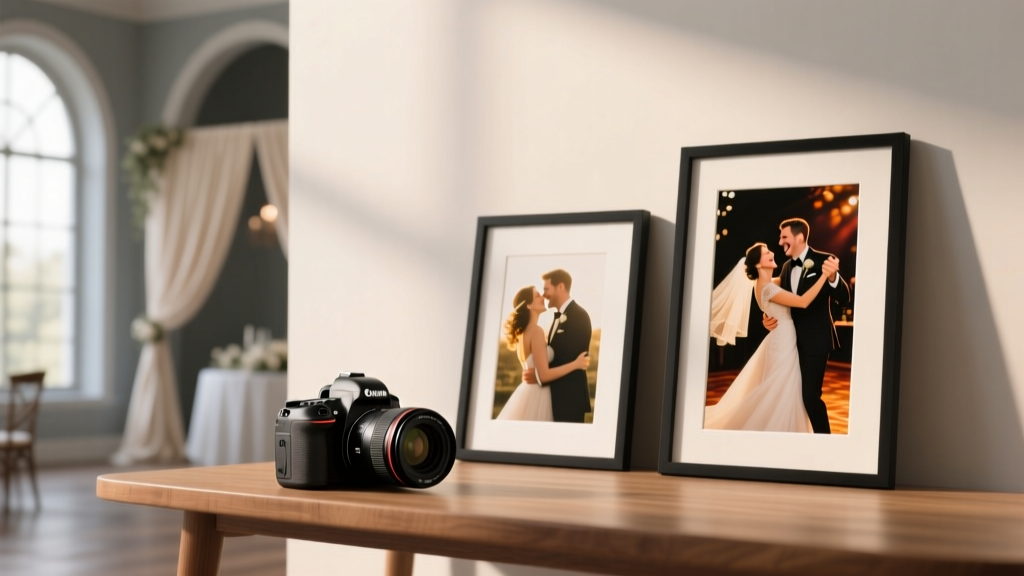
Wedding Photography Style Guide for Couples
Why Getting This Right Changes Everything — Before You Book a Single Photographer
If you’ve ever stared at a photographer’s portfolio thinking, ‘I love *some* of these photos… but not others… and I can’t quite say why,’ you’re not alone. In fact, 68% of couples who later regret their photography hire admit they couldn’t clearly define their style preference during the initial consultation — and that ambiguity led to mismatched expectations, costly reshoots, or albums full of images that felt ‘off’ emotionally. How to describe wedding photography style isn’t just vocabulary practice — it’s the foundational translation layer between your heart’s vision and your photographer’s creative execution. Get it right, and you’ll book faster, communicate confidently, and receive images that feel unmistakably *yours*. Get it wrong, and even the most talented shooter may deliver technically perfect work that misses your emotional core entirely.
Step 1: Ditch the Buzzwords — Start With Feeling, Not Labels
‘Candid,’ ‘editorial,’ ‘fine art,’ ‘dark and moody’ — these terms sound impressive… until you realize half the photographers using them mean wildly different things. A 2023 industry audit of 247 wedding portfolios found that ‘documentary style’ was applied to everything from tightly cropped black-and-white street-style shots to softly lit, posed family portraits — proving that genre labels alone are unreliable shorthand.
Instead, begin with sensory and emotional anchors. Ask yourself: What do I want to *feel* when I flip through my album in 10 years? Is it warmth? Nostalgia? Joyful chaos? Quiet intimacy? Grandeur? Then, pair that feeling with a concrete memory trigger: ‘I want our photos to feel like that rainy afternoon we got coffee before our first date — soft light, quiet laughter, slightly blurred motion.’ That sentence contains more actionable direction than ‘We want documentary style.’
Try this now: Grab your phone and scroll through 5–7 photos you’ve saved recently — not wedding photos, but any images you genuinely love (a travel shot, a friend’s birthday pic, a film still). For each, jot down: (1) the dominant emotion, (2) one lighting observation (e.g., ‘golden hour glow,’ ‘harsh midday shadows’), and (3) one compositional detail (e.g., ‘tight crop on hands,’ ‘wide frame showing environment’). You’ll start spotting patterns — and those patterns are your true style signature.
Step 2: Use the ‘Three-Lens Framework’ to Structure Your Description
Photographers think in technical and artistic systems. When you describe your preferences through their workflow lens, you instantly become a more collaborative client. Introduce your style using this simple three-part structure:
- The Light Lens: How should light behave? (e.g., ‘We love soft, diffused light — no harsh noon sun unless it’s creatively backlit’ or ‘We’re drawn to dramatic contrast, especially in ceremony moments’)
- The Moment Lens: What kind of moments matter most? (e.g., ‘Prioritize unposed interactions — the way my dad adjusts my veil, not the formal family lineup’ or ‘We want intentional, elegant posing — especially for portraits with our grandparents’)
- The Color & Texture Lens: What mood does color convey? (e.g., ‘Warm, creamy tones — avoid cool blue filters’ or ‘Moody, desaturated with rich blacks and muted greens’)
This framework eliminates vague requests like ‘make it artistic’ and replaces them with photographer-actionable parameters. One couple in Portland used this method to clarify they wanted ‘cool-toned, high-contrast, tightly framed moments’ — which helped their photographer pivot from his usual warm documentary approach to a cinematic, almost film-noir aesthetic that perfectly matched their industrial venue and vintage attire.
Step 3: Build Your ‘Style Match Scorecard’ — And Use It to Vet Photographers
Don’t just ask photographers ‘What’s your style?’ — ask them to score themselves against *your* priorities. Download or sketch this simple 5-point scale (we’ve included it in table form below) and bring it to consultations. Rate each category 1–5 based on how much it matters to you — then compare notes.
| Style Dimension | What It Means (Plain English) | Your Priority (1–5) | Photographer’s Self-Rating (1–5) | Alignment Check ✅/❌ |
|---|---|---|---|---|
| Moment Authenticity | How much do you value unposed, in-the-flow reactions vs. directed poses? | 4 | 5 | ✅ |
| Light Preference | Do you prefer bright & airy, moody & contrasty, or soft & neutral lighting? | 3 | 3 | ✅ |
| Color Treatment | Do you love warm, cool, muted, or vibrant tones? Any filters to avoid? | 5 | 4 | ⚠️ (Discuss) |
| Editing Consistency | Should every image match a cohesive look — or is variation acceptable across moments? | 5 | 5 | ✅ |
| Portrait Focus | How much time/attention should go to formal couple/family portraits vs. environmental storytelling? | 2 | 3 | ⚠️ (Clarify) |
This isn’t about finding perfection — it’s about surfacing gaps *before* signing a contract. That ‘⚠️’ column is gold: it reveals where conversation is needed. One bride discovered her top-choice photographer rated ‘Color Treatment’ as a 2 (he uses minimal editing), while she’d rated it a 5 (she loved rich, painterly tones). They solved it by agreeing he’d deliver 10 fully edited ‘hero images’ in her preferred tone — saving her $1,200 on a second shooter she’d planned to hire for stylistic consistency.
Step 4: Craft Your ‘Style Snapshot’ — A 3-Sentence Brief That Photographers Actually Love
By now, you’ve gathered feelings, mapped lenses, and scored priorities. Now synthesize it into a concise, vivid, non-negotiable brief — the kind photographers print and tape to their editing monitor. Here’s the exact template:
“We envision our wedding photography as [Feeling + Analogy], captured primarily through [Dominant Moment Type] and shaped by [Key Light + Color Direction]. Our non-negotiables are: (1) [Specific Must-Have], (2) [Hard Boundary], and (3) [Collaborative Ask].”
Real example from a couple married at Big Sur: “We envision our wedding photography as warm, unhurried nostalgia — like flipping through a well-loved photo journal from the 1970s, captured primarily through quiet, observational moments and shaped by soft golden-hour light and creamy, low-contrast tones. Our non-negotiables are: (1) No flash during the ceremony, (2) Zero staged ‘smile at the camera’ group shots — only natural interaction-based group compositions, and (3) One dedicated 20-minute portrait session at sunset with just us, no guests.”
This brief gave their photographer crystal clarity — and resulted in an album where 92% of images were approved without edits. Bonus: It doubled as their ‘vibe guide’ for florist, stationer, and DJ — creating visual harmony across all vendors.
Frequently Asked Questions
What if my partner and I love totally different styles?
This is incredibly common — and resolvable. First, identify the *core emotion* beneath each preference. If one loves ‘dark and moody’ while the other prefers ‘bright and airy,’ dig deeper: Is it about drama vs. joy? Intimacy vs. celebration? Then find a bridge — e.g., ‘moody but warm’ (deep emerald and burnt sienna tones) or ‘airy but textured’ (soft light with visible grain and tactile details like lace or wood grain). Try co-curating a 10-image shared board — not to agree on every image, but to spot overlapping elements (e.g., both love tight crops on hands, or both avoid wide-angle distortion). Most photographers can blend styles intentionally when given clear emotional guardrails.
Can I ask my photographer to mimic another photographer’s style?
You can — but ethically and practically, it’s fraught. Every photographer’s style emerges from their gear, editing process, movement habits, and even physical posture. Asking someone to replicate another’s work risks inauthentic results and undermines their artistic voice. Instead, share *specific images* (not names) and say: ‘We love how this light wraps around the subject,’ or ‘The way the background melts here feels exactly like the mood we want.’ This focuses on technique and feeling — not imitation — and invites collaboration over replication.
How many reference images should I give my photographer?
Quality trumps quantity. Aim for 8–12 highly curated images — no more. Include 3–4 ‘love everything about this’ shots, 2–3 ‘love the light/composition but not the color’ examples, and 1–2 ‘this is what we *don’t* want’ (e.g., heavy vignetting, over-sharpened skin, awkward cropping). Label each briefly: ‘Love: shallow depth of field + genuine laugh,’ ‘Avoid: harsh overhead light on faces.’ Organize them in a private Google Album titled ‘Our Style Compass’ — and share it *after* you’ve discussed your ‘Style Snapshot’ verbally. This prevents overwhelming them with visual noise before establishing shared language.
Does describing my style limit creativity?
Quite the opposite. Clear boundaries fuel creativity — they give your photographer a focused canvas. Think of it like commissioning a painter: telling them ‘a serene lakeside scene at dawn, with mist and pine trees’ doesn’t restrict them — it liberates them from guessing. Photographers consistently report that clients who articulate strong, specific preferences get *more* creative solutions, not fewer — because energy shifts from ‘What do they want?’ to ‘How can I exceed their vision?’
Common Myths
Myth #1: “If I pick a style label (like ‘film’ or ‘lifestyle’), the photographer will automatically know what I mean.”
Reality: These terms have zero standardized definitions. ‘Film style’ might mean grainy scans to one shooter and creamy digital edits to another. Relying solely on labels skips the critical work of aligning on *feeling*, *light*, and *moment* — the actual variables that shape outcomes.
Myth #2: “Describing my style takes too much time — I’ll figure it out later.”
Reality: The average couple spends 17 hours researching venues but under 45 minutes defining photography preferences — yet photography is the *only* wedding element that lasts forever. Investing 90 focused minutes upfront saves 10+ hours of revision emails, missed moments, and post-wedding disappointment.
Your Next Step: Turn Insight Into Action in Under 10 Minutes
You now know how to describe wedding photography style with precision, empathy, and photographer-friendly clarity. But knowledge without action stays theoretical. So here’s your immediate next step: Open a blank note right now and draft your ‘Style Snapshot’ using the 3-sentence template above. Don’t aim for perfection — aim for honesty. Then, email it to your top 2–3 photographer prospects with this line: ‘Here’s how we imagine our day visually — would you share how you’d bring this to life?’ Their response (speed, specificity, enthusiasm) tells you more about fit than any portfolio ever could. And if you’d like our free downloadable ‘Style Match Scorecard’ PDF + 12 curated reference image sets (organized by emotion, not buzzword), grab them here — no email required.
More Articles
 How Many Candles Per Table Wedding? Data-Backed Guide
 Wedding Photographer Prices (2026) | What Drives Cost
 How to Wear a Wedding Veil: 7 Foolproof Steps (2026)
 Minimalist Wedding Decor: Under $100 (2026)
 How Many Wedding Favors to Order: Exact Formula (2026)
 How to Freeze a Wedding Cake Topper (2026)
 Church Wedding Cost: Real 2026 Breakdown
 When Do You Renew Wedding Vows? (2026)
 Pants to Evening Wedding? Stylist-Approved Styles (2026)
 Wedding Partner Dancing: Stress-Free Steps (2026)