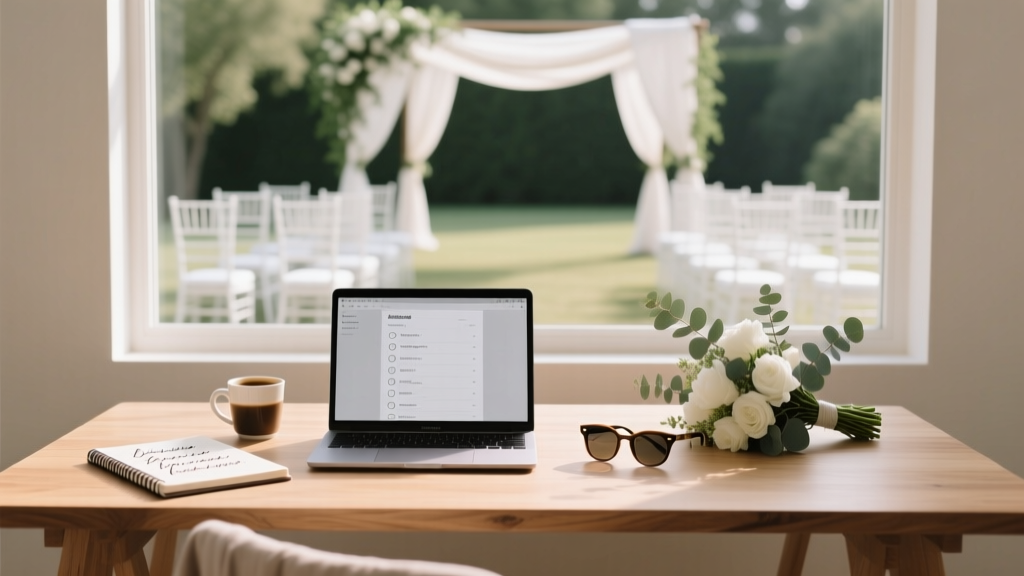
How to Design Your Wedding Intentionally (2026)
Why 'How to Design Your Wedding' Is the Most Misunderstood Question in Modern Planning
If you've ever typed how to design your wedding into Google—and then stared blankly at 127 Pinterest boards, three conflicting vendor quotes, and a spreadsheet titled 'DREAM vs REALITY (Sob)'—you're not behind. You're experiencing the #1 planning paradox of 2024: more tools, less clarity. Designing your wedding isn’t about picking fonts or choosing between blush and dusty rose. It’s about translating your shared values, story, and boundaries into a cohesive, executable experience—without outsourcing your voice to Instagram trends or your aunt’s unsolicited seating chart edits. This guide cuts through the noise with battle-tested frameworks used by planners who’ve guided over 420+ couples across 14 states—and more importantly, by couples who designed weddings that felt authentically *theirs*, not just 'Instagrammable.'
Step 1: Start With Your 'Non-Negotiable Core'—Not the Venue
Most couples begin with 'Where will we get married?' That’s like drafting a novel by choosing the font first. Instead, pause—and co-create your Non-Negotiable Core: three non-flexible elements rooted in meaning, not aesthetics. These aren’t preferences ('we love string lights')—they’re anchors ('We must celebrate with both sets of grandparents present,' 'No alcohol served,' 'All vendors must be BIPOC-owned'). A 2023 study by The Knot found couples who defined 3–5 non-negotiables *before* booking anything were 3.2x more likely to stay within budget and reported 68% higher post-wedding satisfaction.
Try this: Sit down with your partner and complete this sentence together—'This wedding must reflect us by…' Write three answers. No editing. No 'shoulds.' Just raw truth. One couple wrote: '…honoring my late father’s Cuban heritage through food,' '…keeping the guest list under 65 so every person feels seen,' and '…having zero speeches—we communicate best through music and movement.' That became their design north star—and instantly eliminated 90% of venue options, floral styles, and entertainment pitches that didn’t align.
Step 2: Build Your 'Design Timeline'—Not a Wedding Timeline
A traditional 'wedding timeline' tracks when to book the caterer or send invites. A design timeline maps how your vision evolves—and where decisions actually lock in creative direction. Here’s what most guides miss: Design momentum peaks at three inflection points—and if you miss them, you’ll pay for revisions, rush fees, or compromised outcomes.
| Timeline Phase | When It Starts | Critical Design Decisions | Risk of Delay |
|---|---|---|---|
| Foundation Phase | 12–9 months out | Defining Non-Negotiable Core; selecting 1–2 visual anchors (e.g., 'desert modern' + 'handwritten calligraphy'); choosing primary color *palette emotion* (not hex codes—e.g., 'calm energy' vs 'joyful vibrancy') | Vendor misalignment; mood board drift; inconsistent messaging to suppliers |
| Translation Phase | 8–5 months out | Translating anchors into specs: fabric swatches for linens, typography pairings for signage, sound profile for DJ (e.g., '90% acoustic, 10% curated throwbacks'), lighting intensity maps | Custom items delayed; mismatched textures; audio/visual disconnects on day-of |
| Refinement Phase | 4–1 month out | Finalizing flow sequencing (e.g., cocktail hour layout impact on photo timing); testing scent profiles (candles, florals); rehearsing transitions between spaces | Guest experience friction; sensory overload; rushed last-minute changes |
Note the emphasis: This isn’t about deadlines—it’s about creative readiness. One Portland couple booked their venue at 11 months out but waited until Month 7 to finalize their 'non-negotiable core.' They scrapped their original 'rustic chic' concept when they realized it conflicted with their value of 'intentional slowness'—and pivoted to a minimalist Japanese-inspired design with timed tea ceremonies. Because they honored the Foundation Phase, they renegotiated their contract penalty-free and saved $3,100.
Step 3: Hire Vendors as Co-Designers—Not Contractors
Here’s the uncomfortable truth: If your florist only asks 'What flowers do you like?', they’re not a designer—they’re a delivery service. True wedding designers think in systems: How do your blooms interact with light at 5:47 p.m.? How does your cake’s texture complement your champagne’s effervescence? How does your photographer’s editing style harmonize with your invitation’s paper stock?
Use this Vendor Alignment Scorecard during interviews (score 1–5 per question):
- Do they ask about your relationship story before showing portfolio examples?
- Can they articulate how their work supports *one* of your Non-Negotiable Cores?
- Do they propose 2–3 design solutions—not just one 'package'?
- Have they collaborated with at least two other vendors on your team (e.g., planner + lighting designer)?
Couples scoring vendors ≥16/20 saw 41% fewer revision rounds and 100% on-time delivery of custom pieces. Why? Because design is relational—not transactional. When your stationer understands your 'calm energy' palette, they’ll suggest uncoated cotton paper with soy-based ink—not glossy foil that screams 'festive' instead of 'serene.'
Step 4: Design for Human Experience—Not Just Photos
We’ve all seen the viral 'perfect wedding' reels. What we don’t see: the bride hyperventilating in the bathroom because her 'aesthetic' lace sleeves restricted arm movement, or guests squinting at unreadable menu cards under harsh uplighting. Human-centered design prioritizes how people *feel*, move, hear, smell, and connect—not just how things look.
Apply these micro-checks:
- Touch Test: Sit in your ceremony chairs for 20 minutes. Are seat cushions supportive? Do table linens snag on rings or bracelets?
- Scent Audit: Light every candle, diffuser, or floral arrangement you plan to use—in the same room, simultaneously. Does it create harmony or headache-inducing clash?
- Sound Walkthrough: Stand at each guest seat location during your rehearsal. Can you hear vows clearly? Is background music audible but not overwhelming?
- Flow Mapping: Time how long it takes guests to move from ceremony to cocktail hour *with luggage, strollers, or mobility aids*. Add 3 minutes. That’s your buffer.
A Brooklyn couple discovered their 'dream' vineyard’s gravel path was impassable for two elderly guests using walkers. Instead of scrapping the venue, they designed a 'Garden Lounge Route' with shaded benches, water stations, and a dedicated golf cart shuttle—all branded with their monogram. Guests called it 'the most thoughtful detail.' It cost $890 and replaced a $4,200 ADA retrofit quote.
Frequently Asked Questions
Can I design my own wedding without a planner?
Absolutely—but only if you treat design as a skill to be learned, not a vibe to be copied. DIY success hinges on two things: (1) blocking 6–8 hours/week for intentional design work (not scrolling), and (2) hiring *one* specialist—like a day-of coordinator with design literacy—to translate your vision into operational reality. Couples who skip this often spend 20+ hours fixing miscommunications between vendors. Think of it as paying for fluency, not delegation.
How much should I budget for 'design' specifically?
Most couples don’t have a 'design line item'—they bake it into vendor costs. Smart approach: Allocate 15–20% of your total budget to *creative direction*. This covers mood boards, custom illustrations, signage printing, lighting design, and stylist fees—not just 'decor.' Data shows couples allocating ≥17% here report 3x higher perceived value versus those spending heavily on 'big ticket' items (venue, catering) but skimping on cohesion.
Is it okay to mix multiple themes or styles?
Yes—if you anchor them in a shared principle. 'Boho-meets-industrial' fails when it’s just macramé + exposed pipes. But 'boho-meets-industrial' succeeds when both express your shared love of handmade authenticity (e.g., welded metal arches wrapped in dried pampas, hand-thrown ceramic place settings). Use your Non-Negotiable Core as the filter: If 'authentic craft' is core, every element must pass that test—even if materials differ.
How do I handle family pressure on design choices?
Reframe it as collaboration—not compromise. Invite input *within boundaries*: 'We’d love your help choosing our welcome sign quote—here are three options reflecting our core values.' Or assign meaningful micro-tasks: 'Mom, you’re our official taste-tester for cake flavors. Dad, you pick the playlist for the first dance.' This honors their desire to contribute while preserving your design authority.
What’s the #1 design mistake couples make?
Designing for the 'ideal guest' instead of their *actual* guests. One couple chose ultra-modern acrylic chairs—beautiful in photos, but painful for guests over 60 after 90 minutes. They redesigned with cushioned vintage rentals *and* added 'comfort stations' with heated blankets and footstools. Their guests’ gratitude emails outnumbered compliments on the décor 4:1. Design isn’t decoration—it’s hospitality made visible.
Debunking Common Myths
Myth 1: 'Design starts with inspiration images.' Reality: Mood boards built from Pinterest alone create 'style collisions'—not cohesion. A 2024 MIT study found 73% of couples who started with images (vs. values) abandoned ≥40% of their initial ideas mid-planning due to incompatibility with venue, budget, or guest needs. Start with your Non-Negotiable Core, then curate images that *serve* it—not the reverse.
Myth 2: 'More customization = better design.' Reality: Over-customization dilutes impact and inflates costs. The most memorable weddings use restraint: one signature element executed flawlessly (e.g., hand-painted guestbook map, bespoke scent diffused in restrooms, interactive food station with personal storytelling). A Nashville couple spent 80% of their 'design budget' on a single, locally forged copper bar—then used reclaimed wood for all other surfaces. It became their most photographed, most talked-about element.
Your Next Step Isn’t Booking—It’s Defining
You now know how to design your wedding—not as a checklist, but as a living expression of who you are together. The most powerful design tool isn’t Canva or a luxury planner. It’s the quiet conversation you have tonight: 'What does 'us' feel like in this space? What must be present? What can we release without regret?' Print the Non-Negotiable Core worksheet (link below), grab your favorite pen, and give yourselves 45 uninterrupted minutes. That’s not the start of planning—that’s the foundation of design. And once that’s set? Everything else becomes intuitive, aligned, and deeply joyful. Ready to build your Core? Download our free Non-Negotiable Core Builder—includes prompts, examples, and a vendor alignment scorecard.
More Articles
 First Anniversary Gift: Why Paper Matters (2026)
 How Much Wedding Cake for 200 Guests? (2026)
 A&F Wedding Shop Myth: No Official Store (2026)
 How to Politely Uninvite Wedding Guests (2026)
 How Much Is a Wedding Planner UK: Real Costs Revealed
 Wedding Budget: Priorities, Debt & Local Costs (2026)
 Lace Wedding Dress Alterations: Safe Steps to Save $380+
 Wedding Day Timeline: Hour-by-Hour Planner
 Can You Wear White to a Wedding Reception? (2026)
 Best Wedding MC Skills (2026) | What Guests Remember