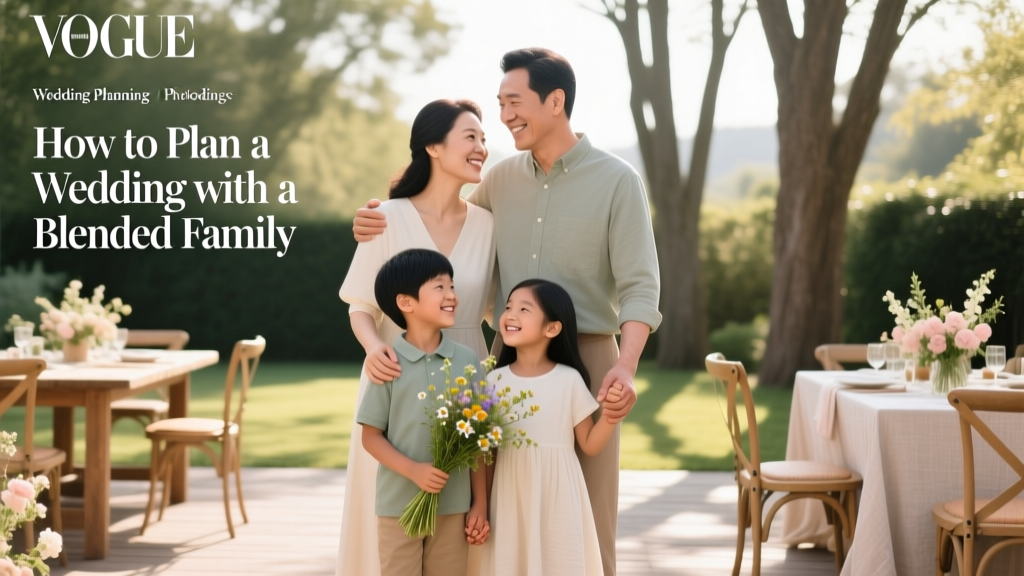
How to Plan a Wedding With a Blended Family
Planning a wedding is already a mix of excitement, logistics, and big feelings. When you’re joining two families—especially with kids, step-parents, co-parents, and long-standing traditions in the mix—those feelings can be even bigger. You might be thrilled to celebrate your love while also wondering: “How do we make everyone feel included?” “What if there’s tension?” “How do we honor the past while building something new?”
If you’re asking those questions, you’re not alone—and you’re not “overthinking.” Weddings with blended families can be some of the most meaningful celebrations because they’re not just about two people. They’re about creating a new family story on purpose. With a little structure, clear communication, and a few pro-level planning tools, you can host a wedding day that feels warm, respectful, and genuinely joyful for everyone involved.
This guide breaks the process down step by step with timeline advice, budget considerations, real-world scenarios, and wedding planner tips to help you navigate family dynamics while still planning a beautiful wedding.
Start With the Foundation: What Does “Family” Mean to You?
Before you talk budgets or bouquets, get aligned as a couple. In blended families, clarity prevents conflict later—especially when different relatives have different expectations.
A quick alignment exercise (30 minutes, no phones)
- Define your “must-feels” for the wedding day (pick 3–5): inclusive, calm, faith-based, kid-friendly, formal, casual, etc.
- List your “non-negotiables”: who needs to be included in key moments, what traditions matter, what boundaries you require.
- Discuss sensitive spots: co-parent dynamics, step-parent roles, child comfort levels, estranged relatives, alcohol concerns, etc.
- Agree on decision-making rules: “We make final decisions together,” “We’ll consider input, but no one else gets veto power,” and “We won’t commit on the spot.”
Real-world example: Maya and Chris wanted a classic ceremony, but Chris’s 12-year-old felt anxious in crowds. Their “must-feel” list included “comfortable for kids,” which led them to choose an earlier ceremony time, a shorter program, and a quiet room at the venue. One simple decision reduced everyone’s stress.
Create a Communication Plan (So You’re Not Managing Drama at Midnight)
Blended family weddings usually don’t fall apart because someone hates the flowers. They get complicated because information is shared unevenly—or not at all. A simple communication plan keeps people informed without inviting constant opinions.
Who needs to know what (and when)
- Kids: share the plan early in age-appropriate detail (what the day looks like, what they’ll wear, where they’ll sit, what their role is).
- Co-parents: confirm schedules, transportation, and expectations for the kids (and clarify who is responsible for what).
- Step-parents: discuss how they’ll be recognized (processional seating, portraits, speeches, etc.).
- Grandparents/extended family: share logistics and key family moments to reduce confusion.
Planner pro tip: Use a “single point of contact”
Choose one trusted person (or hire a day-of coordinator) to handle wedding-day questions. This prevents you from being pulled into last-minute family negotiations when you should be present and enjoying the day.
Budget and Hosting: Who’s Paying, Who’s Inviting, Who’s Deciding?
Money can be extra sensitive in blended families because it can unintentionally signal “who counts.” A transparent conversation early is one of the kindest things you can do for your future selves.
A simple budget conversation checklist
- Who is contributing financially (you, parents, step-parents, other relatives)?
- Is each contribution a gift, or is it tied to specific items (venue, catering, attire)?
- Does financial help come with expectations (guest list additions, traditions, religious elements)?
- What’s the plan if expectations clash? (Example: “We’ll say thank you, consider it, and decide as a couple.”)
Guest list diplomacy for blended families
The guest list is often where blended family dynamics show up first. Try this method:
- Create your core list (closest family and friends) with no outside input.
- Create a second-ring list (extended relatives, family friends).
- Assign each contributing party a limited number of additional invites if you’re comfortable—clearly defined.
- If needed, use an A/B list (send some invites later as RSVPs come in).
Budget tip: If the guest list is growing due to multiple family branches, consider cost-savers that don’t feel like “cutbacks,” such as:
- Brunch or lunch reception instead of dinner
- Beer/wine only bar
- Seasonal florals or greenery-heavy arrangements
- Smaller wedding cake plus sheet cake
- Shorter photographer coverage with a strong shot list
Choosing Roles and Honors: Making Space Without Forcing It
Blended family weddings are at their best when inclusion feels authentic—not performative. The goal isn’t to give everyone an equal “task.” It’s to recognize relationships in a way that feels true and comfortable for you and your kids.
Common blended-family roles (pick what fits)
- Kids in the ceremony: ring bearer/flower role, junior attendant, reading, holding a “family vows” card, walking a parent down the aisle
- Step-parents: escorting, a reading, a toast, getting ready together, included in portraits
- Co-parents: coordinated seating, shared kid handoffs, respectful acknowledgments (without forcing interaction)
Scenario: “My dad and stepdad both raised me—who walks me down the aisle?”
Options couples love:
- Walk with both (one on each side)
- Walk halfway with one, then the other
- Walk solo (powerful and clean), then do a special dance or toast with each
- Skip the “giving away” phrasing and use “Who supports this marriage?” wording instead
Scenario: “Our kids are excited, but also nervous about attention”
Build confidence with a plan:
- Give them a clear job with a short duration (handing rings, carrying a sign, a quick reading)
- Practice during the rehearsal with lots of praise
- Have a backup plan (a trusted adult ready to step in)
- Let them opt out gracefully if emotions run high
Ceremony Planning: Wording, Seating, and Moments That Feel Right
The ceremony is where symbols matter. Small choices—like the order of seating or the exact phrasing of an officiant script—can communicate respect and belonging.
Ceremony details to decide early
- Processional order: who walks with whom, who is seated when
- Seating: “choose a seat, not a side” wording, reserved seats for parents/step-parents
- Officiant language: inclusive wording that reflects your family structure
- Readings: choose texts that acknowledge family, commitment, and community
Blended-family-friendly ceremony ideas (use selectively)
- Family vows: if you have children, you can promise how you’ll show up as a family (keep it simple and age-appropriate)
- Ring warming: rings passed through loved ones (best for smaller weddings)
- Unity rituals: candle, sand, or tree planting—only if it feels meaningful, not obligatory
Planner pro tip: Ask your officiant to avoid surprises. Request a full script draft at least 30 days before the wedding so you can flag anything sensitive (like “giving away,” references to “first marriage,” or jokes about divorce).
Reception Planning: Family Tables, First Dances, and Speeches
Receptions can be wonderfully celebratory—and also a little tricky when you’re blending family circles. Your seating chart and timeline do a lot of emotional heavy lifting, so build them thoughtfully.
Seating strategies that reduce tension
- Sweetheart table (just the couple) instead of a head table to avoid choosing “which parents sit where”
- Two family tables if relationships are polite but not close
- One blended family table only if relationships are stable and comfortable
- Buffer guests: place warm, neutral friends near sensitive pairings
First dances and parent dances: flexible options
- One dance that transitions between multiple parents (DJ can fade between songs)
- Skip formal dances and do an “all-family dance” to one meaningful song
- Replace dances with a toast, private moment, or a photo together
Speeches: set boundaries kindly
Speeches can be emotional in blended families—sometimes beautifully, sometimes awkwardly. Keep it positive with clear guidance:
- Limit to 2–4 toasts total
- Give speakers a time cap (2–3 minutes)
- Ask them to avoid inside jokes about divorce, “the ex,” or “finally” language
- Consider having the DJ/bandleader as a strong emcee to keep things moving
Timeline Advice: A Planning Roadmap That Keeps Everyone Calm
Weddings with blended families benefit from earlier decisions and more intentional communication. Here’s a realistic planning timeline you can adapt.
9–12 months out
- Choose wedding date and venue (confirm kid-friendliness and accessibility)
- Discuss budget contributions and expectations
- Draft a preliminary guest list with both family systems in mind
- Hire a planner or day-of coordinator if family dynamics are complex
6–8 months out
- Decide ceremony structure, key roles, and who sits where
- Book photographer and share any sensitive portrait dynamics early
- Plan kid logistics: childcare, quiet space, meal preferences
- Choose attire with kids’ comfort in mind (especially for long days)
3–5 months out
- Finalize guest list and send invitations
- Confirm any co-parent scheduling needs for kids
- Create a family photo shot list (more on that below)
- Draft a wedding-day schedule and share key timing with immediate family
4–6 weeks out
- Review officiant script and finalize readings
- Confirm seating chart and reception flow
- Assign a “family wrangler” for portraits and transitions
- Reconfirm boundaries if needed (who speaks, who escorts, etc.)
Photography and Family Portraits: Plan It Like a Pro
Portrait time can feel surprisingly emotional in blended families. A clear plan helps everyone feel seen without creating uncomfortable pairings.
Create a “must-have” photo list (and a “do not group” note)
- Couple with each child (individually and together)
- Couple with each set of parents/step-parents
- Siblings and step-siblings (only if the kids want this)
- Grandparents and multi-generational photos
- A few relaxed, candid family photos during the reception
Pro tip: Tell your photographer (privately) about sensitive dynamics. You don’t need to share the whole story—just what helps them work smoothly, such as: “Please don’t pose my mom and dad together,” or “We’d like separate photos with each parent household.”
Common Mistakes to Avoid (And What to Do Instead)
- Mistake: Trying to make everything perfectly “equal.”
Do instead: Aim for thoughtful and authentic. Equality can look different depending on the relationships. - Mistake: Putting kids in roles they didn’t choose.
Do instead: Offer options and let them decide. A comfortable child makes the whole day better. - Mistake: Letting the loudest relative set the agenda.
Do instead: Use your decision-making rules and a single point of contact for questions. - Mistake: Surprising families with ceremony wording or seating choices.
Do instead: Communicate early, kindly, and clearly—especially to parents and co-parents. - Mistake: Skipping a coordinator when dynamics are tense.
Do instead: Budget for a day-of coordinator. It’s often the best “peace of mind” line item.
Wedding Planner Pro Tips for Blended Family Weddings
- Build in buffers. Add 10–15 extra minutes around transitions (portraits, seating, kid breaks) so no one feels rushed.
- Create a quiet space. A spare room with water, snacks, and a few activities can be a lifesaver for kids—and adults.
- Write down boundaries. If you’re worried you’ll cave under pressure, put your plan in writing (even just a shared note between the two of you).
- Use place cards thoughtfully. A seating chart can prevent awkward “Where do we sit?” moments that trigger tension.
- Choose vendors with emotional intelligence. A calm photographer, a confident DJ, and a supportive coordinator matter as much as style.
FAQ: Planning a Wedding With a Blended Family
How do we include step-parents without hurting biological parents’ feelings?
Aim for meaningful acknowledgment rather than matching roles exactly. Include step-parents in portraits, reserved seating, getting-ready moments, or a toast. Communicate ahead of time so no one is surprised, and keep the focus on gratitude and support.
What if our co-parents don’t get along?
Design the day to minimize forced interaction: separate seating, separate portrait groupings, and clear kid handoff times. A coordinator or trusted “family wrangler” can manage logistics so you’re not mediating.
Should our kids stand with us during the ceremony?
Only if they want to. Some kids love being up front; others prefer sitting with a trusted adult. You can include them with a reading, a small role, or a special mention without putting them on display.
How do we handle last names in a blended family wedding?
There’s no one right answer. Some couples keep their names, some hyphenate, some choose a new shared name, and some keep different names while using a shared “family” name socially. Decide what feels practical and respectful for the kids, then communicate it simply.
Is a small wedding better for blended families?
Not always. Smaller weddings can reduce complexity, but larger weddings can help everyone feel included. The “best” size is the one you can afford comfortably and plan with confidence—especially when it comes to guest list expectations across multiple households.
What’s the best way to avoid awkwardness during family photos?
Make a detailed shot list and share it in advance with your photographer and coordinator. Include a note about any groupings to avoid. Assign a family wrangler who knows everyone by face and can call names efficiently.
Your Next Steps: A Calm, Clear Plan You Can Start This Week
If you’re feeling a little overwhelmed, keep it simple. Here are three actions you can take right now that will make everything easier:
- Have the “must-feels and non-negotiables” conversation as a couple and write down your top priorities.
- Draft a short list of key family moments (processional, seating, portraits, dances, speeches) and decide who is included in each.
- Choose your support team: a day-of coordinator or a trusted point person who can handle questions and protect your peace.
Your wedding can honor where everyone has come from while celebrating what you’re building now. You don’t need a perfect family dynamic to have a beautiful day—you just need a plan that’s kind, clear, and true to you.
Ready for more support? Explore more planning guides, checklists, and wedding ideas on weddingsift.com.
More Articles
 How Soon Do People Send Out Wedding Invitations (2026)
 What To Wear For Formal Wedding (2026)
 How to Write a Wedding Love Letter (2026)
 Should You Invite Companies to Your Wedding?
 How to Choose the Right Wedding Officiant
 Cricut Wedding Welcome Sign Guide (2026)
 How Much to Tip a Priest for Wedding (2026)
 How Much Should You Give At Wedding (2026 Guide)
 Wedding Processional Order: Step-by-Step (2026)
 Wedding Ceiling Decor: 7 Budget-Savvy Ideas (2026)