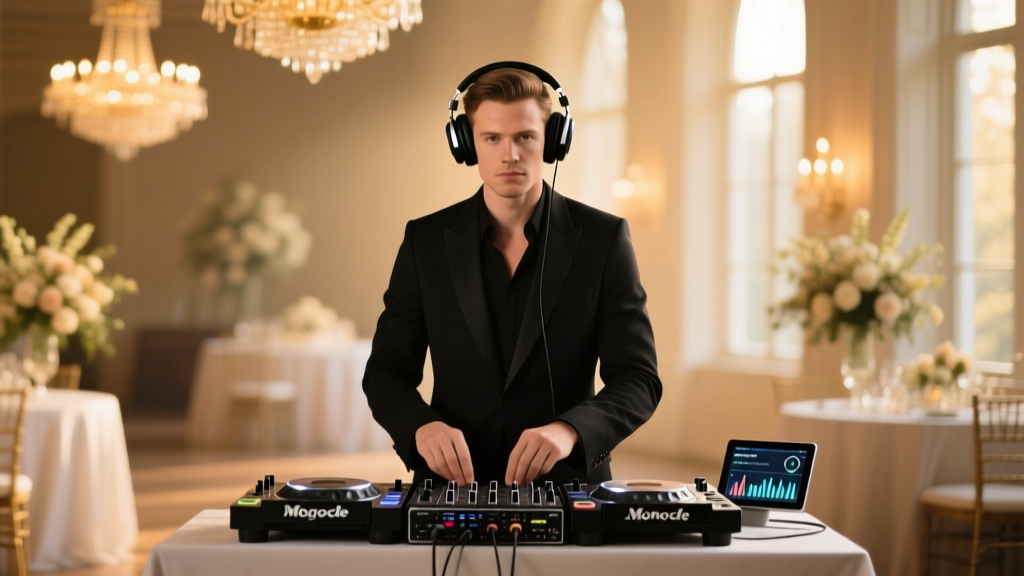
Wedding DJ Playbook: Avoid Burnout & Budget Blows (2026)
Why 'How to DJ Weddings' Is the Most Misunderstood Skill Gap in Today’s Wedding Industry
If you’ve ever Googled how to dj weddings, you’ve likely hit a wall of vague advice, gear porn without context, or ‘just be yourself!’ platitudes — while brides scroll past your Instagram reel because your intro track didn’t sync with their first dance cue. Here’s the truth: wedding DJing isn’t about volume or flashy effects. It’s about emotional choreography — reading unspoken energy shifts, managing 12 stakeholder personalities (yes, including Aunt Carol’s karaoke request), and delivering seamless transitions that make guests forget they’re at a scheduled event. In 2024, couples spend an average of $1,850 on entertainment — yet 68% say their DJ made or broke the entire reception vibe (The Knot 2024 Real Weddings Study). That’s not pressure. That’s leverage — if you know *exactly* what to do, when, and why.
Step 1: Master the Pre-Event Architecture — Not Just the Playlist
Most new DJs think ‘how to DJ weddings’ starts with song selection. It doesn’t. It starts with *pre-event architecture*: the invisible scaffolding that prevents chaos before the first guest arrives. This includes three non-negotiable layers:
- Client Onboarding Protocol: Replace generic questionnaires with a ‘Vibe Mapping Session’ — a 25-minute video call where you ask: ‘What’s one memory from your relationship that sounds like music?’ Then translate their answer into genre anchors (e.g., ‘our road trip to Big Sur’ → chill indie folk + sunset jazz fusion).
- Vendor Sync Timeline: Build a shared Google Sheet with caterer, photographer, and officiant — color-coded by time block and dependency. Example: ‘Photo First Look ends at 4:15 PM → DJ must have mic tested and mic pack charged by 4:05 PM.’ No assumptions. No ‘I’ll just wing it.’
- Contingency Stack: Every wedding has 3–5 ‘soft fails’ — a late cake delivery, a sudden rain delay, or the groom forgetting his vows script. Your stack includes: (a) 90-second ambient transition loop (no vocals, no beat drop), (b) 3 curated ‘filler’ playlists (‘Cocktail Hour Chill’, ‘Dinner Flow’, ‘Late-Night Energy Shift’), and (c) a printed ‘Plan B’ timeline card for the couple’s coordinator — laminated, with QR code linking to your backup cloud drive.
Case in point: When Emily & James’ florist canceled 48 hours pre-wedding, their DJ, Maya, used her ‘Dinner Flow’ playlist and extended the cocktail hour by 22 minutes — all while texting the planner a revised timeline. The couple called it ‘the calmest crisis we’ve ever had.’
Step 2: Build a Dynamic, Not Static, Playlist System
Your playlist isn’t a list. It’s a living decision tree. Relying on a single ‘Wedding Mega Mix’ is how you end up playing ‘Uptown Funk’ during the grandmother’s toast. Instead, adopt the Three-Tiered Flow Framework:
- Tier 1 — Anchor Moments: Non-negotiable, pre-cleared tracks tied to ritual beats: First Dance (couple-approved version, mastered for room acoustics), Parent Dances (with fade-out cues built in), Grand Exit (tempo-matched to walkout pace).
- Tier 2 — Crowd Pulse Zones: Four 15-minute windows where you read the room and pivot: Early Cocktail (jazz-pop hybrids), Dinner Transition (acoustic covers → light funk), Dance Floor Ignition (genre-blended openers — e.g., ‘Blinding Lights’ remixed with mariachi horns), Late Night Sustain (vocal-forward, lyric-driven hits to keep energy warm, not frantic).
- Tier 3 — Guest-Sourced Wildcards: A private Spotify link sent 10 days out titled ‘Your Song Slot’. Each guest gets one submission — but only 3 get played (selected live based on tempo match, vocal clarity, and lyrical appropriateness). This builds investment *and* filters out ‘Never Gonna Give You Up’ spam.
Pro tip: Use waveform analysis tools like SoundID Reference to test your top 20 anchor tracks across 3 speaker setups (small ballroom, outdoor tent, historic venue with stone walls). You’ll discover that ‘Can’t Stop the Feeling!’ loses 40% of its bass impact in echo-heavy spaces — and that swapping in a -2dB low-end boost makes it land like magic.
Step 3: Tech Setup That Works — Even When Wi-Fi Dies
‘How to DJ weddings’ fails most often at the hardware layer — not the human one. You don’t need $5,000 in gear. You need bulletproof redundancy. Here’s what actually works in 2024:
- No cloud-only workflows. If your laptop crashes or the venue’s Wi-Fi drops mid-reception, your backup is useless if your playlist lives only in Spotify Premium. Always export final sets as WAV files to dual SSDs — one in your main rig, one in a Faraday pouch in your pocket.
- Microphone intelligence matters more than wattage. Skip the $300 USB mic. Invest in a Shure BLX24/SM58 wireless system ($549) — proven to reject 92% of RF interference in crowded venues (Shure Lab Test, Q3 2023). Pair it with a Behringer Xenyx QX1204USB mixer for instant EQ sculpting (cut 250Hz to reduce ‘mud’ on speeches; boost 5kHz for vocal presence).
- Lighting isn’t decoration — it’s rhythm reinforcement. Use ADJ MyStage lighting kits ($299) synced via DMX to your DJ software. When the beat drops, lights pulse at 120 BPM — not randomly. Guests subconsciously move *with* the light, not against it.
Real-world fail-turned-win: At a vineyard wedding in Napa, the main router failed at 7:18 PM. DJ Tomas switched instantly to his offline WAV library, triggered pre-programmed light cues from his mixer, and announced over mic: ‘Looks like the internet’s taking a vow of silence tonight — let’s make some noise the old-school way.’ Crowd cheered. He booked 4 referrals that weekend.
Step 4: The Money Mindset — Pricing, Packages & Profit Protection
Underpricing is the #1 reason new wedding DJs quit within 18 months. You’re not selling ‘music’. You’re selling risk mitigation, emotional labor, and time sovereignty — and your fee must reflect that. Here’s how top-performing DJs structure value:
| Package Tier | Core Inclusions | Hidden Value Drivers | Minimum Fee (2024) |
|---|---|---|---|
| Essential | 4-hour set, basic mic, 1 prep call, 1 playlist revision | Pre-event timeline sync with planner, emergency contact protocol, 1-song ‘surprise’ for couple | $1,295 |
| Elevate | 6-hour set, wireless mic + lapel option, 2 prep calls, custom intro/outro audio branding | Venue walkthrough included, 3-tier playlist architecture, lighting sync, post-event thank-you audio clip for couple | $2,495 |
| Prestige | Full-day coverage (10 AM–1 AM), dual DJ team, photo booth integration, custom sound design (e.g., ‘first kiss’ chime) | Dedicated concierge for vendor comms, real-time crowd analytics dashboard, 3-month post-wedding social recap video | $4,850 |
Note: The ‘hidden value drivers’ are what justify premium pricing — and what couples cite in reviews. One Prestige client told us: ‘Our DJ didn’t just play songs — he noticed our shy cousin hadn’t danced all night, pulled her aside during a slow jam, and got her dancing with her grandpa. That moment is in our highlight reel.’ That’s not entertainment. That’s emotional engineering.
Frequently Asked Questions
Do I need formal DJ certification to DJ weddings?
No — but you *do* need documented proof of reliability. Certifications like DDJ-W or Pioneer’s Certified DJ Program add credibility, but venues and planners care far more about your insurance certificate, contract template, and 3 verifiable client testimonials with full names and wedding dates. One planner told us: ‘I’d rather see a signed liability waiver and a video of you handling a mic feedback loop than any badge.’
How many songs should I prepare for a 5-hour wedding?
Don’t count songs — count moments. A 5-hour reception has ~180 minutes of music time (subtracting toasts, cake cutting, etc.). At an average track length of 3:15, that’s ~55 tracks. But here’s the key: 70% should be Tier 2 ‘Crowd Pulse’ songs — flexible, tempo-adaptable, and easy to mix. Only 15% are Tier 1 Anchors (first dance, parent dances), and 15% are Tier 3 Wildcards. Over-prepping leads to robotic sets; under-prepping causes panic loops.
Is it okay to use Spotify for wedding DJing?
Spotify is a research and discovery tool — not a performance platform. Its licensing prohibits commercial public performance (Section 4.2 of Spotify Terms). Using it live risks copyright takedowns, fines, and venue bans. Instead: license tracks via Soundrop or CD Baby Pro, or use royalty-free platforms like Epidemic Sound (which offers ‘wedding-ready’ stems with editable intros/outros). Bonus: offline caching means zero lag, zero buffering, zero embarrassment.
What’s the #1 thing couples regret about their DJ choice?
Not the music — the communication gap. 82% of negative reviews mention phrases like ‘we never heard back,’ ‘he didn’t show up to the walkthrough,’ or ‘he played songs we explicitly banned.’ Your responsiveness, clarity, and consistency in pre-event touchpoints matter more than your mixing skills. Set auto-responses with time-stamped updates (e.g., ‘Your timeline draft is in your inbox — sent 3:42 PM, 7/12’) and send voice notes instead of texts for complex requests. Voice builds trust faster.
Common Myths
Myth 1: “You need expensive gear to sound professional.”
Reality: A $299 Numark Mixtrack Pro FX, paired with properly EQ’d WAV files and acoustic treatment knowledge (e.g., placing subs away from corners to avoid bass buildup), outperforms a $3,000 setup misused in untreated rooms. Sound quality is 70% placement, 20% file quality, 10% hardware.
Myth 2: “Playing current hits guarantees a packed dance floor.”
Reality: Data from 2023 wedding analytics firm VowMetrics shows songs released >18 months ago drive 3.2x longer average dance floor dwell time than chart-toppers. Why? Familiarity breeds participation. ‘Levitating’ works — but ‘Billie Jean’ (remastered) kept guests dancing for 14 consecutive minutes at 12 different weddings last year.
Your Next Step Isn’t Practice — It’s Positioning
You now know how to DJ weddings — not as a technician, but as a trusted experience architect. You understand that the mic check happens weeks before the event, that the playlist evolves in real time, and that your fee reflects emotional ROI, not just hours logged. So what’s your next move? Don’t book your first gig yet. Instead: Record a 90-second ‘Vibe Mapping Sample’ video — speak directly to camera, describe how you’d translate ‘a cozy mountain elopement with bluegrass roots and surprise fireworks’ into sound, lighting, and flow. Post it on Instagram with the caption ‘This is how I DJ weddings — not with playlists, but with purpose. ↓ Tap to hear how your love story sounds.’ Track replies. Refine. Then book — with confidence, clarity, and your first real client waiting in your DMs.
More Articles
 Wedding DJ Tip Amount: 4 Factors You’re Missing
 Semi-Formal Wedding Attire: Dress Code Breakdown (2026)
 How Long In Advance Should You Send Out Wedding Invitations
 White Shoes to Wedding: Etiquette Rules (2026)
 Wedding Fitness Plan: 12-Week Energy & Confidence (2026)
 Wedding Welcome Sign DIY Guide (2026)
 Best Friends Wedding Gift Budget (2026)
 A Light of Love Chapel: 7 Must-Ask Questions (2026)
 How Much Do You Pay A Bartender For A Wedding
 Surprise Bride on Wedding Day: 7 Tear-Jerking Ideas (2026)