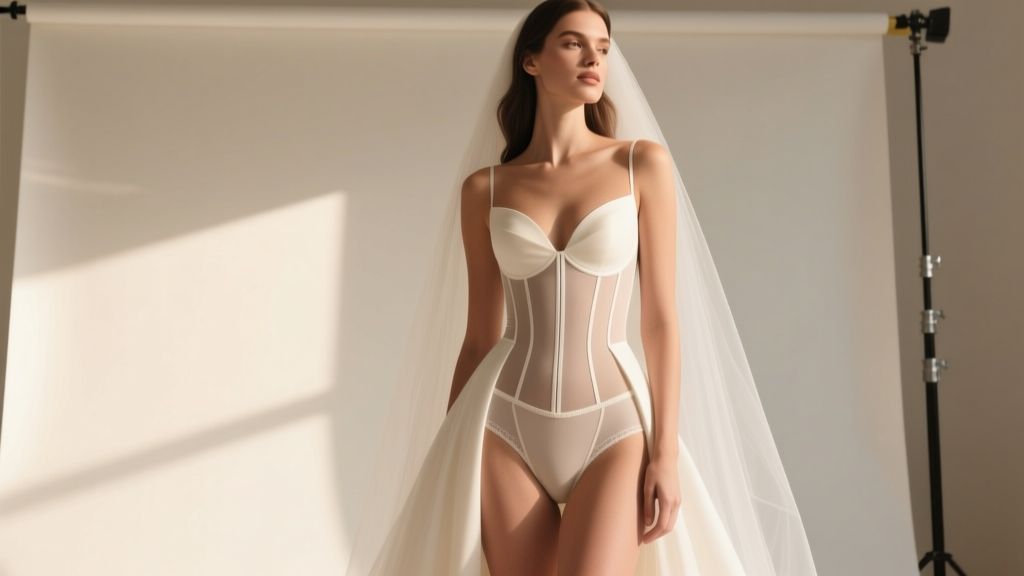
What to Wear Under Wedding Dress: Ultimate Guide
Why Getting ‘What to Wear Under Wedding Dress’ Right Changes Everything
Let’s be honest: you’ve spent months choosing the perfect gown — the lace, the silhouette, the fit — only to discover on your wedding morning that your undergarments are causing visible lines, slipping mid-ceremony, or creating an awkward bulge at the waistline. What to wear under wedding dress isn’t just a detail — it’s the invisible foundation of your entire look, comfort, and confidence. In fact, 68% of brides surveyed by The Knot’s 2023 Real Weddings Study cited ‘undergarment mishaps’ as one of their top three pre-wedding stressors — ahead of weather concerns and vendor delays. And it’s not just about aesthetics: ill-fitting shapewear can restrict breathing during vows; the wrong slip can snag delicate embroidery; and an untested bra can fail catastrophically during your first dance. This isn’t about buying more stuff — it’s about buying *the right* stuff, *at the right time*, for *your specific dress and body*. Let’s fix it — once and for all.
Step 1: Match Your Undergarments to Your Dress’s Architecture (Not Just Your Body)
Most brides start with their body shape — ‘I need smoothing’ or ‘I need lift’ — but that’s putting the cart before the horse. The most critical factor is your dress’s construction. Think of your gown as a building: its structure dictates what kind of internal support system it needs. A mermaid dress with a tight, boned bodice? It demands compression-level shapewear *that stops precisely at the natural waist* — no extended panels that distort the seam. A ballgown with layers of tulle? You’ll need a lightweight, crinoline-integrated slip — not heavy shapewear that adds bulk beneath volume. A minimalist sheath in stretch crepe? Seamless, second-skin shapewear with light control is ideal; anything thicker will telegraph ridges through the fabric.
Here’s how to reverse-engineer your choice: Bring your dress (or high-res photos + measurements) to your first fitting — and ask your seamstress two questions: ‘Where are the key seams I must not disrupt?’ and ‘Which areas need structural support vs. aesthetic smoothing?’ One real-world example: Sarah, a size 14 bride with an hourglass figure, bought premium full-body shapewear for her A-line satin gown — only to find it created horizontal ripples across her hips where the skirt flared. Her stylist swapped it for a high-waisted brief + strapless longline bra combo — and the difference was instant. Why? Because the A-line’s gentle flare needed targeted support, not full compression.
Step 2: The Shapewear Spectrum — From Invisible to Essential (and When to Skip It Entirely)
Shapewear is often overprescribed. Not every dress — or every body — benefits from it. According to bridal fitter Maria Chen (12 years at Kleinfeld), ‘If your dress has built-in corsetry, structured cups, or a lined bodice, adding shapewear is like wearing two seatbelts — redundant and restrictive.’ So let’s demystify the categories:
- Light Control (Seamless Briefs & Thongs): Ideal for stretch fabrics (crepe, jersey), minimalist silhouettes, or dresses with built-in lining. Brands like Spanx Level 1 or Skims Soft Lounge offer breathable, non-compressive shaping that smooths without squeezing.
- Medium Control (High-Waisted Shorts & Bodysuits): Best for fit-and-flare, trumpet, or column gowns in medium-weight fabrics (chiffon, mikado). Look for bonded seams and silicone grip strips — crucial for preventing ride-up during hours of standing and dancing.
- Heavy Control (Full Bodysuits & Waist Cinchers): Reserved for unlined, structured gowns (e.g., traditional ballgowns with organza overlays) or when targeting specific contouring (e.g., smoothing a C-section scar). Warning: Never wear heavy shapewear for more than 8 hours — clinical studies link prolonged use to reduced diaphragmatic breathing and digestive discomfort.
And yes — sometimes the best choice is no shapewear at all. Brides with petite frames, naturally smooth torsos, or dresses featuring soft, draped necklines (like off-shoulder or halter styles) often look and feel better with zero compression. Trust your dress’s design — and your own comfort cues.
Step 3: Bras, Slips, and the Hidden Heroes You’re Overlooking
While shapewear grabs headlines, these three unsung elements prevent 90% of real-world disasters:
- The Strapless Bra: Forget generic ‘strapless’ options. Your dress neckline determines everything. A sweetheart neckline? Requires a bra with deep center gore and memory wire for lift. A plunging V-neck? Needs convertible straps *and* removable padding to avoid visible edges. Pro tip: Try on your dress with *three* different bras — one with molded cups, one with seamless foam, one with soft cup — and move, sit, and raise your arms. If any shift, gap, or pinch — it’s out.
- The Slip: Not optional. Even ‘lined’ dresses often have thin linings that don’t prevent static cling or fabric friction. A proper bridal slip does three things: eliminates transparency, reduces friction between dress and skin (preventing sweat buildup), and adds subtle volume control. Cotton-blend slips breathe best for summer weddings; silk charmeuse slips glide smoothly under satin; and crinoline slips add lift without weight for ballgowns.
- The Modesty Liner: Often ignored until it’s too late. For illusion backs, sheer sleeves, or lace-up details, a nude-toned, ultra-thin adhesive liner (like Nubra or Nudestix BareLiner) provides coverage *without* altering the dress’s drape. Bonus: It doubles as emergency nipple coverage if your dress shifts — a true peace-of-mind investment.
Case in point: Priya wore her dream lace-back gown without a liner — and discovered mid-ceremony that sunlight made her bra strap visible through the illusion mesh. She’d skipped the liner to ‘keep it simple,’ but simplicity cost her confidence. She now recommends keeping two liners in her wedding-day emergency kit — one for her back, one for her bust.
Step 4: Fabric-by-Fabric Undergarment Cheat Sheet
Different fabrics interact with underlayers in wildly different ways. Here’s your actionable, no-jargon reference table:
| Fabric Type | Best Undergarment Combo | Avoid At All Costs | Why |
|---|---|---|---|
| Satin (Duchess, Silk) | Smooth, seamless bodysuit (medium control) + strapless longline bra with silicone grip | Textured shapewear, cotton briefs, padded bras | Satin shows every ridge and seam; cotton creates static cling; padding creates unnatural projection under sleek fabric. |
| Lace (Alençon, Chantilly) | Nude-tone seamless thong + adhesive bust liner + lightweight crinoline slip | Dark-colored underwear, heavy shapewear, non-adhesive liners | Lace is semi-sheer — dark underwear bleeds through; heavy shapewear distorts delicate motifs; non-adhesive liners slide and bunch. |
| Crepe / Jersey | Light-control seamless brief + wireless strapless bra (e.g., Wacoal Smooth Touch) | Any shapewear with seams, underwire, or rigid panels | Stretch fabrics magnify texture — seams create permanent indentations; underwire digs into soft tissue during movement. |
| Tulle / Organza | Crinoline slip with built-in petticoat + high-waisted brief (light control only) | Full-body shapewear, thick slips, cotton-lined slips | Bulk under tulle = loss of shape and airflow; cotton traps heat; full shapewear fights the dress’s intended volume. |
| Chiffon / Georgette | Nude seamless thong + adhesive back liner + silk slip | Anything with elastic bands, lace trim, or synthetic linings | Sheer fabrics reveal elastic lines; lace trim snags delicate fibers; synthetics cause static and overheating. |
Frequently Asked Questions
Can I wear shapewear the night before my wedding to ‘break it in’?
No — and here’s why: Shapewear is designed for short-term wear (4–8 hours), not overnight. Wearing it the night before risks skin irritation, restricted circulation, and even nerve compression. Instead, wear it for 2–3 hours during a dress rehearsal or final fitting — that’s enough to test comfort and adjust fit without compromising health. Bonus: This also helps you identify pressure points early so your tailor can make micro-adjustments.
Do I need special underwear for a destination wedding in hot weather?
Absolutely — but ‘special’ doesn’t mean ‘more.’ It means *smarter*. Prioritize breathability over control: choose moisture-wicking bamboo or Tencel blends (not nylon or polyester), skip full coverage for open-back gowns (opt for adhesive pasties instead), and carry a backup pair in your clutch. One bride in Santorini used cooling gel pads inside her strapless bra — a game-changer for 95°F ceremonies. Pro tip: Test your entire under-layer stack in similar heat/humidity 2 weeks before departure.
My dress has built-in boning — do I still need shapewear?
Usually not — unless you have specific smoothing goals (e.g., postpartum abdominal softening). Built-in boning provides structural support, not cosmetic control. Adding shapewear can actually compromise the dress’s engineered fit, causing puckering or tension at seams. Instead, focus on a perfectly fitted strapless bra and a lightweight slip. If you’re unsure, try both versions at your final fitting — with and without shapewear — and compare movement, breathability, and silhouette integrity.
Is it okay to wear the same underwear I use daily?
Rarely. Daily underwear is optimized for all-day comfort, not photo-ready invisibility. Even ‘seamless’ everyday styles often have hidden elastic bands, tag seams, or cotton gussets that show through thin fabrics. Bridal-specific underwear uses bonded seams, laser-cut edges, and skin-tone dyes formulated for photography. Think of it this way: You wouldn’t wear street shoes with your gown — your undergarments deserve the same intentionality.
Common Myths
Myth #1: “The tighter the shapewear, the smoother the look.”
False. Over-compression creates bulges at the top and bottom edges — especially around the ribcage and thighs — and can push tissue sideways, worsening the very issue it’s meant to solve. Clinical fit studies show optimal smoothing occurs at 15–20 mmHg compression — not the 30+ mmHg of ‘extreme’ shapewear.
Myth #2: “You must buy new underwear — old bras are fine if they fit.”
Outdated. Bras lose elasticity after 6–12 months of regular wear. Even if it fits, the underwire may have warped, the band may have stretched, and the cups may no longer provide lift. For your wedding day, invest in a new, professionally fitted strapless bra — it’s not vanity, it’s physics.
Your Next Step Starts Now — Not 3 Days Before the Wedding
You’ve just learned how to transform ‘what to wear under wedding dress’ from a source of anxiety into a strategic advantage — one that enhances your silhouette, protects your comfort, and safeguards your confidence. But knowledge alone won’t get you there. Your next step? Book your first fitting with your seamstress — and take this article with you. Print the Fabric-by-Fabric Cheat Sheet. Circle your dress fabric type. Ask your stylist to confirm seam placements and lining depth. Then, order your undergarments *within 72 hours* — most bridal brands require 10–14 days for delivery, and returns on intimate apparel are rarely accepted. Don’t wait for ‘someday.’ Your dress deserves the right foundation. And so do you.
More Articles
 Bachelor Party Timing: The 4-Week Sweet Spot (2026)
 When Should Guests RSVP for a Wedding? (2026)
 Backyard Wedding Gift: Real Dollar Ranges (2026)
 A-Line Open Back Wedding Dress Guide (2026)
 Can You Alter A Wedding Dress That Is Too Small
 Wedding Photographer Cost: $1,500 vs $5,000 (2026)
 Wedding Guest Seating Chart System (2026)
 Wedding Draping: 7-Step Pro Checklist (2026)
 Wedding Guest Outfit Decoder: Stress-Free Dress Code (2026)
 Wedding Dance Tips: 7 Stress-Free Steps (2026)