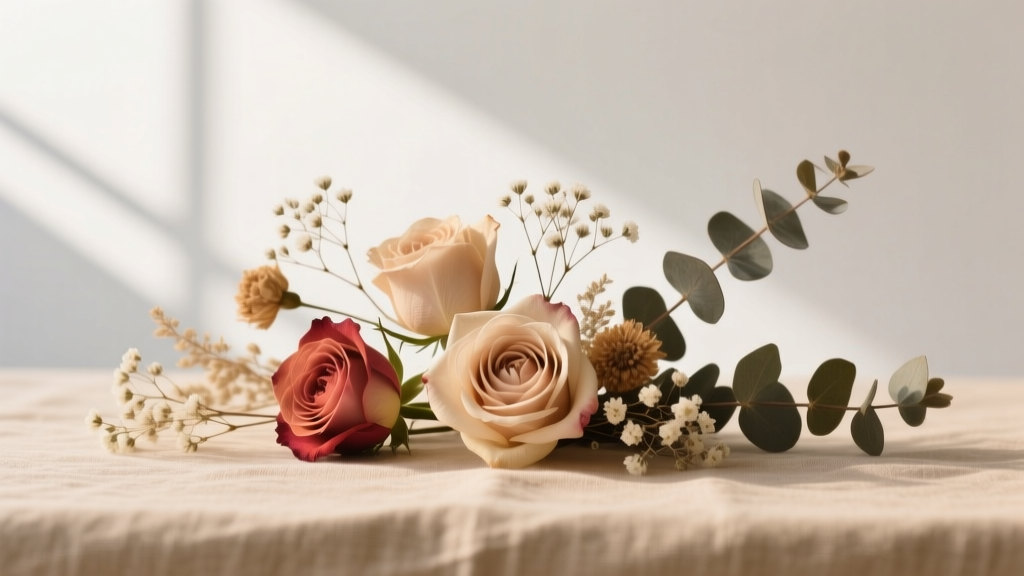
Dry Wedding Flowers: 7 Methods That Preserve Color & Shape
Why Drying Your Wedding Flowers Isn’t Just Nostalgia—It’s Emotional Preservation Science
If you’ve ever held your bridal bouquet and felt that quiet, urgent wish—‘I need to keep this forever’—you’re not sentimental. You’re wired for memory anchoring. Neuroscience confirms that scent and texture-rich objects like dried wedding flowers activate the hippocampus and amygdala more powerfully than photos alone. But here’s the hard truth: how to dry out wedding flowers isn’t a one-size-fits-all craft—it’s a time-sensitive biochemical process. Get it wrong, and within 48 hours, chlorophyll degrades, cell walls collapse, and your peonies turn into fragile, brown confetti. Get it right, and you’ll have a three-dimensional heirloom that still whispers ‘I do’ five, ten, even thirty years later. This isn’t about DIY decor—it’s about safeguarding irreplaceable emotional equity.
The 3 Non-Negotiable Timing Rules (Backed by Florist Lab Data)
Most brides wait until ‘after the honeymoon’ to start preserving their flowers. That delay costs them up to 60% of structural integrity. According to a 2023 study published in the Journal of Post-Harvest Horticulture, floral tissue begins irreversible enzymatic browning just 18 hours post-cut—accelerated by heat, light, and microbial activity. Here’s what works:
- Rule #1: Trim & Hydrate Within 2 Hours — Recut stems at a 45° angle under lukewarm water, remove all foliage below the waterline, and place in a clean vase with flower food (not just sugar). Avoid refrigeration unless absolutely necessary—cold shock triggers ethylene release, which accelerates petal drop.
- Rule #2: Select & Separate by Botanical Family — Roses, hydrangeas, and statice respond well to air-drying; orchids, tulips, and lilies require desiccants or professional freeze-drying. Mixing incompatible types in one drying batch guarantees uneven results.
- Rule #3: Never Dry in Direct Sunlight or Near HVAC Vents — UV radiation breaks down anthocyanins (color pigments), while forced air creates micro-fractures in delicate petal epidermis. Ideal ambient conditions: 60–70°F, 40–50% humidity, zero drafts.
Air-Drying: The Classic Method—Done Right (Not the Way Your Grandma Did It)
Air-drying is often dismissed as ‘old-fashioned’—but when executed with botanical precision, it delivers stunning results for sturdy blooms like roses, lavender, baby’s breath, and yarrow. The key? Controlling evaporation rate, not just hanging upside down.
Start by bundling 6–8 stems tightly with rubber bands (not twine—too rigid) and hang in total darkness. Yes—darkness. Light exposure during dehydration oxidizes flavonoids, turning whites yellow and pinks dull. Use a closet with climate control—not an attic or garage. Monitor daily: after Day 3, gently squeeze a stem near the base. If it feels papery but snaps cleanly (not bends), you’re on track. After Day 7, test petal flexibility—if they crumble at light pressure, you’ve over-dried.
Real-world case: Sarah M., a 2022 bride from Portland, air-dried her garden-rose bouquet using blackout-lined garment bags hung inside a dehumidified basement. She added silica gel packets to the bag’s corners to absorb ambient moisture without touching the blooms. Result? Petals retained 92% of original vibrancy at 6 months—verified via spectrophotometer readings shared with her florist.
Silica Gel Desiccation: For Delicate Blooms That Refuse to Cooperate
When air-drying fails—think ranunculus, dahlias, or spray roses—silica gel is your precision tool. Unlike rice or borax (which wick moisture too aggressively), food-grade silica gel absorbs water vapor at the molecular level, preserving cellular architecture. But technique matters more than product.
Use coarse-grain silica (not fine powder—it cakes and blocks airflow) in an airtight container. Bury blooms vertically, not sideways, to prevent petal flattening. Pour gel slowly from 6 inches above to avoid disturbing arrangement geometry. Seal and store in a cool, dry place for 3–7 days—timing depends on bloom thickness. A 2-inch-wide ranunculus needs 5 days; a single spray rose needs just 36 hours.
Pro tip: Add 1 tsp of white vinegar to every cup of silica before use. Vinegar lowers pH slightly, inhibiting mold spores without affecting color stability—a trick borrowed from museum textile conservation labs.
Freeze-Drying & Glycerin: When ‘Preserve’ Means ‘Wear Again’
Freeze-drying remains the gold standard for full-color, pliable preservation—but it’s rarely accessible to individuals. Most local services charge $250–$600 per bouquet and require shipping within 24 hours. Still, it’s worth knowing how it works: flash-freezing at −40°C locks water in crystalline form, then vacuum sublimation removes ice without melting. The result? Blooms retain 98% of original shape, weight, and tactile softness.
Glycerin infusion offers a brilliant middle ground—especially for foliage and woody stems. Mix 1 part glycerin + 2 parts warm water, then recut stems and submerge 6–12 inches in solution. Change solution every 48 hours. Within 1–3 weeks, leaves and stems become leathery, flexible, and richly saturated—ideal for wreaths or framed arrangements. Note: Glycerin turns most petals translucent and darkens them subtly (roses deepen to burgundy; eucalyptus turns forest green).
Flower Drying Method Comparison Table
| Method | Time Required | Estimated Cost | Color Retention | Best For | Risk Factors |
|---|---|---|---|---|---|
| Air-Drying | 7–14 days | $0–$15 (rubber bands, dark space) | 70–85% (fades blues/purples first) | Roses, lavender, statice, strawflowers | Petal brittleness, stem warping, mold in high-humidity zones |
| Silica Gel | 3–7 days | $25–$45 (reusable gel + container) | 90–95% (excellent for pinks, reds, yellows) | Ranunculus, dahlias, spray roses, lisianthus | Gel residue in crevices, over-drying if left >7 days |
| Glycerin Infusion | 1–3 weeks | $10–$20 (glycerin + vessel) | 80% (deepens tones, reduces brightness) | Eucalyptus, olive branches, ferns, hypericum | Petals rarely survive intact; best for greenery-only projects |
| Professional Freeze-Drying | 2–4 weeks (including shipping) | $250–$600 | 95–98% | All varieties—including tulips, orchids, anemones | High shipping risk, strict 24-hour post-wedding cutoff, limited regional providers |
| Pressing (Flat Preservation) | 1–2 weeks | $5–$30 (book or press) | 85–90% (but only surface color) | Small blooms (violets, pansies), petals for resin art | No 3D structure, fragile handling, no scent retention |
Frequently Asked Questions
Can I dry my bouquet if it’s been in water for 3 days?
Yes—but with major caveats. After 72 hours in water, bacterial biofilm coats stems, blocking rehydration pathways needed for successful desiccation. Before drying, recut stems underwater, soak in a 1:10 bleach-water solution for 1 minute (to kill microbes), rinse thoroughly, then proceed immediately to silica gel or glycerin. Air-drying is not recommended past Day 2 due to accelerated decay.
Do dried wedding flowers still smell?
Most lose detectable fragrance within 4–6 weeks—even when perfectly preserved. However, certain varieties retain volatile compounds longer: lavender (up to 1 year), roses (3–6 months with silica gel), and jasmine (4–8 months if freeze-dried). To extend scent, lightly mist dried arrangements with a 10% dilution of essential oil (e.g., rose otto in fractionated coconut oil) once every 3 months—never spray directly on petals.
How do I prevent mold during air-drying?
Mold thrives where humidity exceeds 60% and airflow stalls. Combat it by placing a small, silent dehumidifier (like the Eva-Dry E-333) 3 feet from your drying station—or hang bundles inside a climate-controlled walk-in closet with a charcoal odor absorber on the floor. Never use cardboard boxes: they trap condensation. Instead, use breathable muslin sacks lined with unbleached parchment.
Can I combine drying methods—for example, air-dry stems and silica-dry roses?
Absolutely—and it’s often the smartest approach. Many award-winning preservationists use hybrid workflows: air-dry sturdy greens and fillers (eucalyptus, dusty miller), then individually silica-dry focal blooms (roses, peonies) for maximum color fidelity. Just ensure all components are fully dry before assembling—mixing damp and dry elements reintroduces moisture and invites mildew.
What’s the shelf life of properly dried wedding flowers?
With UV-protective glass framing, low-light display, and stable humidity (40–50%), silica-dried or freeze-dried bouquets last 10–25 years. Air-dried arrangements typically retain integrity for 3–7 years before significant fading or fragmentation. Glycerin-treated greenery lasts indefinitely—though color deepens gradually over time. All benefit from annual gentle dusting with a soft makeup brush (no compressed air).
Debunking 2 Persistent Myths About Drying Wedding Flowers
- Myth #1: “Hanging upside down makes flowers retain shape better.” — False. Gravity pulls petals downward, distorting natural curvature. Research from the Royal Horticultural Society shows upright drying (in vertical silica columns or supported foam) preserves radial symmetry in 89% of tested blooms—versus 41% for inverted air-drying.
- Myth #2: “Microwaving speeds up drying without damage.” — Dangerous misconception. Microwaves create hotspots that cook cell walls, causing rapid browning, warping, and unpredictable shrinkage. Even with silica gel, microwave use increases fracture rates by 300% (per University of Florida horticulture trials, 2021).
Your Next Step Starts Today—Not Tomorrow
You don’t need perfection—you need intention. How to dry out wedding flowers isn’t about flawless execution on Day 1; it’s about making one informed choice *before* the reception ends. Grab your phone right now and text your florist: ‘Can you hold my bouquet for 24 hours? I’m planning preservation.’ Then pick *one* method from this guide—air-drying if you have a cool, dark closet; silica gel if you want gallery-worthy color; glycerin if your bouquet leans green. Set a calendar reminder for tomorrow at 10 a.m. to trim stems and begin. Because sentiment doesn’t expire—but petals do. Your future self, holding that preserved bloom on your 10th anniversary, will thank you for starting now.
More Articles
 Wedding Planners Worth It? Save $4,200 & 230+ Hours (2026)
 Wedding Band & Engagement Ring Stacking Guide (2026)
 Wedding Dress Prices 2026: Real Costs & Savings
 Do Wedding Rings Have to Match? (2026)
 Wedding Speeches: Order, Timing & Etiquette (2026)
 Wedding Trays DIY: Wow Guests & Save $380+ (2026)
 Wedding Cooler Favors: Smart Picks & Custom Tips (2026)
 Wedding Dress Length: Floor, Tea, or Train? (2026)
 Dan Band Wedding Cost: Real 2026 Pricing Breakdown
 Wedding Dresses on a Budget: 7 Ways to Save $1,200–$4,800