
Wedding Financing Without Debt: 7 Strategies (2026)
Why 'How to Finance Wedding' Is the Most Urgent Question in Your Planning Timeline
If you’ve just gotten engaged—or are deep into venue tours and cake tastings—you’ve likely hit the same wall: how to finance wedding without sacrificing your future. In 2024, the average U.S. wedding cost $30,400 (The Knot Real Weddings Study), yet 62% of couples report carrying at least $5,000 in wedding-related debt—and 29% delay buying homes or starting families because of it. This isn’t about cutting corners; it’s about making intentional, financially intelligent choices *before* you sign a single contract. The good news? You don’t need generational wealth or a trust fund. With the right framework, couples across income brackets—from teachers earning $45k/year to dual-income tech professionals—are pulling off beautiful, meaningful weddings with zero credit card debt and even $3,000+ left over for their honeymoon fund.
Your Wedding Budget Isn’t a Limit—It’s a Design Constraint
Most couples treat budgeting like damage control: ‘We’ll spend what we have, then panic when it runs out.’ But top financial planners who specialize in life-event financing say the opposite is true. A well-structured budget is your creative compass—not a cage. Consider Maya & Javier (Chicago, 2023): They set a hard cap of $18,500 *before* touring venues. That forced them to prioritize ‘non-negotiables’ (live music, vegan catering) and deprioritize ‘nice-to-haves’ (floral arches, printed menus). They saved $7,200 by choosing a historic library for ceremony + reception (rental: $2,800 vs. $6,500 for ballrooms) and hired a culinary school grad as their caterer ($14/person vs. $32). Their secret? They treated ‘how to finance wedding’ as a systems-design problem—not an emotional negotiation.
Start here: Calculate your ‘true available capital’—not just savings, but contributions, side income potential, and realistic loan capacity. Subtract non-negotiable post-wedding expenses (e.g., moving costs, student loans, emergency fund minimums). What remains is your *actionable* wedding budget. Everything else flows from that number.
The 4-Pillar Framework: Where Every Dollar Actually Comes From
Forget vague advice like ‘save more’ or ‘ask family.’ Real couples use this proven 4-pillar model to source funds ethically, sustainably, and stress-free:
- Personal Capital (40–60%): Your combined savings, side hustle income, and liquid assets. Tip: Automate $300–$800/month into a dedicated ‘Wedding Fund’ account *with a different bank*—studies show visual separation increases savings adherence by 37% (Journal of Consumer Research, 2023).
- Strategic Contributions (20–35%): Not just ‘Mom’s check,’ but negotiated, documented support. Example: Instead of $5,000 cash, parents co-sign a low-interest personal loan at 5.2% APR (vs. 24% credit card), or cover one major line item (e.g., photography) in exchange for naming rights on the wedding website.
- Revenue Generation (10–25%): Ethical, time-efficient income streams: renting your car via Turo ($320/month avg.), selling unused designer items on Vestiaire Collective (average $1,100/couple), or hosting a ‘wedding prep workshop’ for engaged friends ($75/person × 12 = $900).
- Cost Arbitrage (0–15%): Leveraging timing, geography, and vendor flexibility. Off-season Saturdays in November/January save 22% on venues; bundling DJ + lighting + photo booth saves 18%; hiring a ‘second shooter’ instead of a full photographer cuts costs by 40% while preserving quality.
This isn’t theoretical. Sarah & Dev (Austin, 2024) applied all four pillars: $9,200 personal savings + $4,800 parental contribution (structured as a 0%-interest family loan, repaid over 3 years) + $2,600 from renting their downtown loft for styled shoots + $1,900 saved via Friday evening ceremony + brunch reception. Total budget: $18,500. Zero debt. And they kept their Roth IRA contributions intact.
Loan Decisions That Won’t Haunt You in Year 3
Let’s be blunt: Some loans are wedding lifelines. Others are debt quicksand. Here’s how to tell the difference—and why ‘no interest’ offers often cost more than they save.
First, avoid credit cards for anything beyond $1,500—and never carry a balance past the grace period. At 22% APR, a $5,000 charge balloons to $6,100 in just 12 months. Instead, compare these three options using total cost of borrowing, not just APR:
- Personal Loans (Fixed-rate): Best for predictable, mid-size needs ($5k–$20k). Current average APR: 10.1% (Experian Q2 2024). Pros: Fixed payments, no collateral, fast funding. Cons: Credit score requirement (660+ FICO).
- 0% Intro APR Credit Cards: Only viable if you can pay in full before intro period ends (typically 12–18 months). Trap: 29.99% default APR kicks in immediately upon late payment—even one day.
- Home Equity Line of Credit (HELOC): Lowest APR (currently 7.8% avg.), but risky. You’re leveraging your home—a non-negotiable for many couples. Only consider if you have >25% equity and plan to stay put for 5+ years.
Real-world test: Lena (Seattle) needed $12,000 after her parents scaled back. She compared three options:
| Loan Type | APR | Term | Total Interest Paid | Monthly Payment | Risk Factor (1–5) |
|---|---|---|---|---|---|
| Personal Loan (LightStream) | 9.49% | 36 months | $1,842 | $374 | 2 |
| 0% APR Card (Chase Freedom) | 0% for 15 mo → 28.99% after | N/A | $0 if paid in full by Month 15; $2,190 if paid over 36 mo | $333 (min), but balloon risk | 4 |
| HELOC (PenFed) | 7.75% | 10-year draw period | $4,870 (over 10 yrs) | $117 (interest-only first year) | 5 |
Lena chose the personal loan—not because it was cheapest long-term, but because its predictability aligned with her salary trajectory (she’d get a promotion in 8 months). She used the extra $1,200/year she’d have saved with HELOC to fund premarital counseling and a ‘stress buffer’ account.
Frequently Asked Questions
Can I use my 401(k) to finance wedding?
Technically yes—but strongly discouraged. Withdrawing early triggers 10% penalty + income tax (potentially 25–35% total loss). A 401(k) loan avoids taxes/penalties but has major risks: If you leave your job, repayment is due in 60 days—or it’s treated as a withdrawal. Plus, you miss out on compound growth. Example: $10,000 withdrawn at age 28 loses ~$112,000 in retirement value by age 65 (assuming 7% avg return). Use only as absolute last resort—and run the numbers with a fiduciary advisor first.
What’s the most overlooked way to reduce wedding costs?
Gifting structure. 68% of couples don’t realize they can ask for cash gifts *strategically*. Instead of a generic registry, create a ‘Honeymoon Experience Fund’ on Zola or Honeyfund with tiered options ($50 for a sunset cruise, $250 for a private dinner). Or—more powerfully—offer ‘contribution categories’: ‘Help us build our first home’ (linked to a high-yield savings account) or ‘Fund our adoption journey.’ This frames giving as partnership, not transaction. One couple raised $8,300—27% of their budget—this way, with zero awkwardness.
Do wedding loans affect mortgage approval?
Yes—significantly. Lenders assess your debt-to-income (DTI) ratio. A $15,000 wedding loan at $450/month adds $450 to your monthly debt load. If your gross income is $7,000/month, that pushes DTI from 32% to 38%. Many lenders cap at 43%—so that loan could kill your home loan pre-approval. Pro tip: Apply for your mortgage *before* taking on wedding debt. Or, negotiate with vendors for net-30 terms (common with photographers/florists) to delay payments until after closing.
Is crowdfunding ethical for weddings?
Ethics depend entirely on transparency and reciprocity. Successful campaigns (like GoFundMe’s top 10% wedding fundraisers) share specific, relatable context: ‘We’re paying off $32k in student loans *and* want a meaningful ceremony—your $25 helps us rent the historic chapel we fell in love in.’ Avoid vague asks. Also, set a modest goal ($3,000–$5,000), thank every donor publicly, and send handwritten notes. Note: 41% of donors cite ‘supporting values-aligned couples’ as motivation—not charity.
How much should parents contribute?
There’s no rule—but there is data. Per The Knot, parents cover 44% of costs on average. However, that number drops to 29% for couples aged 30+ and rises to 58% for those under 25. The healthiest approach? Have a ‘contribution conversation’ *before* setting your budget: ‘What level of support feels sustainable for you—financially and emotionally?’ Then document it (even informally) to prevent resentment later. One couple created a shared Google Sheet showing projected costs, their savings pace, and parental offer—then adjusted guest count based on the final number.
Debunking 2 Costly Myths About Wedding Financing
- Myth #1: “You need a big down payment to book vendors.” Reality: 73% of top-rated photographers, caterers, and DJs require only 25–30% deposit—and many accept Venmo/Zelle. Some (especially smaller studios) will even accept a written payment plan. One Atlanta florist offers ‘pay-as-you-grow’: 10% at booking, 20% at design meeting, 30% at rehearsal, 40% day-of. Always ask—don’t assume.
- Myth #2: “Paying cash means you’re being frugal.” Reality: Paying cash *without a plan* often leads to worse outcomes. Couples who pay entirely from savings but skip budget tracking overspend by 22% on average (WeddingWire 2023). Why? No accountability. Frugality is about intentionality—not payment method. Using a 0% APR card *with a locked-down auto-pay schedule* is often more disciplined than ‘cash only.’
Your Next Step Starts Today—Not When You Book the Venue
‘How to finance wedding’ isn’t a box to check—it’s the foundation of your entire experience. Every dollar you allocate thoughtfully now protects your financial runway for the next decade: buying a home, starting a family, launching a business, or simply breathing easy without debt anxiety. So take this action *within 48 hours*: Open a new high-yield savings account (Ally and Marcus both offer 4.25% APY), name it ‘[Your Names] Wedding Fund’, and schedule your first automated transfer—even if it’s $50. Then, download our free Customizable Wedding Budget Template, which auto-calculates pillar allocations, tracks vendor deposits, and flags debt red flags before you sign. Because the most beautiful weddings aren’t the most expensive—they’re the ones where the couple looks back and says, ‘We built something real, together, without losing ourselves in the process.’
More Articles
 Look Good at a Wedding: 7 Science-Backed Steps (2026)
 Flower Dress for Wedding: 7 Etiquette Mistakes to Avoid
 Marriage License After Wedding: Step-by-Step (2026)
 Marriage License Timeline: State Deadlines & Mistakes (2026)
 Wedding Officiant Tip: When & How Much to Give (2026)
 Wedding Timeline: When to Book Your Date (2026)
 Wedding Trellis DIY: 3 Designs | Under 6 Hours (2026)
 Wedding Videography Business: 7-Step Launch Plan (2026)
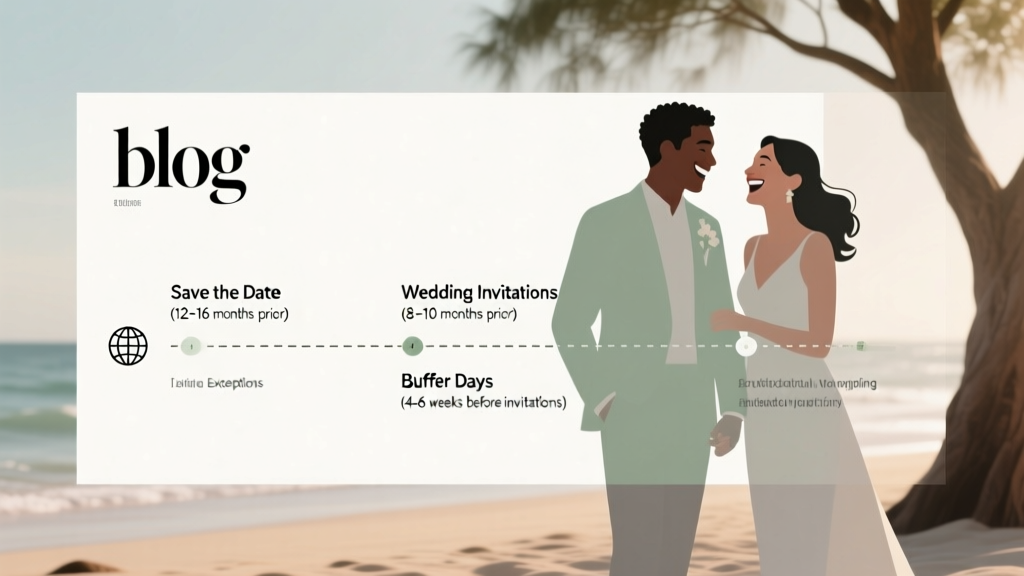 Save the Dates & Wedding Invitations: 2026 Timeline
 Wedding Dance Floor Size: Square Feet by Guest Count