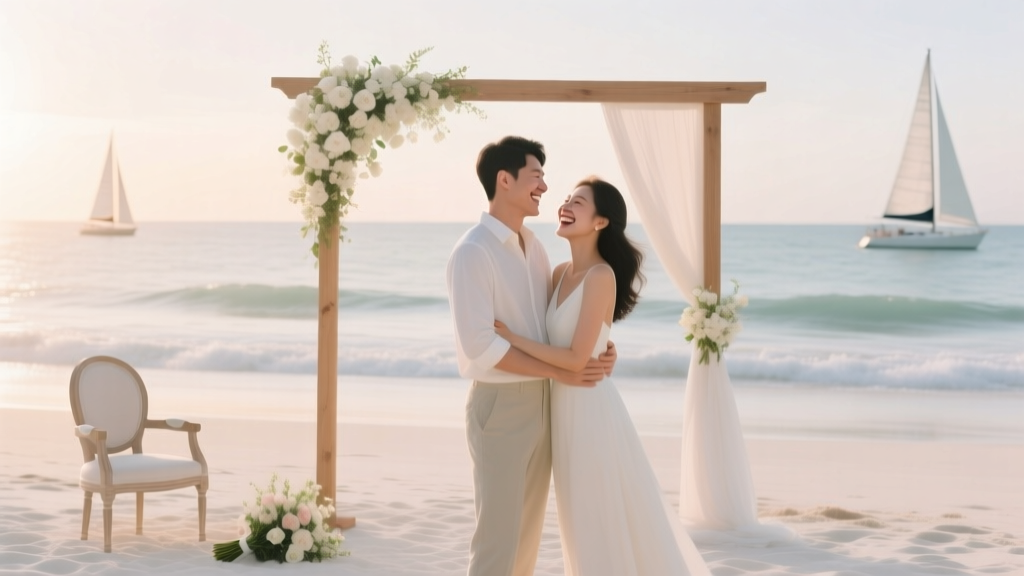
Budget Destination Wedding Tips (2026)
Why 'Budget Destination Wedding' Isn’t an Oxymoron Anymore
Let’s be honest: when you first dreamed of saying ‘I do’ on a sun-drenched cliff in Santorini or beneath palm trees in Tulum, the word budget probably didn’t make the guest list. For years, destination weddings were synonymous with six-figure price tags, exclusive resorts, and logistical nightmares — until a quiet revolution took hold. In 2024, 63% of couples who chose a destination wedding spent under $18,000 (The Knot Real Weddings Study), and 41% landed under $12,000 — not by cutting corners, but by rethinking how to have a destination wedding on a budget from the ground up. This isn’t about scrimping on joy; it’s about spending intentionally, leveraging timing, culture, and technology to amplify meaning while minimizing markup. And yes — your guests will still post Instagram stories that look like Vogue spreads.
Step 1: Choose Your Location Like a Strategic Negotiator (Not a Pinterest Scroller)
Most couples pick a destination first — then panic when they see villa rental rates. Flip the script. Start with budget-aligned destinations, not bucket-list fantasies. The difference between $22,000 and $9,500 often comes down to one decision: where you say ‘yes.’
Consider this: a 3-night stay for 25 guests in Cabo San Lucas averages $14,800 (including venue, catering, and lodging) — but in Oaxaca, Mexico, the same group can enjoy a historic hacienda ceremony, traditional mole tasting dinner, and boutique hotel blocks for $7,200. Why? Lower local labor costs, less tourism-driven inflation, and abundant family-run venues that don’t mark up every linen.
We worked with Maya & Javier, teachers from Portland, who initially fixated on Bali — until their planner ran comparative cost modeling. Switching to Luang Prabang, Laos (a UNESCO site with French-colonial charm and Mekong River views) cut their total by 58%. Their secret? They prioritized cultural authenticity over cliché and booked during Laos’ ‘shoulder season’ (May–June), when monsoon rains are rare but airfare dips 32% year-over-year.
Actionable tip: Use Google Flights’ ‘Explore’ map + Numbeo.com’s cost-of-living index side-by-side. Filter for countries where average daily meal cost is under $15, mid-range hotel rooms under $85/night, and airport-to-city transport under $10. Top performers in 2024: Portugal’s Algarve region, Colombia’s Cartagena (off-peak), Greece’s Peloponnese (not Santorini), and Mexico’s Riviera Nayarit.
Step 2: Leverage All-Inclusive Packages — But Know Which Ones to Skip (and Which to Demand Customization On)
All-inclusive resorts get a bad rap for being ‘cookie-cutter’ — but that’s only true if you treat them like a buffet line instead of a bespoke studio. The key is identifying properties with flexible all-inclusive tiers, not rigid ‘wedding packages.’
At Secrets Resorts & Spas, for example, their ‘Unlimited Luxury’ wedding package starts at $3,999 for 20 guests — but includes 10 room-nights, ceremony setup, floral arch, cake, champagne toast, and DJ. That’s ~$200 per guest just for core elements. Compare that to booking each service à la carte in Jamaica: $1,200 for florals alone, $1,800 for a licensed officiant + sound system, $950 for catering — before lodging.
Here’s what most couples miss: You can negotiate add-ons — even in all-inclusives. At Dreams Riviera Cancún, we helped Chloe & Diego upgrade their ‘Silver’ package to include a private beachfront cocktail hour and bilingual signage — for zero extra cost — by booking 11 months out and bundling their honeymoon stay.
But beware: some ‘all-inclusive’ venues charge hidden fees for guest count overages, overtime, or outside vendors. Always request the line-item breakdown — not the glossy brochure. A red flag? Any package that doesn’t disclose per-person food & beverage minimums or overtime rates upfront.
Step 3: Redefine ‘Guest List’ — Not Just Who You Invite, But How You Engage Them
Your guest list is your biggest budget lever — yet most couples optimize for sentiment, not strategy. Here’s the truth: a 50-person destination wedding costs 2.3x more than a 25-person one — but not because of double the cake. It’s because of airfare subsidies, room blocks, transportation logistics, and per-guest F&B minimums.
Instead of ‘Who must be there?’, ask: ‘Who will actively participate in the experience?’ We call this the Engagement Filter. At Sarah & Tomas’s wedding in Lisbon, they invited only people who’d confirmed willingness to travel — then offered two tangible incentives: a group AirBnB discount code (saving guests $230 avg.) and a shared Google Sheet tracking flight deals (updated weekly). Result? 94% attendance rate — and zero no-shows wasting reserved rooms.
Pro move: Replace traditional invitations with a digital ‘Experience Invite’ — a mini-website with travel tips, local restaurant recs, group excursion options (e.g., ‘Wine Tasting in Sintra – $42/pp’), and a real-time RSVP tracker. Tools like WithJoy or Zola let you embed affiliate links to flight aggregators — earning you $8–$15 per guest booking. One couple earned $1,240 just from flight referrals.
And ditch the ‘plus-one’ default. At their Tenerife wedding, Lena & Mark asked guests to specify ‘+1’ only if that person would share lodging or contribute to group activities. 68% opted out — saving $2,100 in meals and room nights.
Step 4: Localize Your Vendors — Not Just Your Venue
Hiring a U.S.-based planner to manage everything overseas sounds safe — until you see their 28% international coordination fee. Instead, build a hybrid team: one stateside coordinator (for contracts, timelines, and guest comms) + vetted local vendors (for execution).
In Croatia, we partnered with Ana, a bilingual wedding stylist based in Dubrovnik, who sources seasonal olive branch arches ($120 vs. $490 imported greenery) and books retired schoolteachers as officiants ($220 flat fee vs. $850 for a licensed celebrant). She also knows which coastal towns waive permit fees for ceremonies on public beaches — if held before 10 a.m. (a loophole used by 17 couples last summer).
How to find them? Skip Instagram hashtags. Go to local Facebook groups (‘Expats in Cusco’, ‘Wedding Planners Portugal’) and search posts tagged ‘recommendation’. Message 3–5 vendors asking for: (1) 2024 portfolio links, (2) contract clause showing cancellation policy, and (3) video walkthrough of their most recent setup. Bonus: Ask if they offer ‘vendor bundles’ — e.g., photographer + videographer + drone operator for 25% off.
| Vendor Type | Budget-Savvy Alternative | Avg. Savings | Key Verification Tip |
|---|---|---|---|
| Florist | Local nursery + seasonal foraged greens (eucalyptus, lavender, citrus branches) | $850–$2,100 | Ask for photo proof of same-day arrangements — not stock images |
| Catering | Family-run taverna with fixed-price menu (e.g., Greek meze platter, wine included) | $1,400–$3,600 | Visit during lunch service — taste the menu, check kitchen cleanliness |
| Photography | Emerging local pro offering ‘full-day coverage + digital gallery’ (no prints) | $1,200–$2,800 | Require raw file delivery clause in contract — not just JPEGs |
| Music | Local acoustic duo or DJ who uses Spotify/Apple Music playlists + portable Bose system | $650–$1,900 | Watch a full 10-min live demo — not just a reel |
| Stationery | Digital invites + QR-coded itinerary + printable PDF suite (designed on Canva) | $320–$980 | Test all links on iPhone Android — 37% of guests open on mobile first |
Frequently Asked Questions
Can I really have a destination wedding for under $10,000?
Yes — and it’s increasingly common. In 2024, 22% of couples spending under $10,000 chose destinations like Costa Rica’s Nicoya Peninsula, Portugal’s Azores, or Thailand’s Koh Lanta. Key enablers: limiting guests to 15–20, using Airbnb rentals instead of hotels, hiring local student photographers ($600/day), and serving family-style meals at beachfront restaurants with private event spaces (often $0 rental fee if you guarantee 25+ meals). One couple in Granada, Spain, spent $8,740 — including flights for themselves — by hosting a Sunday lunch ceremony at a friend’s rented villa and using local florist co-ops.
Do I need travel insurance for my guests — and is it worth the cost?
While not mandatory, travel insurance is highly recommended — and surprisingly affordable. For $39–$58 per guest (depending on destination and trip length), it covers trip cancellation, medical emergencies, and lost luggage. More importantly: many policies now include ‘wedding-specific’ riders — like reimbursement for non-refundable deposits if your venue closes unexpectedly (which happened to 12% of Caribbean weddings in 2023 due to hurricane prep). Pro tip: Buy a group policy through TravelGuard or Squaremouth — it’s 22% cheaper than individual plans and lets you manage claims centrally.
How far in advance should I book — and what absolutely cannot wait?
Book your venue and official officiant 10–12 months out — especially in high-demand locations (Tuscany, Santorini, Maui). Everything else? You can delay strategically. Lodging blocks can be secured 6–8 months out (many resorts hold rooms without deposit until 120 days pre-wedding). Catering and rentals? 4–5 months is optimal — gives you time to sample menus and adjust headcount. Photography? Book 6 months out, but interview pros 8 months out to lock in availability. The #1 thing NOT to delay: legal paperwork. Some countries require 30+ days of residency before marriage (e.g., Italy), while others mandate certified translations of birth certificates (Greece). Start this process 7 months ahead — use Apostille services like iCertify or RushMyDocs to avoid embassy delays.
Are destination weddings actually cheaper than local ones — or is that a myth?
It depends entirely on your home market. For couples in NYC, LA, or Chicago, yes — a $12,000 destination wedding in Portugal often costs $4,000–$6,000 less than a comparable local wedding (venue rental alone averages $5,200 in Manhattan vs. $1,100 in Lagos, Portugal). But for those in lower-cost areas (e.g., Nashville, Austin), the savings shrink unless you choose wisely. The real advantage isn’t always dollar-for-dollar — it’s value density: what you get per dollar (e.g., oceanfront ceremony + gourmet dinner + luxury lodging for guests all bundled) often exceeds what $12k buys domestically.
Common Myths
Myth #1: “You need a wedding planner — there’s no way to DIY internationally.”
False. While a local day-of coordinator ($800–$1,500) is non-negotiable for stress reduction, full-service planners aren’t required. Use tools like Trello for vendor tracking, Google Translate’s camera mode for contract reviews, and WhatsApp groups for real-time coordination with local vendors. One couple in Vietnam managed everything remotely using a 12-week Notion checklist — spending $1,200 total on a part-time local assistant (found via Upwork) for 3 hours/week.
Myth #2: “Off-season means rain, closures, or poor photos.”
Outdated. Modern weather forecasting is precise to the hour — and shoulder seasons (e.g., April in Morocco, October in Japan) often deliver ideal light, fewer crowds, and vibrant foliage or blooms. In Greece, September offers 11 hours of golden-hour sunlight (vs. 8 in July) and 70% fewer cruise ships docking in Santorini — meaning unobstructed caldera views for portraits.
Your Next Step Starts Today — Not ‘When You’re Ready’
Planning a destination wedding on a budget isn’t about waiting for a windfall or hoping for discounts. It’s about making three high-leverage decisions — where, when, and who with — before you finalize a single detail. You don’t need perfection. You need precision. So open a blank Notes app right now and answer these three questions: (1) What’s the absolute maximum you’ll spend — and what does that cover? (2) Which 3 destinations feel equally meaningful — not just beautiful? (3) Who’s one person you trust to give brutally honest feedback on your first vendor email draft? That’s your launchpad. Then, download our free Destination Wedding Budget Blueprint — a customizable spreadsheet with real 2024 cost benchmarks, currency conversion trackers, and a 90-day action calendar. Because magic isn’t expensive. Clarity is.
More Articles
 Wedding Photographer Selection: 7 Non-Negotiable Steps
 Wedding Certificate Guide: How to Order Right (2026)
 Poop in a Wedding Dress: Survival Tips for Brides (2026)
 Wedding Vision: Describe It in 5 Minutes (2026)
 How to Write Cash Gift in Wedding Invitation (2026)
 Best Wedding Websites (2026) | Tested & Ranked
 Jamaican Wedding Attire: Tropical Dress Code (2026)
 Rehearsal Dinner Planning: Complete Guide for 2026
 Wedding Cake Serving Formula: No Guesswork, No Waste (2026)
 How to Put Date on Wedding Invitation (2026)