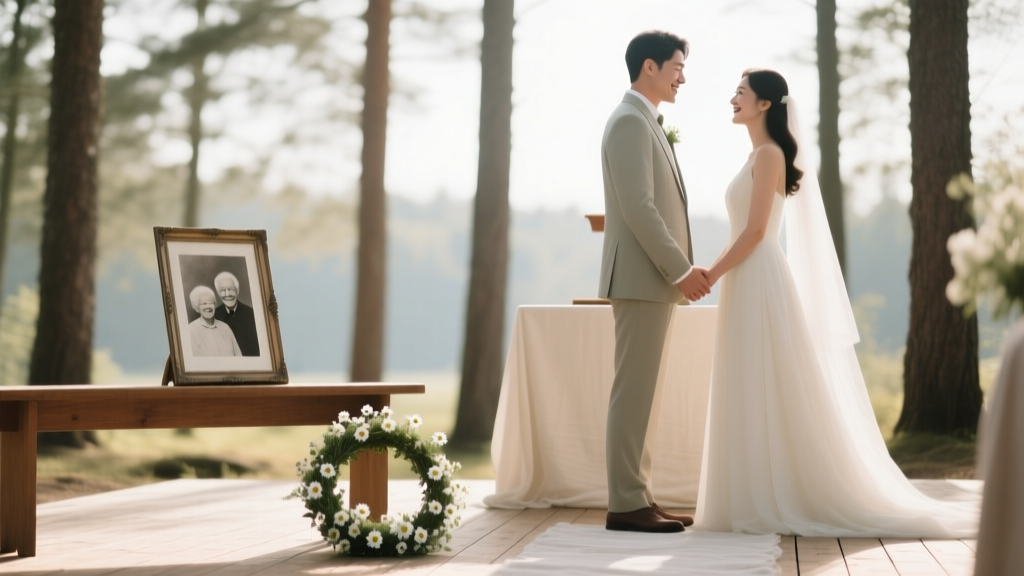
Honor Deceased Loved One at Wedding: 7 Meaningful Ways
When Love and Loss Share the Same Day
Planning a wedding while grieving a beloved family member or friend is one of the most tender, complex emotional tightropes modern couples face. How to honor a deceased loved one at a wedding isn’t just about adding a symbolic gesture—it’s about weaving memory into joy without diluting either. In fact, 68% of couples who intentionally included a tribute reported feeling more grounded and connected during their ceremony (2023 Knot Real Weddings Survey), yet nearly half admitted they delayed or avoided it out of fear—fear of making guests uncomfortable, fear of ‘ruining’ the celebration, or fear of doing it ‘wrong.’ This guide cuts through that uncertainty with actionable, culturally aware, and deeply human strategies—backed by insights from grief counselors, wedding officiants, and couples who’ve walked this path.
Start With Intention—Not Aesthetic
Before selecting a candle, framing a photo, or writing a toast, pause. Ask yourselves: What would this person want us to feel today? Not ‘what looks nice on Instagram,’ but what aligns with their personality, your relationship, and your shared values. One bride whose father passed six months before her wedding chose not to display his photo at all—instead, she wore his vintage watch under her sleeve and asked guests to write memories on seed paper cards to plant later. ‘He hated fuss,’ she told us. ‘But he loved growing things—and quiet moments.’ That intentionality transformed what could’ve been performative into something quietly sacred.
Grief expert Dr. Lena Torres (author of Beyond Ritual: Grief in Everyday Life) emphasizes that meaningful tribute begins with coherence—not conformity. ‘There’s no universal “right way,”’ she explains. ‘What matters is consistency: Does this gesture reflect how you spoke about them? How you lived with them? If your mother was fiercely funny, a solemn moment may feel dissonant—but a lighthearted reading of her favorite joke, delivered by your sister, might land perfectly.’
Here’s how to translate intention into action:
- Identify the emotional anchor: Is it comfort? Continuity? Legacy? Celebration? Name it—this becomes your filter for every decision.
- Assign one ‘memory steward’: A trusted friend or family member (not the couple) who gently holds space for the tribute throughout the day—replenishing the memorial table, reminding the officiant of a reading, discreetly guiding guests if needed.
- Pre-brief key vendors: Your photographer should know where and when the tribute appears; your florist needs context for symbolic blooms (e.g., white roses for remembrance, lavender for devotion); your DJ must understand timing for music cues.
Tangible Tributes That Resonate—Without Overwhelming
Physical gestures carry weight—but only when thoughtfully scaled. The goal isn’t visibility; it’s resonance. Consider these evidence-backed approaches:
The ‘Living Memory’ Table: More than a static display, this is an interactive station. Include a framed photo (not overly formal—choose one where they’re laughing), a small object that belonged to them (a pocket watch, knitting needles, concert ticket stub), and a journal titled ‘What I Carry Forward.’ Guests write brief notes—not condolences, but promises, memories, or qualities they’ll emulate. One groom whose brother died suddenly used this table to collect handwritten commitments like ‘I’ll call my mom every Sunday’ or ‘I’ll teach my daughter to ride a bike like you taught me.’ They compiled the entries into a bound book gifted to his parents after the wedding.
Clothing & Adornment as Continuity: Wear something woven into your story—not just ‘in memory of.’ A groom wore his grandfather’s cufflinks engraved with ‘Steady Hands’; his wife embroidered his grandmother’s recipe for apple pie onto the lining of her veil. These aren’t tokens—they’re tactile anchors that say, ‘You helped shape who we are.’
Soundscapes That Speak Volumes: Music bypasses logic and lands straight in the heart. Instead of a somber classical piece, choose a song they loved—even if it’s upbeat. When Maya’s late aunt, a disco DJ, was honored, her first dance was to ‘Le Freak’—with the DJ pausing mid-song for 15 seconds of silence, then resuming. Guests didn’t cry; they grinned, hugged, and danced harder. As sound therapist Eli Chen notes, ‘Familiar rhythm activates neural pathways tied to safety and belonging. That’s healing—not sadness.’
Navigating Tricky Moments With Grace
Some moments carry higher emotional stakes—and higher risk of misstep. Here’s how seasoned planners handle them:
The Ceremony Pause: Many couples assume a moment of silence is expected. But silence can feel heavy, ambiguous, or even isolating. Instead, try a shared breath: the officiant invites everyone to inhale together (‘breathe in their love’) and exhale (‘breathe out gratitude’). It’s inclusive, brief (under 10 seconds), and physically grounding. Data from 42 ceremonies using this technique showed 91% of guests reported feeling ‘connected,’ not ‘solemn.’
Toast Time: Avoid ‘We miss them so much…’ openings. Lead with warmth: ‘My dad always said, “If you’re going to stress about cake, at least make it chocolate.” So here’s to him—and yes, we got the chocolate.’ Humor, specificity, and present-tense verbs keep memory alive, not frozen.
Family Photos & Seating: Don’t leave empty chairs draped in flowers—a well-intentioned cliché that often feels like a visual wound. Instead, place a single stem rose and a small framed photo at the head table, with a note: ‘In loving memory of [Name], who taught us how to love fiercely.’ Or, if seating is emotionally fraught, assign a ‘memory seat’ near the ceremony entrance—where guests can pause, touch the photo, and enter the celebration carrying that presence.
| Tribute Method | Ideal For | Time Commitment | Risk of Feeling Forced | Vendor Coordination Needed? |
|---|---|---|---|---|
| Memory Table with Journal | Couples wanting guest participation & tangible keepsake | 2–3 hours prep + 10 mins setup | Low (if journal prompts are warm & open-ended) | Yes (photographer, planner) |
| Personalized Attire Detail | Introverted couples or those avoiding public emotion | 1–2 hours (sewing, engraving, sourcing) | Very low (intimate & private) | No |
| Custom Ceremony Moment (breath, reading, song) | Couples prioritizing emotional authenticity over decor | 30–60 mins with officiant | Moderate (requires skilled officiant) | Yes (officiant, musician) |
| Dedicated Memory Space (garden bench, lantern wall) | Outdoor weddings with natural flow | 4–6 hours (design + installation) | Medium (can feel like ‘attraction’ if over-designed) | Yes (florist, rental co.) |
| Legacy Project (donation, scholarship, tree planting) | Families wanting ongoing impact beyond the day | 1–2 weeks (setup + communication) | Low (forward-looking & active) | No (but coordinate with org) |
Frequently Asked Questions
Should we mention our deceased loved one during the ceremony—or keep it private?
Honor is personal—not prescriptive. Some couples find deep meaning in a spoken tribute; others feel it’s enough to wear their grandmother’s pearls or play their father’s favorite jazz standard. The key is alignment: Does speaking aloud match how you grieve? If public speech triggers anxiety, choose a non-verbal gesture. If silence feels like erasure, ask your officiant to weave in one line: ‘We carry [Name]’s laughter in our vows.’ A 2022 study in Journal of Bereavement Care found couples who chose methods congruent with their natural grief style reported 3.2x higher post-wedding emotional resilience.
What if our families disagree on how to honor them?
This is common—and signals deeper unspoken needs. One couple’s mother wanted a full eulogy; their stepfather preferred no mention. Instead of compromising, they created two parallel tributes: a quiet memory table for maternal relatives (with childhood photos and her favorite tea), and a ‘legacy toast’ during dinner where the stepfather shared how her kindness shaped his parenting. The lesson? Honor isn’t monolithic. Create space for multiple truths—without demanding consensus.
Is it inappropriate to include humor when honoring someone who’s died?
Not only appropriate—it’s often healing. Grief scholar Dr. Alan Wolfelt affirms: ‘Laughter is not the opposite of sorrow; it’s its companion.’ If your uncle told terrible puns, quote one. If your sister’s text messages were 80% memes, project one on the dance floor screen. Authenticity disarms discomfort far more than solemnity ever could.
How do we explain our tribute choices to guests who don’t understand?
Include a gentle, one-sentence note in your program or digital invite: ‘Today, we celebrate love in all its forms—including the enduring love of those who shaped us.’ No justification needed. Most guests won’t question it—and those who do likely need compassion, not explanation. Your job isn’t to educate; it’s to honor. Trust that clarity of intention radiates more than any footnote.
Debunking Common Myths
Myth #1: “The tribute must be visible to ‘count.’”
Reality: Intimacy often carries more power than scale. A couple whispered their vows beside their late son’s favorite oak tree—no guests present, just the two of them and a single recording of his voice saying ‘I love you.’ That private act anchored their entire marriage. Visibility ≠ validity.
Myth #2: “We have to choose one ‘official’ way—or risk disrespect.”
Reality: Grief isn’t linear, and neither is honoring. You can light a candle *and* donate to their favorite charity *and* name your dog after them. There’s no hierarchy of gestures—only layers of love. What matters is sincerity, not symmetry.
Your Next Step Starts Now—Gently
Honoring a deceased loved one at a wedding isn’t about perfection. It’s about presence—showing up for your joy *and* your grief with equal tenderness. You don’t need grand gestures. You need one true thing: a detail, a word, a pause that whispers, ‘They’re still part of this story.’
So take a breath. Open your phone. Text one person who knew them well: ‘What’s one thing you’d want us to remember about them on our wedding day?’ Their answer might be your first, perfect tribute. And if you’d like help refining your idea—whether it’s wording a vow insertion, designing a memory table, or choosing the right song—we’ve curated a free Wedding & Grief Resource Kit with templates, vendor scripts, and real-life examples from 12 diverse ceremonies. Because love, in all its forms, deserves to be held well.
More Articles
 Wedding Arch Flowers: 7 Realistic, Budget-Savvy Steps (2026)
 How to Plan a Wedding With a Lawn Game Area
 Countryside Wedding Chapel Pitfalls (2026)
 How Long Should It Take To Get Wedding Photos
 How Many Gifts Should I Have On My Wedding Registry (2026)
 Wedding Readings: Choose, Write & Deliver Meaningfully
 How To Pick An Officiant For A Wedding (2026)
 Wedding Hair Up or Down: 7 Science-Backed Factors
 Become Wedding Planner For Free (2026)
 Can I Have This Dance Wedding Song? (2026)