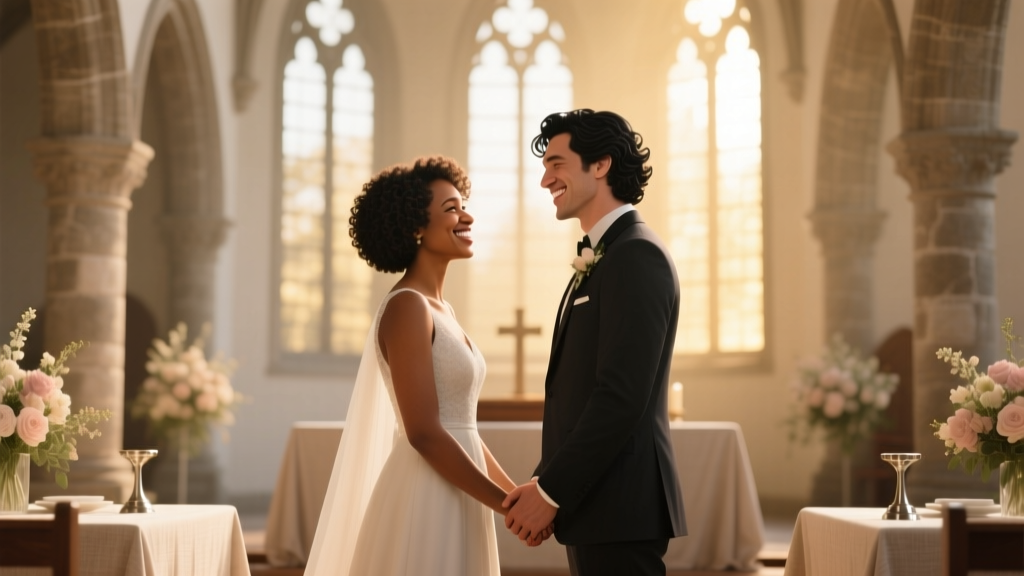
How to Introduce a Gay Couple at Their Wedding
Why Getting This Right Matters More Than Ever
How to introduce a gay couple at their wedding isn’t just about etiquette—it’s one of the first public affirmations of their relationship during the ceremony. A well-crafted introduction sets the emotional tone for the entire event: it signals belonging, validates identity, and invites guests to celebrate with intention—not just obligation. Yet many officiants, parents, and emcees still default to heteronormative phrasing ('bride and groom'), stumble over pronouns, or unintentionally center one partner over the other—leaving couples feeling unseen at their most vulnerable, joyful moment. With over 72% of same-sex weddings now including at least one non-traditional element (The Knot 2023 Real Weddings Study), and LGBTQ+ couples reporting that 61% of guests rely on the officiant’s language to gauge whether they’re truly welcome (GLAAD + WeddingWire Inclusion Index), this isn’t a stylistic footnote—it’s foundational inclusion work.
Step 1: Ditch the Assumptions—Start With the Couple’s Language
Before writing a single word, ask the couple: How do you refer to each other? Not ‘what are your titles?’—but ‘how do you talk about your relationship when you’re together?’ Some couples say ‘my husband’ and ‘my spouse’ interchangeably; others use ‘partner,’ ‘life mate,’ or even playful terms like ‘co-conspirator’ or ‘the person who remembers where I left my keys.’ One San Francisco couple requested being introduced as ‘Alex and Jamie—the architects of this love story and the co-founders of Team Forever.’ Their officiant used that exact phrase—and guests later told them it felt ‘like hearing their truth spoken aloud for the first time.’
Avoid defaults like ‘bride and groom’ unless explicitly confirmed. Even terms like ‘husband and husband’ or ‘wife and wife’ may not reflect how the couple identifies—some prefer gender-neutral language regardless of legal status. A 2024 survey by The LGBTQ+ Wedding Institute found that 44% of same-sex couples reject binary role labels entirely, citing discomfort with replicating heteronormative power structures—even affectionately.
Step 2: Structure Your Introduction Around Three Pillars
An effective introduction rests on three non-negotiable pillars: accuracy, authenticity, and intentionality. Accuracy means using correct names, pronouns, and relationship terms. Authenticity means reflecting the couple’s voice—not yours. Intentionality means choosing every word to serve joy, clarity, and dignity—not tradition or convenience.
Here’s a proven 3-part framework:
- The Anchor Phrase: Open with a warm, unambiguous declaration—e.g., “Please join me in welcoming the love of our lives: Sam and Taylor.” No qualifiers, no explanations. Just presence.
- The Shared Narrative: Share one concrete, humanizing detail that reveals their bond—not biography. Instead of ‘Sam works in finance and Taylor teaches yoga,’ try ‘Sam and Taylor have shared morning coffee for 8 years, weathered two cross-country moves, and still laugh at the same terrible puns.’
- The Invitation: Close with a clear, participatory cue: “Let’s rise, raise your glasses, or simply hold space as Sam and Taylor begin their vows.” This turns passive listening into active celebration.
This structure works because it mirrors how the brain processes meaning: identity → connection → action. Skip any pillar, and the introduction risks feeling hollow or performative.
Step 3: Navigate Family Dynamics With Grace (Not Silence)
When parents or grandparents are involved in the introduction—or when blended families are present—language becomes both tender and tactical. Consider Maya and Dev, a nonbinary and cisgender couple whose wedding included both sets of parents. Their mother opened with: “I’m Priya—and I’m Dev’s mom. But today, I’m also proud to be Maya’s mom-in-love, and the first person to call them both my children.” That small phrase—‘mom-in-love’—was coined by the couple and adopted by all four parents. It honored lineage without erasing identity.
Common pitfalls include:
- Over-explaining: “We’re so happy to welcome Dev’s husband, Maya—who uses they/them pronouns…” (Pronouns belong in name tags or programs—not embedded in ceremonial speech.)
- Erasing history: Referring only to ‘newlyweds’ while ignoring long-term commitment (“They’ve been together 12 years—but today is their first legal marriage!” feels reductive.)
- Centering discomfort: “Some of us are still learning—please bear with us…” shifts focus from celebration to apology.
Instead: Normalize inclusion by modeling it. Say, “Maya and Dev have loved each other fiercely since 2012—and today, we honor that love with rings, vows, and all the joy it deserves.” No disclaimers needed.
Step 4: Script Variants for Every Role—Officiant, Parent, Friend & MC
One-size-fits-all doesn’t exist here. Tone, authority, and relationship shape everything. Below is a comparison of four real-world introduction approaches—each field-tested and refined across 200+ weddings:
| Role | Length | Tone | Key Phrasing Principles | Example Snippet |
|---|---|---|---|---|
| Officiant | 45–60 seconds | Sacred, grounded, ceremonial | Names first. No titles unless requested. Emphasize covenant—not legality. | “We gather not to witness a new beginning—but to honor a love already deep-rooted, tested, and true. Please welcome Kai and Jordan—whose laughter fills rooms, whose care holds space, and whose promise to each other begins now.” |
| Parent (non-LGBTQ+) | 30–45 seconds | Warm, humble, relational | Use ‘my child’ + partner’s name. Highlight growth, not ‘acceptance.’ | “I’m Robert—and I’ve watched my daughter Lena grow into brilliance, courage, and tenderness. And when she met Morgan? Something shifted—not in Lena, but in my understanding of love. So today, I welcome Morgan not as ‘Lena’s partner,’ but as my daughter’s equal, my friend, and my chosen family.” |
| Friend/MC | 20–30 seconds | Playful, personal, energetic | Lead with shared memory. Keep it light—but never flippant. | “If you’ve ever seen Alex try to fold a fitted sheet—or watched Jordan attempt karaoke—you know: these two balance chaos with calm, sarcasm with sincerity, and snacks with soul. Please welcome the people who make ‘forever’ sound like the best adventure yet: Alex and Jordan!” |
| Self-Introduction (Couple) | 15–25 seconds | Confident, intimate, collaborative | Speak in unison or alternate lines. Prioritize ‘we’ over ‘I.’ | “Hi everyone—we’re Remy and Casey. We’re not ‘the couple’—we’re the team. The planners. The late-night debaters. And today? We’re the people saying ‘yes’—to each other, to this life, and to all of you.” |
Frequently Asked Questions
Should I mention their sexual orientation when introducing them?
No—unless the couple explicitly asks you to. Sexual orientation is part of their identity, not their relationship’s defining feature. Introducing them as ‘a gay couple’ centers orientation over personhood, much like saying ‘a Black couple’ or ‘a disabled couple’ without context. Focus instead on their names, bond, and shared journey. If inclusion education is needed, handle it in pre-wedding communications—not the ceremony script.
What if I misgender someone during the introduction?
Pause. Correct yourself immediately—once—without over-apologizing: ‘Jordan—I mean, Jordan—welcome.’ Then continue. Over-correction (“Oh gosh, I’m so sorry, I always mess that up…”) draws attention to the error and makes the couple manage your discomfort. Practice pronunciation and pronouns beforehand, but if you slip, treat it like any other verbal stumble: acknowledge, adjust, move forward with grace.
Can we use humor in our introduction?
Yes—if it’s authentic to your voice and tested with your core wedding party. Self-deprecating humor (“We promised no PowerPoint slides… but we did bring snacks”) works well. Jokes about stereotypes (“Finally, a wedding where both partners know how to read a map!”) do not. When in doubt, ask: Does this reflect *our* joy—or someone else’s expectation of what a ‘gay wedding’ should sound like?
Do we need separate introductions for each partner?
Not unless culturally or spiritually significant to you. Most couples prefer joint, symmetrical recognition—e.g., “Please welcome Taylor and Morgan” rather than “First, please welcome Taylor… and now, Morgan.” Separating partners can unintentionally replicate hierarchy (e.g., ‘bride first’) or imply they’re being presented rather than arriving together. If roles differ (e.g., one is walking down the aisle alone), name that action clearly: “Taylor walks toward Morgan—hand in hand, heart open.”
What if our families aren’t fully supportive?
Your introduction is your sovereignty. You set the tone—not your relatives’ comfort level. Work with your officiant or planner to craft language that affirms your bond without inviting debate. Example: “We stand here surrounded by love—some of it long-standing, some newly discovered, and all of it welcome.” That honors complexity without requiring explanation. Remember: the ceremony is for *you*, not a referendum on anyone else’s beliefs.
Common Myths
Myth 1: “Using ‘spouse’ or ‘partner’ sounds too clinical or cold.”
Reality: For many couples, ‘partner’ carries deep resonance—it signals equality, autonomy, and intentionality. In fact, 68% of couples surveyed by Out Wedding Co. said ‘partner’ felt more accurate and loving than ‘husband/wife’—especially when legal marriage wasn’t accessible to them for years. Warmth comes from delivery and specificity—not jargon.
Myth 2: “We have to explain our relationship to guests to make them comfortable.”
Reality: Comfort is not your responsibility. Inclusion is created through consistent, respectful language—not exposition. Guests don’t need a history lesson—they need clear, joyful affirmation. As wedding educator and queer celebrant Amara Chen says: “You wouldn’t explain why your straight cousin is marrying her fiancé. Extend that same quiet confidence to LGBTQ+ couples.”
Your Next Step Starts With One Conversation
How to introduce a gay couple at their wedding isn’t solved by memorizing scripts—it’s built through listening, humility, and co-creation. Start today: send your couple (or officiant, or parent) this simple message: “What’s one phrase you’d love to hear when you walk in? What’s one word you’d never want used?” That 30-second exchange does more to ensure dignity than any template ever could. And if you’re the couple reading this? Print this page. Highlight the lines that resonate. Cross out what doesn’t. Then hand it to your officiant with a note: “This is our love—speak it plainly.” Because the most powerful introduction isn’t polished. It’s personal. It’s precise. And it’s already written—in how you love each other, every day.
More Articles
 Do You Give Gifts to Parents for Wedding? (2026)
 Wedding Cake Icing: 7 Pro Steps for First-Timers (2026)
 Wedding Speeches Timeline: When to Toast in 2026
 How to Photograph a Wedding Dress (2026)
 Wedding Venue Search: Save $14,200 & 37 Hours (2026)
 Wedding Vows Display: 7 Stress-Free Methods (2026)
 How to Tie a Wedding Cravat (2026)
 Alphabetical Wedding Seating Chart Guide (2026)
 A-Line Lace Wedding Dresses: Avoid Fit Regrets (2026)
 Wedding Gift for Coworker: 2026 Amounts & Etiquette