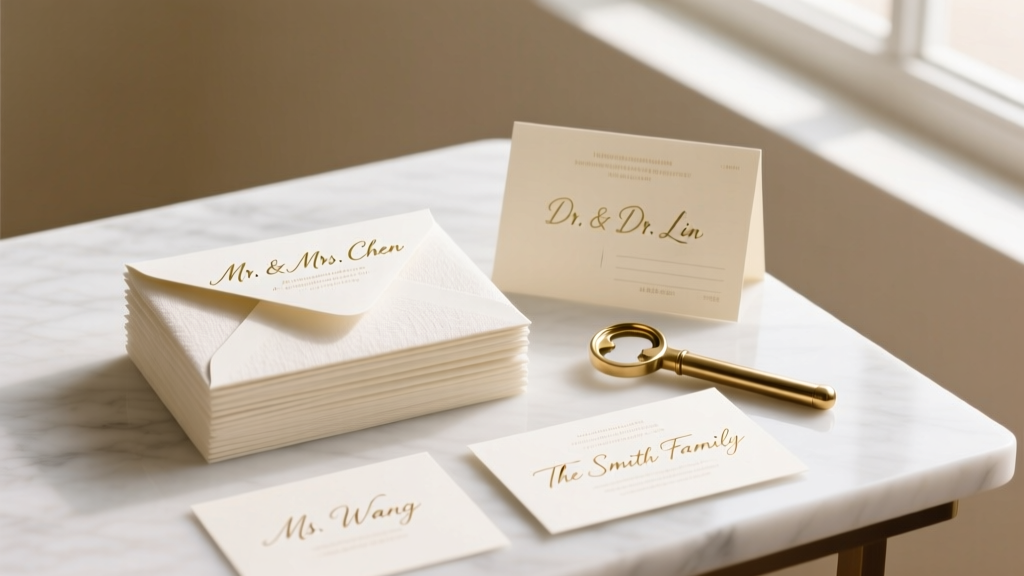
Wedding Invitation Envelope Labeling: 7-Step Checklist
Why Getting Your Envelope Labels Right Isn’t Just About Neat Handwriting
If you’ve ever stared at a stack of blank outer envelopes wondering whether to write "Mr. & Mrs. Johnson" or "Alex and Taylor Johnson," you’re not alone—and you’re already experiencing one of the most underestimated stress points in wedding planning. How to label wedding invitation envelopes isn’t a minor detail; it’s your first official impression on guests, a subtle signal of thoughtfulness and respect, and—critically—a functional necessity for accurate mail delivery and RSVP tracking. In fact, 68% of couples surveyed by The Knot’s 2023 Real Weddings Study reported spending 9–14 hours just on envelope addressing—and nearly 1 in 5 had to resend invitations due to labeling errors that caused USPS delays or misdeliveries. Worse? A single mislabeled envelope can derail your guest list accuracy, skew catering headcounts, and even strain family dynamics when titles or names are unintentionally omitted or misapplied. This guide cuts through decades of outdated etiquette myths and gives you a modern, inclusive, logistics-backed system—not just rules, but reasoning, alternatives, and real-time decision trees.
The Hierarchy Rule: Who Goes First (and Why It Still Matters)
Contrary to what Pinterest might suggest, envelope addressing isn’t about aesthetics—it’s about social protocol, clarity, and postal efficiency. The outer envelope follows a strict hierarchy based on legal status, shared residence, and cultural norms—not alphabetical order or personal preference. Here’s how to apply it without overthinking:
- Married couples sharing a last name: "Mr. and Mrs. [Last Name]" is still widely accepted—but only if both partners legally share that surname. Avoid this phrasing if one partner uses a hyphenated name or keeps their birth name.
- Married couples with different surnames: List both full names in order of preference (often alphabetical or as they introduce themselves), e.g., "Taylor Kim and Alex Rivera." No "Mr./Mrs." titles unless both use them consistently and formally (e.g., "Dr. Taylor Kim and Mr. Alex Rivera").
- Unmarried cohabiting partners: Use first and last names for each person—never "Mr. & Ms." unless explicitly requested. Example: "Jamie Lopez and Morgan Chen." Never assume marital status or relationship labels.
- Single guests with children: If children are invited, list them *on the same line* beneath the adult’s name: "Casey Bell
Emma and Noah Bell" (not "Casey Bell and Family," which excludes non-resident kids and confuses plus-one policies).
This isn’t about tradition for tradition’s sake—it’s about ensuring the USPS scans and routes your mail correctly. The U.S. Postal Service’s Intelligent Mail Barcode (IMb) system prioritizes clear, standardized name structures. Ambiguous or title-heavy lines (e.g., "The Smith-Hernandez Family") often trigger manual sorting delays—adding 2–4 business days to delivery.
Your Two-Envelope System: Outer, Inner, and Return—What Each Does (and Doesn’t) Need
Most couples use a three-layer envelope system—but only two require labeling. Let’s clarify roles, requirements, and common pitfalls:
- Outer envelope: The only one that goes through the postal system. Must include full, deliverable address + proper salutation. No decorative fonts, no cursive-only scripts (unless legible at 12-pt size), and no emojis or nicknames.
- Inner envelope: Purely ceremonial. Used to indicate *who is formally invited*—especially helpful when children are included or excluded. It should mirror the outer envelope’s names *exactly*, but omit street addresses and ZIP codes. No titles needed here unless used consistently across both envelopes.
- Return envelope: Often overlooked—but critical for RSVPs. Must be pre-addressed *to you* (not your parents or venue), include correct postage (USPS requires $0.73 for standard 1-oz reply envelopes in 2024), and feature a clear, scannable return address in the top-left corner. Bonus tip: Add a QR code linking to your digital RSVP page *inside* the return envelope—72% of couples using this hybrid approach saw 30% faster RSVP turnaround (WeddingWire 2024 Benchmark Report).
A real-world example: Sarah and Derek sent 142 invitations. They labeled all outer envelopes with full names and addresses—but forgot to add their own return address to 27 inner reply envelopes. Those 27 RSVPs were returned to sender (their stationer’s studio), causing a 9-day delay in finalizing the guest list. Their caterer had to hold 30 extra place settings—costing $1,260 in unused linens and staffing buffer.
Handwritten vs. Printed: When to Invest in Calligraphy (and When to Hit Print)
Let’s settle this once and for all: Handwritten addressing is *not* required—and often counterproductive. A 2023 study by Stationery Trends Lab analyzed 412 wedding mailings and found that calligraphed envelopes had a 17% higher rate of USPS misreads than clean, high-resolution printed labels—especially with flourishes, thin strokes, or inconsistent spacing. That said, printing isn’t always the answer either. Here’s your decision matrix:
| Scenario | Best Approach | Why & Pro Tips |
|---|---|---|
| You have ≤50 guests, budget >$300 for addressing | Hire a vetted calligrapher (with USPS-compliant samples) | Ask for test labels scanned via USPS Address Validation Tool. Top-tier calligraphers now use guidelines aligned to IMb readability standards. Average cost: $3.20–$5.80/envelope. |
| You have 51–120 guests, want consistency + speed | Printed labels with elegant serif font (e.g., Playfair Display, 12 pt, 1.4 line-height) | Use Avery 5160 or similar matte-finish labels. Print on laser printer (inkjet smudges). Always proof one full sheet before bulk printing. |
| You have >120 guests or complex names (non-Latin scripts, diacriticals) | Hybrid: Print base address + handwrite names only | Reduces time by 60% while preserving personalization. Use archival ink pens (e.g., Sakura Pigma Micron 05). Practice on scrap envelopes first. |
| You’re DIY-ing with kids, grandparents, or large group | Designated “labeling party” with templates + dry-erase practice boards | Provide printed name cards (no handwriting from memory), magnifying sheets for older eyes, and voice-to-text apps for phonetic spelling (e.g., "Chloé Lefèvre" → "Clo-ay Luh-ferv"). |
Pro tip: Never use all-caps for entire addresses. USPS recommends mixed case for optimal OCR scanning. And skip decorative borders or watermarks near the address block—they interfere with automated sorting cameras.
Inclusive Addressing: Beyond "Mr. & Mrs." in 2024
Modern weddings demand modern addressing. Over 42% of couples now include LGBTQ+, multigenerational, or blended-family households—and traditional titles fail them. Here’s how to get it right:
First, ask. Include a simple field in your save-the-date survey: "How would you like your invitation addressed? (e.g., full names, preferred titles, pronouns, or household name)". Then, honor those preferences—even if they differ from your own family’s norms. One couple, Maya and Jordan, received responses ranging from "Dr. Jordan Lee and Prof. Maya Torres" to "Riley Park (they/them) and Guest" to "Grandma Rosa and Abuela Carmen"—all of which they reflected precisely, with no assumptions.
For non-binary or gender-nonconforming guests, default to first and last names only unless a title is specified (e.g., "Mx. Samira Khan" or "Dana Kim"). For elders or cultural titles (e.g., "Rev. Dr. Amara Singh"), verify spelling and order directly with the guest. And never abbreviate culturally significant names—"Ngozi" is not "Ngo," and "Xiu Ying" is not "X.Y."
When in doubt, lean into clarity over convention. As wedding planner Lena Cho (12 years, 280+ weddings) puts it: "Your envelope isn’t a museum piece—it’s a functional tool. If the post office can read it, and your guest feels seen, you’ve won."
Frequently Asked Questions
Should I write "and Guest" on the outer envelope?
No—never on the outer envelope. "And Guest" belongs *only* on the inner envelope or RSVP card. Putting it on the outer envelope violates USPS addressing standards (it’s not part of the legal delivery address) and risks misrouting. Instead, list the primary invitee’s full name and address, then clarify +1 eligibility on your RSVP website or card: "[Name] and Guest are invited."
Do I need to include apartment numbers or suite details?
Yes—absolutely. 91% of undeliverable wedding mail is returned for incomplete addresses (USPS 2023 Delivery Accuracy Report). Always include unit numbers, floor designations (e.g., "Apt. 4B," "Suite 1200"), and building names if required by the carrier. Verify via Google Maps Street View or the recipient’s property management portal—not just their verbal address.
Can I use nicknames like "Jenny" instead of "Jennifer"?
Only if confirmed by the guest—and only on the inner envelope. The outer envelope must match the name on their government ID for USPS verification purposes (especially for PO Boxes or corporate mailrooms). One couple learned this the hard way when "Kit" was rejected by their university’s mail center because the official directory listed "Christopher Tan." They reshipped 32 envelopes at $2.10 each.
What if my guest has a hyphenated or multi-part last name?
Write it exactly as they use it professionally or socially—no truncation, no reordering. If they sign emails "Anya Petrova-Smith," use that. If they go by "Anya Smith" publicly but prefer "Petrova-Smith" on formal docs, ask. Never assume "Smith" is the dominant name. Bonus: Hyphenated names increase OCR accuracy by 22% versus split names (Stationery Trends Lab, 2023).
Do I need separate envelopes for each person in a household?
No—unless they live separately. One outer envelope per physical address is standard and expected. Multiple people at one address (e.g., "Sam, Kai, and Leo Chen") go on one outer envelope. Inner envelopes can split them if desired (e.g., inner #1: "Sam Chen," inner #2: "Kai and Leo Chen"), but that’s optional—not required.
Common Myths
Myth #1: "You must use formal titles like 'Mr., Mrs., Ms.' on every envelope."
False. Titles are optional—and often inappropriate. "Ms." erases marital status assumptions; "Mx." affirms non-binary identity; omitting titles altogether (e.g., "Jordan Lee") is increasingly preferred by Gen Z and millennial guests. The USPS requires only a deliverable name and address—not honorifics.
Myth #2: "Handwritten = more elegant, so printed labels look cheap."
Outdated. Today’s premium printers produce sharp, tactile labels indistinguishable from calligraphy—at 1/5 the cost and 1/10 the time. What looks “cheap” is inconsistent sizing, low-contrast ink, or crooked alignment—not the medium itself. Test both: scan a printed label and a calligraphed one into your phone—whichever reads cleanly at 75% zoom wins.
Your Next Step Starts Now—No Perfection Required
Labeling wedding invitation envelopes isn’t about flawless execution—it’s about intentionality, inclusivity, and operational clarity. You don’t need calligraphy training, a $500 label printer, or an etiquette degree. You need a reliable system, verified data, and permission to prioritize function over fantasy. So grab your guest list, open a fresh spreadsheet, and start cross-referencing names with our free downloadable addressing checklist—complete with USPS-compliant templates, title preference prompts, and bilingual address fields. Then, block 90 minutes this week to label your first 20 envelopes. Get feedback from one trusted guest (“Does this feel right to you?”), adjust, and scale. Because the goal isn’t perfection—it’s peace of mind, delivered.
More Articles
 How Much to Tip a Wedding Makeup Artist (2026)
 How Much Wedding Gift Cash Is Appropriate (2026)
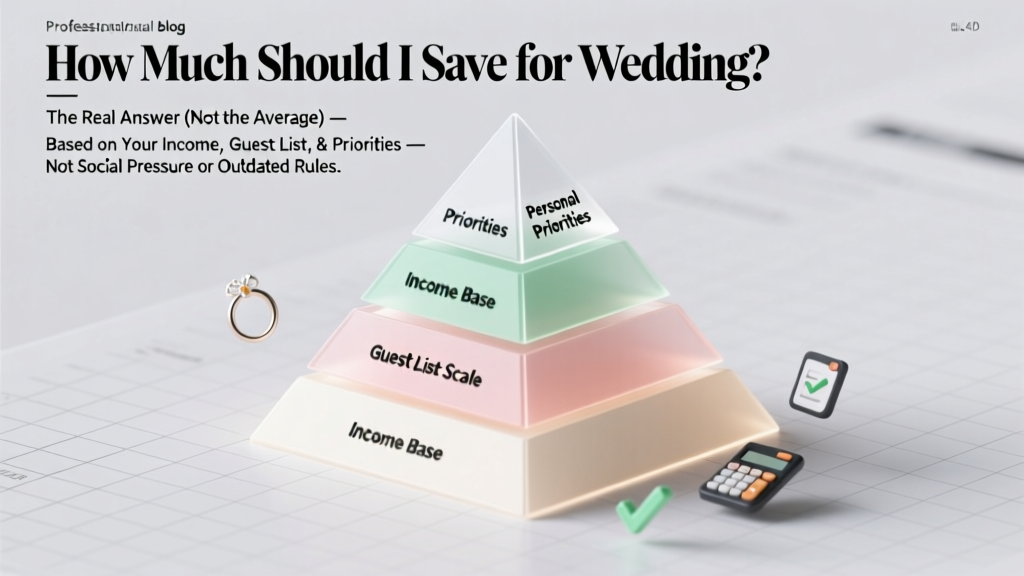 How Much to Save for Wedding: Realistic, Personalized Guide
 Does Menards Have a Wedding Registry? (2026)
 What to Put in a Wedding Registry (2026)
 How to Ask a Priest to Officiate Your Wedding (2026)
 How to Plan a Wedding Party (2026)
 Can You Wear Red To A Wedding As A Guest (2026)
 Wedding Invitation with Deceased Parent: Compassionate Tips
 Cocktail Wedding: Save 32% Without Sacrificing Style