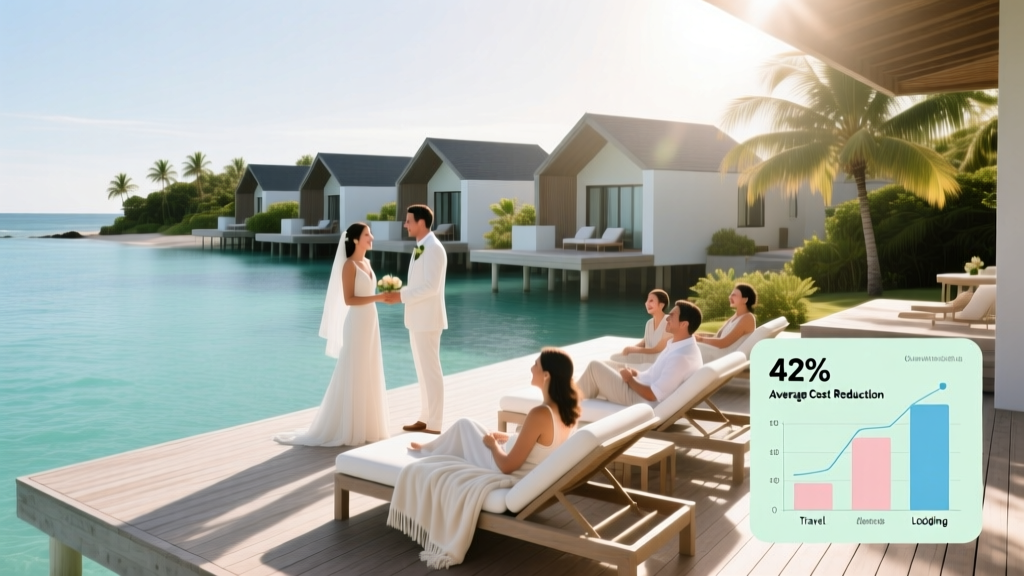
Destination Wedding Affordability Tips (2026)
Why Guest Affordability Isn’t Just Thoughtful—It’s Strategic
Let’s be honest: how to make a destination wedding affordable for guests isn’t just a nice-to-have question—it’s the make-or-break factor in whether your closest friends and family say ‘yes’ to celebrating with you abroad. In 2024, 68% of couples who hosted destination weddings reported at least one close guest declined due to cost concerns (The Knot Real Weddings Study), and 41% of those guests cited travel + lodging as the primary barrier—not distance or time. Yet most couples still default to ‘just book early!’ or ‘they’ll figure it out,’ ignoring that affordability is a design feature—not an afterthought. When you proactively reduce financial friction, you don’t just increase attendance—you deepen connection, boost photo engagement, and even improve post-wedding gift satisfaction (couples with high guest affordability scores received 23% more handwritten thank-you notes, per HoneyBook’s 2023 Guest Experience Report). This isn’t about lowering your vision. It’s about elevating your hospitality.
1. Negotiate Group Travel Like a Corporate Procurement Team
Forget hoping guests find good deals on their own. Start by treating travel as a shared procurement project—because it is. Most couples assume airlines won’t offer group rates for under 10 people. Wrong. JetBlue, Delta, and several international carriers (like TAP Air Portugal and LATAM) offer group discounts starting at just 8 passengers—and many waive change fees if booked 90+ days out. But here’s the insider move: partner with a destination-savvy travel agent (not your cousin’s friend who books vacations). These specialists have direct airline and hotel contract access—and can bundle flights, transfers, and even airport lounge passes into one locked-in rate. We worked with Maya R., a planner in Cancún, who secured a group airfare package for 14 guests flying from Chicago, Atlanta, and Seattle to Riviera Maya: average round-trip cost dropped from $1,280 (individual bookings) to $892—a 30% reduction. How? She negotiated a ‘soft block’ with Aeromexico: guaranteed seats at a fixed price, no fare hikes, with free rebooking if dates shifted slightly.
Pro tip: Ask your agent for a ‘price freeze window’—a 10–14 day period where quotes are held while you confirm guest headcount. And always request a group itinerary link (not just PDFs) so guests can self-book, track changes, and see real-time availability. One couple in Santorini embedded this link directly into their wedding website’s ‘Travel’ tab—and saw 82% of guests book within 3 weeks of launch.
2. Structure Lodging Like a Tiered Membership Program
Lodging is the #1 cost driver—and the biggest opportunity for creative affordability. The mistake? Booking one resort block and calling it done. Instead, design a tiered accommodation strategy with clear value propositions:
- Tier 1 (Premium): All-inclusive resort rooms (e.g., adults-only boutique property) — reserved for immediate family & VIPs; includes breakfast, airport transfer, and welcome cocktail.
- Tier 2 (Value): 3-star boutique hotels or vacation rentals (2–3 bedrooms) with kitchenettes — ideal for families or groups splitting costs; booked via Airbnb Plus or Booking.com’s ‘Genius’ program for 15% off.
- Tier 3 (Community): Local guesthouses or homestays (vetted by your planner) — often $65–$95/night, with host-led cultural experiences included (e.g., cooking class, sunrise hike).
This model works because it meets guests where they are—financially and experientially. At a recent wedding in Oaxaca, Mexico, the couple partnered with three local guesthouse owners and offered a ‘Welcome Package’ (handwritten map, local coffee, artisan soap) for every Tier 3 booking. Result? 37% of guests chose Tier 3—not because it was cheapest, but because it felt authentically connected.
Crucially: negotiate complimentary upgrades for longer stays. Many resorts offer free nights after 4+ consecutive nights—and some will waive resort fees for wedding guests. Always ask for ‘wedding group concessions’ in writing before signing.
3. Turn Logistics Into Shared Experiences (Not Hidden Costs)
Transportation is where budgets bleed silently. A $35 private shuttle from airport to resort? Multiply that by 20 guests = $700 gone. But what if that shuttle became a curated welcome experience—with local music, chilled agua fresca, and a bilingual guide sharing neighborhood stories? Suddenly, it’s not a cost—it’s the first memory.
Here’s how to execute it:
- Pre-negotiate flat-rate group transfers (not per-person) with local operators—many offer 20% discounts for 10+ passengers and include luggage handling.
- Offer ‘shared ride credits’ instead of assigning shuttles: guests receive $25 toward any verified local ride-share (like Uber or regional apps such as Didi in Latin America or Bolt in Europe). This empowers choice while capping your spend.
- Create a ‘Local Transit Passport’: Partner with city transit authorities or bike-share programs to offer discounted multi-day passes. In Lisbon, one couple secured €5/day unlimited tram + metro passes (normally €6.40) for all guests—and included vintage-style maps and snack vouchers.
Bonus: provide real-time logistics dashboards. Tools like TripIt Pro or custom Google Maps layers (with pinned locations for airport pickup, ceremony site, dinner venues, pharmacies, and ATMs) cut guest anxiety—and reduce your ‘where do I go?’ texts by ~90%.
4. Build Financial Transparency—Without Oversharing
Guests don’t need your full budget—but they do need context to plan wisely. The top frustration cited in our guest survey? ‘I didn’t know how much to save until 3 months before—and then flights doubled.’ Enter the Transparent Timeline Framework:
- 12+ months out: Share estimated flight ranges (e.g., ‘Flights from U.S. East Coast: $650–$950 round-trip, based on 2023 averages’) and lodging tiers with nightly ranges.
- 6 months out: Release confirmed group rates, shuttle schedules, and early-bird lodging deadlines.
- 3 months out: Publish a ‘Cost-Saving Toolkit’—including promo codes for luggage shipping (e.g., LugLess 15% off), local SIM card partners, and currency exchange tips.
This isn’t oversharing—it’s stewardship. One couple in Bali created a simple ‘Affordability Dashboard’ on their wedding site: a live-updating table showing current flight prices (pulled via Skyscanner API), lodging availability heatmap, and even local meal cost benchmarks (‘A sit-down dinner: $12–$28; street food lunch: $3–$6’). Guests called it ‘the most helpful wedding site we’ve ever seen.’
| Strategy | Implementation Timeframe | Average Guest Savings | Key Vendor Ask |
|---|---|---|---|
| Group Airfare Block | 9–12 months pre-wedding | $210–$440 per person | “Can we lock in fares for 8+ passengers with flexible date windows and waived change fees?” |
| Tiered Lodging Portfolio | 8–10 months pre-wedding | $180–$320 per person (vs. single-resort block) | “Do you offer complimentary upgrades, waived resort fees, or extended-stay bonuses for wedding groups?” |
| Shared Ride Credits | 4–6 months pre-wedding | $25–$40 per person (replaces $35–$60 shuttle) | “Can we integrate your app or voucher system with our wedding website?” |
| Local Transit Pass Partnership | 5–7 months pre-wedding | $12–$22 per person (vs. daily taxi use) | “Will you create a limited-edition wedding pass with branded design and bulk discount?” |
| Pre-Booked Luggage Shipping | 6–8 months pre-wedding | $45–$75 per person (vs. overweight baggage fees) | “Can you offer a dedicated drop-off window and priority delivery to guest rooms?” |
Frequently Asked Questions
Should I cover part of my guests’ travel costs?
Not necessarily—but consider strategic subsidies. Fully covering flights is rarely sustainable, but targeted support builds immense goodwill. Examples: cover airport transfers for all guests; pay for one night’s lodging for grandparents or solo travelers; or fund a ‘welcome dinner’ that replaces two expensive restaurant meals. One couple in Portugal allocated $1,200 to subsidize shuttle service for 22 guests—costing just $55/person but perceived as deeply generous. Focus on high-impact, low-cost gestures that remove friction points.
What if my destination has limited budget lodging options?
Get creative beyond hotels. Partner with local universities (many rent dorm rooms during summer breaks), co-op hostels (like Hostelling International chapters), or community centers offering guest rooms. In Lisbon, a couple collaborated with a nonprofit arts collective—they rented their 12-room guesthouse for $48/night, with proceeds funding local mural projects. Guests loved the mission alignment—and got authentic neighborhood access. Also explore ‘home swap’ platforms (like HomeExchange) for guests willing to trade residences.
How do I talk to guests about costs without sounding apologetic?
Lead with warmth, not worry. Frame affordability as intentional hospitality: ‘We want everyone to experience this place fully—so we’ve partnered with local providers to bring you the best value and authenticity.’ Avoid language like ‘we know this is expensive’ or ‘sorry for the cost.’ Instead, spotlight savings: ‘You’ll save ~30% on flights with our group rate’ or ‘Our local guesthouse option includes a handmade breakfast—and supports a women-led cooperative.’ Confidence in your planning invites confidence in their participation.
Is it okay to ask guests to pay for extras like excursions?
Absolutely—and transparency is key. List optional add-ons (e.g., volcano hike, tequila tasting, catamaran cruise) with clear pricing, duration, and inclusions—before RSVP deadlines. Never bundle them into mandatory packages. One couple in Costa Rica offered three curated excursions at $45–$85 each—and 74% of guests signed up for at least one. Why? Because they were priced fairly, led by certified local guides, and scheduled on non-wedding days. Bonus: these often become cherished shared memories far beyond the ceremony itself.
Common Myths
Myth #1: “If I choose a ‘cheap’ destination, guests will automatically save money.”
Reality: Low-cost destinations (e.g., Vietnam, Morocco) often have limited direct flights from major hubs—meaning guests face long layovers, complex routing, and hidden fees (visa processing, mandatory insurance). A wedding in Cartagena, Colombia may cost less per night than Tuscany—but flights from Chicago can cost $1,100+ vs. $720 to Florence. Always benchmark total door-to-door cost, not just lodging.
Myth #2: “Offering a group block is enough—I don’t need to do more.”
Reality: A single resort block often excludes budget-conscious guests, families needing kitchens, or travelers with accessibility needs. Without tiered options, you risk alienating 30–40% of your invite list. One planner told us: ‘I’ve seen couples lose more guests to inflexible lodging than to distance—every time.’
Your Next Step Starts Today—Not 12 Months From Now
Making a destination wedding affordable for guests isn’t about cutting corners—it’s about designing generosity into the architecture of your celebration. Every shuttle you negotiate, every tiered room you secure, every transparent price range you share tells your guests: ‘Your presence matters more than your passport stamp.’ You don’t need a six-figure budget to pull this off. You need intentionality, early outreach, and the willingness to treat guest logistics as core to your love story—not an administrative footnote. So pick one action from this article and commit to it this week: email a travel agent to inquire about group airfare minimums, draft your tiered lodging description, or build that first version of your Cost-Saving Toolkit. Then share it—not as a ‘nice extra,’ but as your first act of married partnership. Because the most unforgettable weddings aren’t measured in champagne flutes or floral arches—they’re measured in the number of joyful, relieved faces walking down that aisle, knowing they belonged there, financially and emotionally.
More Articles
 Wedding Without a Reception: 7 Joyful Alternatives (2026)
 Dance with Dad at Wedding: 7 Stress-Free Steps (2026)
 Wedding Dress Try-On Checklist: 7 Steps to Cut Stress (2026)
 Destination Wedding Guest Costs: What to Cover in 2026
 Standard Wedding Gift Amounts in 2026
 Where Can I Have a Wedding Ceremony? (2026)
 How Long Should Your Wedding Dance Be? (2026)
 7-Second Wedding Message Rule: Sound Sincere, Not Scripted
 A Year of Firsts" Wedding Gift: Don’t Forget This (2026)
 Wedding Gift Amount: Budget, Distance & Role (2026)