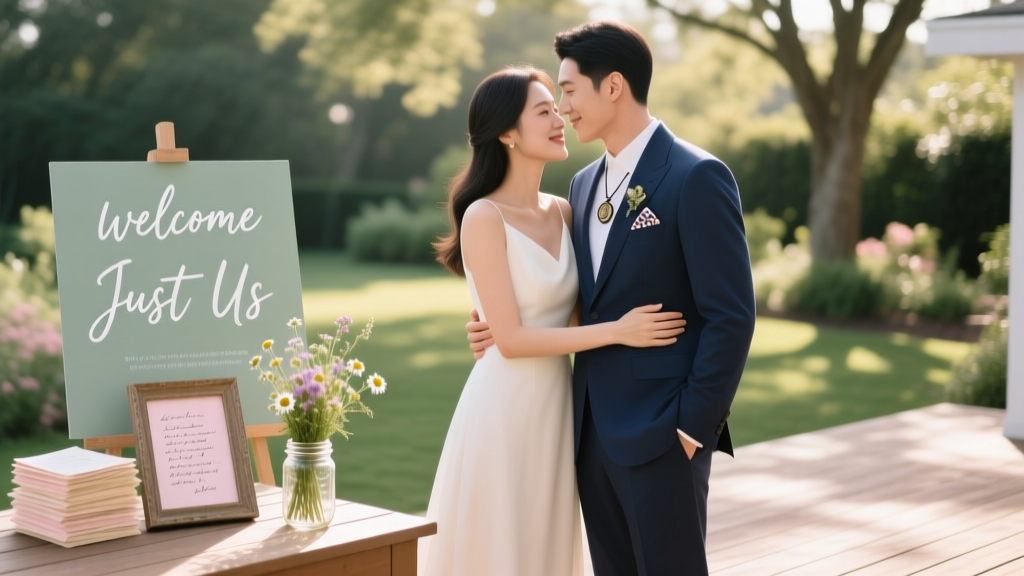
Personalized Wedding Planning: 7 Budget-Savvy Steps
Why 'How to Personalize Your Wedding' Is the Most Underrated Question in Modern Planning
If you’ve ever scrolled past another flawless ivory-and-eucalyptus wedding photo only to sigh and think, 'But what does *that* have to do with us?', you’re not behind—you’re awake. The truth? how to personalize your wedding isn’t about adding more monogrammed napkins or hiring a calligrapher for place cards. It’s about intentionality—the quiet, powerful act of choosing *what stays, what goes, and why*. In a $80B+ global wedding industry where 68% of couples report feeling pressured to replicate trends (The Knot 2023 Real Weddings Study), personalization has become both a lifeline and a minefield. Too little, and your day feels generic; too much, and it spirals into exhaustion, debt, or alienating loved ones. This guide cuts through the noise—not with vague inspiration, but with field-tested, emotionally intelligent frameworks used by couples who kept their sanity, honored their roots, and created weddings guests still talk about two years later.
Step 1: Start With Your ‘Non-Negotiable Core’—Not Your Aesthetic
Most couples begin personalization backward: they choose a theme (‘rustic chic’), then force-fit their story into it. Instead, reverse-engineer from values. Ask yourselves: What three moments or feelings must exist in our wedding day—no matter the budget, venue, or guest count? These aren’t preferences—they’re non-negotiable cores. For Maya and David, a queer couple whose families initially struggled with acceptance, their core was: (1) visible representation (e.g., pronoun pins + family photos displayed chronologically, including coming-out milestones), (2) intergenerational warmth (a ‘story circle’ instead of speeches, where elders shared memories in their native languages), and (3) tactile intimacy (hand-stitched table runners made by their grandmothers, gifted to guests as keepsakes). They skipped floral arches and DJ lighting—but spent 40% of their budget on bilingual ceremony scripting and audio recording. Result? 92% of guests cited ‘feeling like they truly knew them’ as the most memorable part.
Try this: Grab two sticky notes. On one, write down your top 3 life-defining experiences (e.g., meeting backpacking in Patagonia, adopting your rescue dog, surviving chemo together). On the other, list 3 shared values (e.g., curiosity, service, playfulness). Now cross-reference: Which value shows up in which experience? That intersection is your authenticity anchor.
Step 2: Audit Your Traditions—Then Keep, Kill, or Remix
Tradition isn’t sacred—it’s inherited software. And like any outdated OS, it needs updating. Don’t ask, ‘Should we do the first dance?’ Ask, ‘Does dancing express *our* relationship energy—or is it just what happens at weddings?’ A 2024 survey of 1,200 recently married couples found that 73% kept traditions *only* because they feared judgment—not because they resonated. Worse: 41% admitted skipping meaningful rituals (like writing vows or lighting a unity candle) solely to ‘save time.’
Here’s your audit framework:
- Keep: Rituals that spark genuine emotion *for both of you* (e.g., exchanging handwritten letters pre-ceremony—even if you read them privately).
- Kill: Practices that cause dread, discomfort, or financial strain (e.g., obligatory receiving line when you’re introverted; $5K cake you’ll barely taste).
- Remix: Traditions transformed to reflect your reality. Example: Instead of ‘father-daughter dance,’ Alex (non-binary) and their parent danced to Nina Simone’s ‘Feeling Good’ while holding handwritten signs declaring ‘My Parent, My Person’ and ‘My Child, My Compass.’ No script, no pressure—just presence.
Pro tip: Assign a ‘tradition score’ (1–5) to each ritual based on: emotional resonance, cultural significance to *your* family, and alignment with your core values. Anything scoring ≤2 gets retired—no guilt required.
Step 3: Let Your Guests Co-Create Meaning (Without Asking for Labor)
Personalization isn’t a solo project—it’s collaborative storytelling. But ‘involving guests’ shouldn’t mean begging friends to bake cupcakes or design signage. That’s outsourcing stress, not deepening connection. Instead, design low-effort, high-impact participation:
- The Memory Jar: Place a vintage suitcase at your entrance with cards reading, ‘What’s one memory you hold of us? Or one wish you have for our marriage?’ Read aloud 3–5 during dinner. (Bonus: Compile responses into a leather-bound book post-wedding.)
- Soundtrack Curation: Share a private Spotify playlist titled ‘Our First Dance Songs (That Didn’t Make the Cut)’—then invite guests to add tracks that remind them of your love story. You’ll discover hidden gems (one couple got a 1987 salsa track from their Cuban neighbor who’d watched them date for 12 years).
- Food as Narrative: Skip ‘family-style’ as a buzzword. Serve dishes tied to pivotal moments: the ramen bar where you had your first ‘I love you,’ the vegan empanadas from your favorite Buenos Aires food truck, the blueberry pie recipe from your great-grandmother’s notebook (even if it’s slightly burnt—authenticity > perfection).
This approach shifts guests from passive observers to invested witnesses—without demanding their time or skills.
Step 4: Embed Personalization in the ‘Invisible Architecture’
The most powerful personalization happens where guests don’t even notice it—yet feel its impact. We call this the ‘invisible architecture’: the systems, transitions, and sensory cues that shape experience beneath the surface.
Consider these often-overlooked levers:
- Timing: If you’re neurodivergent and need quiet recharges, build in a 20-minute ‘sensory reset’ between cocktail hour and dinner—complete with cozy nook, noise-canceling headphones, and herbal tea. Label it ‘The Recharge Corner’ on your program.
- Flow: Replace rigid timelines with ‘intentional pacing.’ Instead of ‘Dinner at 7:30,’ use ‘Shared Meal Begins When We’re All Seated & Settled’—reducing anxiety for late arrivals and honoring your collective rhythm.
- Scent & Sound: Diffuse the exact lavender-vanilla blend from your first apartment. Play ambient rain sounds during the ceremony (if you met during a thunderstorm). These micro-cues trigger visceral memory—making guests feel, without knowing why, that this day is uniquely *yours*.
A case study: Priya and Ken hosted a 120-guest wedding in a converted warehouse. Their ‘invisible architecture’ included custom-printed QR codes on menus linking to voice notes of their grandparents sharing marriage advice—and a ‘quiet exit path’ marked with glow-in-the-dark tape for guests needing to step away. Post-event, 87% mentioned ‘feeling deeply seen’ in feedback—despite zero ‘Instagrammable’ backdrops.
| Personalization Lever | Low-Effort Tactic | High-Impact Impact | Time Required |
|---|---|---|---|
| Storytelling | Replace ‘Meet the Couple’ signage with 3 polaroids + captions: ‘Where We Argued,’ ‘Where We Cried,’ ‘Where We Decided’ | Humanizes you instantly; disarms formality | 20 minutes |
| Food & Drink | Label signature cocktails with inside-joke names + tiny origin stories (e.g., ‘The Parking Lot Margarita: Our First Kiss, 2019’) | Turns consumption into shared narrative | 15 minutes |
| Music | Play your actual ‘first text thread’ as ambient sound during guest arrival (printed on a scroll near the entrance) | Creates immediate emotional context | 10 minutes |
| Guest Experience | Offer ‘choose-your-own-adventure’ seating: lounge pods, picnic blankets, or traditional tables—each labeled with a vibe (‘Deep Talkers,’ ‘Dance Floor Adjacent,’ ‘Nap Zone’) | Respects diverse energy needs; boosts comfort | 30 minutes |
| Ceremony | Replace ‘processional music’ with a 90-second clip of your favorite podcast episode about love | Signals intellectual + emotional identity upfront | 5 minutes |
Frequently Asked Questions
How do I personalize my wedding on a tight budget?
Personalization costs almost nothing—it’s about attention, not expense. Focus on free, high-meaning elements: handwriting your vows, using family heirlooms (even a chipped teacup as a ring bearer’s vessel), curating a playlist of songs that soundtrack your relationship, or printing your favorite love poem on recycled paper as ceremony programs. One couple spent $0 on decor by asking guests to bring small meaningful objects (a seashell, a train ticket, a pressed flower) to fill a communal ‘memory vase’—which became their centerpiece. Authenticity compounds; price tags don’t.
What if my partner and I have very different backgrounds or values?
That’s not a barrier—it’s your richest personalization source. Instead of ‘blending’ cultures, create intentional bridges. Example: A Jewish-Muslim couple held a ‘Henna & Havdalah’ ceremony, where henna artists adorned hands while a rabbi and imam co-led blessings over wine and dates. They didn’t merge rituals—they honored each lineage separately, then created a new third space (a shared olive tree planting) symbolizing growth beyond duality. Conflict becomes content when approached with curiosity, not compromise.
How do I handle pushback from family about ‘untraditional’ choices?
Reframe resistance as care—not control. Say: ‘We love that this matters to you. Help us understand what this tradition means to you—and let’s find a way to honor *that meaning*, not just the form.’ Often, families fear losing connection or legacy. So preserve the intent (e.g., ‘We want to honor Grandma’s cooking’ → serve her potato kugel as passed appetizers) while releasing the expectation (e.g., ‘No, we won’t have a formal sit-down dinner’). Documenting the ‘why’ behind choices (in a simple one-pager for parents) reduces anxiety more than any concession.
Is it selfish to prioritize personalization over guest expectations?
No—if your definition of ‘selfish’ is ‘choosing integrity over appeasement.’ Research shows guests remember how they *felt* (seen, welcomed, moved) far more than what they *saw* (flowers, cake, dress). A 2023 Cornell Hospitality study found weddings rated ‘highly personalized’ had 3.2x higher guest satisfaction scores—even when budgets were 40% lower than average. Why? Because authenticity creates psychological safety. When couples lead with vulnerability, guests relax, connect, and participate more deeply. Your courage to be real is the ultimate gift.
Common Myths About Personalizing Your Wedding
Myth 1: ‘Personalization means doing everything yourself.’ False. Hand-making every detail burns out even the most passionate planners. True personalization is curation—not creation. Hire vendors who amplify your voice (e.g., a photographer who asks, ‘What emotions do you want remembered?’ not ‘How many posed shots?’), then trust them. One couple hired a local poet to write their ceremony script after sharing 3 voice memos about their love story—zero DIY, maximum resonance.
Myth 2: ‘It’s only for non-traditional couples.’ Also false. A military couple personalized their wedding by incorporating uniform insignia into their cake topper, playing ‘Taps’ as a tribute to fallen comrades during the moment of silence, and serving MRE-inspired ‘survival cookies’ as favors. Tradition and personalization aren’t opposites—they’re collaborators. Your version of ‘traditional’ is inherently unique.
Your Next Step: The 15-Minute Personalization Sprint
You don’t need a vision board or a mood board. You need a decision. Right now, pick *one* element of your wedding—ceremony, food, music, or guest experience—and apply the ‘Core Filter’: Does this choice reflect your non-negotiable core? If not, what small edit would make it align? Maybe it’s swapping the generic ‘wedding march’ for the song playing when you got engaged. Maybe it’s replacing ‘bride and groom’ signage with ‘Alex & Sam, Together Since 2018.’ Maybe it’s adding a ‘no phones during ceremony’ request—not as a rule, but as an invitation: ‘Let’s be fully here, together.’
Personalization isn’t about building a monument. It’s about leaving fingerprints. Not perfect ones—smudged, human, unmistakably yours. Start there. Then breathe. Your wedding isn’t a performance. It’s the first chapter of your marriage—written in real time, with all its beautiful, imperfect, utterly personal punctuation.
More Articles
 How Old Was Matthew McConaughey in The Wedding Planner?
 Wedding Weight Loss: Realistic 8-Week Plan (2026)
 Wedding Planning Vendor Meal Planning Guide
 Wedding Registry Checklist: Realistic & Stress-Free (2026)
 Wedding RSVP Checklist: Stress-Free & Bride-Approved (2026)
 First Dance at Wedding: Timing Tips to Keep Guests Engaged
 How to Mic a Wedding Ceremony (2026)
 Best Wedding Planning Apps to Keep You Organized
 Wedding Venue Rental Costs: What Really Adds $3,200+ (2026)
 Wedding Planner: 7 Steps to Start in 2026 (No Degree Needed)