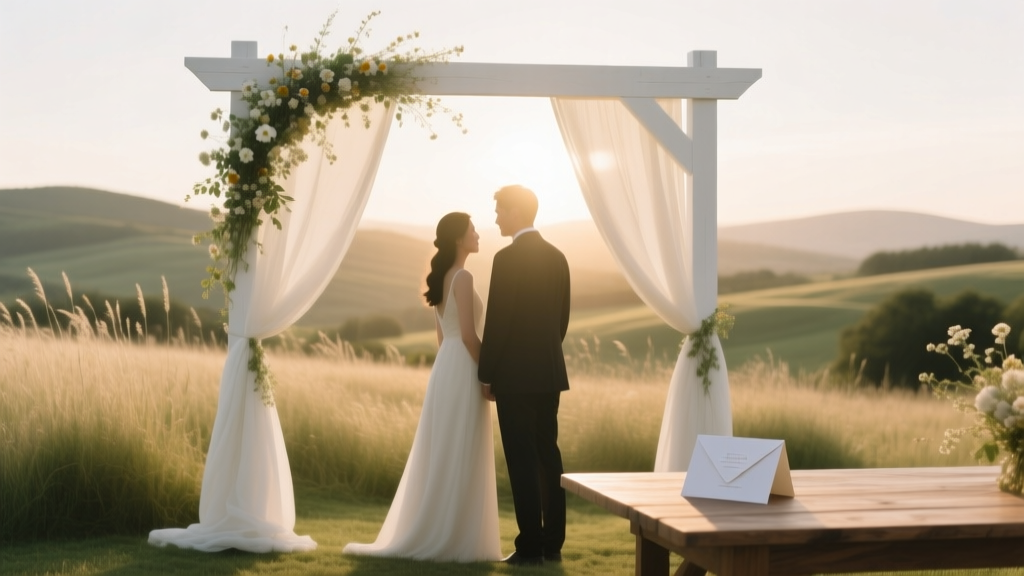
Private Wedding Planning: 7-Step Stress-Free Framework
Why Your Private Wedding Isn’t Just Smaller — It’s Strategically Different
If you’ve searched how to plan a private wedding, you’re likely feeling pulled in two directions: the quiet certainty that intimacy matters more than spectacle, and the nagging fear that ‘private’ means ‘complicated’ — or worse, ‘second-rate.’ You’re not wrong to hesitate. Unlike traditional weddings, where templates, checklists, and vendor packages abound, private weddings (typically 10–30 guests) operate outside mainstream assumptions. They demand intentionality, not just scale-downs. And here’s what no one tells you upfront: planning a private wedding isn’t easier — it’s *different*. It swaps guest-count logistics for deep relational calibration, trades venue capacity constraints for nuanced legal and emotional considerations, and replaces ‘what looks impressive’ with ‘what feels true.’ In 2024, 42% of couples surveyed by The Knot chose guest lists under 50 — but only 28% felt confident navigating the unique pitfalls: officiant availability for micro-ceremonies, photography packages built for 200+ guests, or even friends misinterpreting ‘private’ as ‘exclusive’ or ‘cold.’ This guide cuts through that noise. It’s not about shrinking a big wedding — it’s about building a new kind of ceremony, rooted in clarity, consent, and calm.
Step 1: Define Your ‘Private’ — Before You Book Anything
‘Private’ is not a universal number — it’s a values-based boundary. Start here, not with Pinterest boards or venue tours. Ask yourselves: What does ‘private’ protect? Is it emotional safety? Financial boundaries? Cultural or familial complexity? A desire for authenticity over performance? One couple we worked with — Maya and Javier, married in Big Sur with 14 guests — realized their definition wasn’t about size at all. It was about presence: no one who’d ask intrusive questions about fertility, no relatives who’d weaponize silence during speeches, no obligation to host a reception that drained them for weeks. They defined ‘private’ as zero emotional labor for guests who didn’t earn proximity.
Use this 3-question litmus test before moving forward:
- Who must be there — not out of duty, but because their presence actively deepens the meaning of your vows? (Hint: If you’re listing people to avoid guilt, pause.)
- What would make you feel exposed, distracted, or performative — and how can your structure eliminate that? (e.g., open mic speeches → curated readings; buffet lines → family-style dining at one table)
- Is ‘private’ serving you — or shielding you from something you haven’t named yet? (e.g., avoiding conflict with estranged parents may signal a need for mediation, not just smaller invites.)
Once defined, write your ‘Private Charter’ — a 2–3 sentence statement you’ll reference when vendors, family, or doubt creep in. Example: “Our wedding is private to honor our commitment to emotional honesty, financial integrity, and mutual care. We are choosing depth over breadth, presence over pageantry.”
Step 2: Navigate the Legal & Logistical Tightrope
Here’s where most private weddings derail: assuming fewer guests = simpler logistics. Reality? Many jurisdictions and venues have minimum guest requirements, insurance clauses, or officiant protocols built for crowds — not couples standing barefoot on a cliffside with two witnesses.
Officiant Alignment: Not all officiants are equipped — or licensed — for micro-ceremonies. Some states (like California and Colorado) allow self-solemnization, but require specific forms filed before the ceremony. Others mandate two witnesses — who must be 18+, sober, and present for the entire legal act (not just the photo op). We recommend booking your officiant first, then confirming their jurisdictional authority and witness requirements. Bonus tip: Ask if they offer ‘legal-only’ ceremonies (often $200–$400) versus ‘ceremony + celebration’ packages ($1,200+). One Portland couple saved $950 by separating legal solemnization (at city hall, Tuesday at 9 a.m.) from their symbolic forest vow renewal (Saturday, 12 guests, hired poet).
Venue Flexibility vs. Hidden Fees: A mountain lodge advertising ‘intimate weddings’ may charge a $1,500 ‘minimum food & beverage’ fee — even if you’re serving charcuterie and lemonade to 8 people. Always ask: Is there a per-person minimum? A non-refundable deposit tied to guest count? Can we use our own caterer or bring in a friend who bakes? Pro tip: Consider non-traditional spaces — art galleries, historic libraries, national park visitor centers (permits required), or even your own backyard. A recent study by WeddingWire found backyard weddings averaged 37% lower venue costs — but required 22 hours more prep time. Trade-offs matter.
| Logistical Element | Traditional Wedding Assumption | Private Wedding Reality Check | Action Step |
|---|---|---|---|
| Photography | Full-day coverage (8–10 hrs), 300+ edited images, album included | Most photographers charge flat rates for ‘micro-wedding’ packages (3–4 hrs, 75–120 images, digital gallery only). Some refuse bookings under 15 guests. | Ask: “Do you offer a ‘Presence Package’? What’s your minimum guest count?” |
| Catering | Plated dinner at $45/person, bar package $25/person | Many caterers won’t serve under 20 guests without a $1,200 minimum. Food trucks often have lower minimums but stricter permitting. | Explore ‘chef’s table’ pop-ups, local bakery catering (e.g., ‘The Honey & Rye Box’), or potluck-style with assigned dishes (only for ultra-trusted circles). |
| Music | Live band ($2,500+) or DJ ($1,200+) | A skilled acoustic duo ($650–$900) or curated playlist + portable speaker ($120) often delivers richer ambiance for 12 people than a DJ shouting over chatter. | Test sound levels in your space with Spotify’s ‘Wedding Ceremony’ playlist — volume should allow whispered vows to carry. |
| Attire | Bridal gown ($1,800+), groom’s suit rental ($250) | 68% of private-wedding couples wear existing clothing, vintage finds, or rent via platforms like Rent the Runway or Nuuly. Tailoring > buying. | Book a 1-hr tailor session 3 weeks pre-wedding — even ‘simple’ alterations prevent last-minute panic. |
Step 3: Design Intimacy — Not Just Reduce Scale
Intimacy isn’t automatic with fewer people. It’s designed. Think of your private wedding as immersive theater — every element should deepen connection, not fill space. A 2023 Cornell hospitality study found guests at weddings under 25 reported 3.2x higher emotional resonance when rituals were personalized, tactile, and participatory.
Ritual Engineering: Replace passive observation with shared meaning. Instead of a generic unity candle, try a ‘Story Jar’: each guest writes one memory, hope, or piece of advice on recycled paper, sealed in a hand-blown glass vessel you’ll open on your 5th anniversary. Or co-create a ‘Vow Companion’ — a small, illustrated booklet guests receive pre-ceremony with your vows, song lyrics, and blank pages for notes. One Brooklyn couple printed theirs on seed paper — guests planted pages post-ceremony, growing wildflowers.
Seating & Flow: Ditch the head table. Opt for one long farmhouse table, circular arrangement, or even floor cushions around a low coffee table. Ensure sightlines let everyone see your faces during vows. Acoustics matter: test voice projection. If your venue echoes, hire a subtle lapel mic (<$100 rental) — better than shouting your ‘I do’ into a void.
The ‘No’ List is Your Compass: Private weddings thrive on elegant exclusions. Be ruthless: no open bar (offer 2 signature drinks + sparkling water), no gift registry (request donations to a cause you both champion), no formal dance floor (but do add a rug and one great song for spontaneous swaying). As designer and private-wedding advocate Lena Chen says: “Every ‘no’ you speak is a ‘yes’ to your center.”
Step 4: Manage Expectations — With Grace & Granularity
The hardest part of planning a private wedding isn’t logistics — it’s emotional labor. You’ll face three pressure points: the Guilt Spiral (‘Are we hurting feelings?’), the Comparison Trap (scrolling lavish weddings while eating takeout in your living room), and the ‘But Why?’ Question (from well-meaning but confused loved ones).
For Family: Host a 20-minute ‘Intent Call’ — not to persuade, but to witness. Say: “We’re sharing our vision so you understand our ‘why,’ not to seek approval. We’d love your support — and if you need space to process, we respect that.” Provide a written summary afterward (email or printed card) reiterating your charter. One couple sent handwritten notes to excluded relatives: “Your love shaped us. This day reflects a specific chapter — not a measure of your place in our lives.”
For Friends: Anticipate the ‘Can I bring +1?’ question. Answer early, kindly, and consistently: “Our private structure is intentional — we’ve created space for exactly who’s named on the invite. We’d love to celebrate with you separately soon.” Then follow up with a low-pressure coffee date or hike invitation.
For Yourselves: Build in ‘reality resets.’ Schedule a 15-minute weekly ‘non-wedding chat’ — talk about movies, work wins, or childhood memories. Track your energy: if planning drains you for 2 days after, scale back. Hire a $75/hr virtual coordinator (we recommend trusted micro-wedding specialists) just for vendor email drafting and timeline QA — not full-service management.
Frequently Asked Questions
Can I legally get married with only 2 people present?
Yes — in most U.S. states, you need only the couple + 1–2 witnesses (age 18+, mentally competent, present for the entire ceremony). However, requirements vary: Alabama requires 2 witnesses; New York allows self-solemnization only for clergy or judges. Always verify with your county clerk before setting a date. Some states (e.g., Maine) require witnesses sign the license within 24 hours of the ceremony — not just at the event.
How much does a private wedding actually cost?
Median spend in 2024: $12,800 (The Knot), but private weddings cluster tightly between $5,200–$18,500. Key variables: location (national park permit: $150; luxury villa rental: $4,200/night), whether you DIY (30–40% savings) or hire specialists (20% premium for micro-wedding expertise), and food/drink format (family-style meal: $28/person; gourmet picnic box: $42/person). The biggest cost saver? Skipping the rehearsal dinner — 74% of private couples replace it with a group hike or board game night.
What if my parents want a bigger celebration later?
This is common — and valid. Frame it as ‘two celebrations, one marriage’: your private ceremony is your legal and emotional anchor; a future ‘gathering of joy’ (not ‘wedding’) honors community. Set clear boundaries early: “Our wedding day is complete. What comes next is a separate event — with its own budget, guest list, and purpose.” Many couples host a ‘Year-One Party’ — no gifts, no speeches, just music, lawn games, and cake.
Do I still need wedding insurance?
Yes — especially for private weddings. While liability risk is lower, cancellation insurance covers non-refundable deposits (officiant, venue, photographer) if illness, weather, or permit denial occurs. Micro-wedding policies start at $149 (e.g., WedSafe) and cover up to $10,000 in losses. Skip it only if every vendor offers full refunds — rare.
Debunking Common Myths
Myth 1: “A private wedding means no vendors — just DIY everything.”
Reality: DIY works for some elements (invites, playlist, dessert table), but professional support in key areas — officiant, photography, and coordination — prevents stress-induced errors. One couple tried DIY floral arches — spent 14 hours, collapsed 2 hours pre-ceremony, and called a florist who charged $1,100 for same-day rescue. Strategic outsourcing > total DIY.
Myth 2: “Private weddings are automatically cheaper — just book a smaller venue.”
Reality: Per-guest costs often rise significantly. A $3,000 venue minimum divided among 12 guests = $250/person — versus $125/person at a $15,000 venue for 120. Factor in minimums, flat fees, and service charges — then compare line-item costs, not totals.
Your Next Step: Draft Your Private Charter — Then Breathe
You now hold a framework, not a formula. How to plan a private wedding isn’t about checking boxes — it’s about aligning every decision with your definition of intimacy, safety, and authenticity. You don’t need permission to prioritize peace over pageantry. So grab a notebook or open a blank doc. Write your Private Charter — 2–3 sentences capturing your non-negotiables. Then, do this: set a timer for 90 seconds, close your eyes, and breathe. Feel the weight lift — not because it’s easy, but because it’s yours. Ready to bring it to life? Download our free Private Wedding Launch Kit — includes a customizable Charter template, vendor script library (for saying ‘no’ gracefully), and a state-by-state legal checklist. Because your quiet ‘I do’ deserves the same reverence as any grand affair — just in a different key.
More Articles
 Countryside Wedding Chapel Pitfalls (2026)
 Wedding Gift Check Etiquette: 7 Steps for Perfect Thank-Yous
 Groom's Family Wedding Costs (2026)
 Hydrafacial Before Wedding: Dermatologist-Approved Timeline
 Wedding Ring Before Wedding: When It Works (2026)
 Destination Wedding Mexico Cost: Real Budgets (2026)
 Wedding Registry Costs in 2026: Real Data & Trends
 The Knot Wedding Invitations: Do They Auto-Send? (2026)
 Wedding Save the Dates: 7 Must-Do Steps (2026)
 Wedding Envelope Addressing for Families: Etiquette Guide