## You're Engaged — Now What?
Congratulations! The ring is on your finger, and suddenly everyone has an opinion about your wedding. The average couple spends 12–18 months planning a wedding, yet most feel overwhelmed within the first week. This how to plan a wedding guide cuts through the noise and gives you a clear, step-by-step roadmap — from setting your budget to walking down the aisle.
---
## Step 1: Set Your Budget and Guest List First
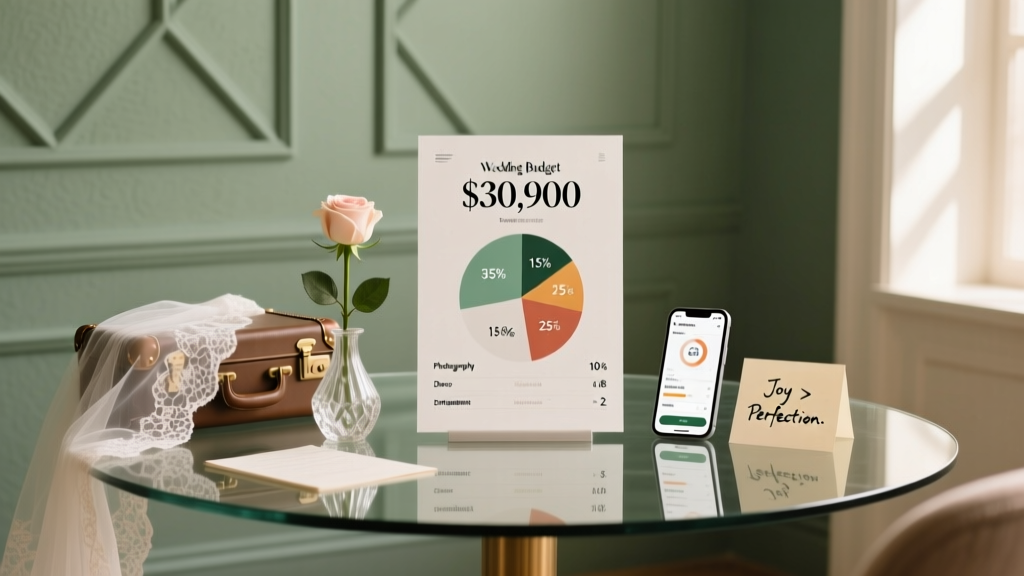
Every other decision flows from these two numbers. The national average wedding cost in the US is around $30,000, but your number should reflect *your* finances, not a statistic.
**How to build your budget:**
- List all potential contributors (parents, yourselves, etc.) and confirm amounts in writing
- Allocate roughly: 45% venue/catering, 12% photography, 10% music, 8% florals, 25% everything else
- Add a 10% buffer for surprises — they always happen
Your guest count drives your per-head catering cost, which is usually the single largest line item. Cutting 20 guests can save $2,000–$4,000 instantly.
---
## Step 2: Book Your Venue and Date Early
Popular venues book 12–18 months out, especially for Saturday dates in spring and fall. Once you have a venue, every other vendor falls into place.
**Wedding planning timeline milestones:**
- **12+ months out:** Venue, date, rough guest list
- **9–12 months:** Photographer, caterer, officiant
- **6–9 months:** Florist, band/DJ, dress/attire
- **3–6 months:** Invitations, rehearsal dinner, honeymoon
- **1–3 months:** Final headcount, seating chart, vendor confirmations
- **1–2 weeks:** Final payments, day-of timeline distributed
Consider off-peak dates (Friday evenings, Sunday afternoons, January–March) to save 20–30% on venue costs with no sacrifice in quality.
---
## Step 3: Build Your Vendor Team Strategically
Your vendors are the professionals who execute your vision. Vet them carefully.
**For each vendor:**
1. Read at least 10 recent reviews on Google and The Knot
2. Ask for a full contract before signing — confirm cancellation and refund policies
3. Meet or video-call before booking; personality fit matters for an 8-hour wedding day
4. Get everything in writing, including overtime rates
**The vendors you cannot skip:** photographer, caterer, and officiant. Everything else can be DIY'd or simplified if budget is tight.
---
## Step 4: Manage the Day-Of Logistics
The most common source of wedding-day stress is a missing or vague timeline. Build a minute-by-minute schedule and share it with every vendor and your wedding party.
**Day-of timeline essentials:**
- Hair and makeup start time (work backwards from ceremony)
- First look or photo session window
- Ceremony start and end
- Cocktail hour, dinner, speeches, first dance, cake cut
- Vendor load-out time
Assign a point-of-contact (a trusted friend or hired day-of coordinator) to handle vendor questions so you don't spend your wedding day on the phone.
---
## Common Wedding Planning Myths
**Myth 1: You need a wedding planner to have a great wedding.**
A full-service planner costs $3,000–$8,000+. Many couples plan beautiful weddings entirely on their own using free tools like Zola, The Knot, or a shared Google Sheet. A day-of coordinator (typically $800–$1,500) is a smarter spend for most budgets — they handle logistics without the full planning fee.
**Myth 2: More guests means more fun.**
Smaller weddings (under 75 guests) consistently score higher on couple satisfaction surveys. Fewer guests means more meaningful conversations, lower catering costs, and a more intimate atmosphere. Micro-weddings (under 30 guests) have surged in popularity precisely because couples feel more present on their day.
---
## Your Next Step
Wedding planning becomes manageable the moment you have a system. Start today: open a spreadsheet, write down your maximum budget and your ideal guest count, and search venues in your area for your target date range. Those three numbers will make every decision that follows dramatically easier.
Bookmark this how to plan a wedding guide and revisit each section as you hit each planning milestone. Your wedding doesn't have to be perfect — it just has to be yours.

 Small Wedding, Big Family: Real Strategies (2026)
 How Much Does a Florist Cost for Wedding? (2026)
 Wedding Tent Rental Guide: Avoid Costly Mistakes
 Wedding Costs in America 2026: Real Data & Savings
 Uplighting for Wedding: 7-Step $1,200+ Savings (2026)
 How to Start Wedding Vows to Him (2026)
 Affordable Wedding Bands: 7 Ways to Save $1,200–$3,800
 Wedding Processional Order: Expert Guide (2026)
 Wedding Dress Length: Front Measurement Guide (2026)
 Wedding Planning for Short Engagements Survival Tips