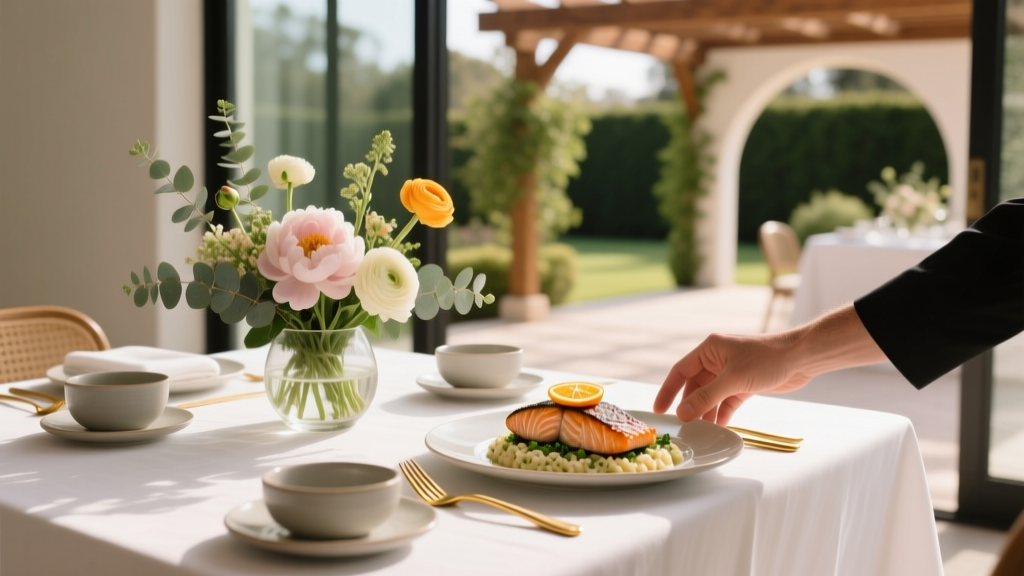
Wedding Menu Planning: 7-Step Framework (2026)
Why Your Wedding Menu Is the Silent Guest Who Makes or Breaks the Entire Day
If you've ever scrolled through Pinterest wedding boards and felt equal parts inspired and overwhelmed — staring at artfully plated heirloom tomato salads while simultaneously panicking about your cousin’s gluten-free + vegan + nut allergy combo — you’re not alone. The truth? how to plan a wedding menu isn’t just about choosing dishes — it’s about orchestrating flavor, inclusivity, logistics, and emotion into one cohesive, memorable experience. In fact, 73% of guests cite food quality as their top memory trigger from weddings (The Knot 2023 Real Weddings Study), yet nearly 60% of couples admit they started menu planning *after* finalizing their venue — a costly misstep that limits vendor options, inflates budgets, and creates last-minute dietary scrambles. This guide cuts through the noise with field-tested strategies used by planners who consistently deliver standout menus — even on $15–$25/person catering budgets.
Step 1: Anchor Your Menu in Reality — Not Romance
Before naming a single dish, pause. Most couples begin with ‘I love truffle pasta’ or ‘We want mini tacos!’ — then hit roadblocks when they learn that truffle oil adds $4.20 per plate or that taco stations require three staff members minimum. Instead, start with three non-negotiable anchors:
- Budget per person (not total): Calculate this *before* tasting anything. Include tax, service fee (18–22%), cake cutting fee ($2–$4/slice), and bar staffing (often billed hourly, not per drink). Example: A $5,000 food budget for 120 guests = $41.67/person — but after fees, only ~$32 goes toward actual food.
- Venue constraints: Does your barn venue prohibit open flame? Does your historic ballroom charge $350 for each outside caterer’s kitchen pass? Does your beach site require portable refrigeration rentals ($180/day)? These aren’t footnotes — they’re menu gatekeepers.
- Guest bio-mapping: Don’t guess dietary needs. At RSVP, ask for *specific restrictions* (e.g., ‘gluten intolerance’, not just ‘gluten-free’) and flag allergies requiring separate prep (peanuts, shellfish, dairy). One couple discovered 22% of their 140 guests needed accommodations — turning a simple chicken entrée into a 4-entrées operation (roast chicken, lemon-herb tofu, herb-crusted salmon, and harissa-spiced lentil loaf).
Real-world case: Maya & James booked a vineyard with an in-house kitchen — but didn’t realize their ‘farm-to-table’ package required using only estate-grown produce (no imported citrus, no heirloom tomatoes off-season). Their ‘dream’ summer menu became impossible in March. They pivoted to roasted root vegetables, preserved lemons, and smoked trout — and guests called it ‘the most authentically seasonal meal we’ve ever had.’ Flexibility rooted in facts beats fantasy every time.
Step 2: Choose Your Service Style Like a Strategist — Not a Pinterest Scroller
Buffet, plated, family-style, food truck, or cocktail hour-only? Each carries hidden costs, staffing demands, and guest-experience trade-offs. Here’s what planners *actually* weigh:
- Plated: Highest perceived elegance, lowest food waste (portion control), but slowest service (12–15 mins per course), requires 1 server per 12–15 guests, and offers zero flexibility for late arrivals.
- Family-style: Builds connection (guests serve themselves from shared platters), encourages conversation, and reduces labor (1 server per 20 guests), but increases portion variance and cross-contamination risk for allergies.
- Stations (e.g., pasta bar, carving station): High engagement, Instagrammable, but adds $8–$12/person for extra staff, equipment rental, and food loss (people over-scoop, then abandon half-full plates).
- Cocktail-hour-only (with heavy apps instead of dinner): Cuts food cost by 40–60%, ideal for 4–6 p.m. weddings, but risks guest hunger (especially if ceremony runs late) and requires strategic app sequencing (savory → rich → sweet → palate cleanser).
Pro tip: Hybrid service works brilliantly for mixed crowds. Try plated entrees (for consistency and dietary control) + family-style sides (roasted potatoes, seasonal greens) + a dessert station (mini pies, crème brûlée torches, vegan chocolate mousse cups). You get structure *and* interaction — without doubling your staffing budget.
Step 3: Build Flavor Layers — Not Just Entrée Lists
A great wedding menu tells a story across courses — and it starts long before the main. Think in *flavor arcs*, not isolated dishes:
- Cocktail Hour (15–20 mins): Serve 3–4 bite-sized apps that hint at your dinner theme. If serving Moroccan-spiced lamb later, offer za’atar pita chips with labneh and preserved lemon dip — not generic meatballs.
- First Course (if served): Light, bright, and palate-waking. Avoid heavy cream sauces. Try chilled cucumber-yogurt soup with dill oil, or grilled peach & burrata salad with basil vinaigrette.
- Main Course: Offer *two proteins maximum* — never three. Three options inflate cost, complicate kitchen flow, and confuse guests. Instead, pair one crowd-pleaser (e.g., herb-roasted chicken) with one bold choice (e.g., miso-glazed eggplant for vegetarians) — both built on the same grain base (farro pilaf) and seasonal veg (roasted fennel & cherry tomatoes).
- Dessert: Skip the towering cake unless it’s meaningful. Opt for a curated dessert bar: 1 cake slice, 1 cookie (e.g., cardamom shortbread), 1 tart (lemon-thyme curd), and 1 ‘wow’ item (chocolate-dipped orange segments with sea salt). This satisfies varied preferences without 80% of the cake going uneaten.
Seasonality isn’t just poetic — it’s economic. Using in-season produce slashes costs by 25–40%. In July, heirloom tomatoes cost $4.50/lb; in December, hothouse versions cost $9.20/lb *and* lack flavor. Work backward: pick your date → identify peak local produce → design dishes around those ingredients. A June wedding in Oregon? Highlight strawberries, snap peas, and spot prawns. A November wedding in Texas? Roasted squash, pecans, and smoked brisket make sense — and taste better.
Step 4: Negotiate, Taste, and Lock — Without Getting Played
Your tasting isn’t just about flavor — it’s your final quality audit and negotiation leverage point. Do this right:
- Require a full-service mock-up: Don’t just taste entrées. Insist on seeing how apps are presented, how plating looks under event lighting, how servers carry 12 plates at once, and how dietary meals are labeled and delivered. One planner discovered a caterer’s ‘gluten-free’ chicken was cooked on the same grill as breaded items — a critical allergen breach.
- Bring your contract checklist: Verify every line item: Are chafing dishes included? Is linen rental part of the package? Is overtime charged after 11 p.m. — and at what rate? Ask for written confirmation of substitutions (e.g., ‘If heirloom tomatoes are unavailable, we’ll use Brandywine variety at no cost increase’).
- Negotiate smartly: Never say ‘Can you lower the price?’ Instead, ask: ‘What’s your most flexible line item?’ Often, it’s bar packages (switch from premium to select liquor), staffing (reduce bartender count if offering wine/beer only), or rentals (bring your own vintage glassware). One couple saved $1,200 by providing their own cake stand and dessert forks.
| Menu Planning Decision | Low-Cost / Low-Risk Option | High-Impact / Higher-Cost Option | When to Choose It |
|---|---|---|---|
| Protein Strategy | One signature protein + one robust vegetarian option (e.g., mushroom risotto) | Three proteins (chicken, beef, fish) | Choose low-cost if >70% guests are omnivores; choose high-impact only if cultural/religious diversity demands it (e.g., Hindu + Jewish + Muslim guests) |
| Dietary Accommodations | Pre-portioned, clearly labeled plates with universal symbols (GF, V, DF) | Custom-prepped individual stations with dedicated cook/staff | Choose low-cost for 1–3 common restrictions; choose high-impact if >15% guests have life-threatening allergies or complex religious diets (halal/kosher) |
| Dessert Format | Single-tier cake + 2–3 mini desserts per guest | Multi-tier cake + dessert bar + late-night snack (e.g., donut wall) | Choose low-cost for intimate weddings (<80 guests) or daytime events; choose high-impact for evening galas where dessert is a key ‘moment’ |
| Bar Approach | Beer + wine + 2 signature cocktails (pre-batched) | Full open bar with premium liquors + mixologist station | Choose low-cost for afternoon weddings or budget-conscious priorities; choose high-impact if alcohol is central to your culture or guest expectations (e.g., Irish, Latinx, or industry events) |
Frequently Asked Questions
How far in advance should I start planning my wedding menu?
Start 8–10 months out — especially if you have a popular venue or caterer. Top vendors book 12+ months ahead, and tasting slots fill fast. Begin with budgeting and venue constraints at 10 months, lock in caterer by 8 months, finalize menu drafts by 5 months, and confirm all details (including dietary counts) by 30 days pre-wedding. Waiting until 3 months out often means paying rush fees or accepting limited options.
Do I need to offer a vegetarian option if only one guest is vegetarian?
Yes — and here’s why: First, it’s inclusive branding. Even one vegetarian guest signals your values to *all* guests. Second, vegetarian dishes often cost less to produce (no meat markup) and can be scaled easily. Third, many guests appreciate plant-forward options — 42% of U.S. adults now identify as ‘flexitarian’ (The Hartman Group, 2023). One vegetarian entrée serves everyone — ethically and economically.
Can I use a food truck instead of traditional catering?
Absolutely — and it’s growing fast (up 67% since 2020 per Special Events Magazine). Food trucks shine for casual, urban, or outdoor weddings, offering authenticity and lower overhead. But vet carefully: Confirm insurance coverage, generator power requirements, waste disposal plans, and whether they provide linens, china, and staffing. Some ‘food truck’ packages are actually trailers with limited mobility — and may cost more than expected once permits and parking logistics are added.
How do I handle guests who RSVP ‘yes’ but don’t specify dietary needs — then show up with restrictions?
Build in a 5–7% buffer for unreported needs. Train your coordinator to discreetly approach late-declared guests: ‘We have a delicious roasted vegetable option ready — would you like us to prepare it for you?’ Most caterers keep a simple, safe backup (e.g., grilled zucchini + quinoa) that can be plated in under 90 seconds. Never shame or scramble — anticipate, buffer, and respond gracefully.
Common Myths
Myth #1: “More menu choices = happier guests.”
Reality: Offering 4+ entrée options increases food waste by up to 35% (National Restaurant Association), confuses kitchen staff, and delays service. Guests prefer thoughtful curation over overwhelming choice — especially when dishes reflect your story.
Myth #2: “You must serve steak or salmon to feel ‘luxurious.’”
Reality: Luxury is in execution, not price tag. A perfectly seared, locally raised pork chop with blackberry gastrique and roasted sunchokes feels more special — and costs less — than a generic filet mignon drowned in béarnaise. Focus on technique, seasonality, and storytelling over expensive ingredients.
Your Menu, Mastered — What to Do Next
You now hold a battle-tested framework for how to plan a wedding menu that delights guests, honors your values, and respects your budget — without the panic spiral. The next step isn’t more research. It’s action: Download our free ‘Wedding Menu Blueprint’ PDF — a fillable checklist that walks you through vendor questions, seasonal ingredient calendars, dietary accommodation templates, and 12 real-world menu examples (with cost breakdowns) — all designed to get you from ‘overwhelmed’ to ‘confidently in control’ in under 90 minutes. Because your menu shouldn’t be a stress point — it should be the first chapter of your love story, served warm and unforgettable.
More Articles
 Galilee Wedding Planning: 7-Step Checklist (2026)
 How Long Does It Take to Plan a Wedding: The Real Timeline
 Wedding Anniversary Gifts: 7-Step Connection Framework
 Wedding Cake Cutting: 7 Foolproof Steps (2026)
 How to Make a 2-Tier Wedding Cake at Home (2026)
 Wedding Timeline: Your 6-Month Planning Checklist
 Wedding Ceiling Decor: 7 Budget-Savvy Ideas (2026)
 How to Wear a Corsage at a Wedding (2026)
 Wedding Dress Tailoring Costs (2026) | Save $150–$600
 What to Write on a Wedding Card (2026)