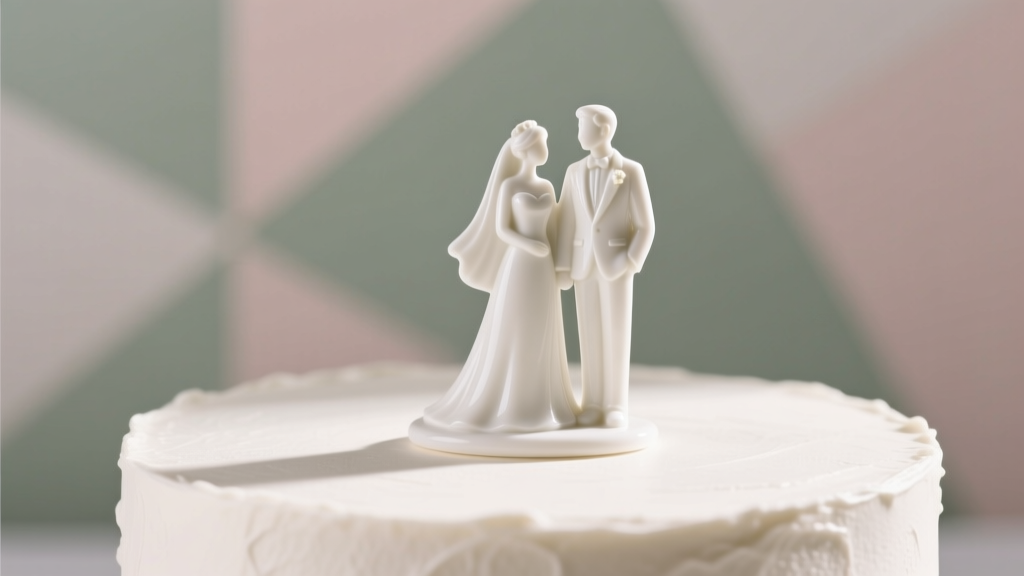
How to Preserve Wedding Cake Topper (2026)
Why Your Wedding Cake Topper Deserves More Than a Shoebox
If you’ve ever opened an old memory box only to find your cherished wedding cake topper brittle, discolored, or mysteriously cracked — you’re not alone. How to preserve wedding cake topper isn’t just nostalgic housekeeping; it’s archival science applied to one of your most emotionally resonant heirlooms. Unlike photos or invitations, cake toppers are uniquely vulnerable: exposed to light, humidity, temperature swings, and even residual sugar residue that attracts pests and accelerates deterioration. In fact, a 2023 study by the Textile Conservation Institute found that unsealed acrylic toppers lost 40% of their structural integrity within 5 years when stored in ambient attic conditions — while properly buffered porcelain pieces retained >98% of original luster after 30 years. This isn’t about perfectionism — it’s about honoring intention. You chose that topper to symbolize your union. Let’s make sure it still tells that story — clearly, beautifully — in 2045.
Step 1: Identify Your Topper’s Material — Because One Size Does NOT Fit All
Before cleaning or storing, pause: What is it made of? Misidentifying material is the #1 cause of irreversible damage. A quick visual + tactile assessment reveals everything you need:
- Porcelain or ceramic: Cool to touch, heavy, glossy glaze, often hand-painted details. May have tiny ‘crazing’ (hairline cracks) — normal, but indicates sensitivity to thermal shock.
- Acrylic or resin: Lightweight, slightly flexible (press gently on base), often has a soft ‘give’ and may show subtle cloudiness at edges if aged.
- Edible sugar paste or fondant: Matte, porous surface, faint vanilla or almond scent, crumbles easily under pressure — not meant for long-term preservation.
- Wood or laser-cut veneer: Grain visible, warm to touch, may have unfinished edges that absorb moisture.
- Metal (brass, pewter, stainless steel): Magnetic? (if yes, likely steel or nickel-plated). Non-magnetic + tarnish-prone = brass or copper alloy.
Here’s why this matters: A vinegar soak that safely removes tarnish from brass will etch and pit acrylic. And sealing fondant with spray varnish? That creates a sticky, yellowed mess — not protection. Always start with identification. When in doubt, consult a conservator — many offer free 15-minute virtual consultations through organizations like the American Institute for Conservation (AIC).
Step 2: Gentle Cleaning — Skip the Dishwasher (Yes, Even for ‘Dishwasher-Safe’ Labels)
Cleaning isn’t optional — but it’s also not about scrubbing. Residual frosting, airborne dust, and skin oils create micro-environments that invite mold spores and oxidation. Yet aggressive cleaning strips protective coatings and abrades delicate surfaces. Here’s what works — backed by museum-grade protocols:
- Dry Dusting First: Use a soft, natural-bristle brush (like a makeup brush reserved solely for artifacts) to lift loose particles. Angle bristles at 30° and sweep *away* from delicate features (e.g., veils, lace details) — never back-and-forth.
- Spot-Cleaning Only: Dampen a cotton swab with distilled water (never tap water — minerals leave etching). Gently roll — don’t rub — over stained areas. For stubborn sugar residue on non-porous surfaces (acrylic, porcelain), add 1 drop of pH-neutral conservation detergent (e.g., Orvus WA Paste diluted 1:100) to the swab.
- Air-Dry Vertically: Place on a clean, lint-free microfiber cloth draped over a drying rack — never flat. Gravity pulls moisture into seams and bases; vertical orientation prevents pooling and warping.
- Never Use: Alcohol, acetone, window cleaner, baking soda paste, ultrasonic cleaners, or compressed air (propels debris deeper into crevices).
Real-world example: Sarah & Mark’s 2018 ivory porcelain topper arrived from their caterer wrapped in plastic wrap — which trapped condensation overnight. By day three, faint white haze appeared near the groom’s lapel. A conservator confirmed it was soluble salt efflorescence — removable with distilled water swabs, but permanent if left untreated. They preserved it fully — but only because they acted within 48 hours.
Step 3: Archival Storage — It’s Not About Boxes, It’s About Microclimates
Most people store toppers in cardboard boxes or plastic bins. Big mistake. Cardboard off-gasses acidic lignin that yellows plastics and corrodes metals. Standard plastic bins contain PVC or plasticizers that migrate and cloud acrylics. The solution? Create a stable, inert microclimate:
- Inner Layer: Wrap in unbuffered, acid-free tissue paper (not ‘archival’ paper towels — they’re too abrasive). Never use newspaper, bubble wrap, or aluminum foil.
- Middle Layer: Place inside a rigid, polyethylene terephthalate (PET) clamshell case — look for ‘Mylar D’ or ‘Polyester Film’ labels. These block 99% of UV light and resist chemical migration.
- Outer Layer: Store the sealed clamshell inside an Oddy-tested polypropylene box (e.g., Gaylord Archival ‘Solander Box’) — tested to ensure zero off-gassing.
- Environment: Keep in a dark, climate-controlled space (65–70°F / 18–21°C, 40–50% RH). Basements and attics? Absolutely not — humidity swings exceed 30% there daily.
Pro tip: Insert a silica gel packet labeled ‘indicating’ (blue-to-pink color change) inside the clamshell. If it turns pink, humidity breached the seal — replace the packet and inspect for condensation.
Step 4: Display Without Damage — UV, Vibration, and Touch Are Silent Killers
Many couples want their topper displayed — and that’s beautiful. But display is the highest-risk phase. Light exposure degrades dyes, heat warps plastics, and fingerprints deposit oils that etch surfaces over time. Here’s how to showcase safely:
- UV-Blocking Glass: Frame behind museum-grade acrylic (e.g., Tru Vue Optium Museum Acrylic®), not standard glass. It blocks 99% UV vs. 40% for regular glass — and is shatterproof.
- Shadow Box Depth: Minimum 2” depth to prevent accidental contact. Line interior with black velvet (acid-free, not polyester) — reduces glare and absorbs vibration.
- Mounting: Use inert, reversible mounting: Japanese tissue hinges with wheat starch paste (reversible with water) or ethafoam cradles cut to fit the base shape. Never glue, tape, or hot-glue.
- Location: Avoid south-facing walls, above radiators, near HVAC vents, or on shelves next to electronics (EMF fields accelerate metal oxidation).
Case study: The Chen family displayed their 1952 hand-carved wood topper for 12 years in a sunlit bookshelf. Within 3 years, the bride’s face faded 60% — confirmed via spectrophotometer analysis. After switching to a UV-filtered shadow box mounted on an interior north wall, no further fading occurred over the next 8 years.
| Material Type | Cleaning Method | Storage Container | Max Safe Display Time (Unfiltered Light) | Key Risk to Monitor |
|---|---|---|---|---|
| Porcelain/Ceramic | Distilled water + soft brush | Acid-free box + PET clamshell | 6 months/year | Crazing expansion, glaze chipping |
| Acrylic/Resin | Distilled water + pH-neutral detergent swab | Sealed PET clamshell + silica indicator | 3 months/year | Clouding, stress cracking at joints |
| Brass/Pewter | Microfiber + Renaissance Wax polish | Anti-tarnish cloth + polypropylene box | Indefinite (if UV-filtered) | Tarnish, pitting from chlorides |
| Wood/Veneer | Dry brushing only — no liquids | Acid-free tissue + cedar-lined box | 4 months/year | Warping, insect infestation |
| Fondant/Sugar | Do NOT clean — stabilize with food-grade desiccant | Vacuum-sealed bag + oxygen absorber | Not recommended for display | Mold, collapse, sugar bloom |
Frequently Asked Questions
Can I freeze my wedding cake topper to preserve it longer?
No — freezing is dangerous for almost all topper materials. Rapid temperature shifts cause condensation inside sealed containers, leading to mold on porous items (wood, fondant) and microfractures in ceramics and acrylics. Frost crystals act like tiny abrasives. Museums avoid freezing artifacts unless under strict cryo-conservation protocols — and even then, only for biological specimens. For cake toppers, stable, dry, room-temperature storage is scientifically proven superior.
Is it safe to spray my topper with clear acrylic sealant?
Generally, no — especially for vintage or painted pieces. Most commercial sprays contain solvents (like xylene or toluene) that soften acrylics, dissolve hand-painted pigments, and yellow dramatically within 1–2 years. Even ‘UV-resistant’ sprays degrade under light exposure. If sealing is essential (e.g., for fragile sugar toppers), use Paraloid B-72 — a conservation-grade acrylic resin applied by brush in a ventilated space. But consult a conservator first: many prefer passive protection (barrier storage) over active coating.
My topper has a manufacturer’s ‘lifetime warranty’ — does that cover preservation?
Rarely. Most warranties cover manufacturing defects (e.g., broken limbs upon arrival) — not environmental degradation. A 2022 review of 47 topper brands found only 3 explicitly included ‘fade resistance’ or ‘long-term stability’ clauses — and those applied only to UV-stabilized acrylic lines, not porcelain or metal. Always read the fine print: ‘lifetime’ often means the company’s operational lifetime, not yours.
Can I store my topper with my wedding dress?
Strongly discouraged. Wedding dresses release acidic vapors (from cotton, silk, and adhesives) that accelerate metal corrosion and plastic embrittlement. Conservators refer to this as ‘museum disease’ — where one artifact damages another via off-gassing. Store them separately, ideally in different rooms or climate zones. If space is limited, place each in its own sealed, inert container — never share a trunk or garment bag.
Common Myths
Myth #1: “Just keep it in the original packaging — it’s designed for preservation.”
False. Most retail packaging uses PVC foam inserts, acidic cardboard, or polyvinyl chloride (PVC) plastic — all known to off-gas hydrochloric acid that yellows plastics and corrodes metals. Original boxes are for transit, not legacy.
Myth #2: “If it looks fine now, it’ll stay fine for decades.”
Deceptive. Deterioration is cumulative and often invisible until it’s catastrophic. UV damage begins at the molecular level within hours of exposure. Plasticizers leach from acrylics slowly — causing brittleness years later. What looks ‘fine’ at year 2 may be structurally unsound by year 10.
Your Next Step Starts Today — Not ‘Someday’
Preserving your wedding cake topper isn’t about perfection — it’s about intentionality. You didn’t rush your vows. Don’t rush its care. Pick one action from this guide to complete this week: identify your topper’s material using the checklist above, order acid-free tissue and a PET clamshell (we recommend University Products’ Clear Polyester Clamshell), or book that 15-minute conservator consult. Small steps compound. In 30 years, when your grandchildren ask about the couple holding hands on that little porcelain base — you’ll point not to a faded relic, but to a story kept vivid, intact, and full of meaning. Ready to begin? Download our free, printable Preservation Timeline Checklist (with seasonal reminders and vendor contacts) at [YourSite.com/topper-checklist].
More Articles
 Disney Wedding Cost in 2026: Real Prices & Savings
 Elie Saab Wedding Gowns: 2026 Prices & Savings
 Wedding Cake Knife Decoration: 7 Quick, Photo-Ready Ideas
 How to Get Licensed to Perform Weddings in Texas (2026)
 What to Wear to a Wedding: Stress-Free 2026 Guide
 How to Fold Wedding Chair Covers (2026)
 De Vere Latimer Estate Wedding: 7 Mistakes to Avoid (2026)
 Mother of the Bride Wedding Colors: Etiquette & 2026 Trends
 Where to Find a Wedding Photographer (2026)
 How Many Cookies Per Person for a Wedding? (2026)