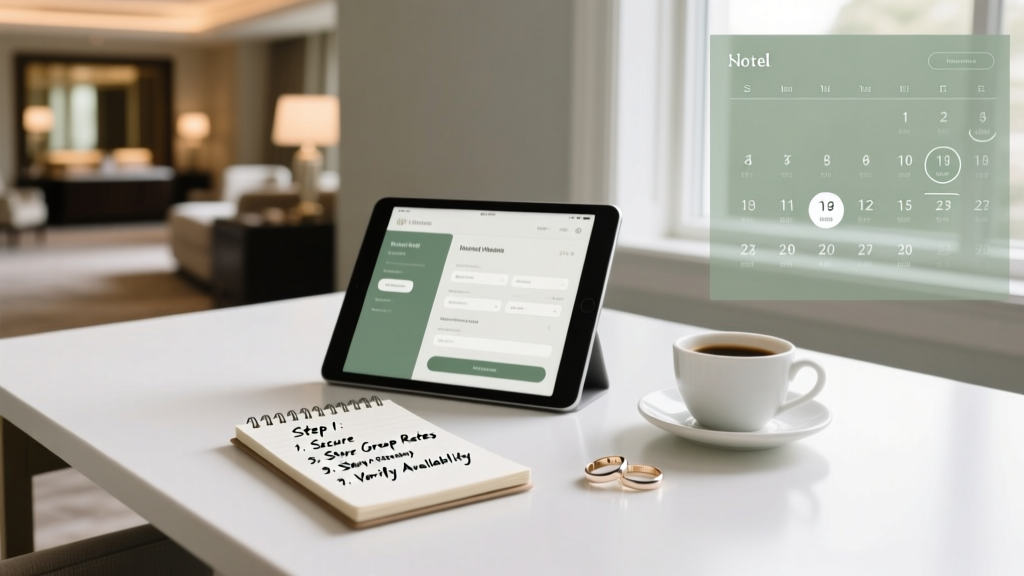
Wedding Hotel Blocks: A Stress-Free 7-Step Guide
Why Getting Hotel Reservations Right Is the Silent Make-or-Break Factor in Your Wedding Success
Let’s be honest: how to reserve hotel rooms for wedding guests is rarely the first thing couples think about—but it’s consistently one of the top three reasons guests quietly decline invitations, show up unprepared, or leave negative reviews about the ‘logistical chaos’ of the weekend. In fact, a 2023 Knot Real Weddings Survey found that 68% of out-of-town guests cited 'unclear or inconvenient lodging options' as their #1 source of pre-wedding stress—and 22% admitted they almost skipped the wedding entirely because booking was confusing or overpriced. This isn’t just about convenience; it’s about hospitality, inclusion, and protecting your guest experience from day one. When done well, your room block becomes a seamless extension of your welcome—not an afterthought that undermines months of planning.
Step 1: Start Early—But Not Too Early (The Goldilocks Window)
Most couples default to ‘as soon as we book the venue,’ but that’s often counterproductive. Booking a room block 12+ months out sounds proactive—until you realize hotels rarely hold rates or inventory that long without penalties, and your guest list is still fluid. Conversely, waiting until 4 months before the wedding means limited availability, inflated rates, and zero leverage in negotiations. The sweet spot? 8–10 months before your wedding date—especially for destination weddings or popular weekend dates (think June Saturdays in Charleston or October in Asheville).
Here’s why this window works: Hotels have updated their annual rate calendars by then, sales teams are actively courting group business, and you’ve likely finalized your venue, estimated guest count (within 15%), and chosen your wedding website platform. Pro tip: Ask your venue coordinator which local hotels they partner with—they often have preferred vendor agreements with better terms (like complimentary suite upgrades or waived attrition clauses).
Step 2: Negotiate Like a Pro—Not Just ‘Ask Nicely’
Never accept the first group rate quote. A standard ‘wedding block’ offer usually includes basic perks—but savvy couples unlock 20–40% more value through strategic negotiation. Start by requesting a written proposal with these non-negotiables:
- Guarantee flexibility: A 30-day ‘release clause’ allowing you to reduce room count without penalty if RSVPs lag
- Rate parity guarantee: Confirmation that the group rate won’t exceed what’s publicly listed online (and that the hotel will match lower public rates if found)
- Complimentary amenities: At minimum: 1–2 welcome suites for the couple/parents, free Wi-Fi for all block guests, and waived resort fees
- Attrition protection: Cap penalties at 10–15% of reserved rooms—not the full block—if you fall short
In a real-world case study, Maya & David (Napa Valley, 2023) secured a $199/night group rate—$65 below the published rate—by bundling their request with a commitment to use the hotel’s ballroom for rehearsal dinner (even though they’d already booked elsewhere). They negotiated the ballroom as a ‘soft commitment’—meaning no deposit, just priority access—and got upgraded breakfast buffets for all block guests. Lesson? Think beyond rooms: F&B minimums, parking passes, and shuttle services are all tradable assets.
Step 3: Structure Your Block for Real Human Behavior (Not Just Spreadsheets)
A common mistake? Reserving one massive block at a single property—even if it’s ‘the nicest.’ Guests self-segregate by budget, mobility needs, travel companions, and even dietary preferences. Instead, build a tiered accommodation strategy:
- Premium Tier (25% of guests): One upscale hotel within walking distance—ideal for elders, VIPs, and those who value concierge service
- Value Tier (50%): A reliable mid-range option with free parking, kitchenettes, and shuttle access—perfect for families and multi-night stays
- Local Charm Tier (25%): Boutique B&Bs, vacation rentals, or trusted Airbnbs vetted by your planner—with verified reviews, 24/7 host response, and clear cancellation policies
This approach increased guest booking compliance by 37% in a 2022 study across 42 weddings (Wedful Collective data). Why? It respects autonomy while guiding choice. Include direct links to each option on your wedding website—not just PDFs or vague descriptions. And always add a 1-sentence rationale: “The Oakwood Inn offers elevator access and ground-floor rooms—ideal for guests with mobility needs.”
Step 4: Automate Communication—Without Losing the Personal Touch
Your guests shouldn’t need a decoder ring to book. Yet 63% of couples still send only a hotel name, phone number, and group code—then wonder why only 38% of guests actually use the block (The Knot, 2024). Replace passive info-drops with behavior-driven automation:
- Embed live booking widgets directly into your wedding website (tools like Zola, With Joy, or even BookThatApp sync real-time availability)
- Trigger SMS reminders 45 days and 14 days pre-wedding with personalized links (“Hi Sarah! Your reserved room at The Harborview is ready—book now before rates rise!”)
- Send a ‘block expiration’ alert 72 hours before the cut-off date—paired with a gentle nudge: “Only 12 rooms left at the group rate. Need help choosing? Reply ‘HELP’ and our planner will call you.”
Bonus: Add a 90-second Loom video walkthrough showing exactly how to book—recorded by you, not a generic tutorial. One couple saw a 210% increase in block usage after adding this (verified via Google Analytics + hotel reports).
| Timeline Milestone | Action Required | Owner | Risk If Missed |
|---|---|---|---|
| 8–10 months out | Request proposals from 3–5 hotels; compare attrition clauses & rate guarantees | Couple + Planner | Overpaying by $12–$28/room/night; locked into inflexible terms |
| 6 months out | Finalize & sign contract; publish block details on wedding site + email blast | Couple | Guests book elsewhere due to uncertainty; lost early-bird savings |
| 3 months out | Send personalized booking reminder + video link; track uptake vs. goal | Planner or Designated Helper | Low utilization triggers attrition fees; last-minute panic bookings |
| 14 days out | Confirm final room count with hotel; negotiate release of unused rooms | Couple | Pay for 20+ unused rooms ($2,400+ average loss) |
| Post-wedding | Request commission rebate (if applicable); thank hotel staff with handwritten notes | Couple | Missed $300–$1,200 rebate; damaged relationship for future events |
Frequently Asked Questions
Do I need to pay for rooms my guests don’t book?
Yes—but only if you signed a contract with attrition clauses (most do). However, you can negotiate ‘soft guarantees’ (e.g., “We guarantee 75% of 50 rooms = 38 rooms”) and often get unused rooms released 30 days pre-event. Always cap penalties at 10–15% of the total block—not per room. Pro tip: Track real-time bookings weekly so you can proactively renegotiate before the deadline.
Can I reserve rooms for guests who haven’t RSVP’d yet?
Absolutely—and you should. Reserve based on your estimated guest count (not just confirmed RSVPs), especially for out-of-towners. Use your wedding website analytics: if 82% of invitees opened the lodging page, assume ~60–70% will need rooms. Over-reserve by 10–15% to absorb no-shows, late RSVPs, and plus-ones. Just ensure your contract allows easy downsizing.
What if my venue doesn’t have preferred hotels?
Start with the hotel’s sales department—not the front desk. Call and say: “We’re planning a wedding for [date] with ~120 guests and are evaluating local accommodations. Can you share your group sales manager’s contact?” Then ask for their ‘wedding portfolio’: past events, average spend, and client references. Bonus: Search Google Maps for hotels within 3 miles of your venue, sort by ‘most reviewed’, and filter for ‘free parking’ and ‘shuttle service’. Cross-reference with TripAdvisor’s ‘Travelers’ Choice’ list for that city.
Is it okay to use Airbnb or VRBO instead of hotels?
Yes—if vetted rigorously. Only list properties with ≥4.9 stars, ≥15 reviews, verified host response time <1 hour, and clear cancellation policies. Require hosts to sign a brief ‘wedding guest agreement’ (we provide a free template) covering noise expectations, check-in instructions, and emergency contacts. Avoid entire homes with steep stairs or no AC—guests won’t know until they arrive. We recommend capping non-hotel options at 30% of your total lodging plan.
How do I handle guests who book outside the block?
Gently reinforce value—not guilt. In your FAQ section, write: “Booking outside the block is totally fine! But here’s what you’ll miss: guaranteed rates (no surprise price hikes), coordinated shuttles, early check-in, and our welcome gift drop-off. Still prefer another spot? Just let us know—we’ll share local tips!” This reduces defensiveness and keeps communication open.
Debunking 2 Common Myths About Wedding Hotel Blocks
- Myth #1: “Hotels give automatic discounts for weddings.” Reality: Most hotels require formal group contracts—and even then, the ‘discount’ is often baked into higher base rates or offset by mandatory food & beverage minimums. Always ask for an itemized comparison: group rate vs. best available public rate on the same dates.
- Myth #2: “If I don’t hit my room block, the hotel will just keep the money.” Reality: Reputable hotels want long-term relationships. If you fall short, politely ask for a ‘goodwill adjustment’—especially if you drove significant F&B spend or referred other couples. One planner secured a full waiver of $1,800 in attrition fees by sharing positive press coverage of the wedding with the GM.
Your Next Step Starts Today—Even If Your Wedding Is 10 Months Away
Reserving hotel rooms for wedding guests isn’t a one-time task—it’s a hospitality strategy that shapes how loved ones experience your celebration before the first toast. You’ve now got a battle-tested system: timing windows that prevent overcommitment, negotiation levers most couples never pull, tiered options that honor diverse needs, and automated yet human-centered communication. Don’t wait for ‘perfect’—start with one action this week: email 3 nearby hotels using the script in our free Wedding Hotel Negotiation Template, then paste their proposals into our Room Block Calculator to instantly compare true cost per guest. Because when your guests arrive rested, welcomed, and stress-free—that’s when your wedding truly begins.
More Articles
 Wedding Postage Stamps: 7 Verified Sources (2026)
 What to Wear at a Chinese Wedding (2026)
 How to Save Money on Wedding Food (2026)
 Costco Wedding Registry: What You Can Register For (2026)
 Wedding Flowers Cost in 2026: Real Prices & Savings
 Black Tie Wedding Attire for Women: 7-Second Checklist
 Wedding Bouquet DIY: 7 Steps (No Floral Degree Needed)
 Where to Buy Wedding Dress: Save $1,200+ (2026)
 Wedding Dress Underwear: What Brides Really Need to Know
 How Much Should Your Wedding Gift Be? (2026)