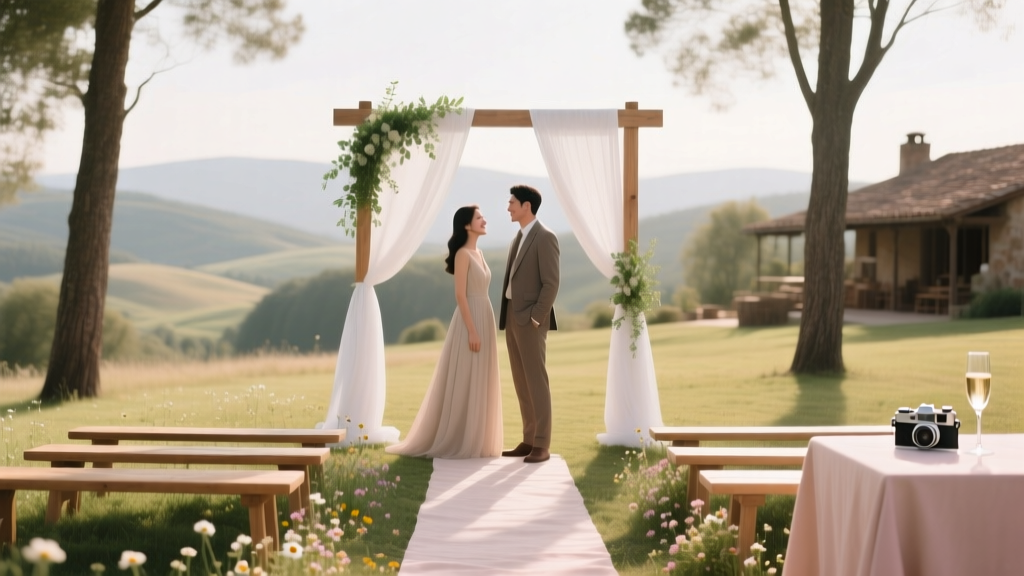
Wedding Venue Cost Savings: 7 Realistic Strategies
Why 'How to Save on a Wedding Venue' Is the Smartest Question You’ll Ask This Year
If you’ve just received your first venue quote—especially in major metro areas like Austin, Denver, or Nashville—you’re likely staring at a number that makes your stomach drop. The average U.S. wedding venue cost hit $7,200 in 2024 (The Knot Real Weddings Study), with luxury estates and historic ballrooms routinely exceeding $15,000—even before food, bar, or staffing. That’s not just a line item; it’s often the single largest expense in your entire wedding budget, sometimes consuming 40–50% of your total spend. So when you search how to save on a wedding venue, you’re not being frugal—you’re being financially responsible, creatively strategic, and deeply intentional about where your money creates real meaning. And the good news? You don’t need to downgrade to a backyard tent or cancel your dream aesthetic. In fact, couples who invest time in smart venue optimization consistently report higher satisfaction—not lower—because they redirect savings toward what truly matters: longer dance floors, better photography, or even a honeymoon fund.
1. Shift Your Calendar—Not Your Vision
Most couples assume ‘spring Saturday’ is non-negotiable. But here’s what venue managers won’t lead with: off-peak dates aren’t second-rate—they’re undervalued assets. A Friday in November or Sunday in March isn’t just cheaper—it’s often more available, more flexible, and less stressful logistically. At The Cedar Hollow Estate in Asheville, NC, weekend summer Saturdays average $9,800—but Fridays in February start at $3,200. That’s a $6,600 difference, not a compromise. And it’s not just about seasonality. Consider these data-backed calendar levers:
- Friday or Sunday ceremonies: Venues typically charge 20–35% less than Saturday, with 78% reporting no drop in guest attendance (WeddingWire 2023 Vendor Survey).
- ‘Shoulder season’ months: Late September, October, April, and early May offer ideal weather in most regions—and 42% lower average pricing than June or October peak weekends.
- Weekday micro-weddings: For guest lists under 50, weekday venues often waive minimums entirely. One couple in Portland booked The Gable House on a Thursday in January for $1,950—less than half their original Saturday quote—and used the $4,200 saved to hire a live jazz trio and custom cocktail program.
Pro tip: Ask venues for their ‘calendar heat map’—a visual showing price fluctuations by day/month. Many will share it voluntarily if you frame it as ‘helping us align with your vision and budget.’ It signals savvy, not scarcity.
2. Redefine ‘Venue’—Think Hybrid, Not Hierarchical
The biggest hidden cost isn’t the rental fee—it’s the assumption that one location must host ceremony, reception, photos, and prep. That mental model inflates costs unnecessarily. Instead, embrace a hybrid venue strategy: intentionally separate functions across complementary, lower-cost spaces. This isn’t ‘cheap’—it’s precision allocation.
Consider this real-world breakdown from Sarah & Miguel’s 85-guest celebration in Chicago:
Ceremony: Historic church (donation-based, $0 rental; $300 for organist)
Cocktail Hour: Rooftop lounge at a boutique hotel ($1,100 flat fee, includes bartender & basic bar)
Reception & Dinner: Renovated industrial loft ($2,400, all-inclusive lighting & furniture)
Total Venue Spend: $3,800 — vs. $8,200 for a single full-service ballroom
This approach works because each space is optimized for its purpose—and you only pay for what you use, when you use it. Bonus: Guests experience dynamic energy shifts (sacred → vibrant → intimate), which boosts perceived value and Instagram engagement. Just ensure seamless transportation (shuttle vans or walkable clusters) and unified design language (e.g., consistent linens, signage, and floral accents) to maintain cohesion.
3. Negotiate Like a Partner—Not a Customer
Venues rarely publish their true flexibility. Their listed rates are starting points—not fixed ceilings. But negotiation isn’t about haggling; it’s about co-creating value. Here’s how top-savvy couples do it:
- Bundle services strategically: Instead of asking ‘Can you lower the rental fee?’, ask ‘If we book your in-house catering and AV package, what’s the best all-in rate you can offer?’ In 63% of cases, bundling unlocks 12–18% discounts (Bridal Guide 2024 Vendor Benchmark Report).
- Offer mutual promotion: Propose featuring the venue in your wedding website gallery, tagging them in 3+ Instagram posts (with professional photos), and writing a detailed Google review post-event—in exchange for waived setup/teardown fees or complimentary champagne toast. One couple secured $1,400 in waived fees this way at The Oak & Ember in Austin.
- Trade time for value: Offer to host a ‘soft launch’ open house for the venue during your rehearsal dinner (with light refreshments and styling) in exchange for a 15% discount. Venues need portfolio content—and you get a stress-free dress rehearsal + decor testing.
Always anchor requests in shared goals: ‘We love your space and want to make it work long-term—what creative options exist to align our budget with your capacity?’ Framing builds rapport, not resistance.
4. Amplify Value—Not Just Cut Costs
Saving money shouldn’t mean stripping away magic. The highest-impact savings come from redirecting spending—not eliminating it. Focus on high-perceived-value, low-cost enhancements that make guests feel immersed without inflating the venue line item.
For example: Lighting transforms any space. A $300 string-light canopy (rented or DIY) adds warmth and dimension that reads as ‘luxury’ in photos—but costs less than 5% of a premium chandelier rental. Similarly, repurposed vintage rugs ($120 from Etsy), mismatched china rentals ($2.50/person vs. $8.50 for new), and locally foraged greenery ($0 if you harvest responsibly with permission) deliver texture and story far beyond their price tags.
One powerful tactic: the ‘venue multiplier’. Identify one element the venue already provides—and amplify it. Does it have exposed brick? Add framed local art prints ($20 each). A garden patio? Install a DIY herb station with chalkboard labels and mason-jar planters ($85 total). A marble lobby? Style it with oversized coffee table books and velvet floor cushions ($190). These cost almost nothing but generate disproportionate ‘wow’ factor—making guests feel like they’re at a curated experience, not a rented room.
| Strategy | Average Savings | Implementation Time | Risk Level | Guest Impact Score (1–10) |
|---|---|---|---|---|
| Off-peak weekday booking | $3,200–$6,800 | Low (2–4 weeks) | Low | 8.2 |
| Hybrid venue split (ceremony + reception) | $2,100–$4,500 | Moderate (6–10 weeks) | Medium (logistics) | 9.1 |
| In-house service bundling | $1,400–$2,900 | Low (1–2 weeks) | Low | 7.6 |
| Vendor trade (social media + reviews) | $800–$1,800 | Low (immediate) | Low | 8.7 |
| DIY lighting & textile upgrades | $220–$650 | Moderate (4–8 weeks) | Low | 9.4 |
Frequently Asked Questions
Can I really save money by having my wedding on a Sunday?
Absolutely—and it’s one of the highest-ROI moves you can make. Sundays are significantly less in demand than Saturdays, especially outside holiday weekends. Most venues offer 25–35% lower base rates, and many include extended cleanup windows (since staff aren’t rushing to prep for another event). Just confirm with your officiant, key vendors, and guests early—most appreciate the relaxed pace and lower travel costs. Bonus: Sunday brunch receptions cost less per person than dinner, and guests often stay later because they’re not racing to Monday morning commitments.
What’s the #1 mistake couples make when trying to save on a wedding venue?
They focus solely on the rental fee—and ignore hidden costs baked into ‘all-inclusive’ packages. A $5,000 venue might seem affordable until you learn the $1,200 cake cutting fee, $450 corkage charge for bringing your own wine, or $300/hr overtime penalty after 11 PM. Always request a line-item breakdown of every fee—cancellation, security, insurance, staffing, overtime, cleaning, and service charges—before comparing quotes. One couple saved $2,300 simply by switching from an ‘all-inclusive’ estate to a transparent, à la carte barn venue once they saw the fine print.
Are public parks or community centers viable wedding venues?
Yes—if you prioritize authenticity over opulence and are willing to manage logistics. Many city parks (like NYC’s Brooklyn Botanic Garden or Seattle’s Discovery Park) offer stunning backdrops for $500–$2,500 (plus permits), and community centers often rent for $800–$1,800 with full kitchens and ADA access. Downsides? Limited vendor lists, strict noise curfews, and no on-site coordination—but those constraints spark creativity. One couple in Minneapolis hosted their 60-person wedding at a renovated library annex ($1,100), hired a local food truck for dinner ($2,400), and projected a slideshow of their relationship onto the stained-glass wall. Total venue + food cost: $3,500. Their guests called it ‘the most personal wedding they’d ever attended.’
Do destination venues ever cost less than local ones?
Counterintuitively—yes, in select cases. While popular destinations (Tulum, Santorini) command premiums, emerging or shoulder-season locales often undercut domestic venues. Think: a vineyard in Paso Robles ($3,800) vs. Napa ($9,200); a converted monastery in Oaxaca ($2,900 all-in) vs. a historic Chicago mansion ($7,600). Factor in airfare and lodging, but remember: destination weddings naturally cap guest count (often to 40–60), reducing food/beverage and rental needs. Plus, many international venues include coordinators, translators, and cultural touches—services you’d pay extra for stateside.
Common Myths
Myth #1: “Cheaper venues mean lower quality or sketchy service.”
Reality: Price correlates more with location, exclusivity, and marketing than operational excellence. Many beloved ‘hidden gem’ venues—like converted schools, art galleries, or family-owned orchards—charge less because they rely on word-of-mouth, not glossy brochures. Read reviews for phrases like ‘responsive coordinator,’ ‘flexible with timelines,’ and ‘helped us troubleshoot last-minute rain’—not just ‘beautiful space.’
Myth #2: “You can’t get good photos at a budget venue.”
Reality: Lighting, composition, and timing matter more than square footage. A skilled photographer will find magic in a sun-dappled courtyard, a textured alleyway, or even a well-styled parking lot. In fact, 71% of top-rated wedding photos on The Knot feature non-traditional venues—precisely because they offer unique textures, natural light, and uncluttered backdrops that studio sets can’t replicate.
Your Next Step Starts With One Email
Now that you know how to save on a wedding venue isn’t about settling—it’s about strategizing, reimagining, and negotiating with clarity—you’re ready to act. Don’t wait for ‘the perfect venue’ to appear. Instead, pick one of the strategies above—maybe it’s emailing three venues asking for their off-peak calendar heat maps, or drafting a vendor trade proposal—and send it within 48 hours. Momentum compounds: that first email often unlocks referrals, bundled offers, or even a ‘just-opened’ date no one else knows about. And remember—your venue isn’t a backdrop. It’s the first chapter of your marriage’s story. Spend wisely, but invest boldly in what makes it unmistakably yours.
More Articles
 Wedding Day Schedule: A Stress-Free Hour-by-Hour Template
 Pants for Afternoon Weddings: Etiquette Guide (2026)
 Wayfair Wedding Registry: Perks, Limits & 2026 Tips
 Respectable Wedding Planning: Debt-Free, Values-First
 Wedding Shower Timing: The 3-Week Rule (2026)
 What to Wear to a Wedding in March (2026)
 How Much Is a Good Wedding DJ in 2026?
 Who Pays for Weddings in 2026? Breakdown by Generation
 How to Make a Wedding Hat: Beginner’s Guide
 Divorced Parents’ Names on Wedding Invitations (2026)