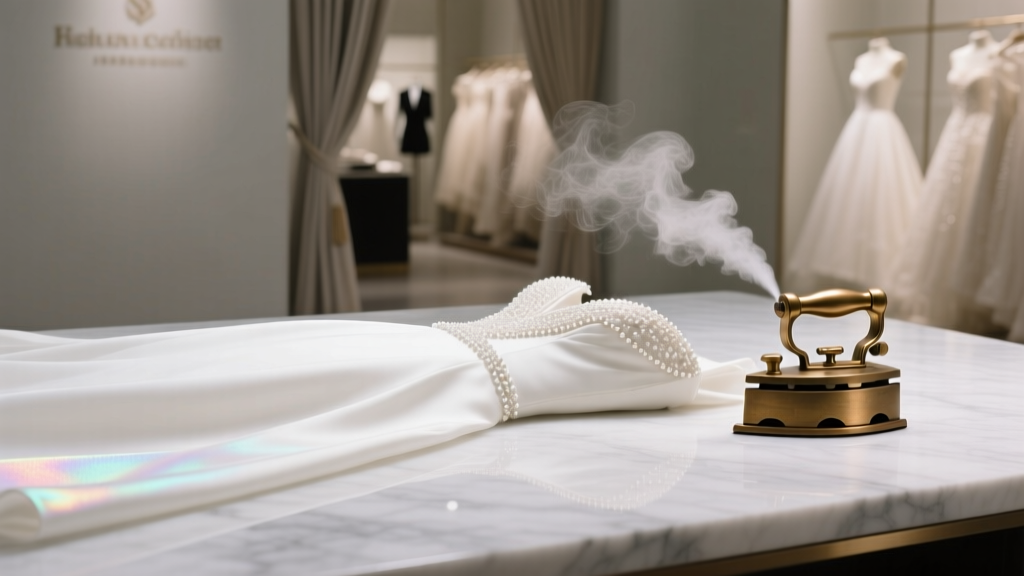
Steam Iron Wedding Dress: Avoid Beads & Shine (2026)
Why Getting This Right Matters More Than You Think
If you’re searching how to steam iron a wedding dress, you’re likely standing in your bedroom two days before the wedding, holding a garment bag with trembling hands—and staring down a $2,800 heirloom that’s developed stubborn creases from travel, storage, or last-minute alterations. That ‘just one quick steam’ impulse? It’s the #1 cause of irreversible damage reported by bridal preservation specialists: melted lace appliqués, water-stained tulle, heat-induced shine on satin, and warped boning that alters fit mid-ceremony. Unlike everyday clothing, wedding dresses are engineered composites—often blending silk charmeuse, polyester mikado, illusion netting, hand-sewn pearls, and metallic-thread embroidery—all reacting differently to moisture and temperature. One misstep isn’t just cosmetic; it can compromise structural integrity, void preservation warranties, and cost hundreds in emergency repairs. This isn’t about convenience—it’s about honoring the craftsmanship, your investment, and the emotional weight stitched into every seam.
Before You Even Plug in the Steamer: The 3-Point Pre-Steaming Audit
Skipping this step is like driving without checking oil—technically possible, catastrophically unwise. Grab a magnifying glass (yes, really) and conduct this forensic-level inspection:
- Fabric ID Check: Flip the dress lining and locate the care label—if missing, use a fabric swatch test (more below). Satin, crepe, and silk demand radically different protocols than organza or tulle.
- Embellishment Mapping: Circle every bead, sequin, rhinestone, lace overlay, and embroidered motif with a non-permanent marker. Note proximity to seams, darts, and boning channels—these are thermal danger zones.
- Structural Integrity Scan: Gently pinch the waistband, bustline, and hem. Does the bodice feel stiff or brittle? Are there loose threads near boning casings? Heat + tension = snapped internal structure. If you detect cracking or stiffness, do not steam—contact your bridal salon immediately.
Real-world example: Sarah M., a 2023 bride in Portland, skipped this audit. Her $4,200 Monique Lhuillier had hidden silk organza layers beneath lace. She steamed the outer layer thinking it was ‘just tulle’—unbeknownst to her, the heat penetrated and permanently fused the inner organza to the lining, creating rigid, visible ridges across her back. Restoration cost: $680. Prevention time: 90 seconds.
The Steaming Protocol: Temperature, Distance & Direction—Not Just ‘Hold and Spray’
Most home steamers operate at 212°F (100°C)—boiling point. But here’s what manufacturers won’t tell you: your dress’s safe maximum is often 158–176°F (70–80°C). Exceeding that melts synthetic fibers, yellows silk proteins, and sets in starch residues that attract yellowing over time. Here’s how to calibrate:
- Test First, Always: Snip a 1”x1” scrap from an interior seam allowance (or ask your seamstress for a remnant). Hold your steamer 6 inches away for 3 seconds. Observe: Does the edge curl? Does color bleed? Does it develop a glossy sheen? If yes—reduce heat or abandon steaming entirely.
- Distance Is Non-Negotiable: Never hold the steamer nozzle closer than 8 inches from fabric—even ‘delicate’ settings scorch lace at 4”. Use a ruler taped to your steamer handle as a physical reminder.
- Directional Steaming: Always steam with the grain—never crosswise or in circles. For bias-cut silks and satins, move vertically from shoulder to hem. For structured bodices, steam top-to-bottom in straight lines parallel to boning. Circular motions stretch and distort delicate weaves.
- Steam ≠ Iron: A steamer adds moisture; an iron applies pressure. Never press satin or silk with an iron—even ‘low heat’. Pressure + moisture = permanent shine marks. If creases persist after steaming, hang the dress in a steamy bathroom (shower running hot) for 20 minutes—then gently smooth with hands only.
When Steaming Is Forbidden: The 5 Red Flags That Demand Professional Intervention
Some dresses simply cannot be steamed at home—no exceptions. Recognizing these early saves time, money, and sanity:
- Heat-Sensitive Embellishments: Anything with Swarovski crystals, foil-printed motifs, or glued-on appliqués (common in BHLDN and David’s Bridal budget lines) will cloud, peel, or discolor instantly under steam.
- Silk Dupioni or Raw Silk: These fabrics have natural slubs and irregular weaves. Steam causes unpredictable shrinkage and permanent ‘water spotting’ that looks like bleach stains.
- Antique or Vintage Gowns: Fabrics over 30 years old become hydrolyzed—moisture breaks down cellulose fibers. A single steam session can cause holes or disintegration.
- Boning or Corsetry: If your dress has steel or plastic boning sewn into channels, steam softens adhesive and warps structure. You’ll end up with a ‘saggy’ fit no amount of pinning fixes.
- Pre-Preserved Dresses: If your gown came with a ‘preservation-ready’ tag or was professionally cleaned pre-storage, steaming reintroduces moisture that triggers oxidation and yellowing during archival boxing.
Case study: Elena R., Austin, TX, tried steaming her 2022 Pronovias dress with delicate Chantilly lace overlays. Within minutes, the lace stiffened and turned translucent where steam contacted glue backing. She contacted Pure Clean Bridal—their lab confirmed irreversible polymer degradation. Cost to replace lace panels: $1,250. Time saved by calling first: 3 hours.
Steaming vs. Professional Pressing: When to Pay Up (and What You’re Really Paying For)
Let’s cut through the pricing confusion. A $125 ‘bridal steaming service’ isn’t just charging for steam—it’s covering expertise, calibrated equipment, and liability insurance. Here’s what professionals actually do that you can’t replicate at home:
| Feature | Home Steamer | Professional Bridal Press |
|---|---|---|
| Temperature Control | Fixed boiling point (212°F); no fine-tuning | Digital thermostats calibrated per fabric (e.g., 140°F for silk, 165°F for polyester) |
| Steam Purity | Tap water minerals cause mineral deposits → yellowing | Distilled water + anti-scale additives; filtered steam lines |
| Pressure Application | None—only vapor contact | Vacuum suction holds fabric taut while steam penetrates evenly |
| Boning Protection | No safeguards—heat migrates into channels | Cool-air shields placed directly over boning before steaming |
| Post-Steam Drying | Ambient air (risk of mildew in humid climates) | Climate-controlled drying cabinets (45% humidity, 72°F) |
Bottom line: If your dress costs $2,500+, the $125–$220 professional pressing fee represents 0.5–0.9% of your total investment. Compare that to the average $850 cost of emergency restoration for heat-damaged gowns (per 2023 Bridal Executive survey). Ask your preservation company if they offer ‘pre-wear steaming’—many include it free with cleaning packages.
Frequently Asked Questions
Can I use a garment steamer labeled ‘for delicates’?
No—not without verification. ‘Delicate’ labels are marketing terms, not fabric-specific certifications. Most consumer steamers max out at 212°F and lack adjustable temperature dials. Test on a seam allowance first, and never assume ‘delicate mode’ equals ‘safe for silk.’
What if my dress has wrinkles that won’t come out with steam?
Persistent creases usually indicate either improper storage (folded too long) or structural issues (e.g., boning misalignment). Do not crank up the heat. Instead, hang the dress on a padded hanger in a steamy bathroom for 30 minutes, then gently smooth with palms—not fingers—to avoid snagging. If wrinkles remain after 48 hours, consult your seamstress—they may need to re-steam internally using specialized tools.
Is hanging the dress in the bathroom while showering enough?
It’s better than nothing for light creasing—but unreliable. Humidity levels vary wildly by bathroom size, ventilation, and water temperature. A 10-minute hot shower generates ~60% humidity; you need sustained 80%+ for effective fiber relaxation. Professional steam cabinets maintain 95% humidity for 20+ minutes. For DIY: boil a large pot of water on the stove, place dress on a hanger 3 feet away (not over the pot!), and cover both with a dry cotton sheet for 15 minutes.
Can I steam the veil separately?
Yes—but with extreme caution. Most veils are illusion tulle or silk organza. Use the lowest heat setting, hold steamer 10 inches away, and steam only the edges—not the center, which stretches easily. Never pull or tension while steaming. For cathedral-length veils, lay flat on a clean white towel and steam from above in overlapping passes.
What’s the safest way to store the dress after steaming?
Hang immediately on a wide, padded hanger (no wire!) in a cool, dark closet—never in plastic. Use breathable cotton garment bags (like those from The Wedding Library). Avoid cedar closets (oils stain fabric) and basements (humidity). Wait 48 hours before packing for preservation—this ensures all residual moisture evaporates, preventing mold spores in archival boxes.
Common Myths
Myth #1: “All steamers are safe for wedding dresses if you use the ‘delicate’ setting.”
False. Consumer steamers lack precision temperature control. ‘Delicate’ often just reduces steam volume—not heat. Many still emit 212°F vapor, which melts polyester-based lace and sinters silk fibers.
Myth #2: “If it looks smooth right after steaming, it’s fixed.”
False. Heat damage is often delayed. Shine marks, yellowing, and embrittlement appear 24–72 hours post-steaming as fibers oxidize. What looks perfect at midnight may be irreparably damaged by walk-down time.
Your Next Step Starts Now—Not Tomorrow
You now know how to steam iron a wedding dress—but more importantly, you know when not to. Your gown isn’t laundry. It’s architecture, artistry, and emotion woven into fiber. So before you reach for that steamer, take three breaths. Pull out your seam allowance scrap. Measure that 8-inch distance. And remember: the most elegant solution is often the one that preserves—not corrects. If any red flag appeared during your audit, call your bridal salon today. Most offer complimentary pre-wear checks—and many partner with preservation labs that provide same-week steaming. Your future self, holding that dress again on your daughter’s wedding day, will thank you for choosing wisdom over speed. Ready to protect your investment? Download our free Pre-Wedding Preservation Checklist—includes fabric ID cheat sheets, steamer calibration guides, and a list of vetted preservation partners by ZIP code.
More Articles
 Brookgreen Gardens Wedding Cost (2026) | Pricing & Savings
 Wedding Gift Amount: Stress-Free 2026 Guide
 Men Wearing White at Weddings: Etiquette Rules (2026)
 Wedding Guest Stay Time: Etiquette Timeline (2026)
 Venue Address on Wedding Invitation (2026)
 Wedding Invitation Time Format Rules (2026)
 Wedding Money Phrases: Polite & Culturally Smart (2026)
 Wedding Ring Exchange: 7-Step Ceremony Script (2026)
 Wedding Favor Wrapping: Pro Tips & Time-Saving Hacks
 Thailand Destination Wedding Cost (2026): $8,900–$62,500