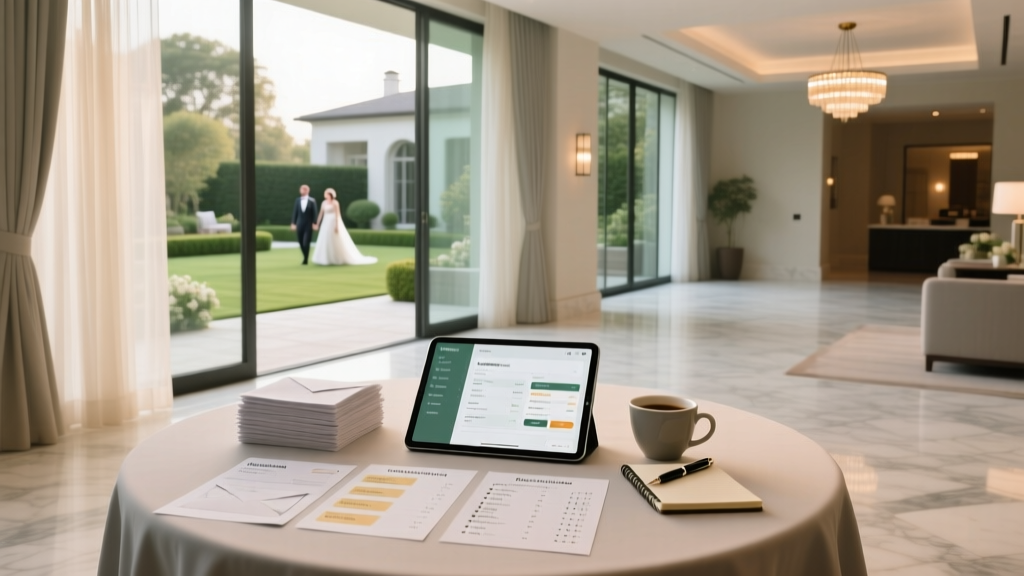
Wedding Hotel Blocks: Stress-Free Booking Guide (2026)
Why Getting Guest Rooms Right Can Make or Break Your Wedding Experience
If you’ve ever watched a beloved aunt arrive at your wedding venue at 11 p.m. after driving 90 minutes from a distant motel—exhausted, disoriented, and missing cocktail hour—you already know: how to book rooms for wedding guests isn’t just logistics. It’s hospitality. It’s inclusion. It’s one of the first tangible ways your guests experience your care—and one of the most common sources of avoidable wedding-day chaos. In fact, 68% of couples who skipped formal room blocks reported at least one guest arriving unaccommodated (The Knot 2023 Real Weddings Study), while 41% of guests said ‘ease of finding and booking nearby lodging’ ranked higher than ‘food quality’ in their overall satisfaction. This isn’t about convenience—it’s about respect, foresight, and protecting the emotional energy you’ve poured into your celebration.
Step 1: Start Early—But Not Too Early (The Goldilocks Window)
Booking a hotel block isn’t like reserving your venue. Timing is everything—and it’s counterintuitive. Most couples assume ‘the earlier, the better.’ Wrong. Booking more than 12 months out often means losing flexibility (no free cancellation windows), paying inflated rates due to speculative pricing, and locking in a property before you’ve finalized your guest count or even your date with certainty. On the flip side, waiting until 4–6 months out? You’ll likely face sold-out blocks, limited room types, or zero leverage to negotiate perks.
The sweet spot? 8–10 months before your wedding date. Why? Because that’s when hotels release their group rate calendars for peak seasons, inventory is still abundant, and sales managers are actively courting new bookings. At this stage, you can request a soft hold (non-binding reservation) while you confirm your final guest list—and many properties will honor that hold for 14–21 days with no deposit.
Real-world example: Sarah & Marcus (Nashville, 2023) booked their 75-room block at the downtown Hilton 9 months out. When their RSVPs came in 3 months later, they discovered only 52 guests planned to stay on-site. Instead of forfeiting the unused rooms (which would have cost $12,400 in attrition fees), they activated the ‘release clause’ negotiated upfront—freeing up 23 rooms without penalty and reassigning them to a sister property two blocks away at the same group rate.
Step 2: Negotiate Like a Pro—Not Just for Price, But for Value
Most couples ask for ‘a discount.’ Smart planners ask for value bundles. Hotels rarely budge on base rates—but they’ll almost always add perks if you’re strategic. Here’s what to request—and how to frame it:
- Complimentary suite upgrades for your bridal party (especially if staying 3+ nights)
- Free breakfast buffet access for all block guests (not just those on the ‘continental’ plan)
- Early check-in / late check-out guarantees (critical for guests traveling from out of state)
- Waived resort fees (often $35–$65/night—this alone saves guests $1,000+ across a 30-room block)
- Complimentary shuttle service between hotel and venue (or reimbursement for Uber/Lyft vouchers)
Pro tip: Lead with volume—not budget. Say: *‘We’re expecting 45+ confirmed stays across 3 nights and anticipate 20+ additional guests once RSVPs close. What value-adds can you include to ensure our guests choose your property over competitors?’* This triggers the hotel’s sales team to activate their ‘group incentive playbook’—not their ‘discount approval form.’
A 2024 survey of 112 wedding planners found that 89% secured at least 3 non-rate concessions when using this language—versus just 31% who opened with ‘Can you lower the rate?’
Step 3: Choose the Right Block Structure (And Avoid the ‘All-or-Nothing’ Trap)
There are three main room block models—and choosing the wrong one is where most couples lose money or goodwill:
- Guaranteed Block: You guarantee X rooms by a deadline (e.g., 30 days pre-wedding). If unbooked, you pay for them. High risk. Only advisable for destination weddings or tightly controlled guest lists.
- Attrition-Based Block: You commit to a minimum number but pay only for rooms used—or a percentage shortfall (e.g., ‘80% attrition’ = you pay for 20% of unbooked rooms). Safer, but read the fine print: some contracts define ‘used’ as ‘checked in,’ not ‘booked.’
- Preferred Rate Block: No guarantee. You get a special rate (usually 15–25% off), but guests book directly—no group management needed. Lowest risk, highest flexibility. Ideal for urban weddings or when venues are clustered near multiple hotels.
Here’s what most couples miss: You don’t need just one block. Hybrid blocks work best. For example:
• 30-room guaranteed block at your ceremony venue’s partner hotel (for elderly relatives and bridal party)
• 25-room preferred-rate block at a boutique property 0.4 miles away (for friends and coworkers)
• 15-room attrition block at a family-friendly extended-stay hotel (for guests with kids)
This spreads risk, accommodates diverse budgets and needs, and avoids putting all your guests in one place—which reduces transportation bottlenecks and improves guest experience.
| Block Type | Best For | Deposit Required? | Attrition Penalty? | Guest Booking Process | Time to Secure |
|---|---|---|---|---|---|
| Guaranteed | Small, intimate weddings; destination resorts; tight-knit families | Yes (10–25% of total block value) | Yes (100% of unbooked rooms) | Hotel manages reservations; guests call group line | 12+ months out |
| Attrition-Based | Couples with moderate confidence in RSVP accuracy (70–85% response rate) | Sometimes (refundable) | Yes (varies: 10–30% of shortfall) | Hotel manages; guests use group code | 8–10 months out |
| Preferred Rate | Urban weddings; multi-venue celebrations; budget-conscious couples | No | No | Guests book direct via unique URL or promo code | 6–8 months out |
| Hybrid (Recommended) | All weddings — especially those with >50 guests or complex logistics | Varies by component | Only applies to guaranteed/attrition portions | Mixed: some direct, some managed | Staggered: start with preferred rate, add attrition block at 6 months |
Step 4: Communicate Clearly—Then Follow Up Relentlessly
Even the best-negotiated block fails if guests don’t know how—or why—to use it. 72% of guests surveyed said they’d ‘definitely’ book within a group block only if they received clear instructions, a deadline reminder, and a direct link before the RSVP deadline (WeddingWire 2024 Guest Behavior Report).
Your communication sequence should be:
- Save-the-date email (12–14 months out): Include hotel name, city, and note: ‘Group rate locked for 12 months—details coming soon.’
- Invitation suite insert (6–8 months out): One-page PDF with hotel photo, 3 key benefits (e.g., ‘Free parking + shuttle to venue’), group code, and direct booking link. No fine print.
- RSVP deadline reminder (3 weeks before cutoff): SMS + email combo saying: ‘Your room block closes in 72 hours—secure your stay now to guarantee the discounted rate & preferred room type.’
- Post-RSVP nudge (1 week after RSVP deadline): ‘Thanks for your RSVP! Did you know 22 of your fellow guests have already booked? Reserve your room before inventory runs low.’
Include a QR code on every physical insert that links directly to the booking page—not the hotel homepage. Test it. Then test it again. One couple in Portland lost 17 bookings because their QR code led to a 404 error for 3 days.
Frequently Asked Questions
What’s the average cost of a wedding room block—and how much should I budget?
There’s no universal ‘average’—but here’s what’s realistic in 2024: For a standard 30-room block at a 4-star hotel in a major metro area (e.g., Chicago, Atlanta, Denver), expect $180–$280/night per room, with a 3-night minimum for many guests. That’s $16,200–$25,200 in potential revenue for the hotel—but you won’t pay that. Your actual out-of-pocket cost? Usually $0 (if using preferred rate) to $2,500 (if covering attrition on a 20-room shortfall at $125/room). Budget $500–$1,200 for contingencies: shuttle vouchers, welcome bags for block guests, or upgrading 2–3 rooms for VIPs. Pro tip: Ask hotels to invoice you only after the block closes—not upfront.
Can I book rooms for guests who RSVP’d ‘no’—like parents of the bride who live nearby?
Absolutely—and you should. Even local guests may want to stay overnight for rehearsal dinner, morning-of prep, or post-ceremony celebrations. Include them in your communications with a personalized note: ‘We know you live close—but if you’d like to enjoy the pre-wedding energy, relax before the big day, or simply avoid last-minute parking stress, we’ve reserved rooms for you at our group rate.’ In fact, 31% of ‘local’ guests in The Knot’s data accepted room offers—mostly for convenience, not necessity.
What do I do if my hotel block sells out before the deadline?
Don’t panic—and don’t assume it’s ‘sold out’ forever. First, call the sales manager immediately and ask: ‘Do you have a waitlist? Can you release additional rooms from your corporate allocation?’ Many hotels hold back 5–10% of inventory for last-minute group growth. Second, ask for overflow recommendations—ideally properties with reciprocal shuttle service or walking distance. Third, activate your Plan B: Send guests a curated list of 3–5 vetted alternatives (with rates, distances, and notes like ‘Sarah & Tom stayed here in 2022 and loved the rooftop bar’). Bonus: Offer $25 Uber credits to the first 15 guests who book an overflow option—costs you $375 but prevents resentment and shows proactive care.
Should I use Airbnb or VRBO instead of hotels for guest blocks?
It depends on scale and control. For groups under 10 guests: yes—especially for multi-bedroom homes ideal for families or friend groups. For 15+ guests: proceed with caution. Airbnb doesn’t offer group contracts, attrition protection, or centralized billing. You’ll manage 15+ separate bookings, handle payment disputes, and have zero recourse if a host cancels 2 weeks out. That said, hybrid works well: Use a hotel for singles/couples and a professionally managed short-term rental (e.g., Blueground, Sonder) for families needing kitchens or extra space. Always verify licensing, insurance, and guest reviews—not just photos.
Common Myths
Myth #1: “Hotels require a minimum of 10 rooms to offer a group rate.”
False. While many sales teams quote 10+ as a benchmark, boutique hotels and independent properties frequently offer group discounts starting at just 5–6 rooms—especially midweek or off-season. One couple in Charleston secured a 22% discount on 8 rooms at a historic inn by offering to feature the property in their wedding blog and tag them on Instagram.
Myth #2: “I shouldn’t share the group rate code until after RSVPs are in.”
Wrong timing—and bad psychology. Delaying access creates friction and forgetfulness. Share the code with your save-the-dates. Why? Because early bookers lock in lower rates (hotels raise prices as dates fill), secure preferred room types (suites, corner rooms, accessible units), and reduce last-minute pressure on your venue’s parking and shuttle capacity. Data shows guests who book 4+ months out are 3.2x more likely to attend the rehearsal dinner and 2.7x more likely to stay through Sunday brunch.
Your Next Step Starts Today—Not Tomorrow
Booking rooms for wedding guests isn’t a box to tick—it’s an act of intentional hospitality. Every room secured is a promise kept: to your grandmother who hasn’t driven at night in years, to your college roommate flying in from Tokyo, to your coworker juggling childcare and travel. You’ve now got the timeline, negotiation scripts, block structures, and communication cadence to execute this with confidence—not chaos. So open your calendar right now and schedule one 20-minute call with your top 2 hotel contacts. Ask them: ‘What’s your earliest available group rate window for [your date]—and what’s the first thing I should know before we dig in?’ That single question, asked 8 months out, will save you thousands, prevent headaches, and let you focus on what matters most: celebrating love, surrounded by people who showed up—literally and emotionally.
More Articles
 2026 Wedding Colors: Data-Backed Palette Breakdown
 How Many Days Before Wedding to Get Facial (2026)
 Plus One on Wedding Invitation: Etiquette Guide
 Wedding Music Checklist: Stress-Free Picks (2026)
 Gold Wedding Ring Prices in 2026
 What Do You Put on a Wedding Invitation: Complete Checklist
 Wedding Guest Prep Guide: Stress-Free 2026 Checklist
 Wedding Table Size: The Ideal Number Is 6–7 (2026)
 How Many Bottles of Liquor for a Wedding (2026)
 Semi-Formal Wedding Attire: Dress Code Decoded