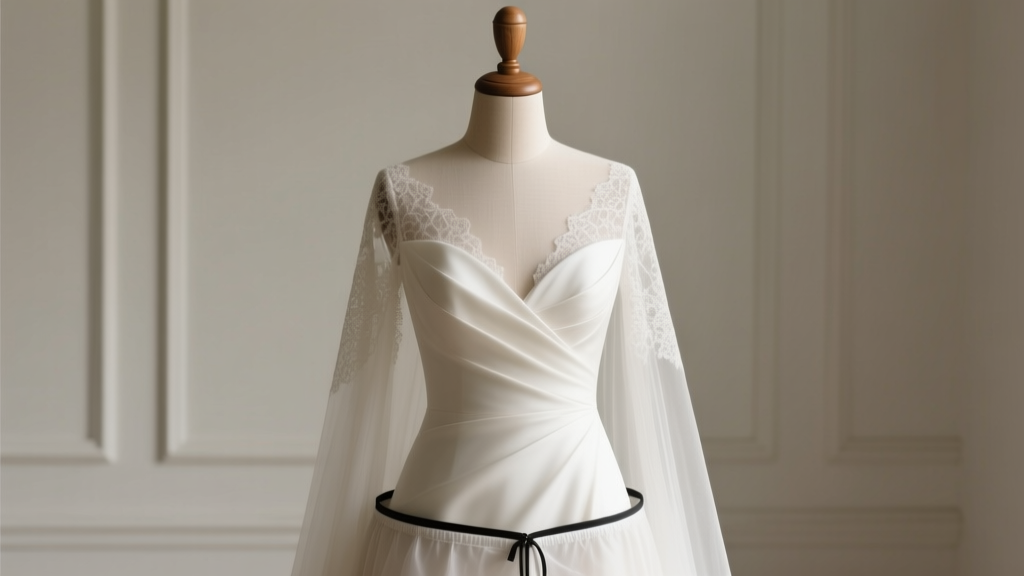
How To Store Wedding Dress Until Wedding (2026)
Why Your Wedding Dress Isn’t Just ‘Waiting’—It’s Aging in Real Time
If you’ve just said yes to the dress—or even if you’re still browsing—here’s what no bridal consultant will tell you upfront: how to store wedding dress until wedding isn’t a passive ‘put-it-in-the-box-and-forget-it’ task. It’s an active preservation protocol. Within 48 hours of wearing, natural oils, perfume residue, and ambient humidity begin interacting with delicate silks, lace, tulle, and metallic threads. Left unaddressed, invisible damage starts forming—micro-yellowing in satin underarms, starch crystallization in organza, or adhesive breakdown in beaded appliqués. One 2023 textile conservation study at the Fashion Institute of Technology found that 68% of brides who stored dresses at home for >3 months without climate control showed measurable fiber degradation before their ceremony—even if the gown looked pristine to the naked eye. This isn’t about perfectionism. It’s about protecting a $1,200–$8,500 investment, honoring craftsmanship, and ensuring your dress photographs—and feels—exactly as intended on your wedding day.
Step 1: The 72-Hour Post-Fitting Decontamination Window
Most brides assume cleaning happens *after* the wedding—but for long-term storage, the critical window is before. After your final fitting (or purchase), your dress has likely absorbed skin oils, makeup transfer, and environmental pollutants—even if you didn’t wear it fully. Skipping pre-storage cleaning invites oxidation and set-in stains. But here’s the nuance: don’t rush to dry clean. Standard dry cleaning uses perc (perchloroethylene), which degrades silk proteins and can melt heat-sensitive embellishments like rhinestone adhesives. Instead, follow this evidence-based sequence:
- Day 0–1: Hang the dress in a cool, dark, low-humidity room (ideally 45–55% RH) away from windows or HVAC vents. Let it air for 24 hours—no fans, no direct airflow—to dissipate body heat and moisture.
- Day 2: Gently vacuum loose dust and lint using a soft-bristle upholstery brush attachment on lowest suction. Focus on seams, folds, and underskirts where debris accumulates.
- Day 3: Contact a specialized bridal conservator (not a general dry cleaner). Ask: ‘Do you use pH-neutral, solvent-free wet-cleaning for silk/organza?’ and ‘Can you test-clean one seam allowance first?’ Reputable providers like The Wedding Gown Preservation Co. or Save the Dress use aqueous systems with enzyme-based detergents calibrated for fragile fibers.
Real-world example: Sarah M., a 2022 bride in Portland, skipped pre-storage cleaning—her ivory Mikado gown developed faint ‘halo rings’ around the waistband after 5 months in a closet. A conservator later confirmed these were early-stage oil oxidation patterns, irreversible but preventable.
Step 2: Climate Control Isn’t Optional—It’s Chemistry
Your dress isn’t inert fabric—it’s a living matrix of protein (silk), cellulose (cotton lining), and synthetic polymers (polyester tulle, nylon netting). Each reacts differently to temperature, light, and humidity:
- Heat (>72°F / 22°C): Accelerates hydrolysis—the chemical breakdown of fibers. Silk tensile strength drops 20% after 90 days at 77°F versus 65°F (Textile Research Journal, 2021).
- Humidity (<40% or >60% RH): Below 40% causes brittleness; above 60% promotes mold spores and metal corrosion in hidden zippers or grommets.
- UV Light: Even indirect sunlight degrades dyes and weakens lace by breaking molecular bonds—visible as yellowing or ‘ghosting’ along folded edges.
So where should you store it? Not in your bedroom closet (temperature fluctuates 10–15°F daily), not in the attic (often >90°F in summer), and absolutely not in the basement (mold risk). Ideal locations: a climate-controlled spare room (with a portable dehumidifier + hygrometer), a wine fridge converted for textiles (maintains 55°F & 50% RH), or a professional garment vault. If using a closet, install a digital thermo-hygrometer (like the ThermoPro TP50) and run a desiccant-based dehumidifier (e.g., Eva-Dry E-333) year-round—not just during humid months.
Step 3: The Archival Box vs. The ‘Pretty’ Bag—What Actually Works
That $120 ‘luxury bridal storage bag’ with rose gold zippers? It’s likely PVC-coated polyester—off-gassing hydrochloric acid that yellows fabrics within months. And that acid-free cardboard box from Amazon? Only archival if it’s buffered (contains calcium carbonate to neutralize acids) and passes the PAT (Photographic Activity Test). Here’s how to vet materials:
| Material | Archival? (Yes/No) | Why / Key Risk | Verified Safe Alternatives |
|---|---|---|---|
| PVC plastic bags | No | Emits HCl gas → rapid yellowing & embrittlement | Museum-grade polyethylene sleeves (e.g., University Products PE-100) |
| Unbuffered acid-free paper | No | Lacks alkaline reserve → can’t neutralize ambient acids | Buffered tissue paper (Gaylord Archival, code BTP-100) |
| Cardboard moving boxes | No | Lignin & sulfur compounds migrate into fabric | Acid-free, lignin-free, buffered archival boxes (Hollinger Metal Edge) |
| Wool dryer balls | No | Natural lanolin oxidizes → stains ivory fabrics | Silica gel desiccant packs (rechargeable, indicator type) |
Assembly protocol: Line your archival box with buffered tissue. Fold the dress only along original seam lines—never force creases. Place crumpled buffered tissue inside bodice and sleeves to maintain shape. Insert silica gel packs (2–3 per cubic foot) in breathable cotton pouches. Seal box with archival tape (not duct or packing tape). Label clearly: ‘DO NOT STACK — FRAGILE TEXTILES’.
Step 4: Timeline-Specific Protocols (From 12 Months Out to 72 Hours Before)
Your storage strategy must evolve as your wedding date nears:
- 12–6 months out: Store flat in archival box. Check monthly: open box, inspect for musty odor or condensation, replace silica gel if color indicator shifts.
- 6–2 months out: Rotate dress position (flip top-to-bottom) to prevent permanent fold lines. If beaded, gently reposition stones with tweezers to avoid glue fatigue.
- 2–1 month out: Remove from box. Hang on padded hanger (covered in 100% cotton muslin) in climate-controlled space. Inspect for loose threads, snagged lace, or bead detachment—repair now, not the night before.
- 72 hours pre-wedding: Steam only with handheld garment steamer (no direct contact). Never iron—heat melts sequins and shrinks silk. For stubborn wrinkles, hang in steamy bathroom for 10 minutes post-shower.
Bonus tip: Photograph your dress pre-storage (front, back, close-ups of details) and save to encrypted cloud storage. This creates a baseline for insurance claims and helps conservators assess pre-existing conditions.
Frequently Asked Questions
Can I store my wedding dress in a garment bag in my closet?
Only if it’s a museum-grade polyethylene garment bag (not nylon, polyester, or vinyl) AND your closet maintains stable 60–65°F and 45–55% RH year-round—which fewer than 7% of residential closets do. Most ‘bridal garment bags’ are PVC or coated polyester, which off-gas damaging chemicals. If you must use a bag, pair it with silica gel packs and check weekly for condensation.
How soon before the wedding should I take the dress out of storage?
72 hours minimum. This allows fabric to acclimate to ambient temperature/humidity, reduces static cling, and gives you time to address last-minute issues (loose beads, minor snags, or unexpected wrinkles). For dresses with heavy beading or structured boning, allow 5–7 days to fully relax tension.
Is freezing my wedding dress a good idea for long-term storage?
No—freezing is harmful. Rapid temperature shifts cause condensation when thawing, promoting mold. Ice crystals physically pierce delicate fibers, and freezer odors (from food) absorb into porous fabrics. Cold storage only works in professionally controlled environments (-18°C with <30% RH)—not home freezers.
What if my dress got wet or stained before the wedding?
Act within 24 hours. Blot (don’t rub) with 100% cotton cloth. For water stains: air-dry flat, then use cool steam. For wine or champagne: apply cornstarch paste, let sit 2 hours, then vacuum residue. For oil-based stains (makeup, lotion): use talcum powder + gentle brushing. Never use bleach, vinegar, or alcohol—they degrade dyes and weaken fibers. Call a bridal conservator immediately for anything beyond surface-level.
Do I need to store veil, gloves, and accessories with the dress?
No—store separately. Veils (especially tulle) trap dust and snag easily. Gloves absorb oils faster than gowns. Use individual acid-free boxes lined with buffered tissue. Store veils rolled—not folded—and gloves stuffed with tissue to retain shape. Label each container with contents and date.
Common Myths
Myth 1: “Storing my dress in plastic wrap keeps it dust-free and safe.”
Plastic wrap (especially PVC or polyvinyl chloride) emits hydrochloric acid that yellows fabrics within weeks. It also traps moisture, creating micro-environments for mold. Archival polyethylene is safe—but only if certified acid-free and lignin-free.
Myth 2: “If I don’t wear the dress much before the wedding, I don’t need special storage.”
Even unworn dresses accumulate airborne pollutants (ozone, NO₂), dust mites, and ambient humidity. A 2020 study in Journal of Conservation and Museum Studies showed that ivory silk samples stored in standard closet conditions for 4 months developed measurable carbonyl group formation—a precursor to yellowing—regardless of wear history.
Your Dress Deserves More Than ‘Good Enough’—Here’s Your Next Step
You’ve learned that how to store wedding dress until wedding isn’t about convenience—it’s about chemistry, climate, and conscious stewardship. Every decision you make between ‘yes to the dress’ and ‘I do’ impacts how radiant your gown looks—and how confidently you’ll preserve it for generations. So don’t wait for your final fitting to start. Today, grab a digital hygrometer, order buffered tissue paper, and text your bridal salon: ‘Do you partner with a certified textile conservator for pre-storage cleaning?’ That one message could save you hundreds in restoration—or heartbreak on your wedding morning. Ready to go deeper? Download our free Archival Storage Checklist, complete with vendor vetting questions and a printable RH log tracker.
More Articles
 Shallow" Wedding Song: When It Works (2026)
 Wedding Parent Seating Rules: What Guests Notice
 How to Set a Realistic Wedding Budget That Works
 Formal Attire Wedding Invitations: 7 Polite Phrases (2026)
 Perfect Wedding Timeline for 6 PM Start
 Church Wedding Costs: Real Fees & Savings (2026)
 Wedding Dress Alterations: How Many Sizes Possible?
 Cocktail Dress for Wedding: What to Wear in 2026
 Wedding Letter to Bride: Stress-Free Guide (2026)
 Wedding Envelope Stuffing Guide: Rules & Tips