# How to Officiate a Wedding: Everything You Need to Know to Wed a Couple Beautifully
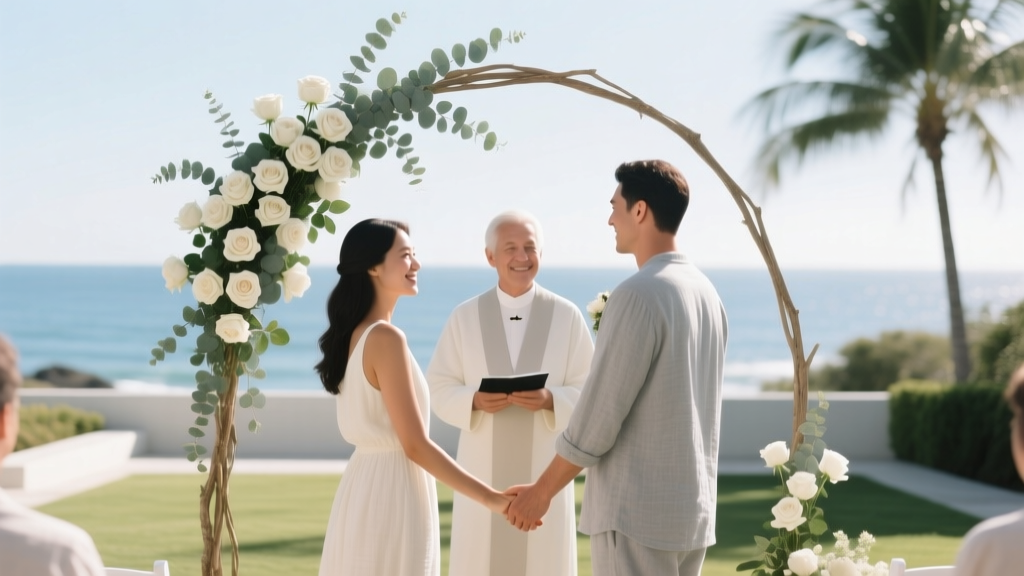
Being asked to wed a couple is one of the greatest honors a person can receive. But if you've never officiated before, the responsibility can feel overwhelming. How do you get legally authorized? What do you actually say? How long should the ceremony be? This guide walks you through every step — from paperwork to pronouncement — so you can give the couple a ceremony they'll remember forever.
---
## Step 1: Get Legally Ordained
Before you can wed a couple, you must be legally authorized to do so. The most common route is online ordination through organizations like:
- **Universal Life Church (ULC)** — free, instant, accepted in most U.S. states
- **American Marriage Ministries (AMM)** — free, widely recognized
- **National Officiant Registry** — paid option with additional credentials
**Key legal steps after ordination:**
1. Check your state's requirements — some states (Virginia, Pennsylvania, Nevada) have stricter rules
2. Register with the county clerk if required (e.g., New York City requires this)
3. Obtain a copy of your ordination certificate
4. Review the marriage license the couple provides — you'll need to sign it after the ceremony
According to the American Marriage Ministries, over 26 million people in the U.S. have been ordained online, making friend-officiants one of the most popular ceremony choices today.
---
## Step 2: Meet With the Couple and Plan the Ceremony
A great officiant doesn't just show up and read from a script — they collaborate with the couple to craft something personal.
**Schedule at least two planning meetings:**
- **Meeting 1 (6–8 weeks out):** Learn their love story, tone preferences (religious, secular, humorous, heartfelt), and must-have elements
- **Meeting 2 (2–3 weeks out):** Review the full script together and rehearse timing
**Ceremony structure to discuss:**
| Element | Typical Duration |
|---|---|
| Processional | 3–5 min |
| Welcome & opening words | 2–3 min |
| Readings (optional) | 2–4 min |
| Vows | 3–5 min |
| Ring exchange | 1–2 min |
| Pronouncement & kiss | 1 min |
| Recessional | 2–3 min |
Most ceremonies run **20–30 minutes** — long enough to feel meaningful, short enough to hold attention.
---
## Step 3: Write and Deliver the Script
Your script is the backbone of the ceremony. It should feel like the couple — not like a template you downloaded.
**Structure your script in five parts:**
1. **Welcome** — greet guests, acknowledge the occasion, briefly introduce yourself
2. **Opening remarks** — share a story or reflection about the couple (2–3 minutes max)
3. **Readings or rituals** — unity candle, sand ceremony, or a poem read by a guest
4. **Vows and ring exchange** — prompt each partner, or have them recite memorized/written vows
5. **Pronouncement** — the legal declaration and the kiss
**Sample pronouncement wording:**
> *"By the power vested in me by the State of [State], I now pronounce you married. You may kiss each other."*
**Delivery tips:**
- Print your script in large font (14pt minimum) and use a binder or clipboard
- Make eye contact with the couple, not just your notes
- Speak slowly — nerves make everyone rush
- Do a full rehearsal at the venue the day before
---
## Step 4: Handle the Legal Paperwork
The ceremony is the emotional heart — but the paperwork makes it legal.
**After the ceremony, you must:**
1. Sign the marriage license along with the couple and any required witnesses
2. Return the signed license to the county clerk within the required timeframe (usually 3–10 days)
3. Keep a copy for your records
Failing to return the license on time is one of the most common officiant mistakes — and it can delay the couple's legal marriage status. Set a calendar reminder the day of the wedding.
---
## Common Mistakes (And the Myths Behind Them)
**Myth #1: "Online ordination isn't legally valid."**
This is false in the vast majority of U.S. states. Online ordinations from recognized organizations like ULC and AMM are legally valid in 47+ states. The exceptions are narrow and state-specific. Always verify your state's current rules, but don't let this myth stop you from saying yes.
**Myth #2: "The ceremony has to be long to be meaningful."**
Length has nothing to do with meaning. Some of the most powerful ceremonies last 15 minutes. What matters is specificity — a single true story about the couple lands harder than ten minutes of generic sentiment. Couples and guests consistently report that shorter, personal ceremonies feel more memorable than long, formal ones.
---
## Conclusion
Wedding a couple is a profound privilege — and with the right preparation, it's entirely within reach for anyone willing to put in the work. Get ordained, meet with the couple early, write a script that sounds like them, and don't forget to file the paperwork.
If you've been asked to officiate, start by confirming your state's ordination requirements this week. The couple trusted you with one of the most important moments of their lives — and with this guide, you're ready to deliver.
**Ready to start writing your ceremony script?** Download our free officiant script template and checklist to make sure you don't miss a thing.
 Wedding Invitation Letter Tips (2026)
 Wedding Invitations: 7 Ways They Impact Your Big Day
 Wedding Pictures Timeline: Cut 45+ Min, Keep Quality
 Wedding Planner Pricing: 7 Real Models (2026)
 DIY Wedding Planning: 12-Month Timeline, Budget & Scripts
 Wedding Website Plus Ones: 7-Step RSVP Checklist (2026)
 George Peabody Library Wedding Cost (2026)
 Print Wedding Place Cards at Staples: 7-Step Guide (2026)
 Bridal Shower vs Wedding Gifts: When to Give Both
 Gold Wedding Anniversary: When It Is & How to Celebrate