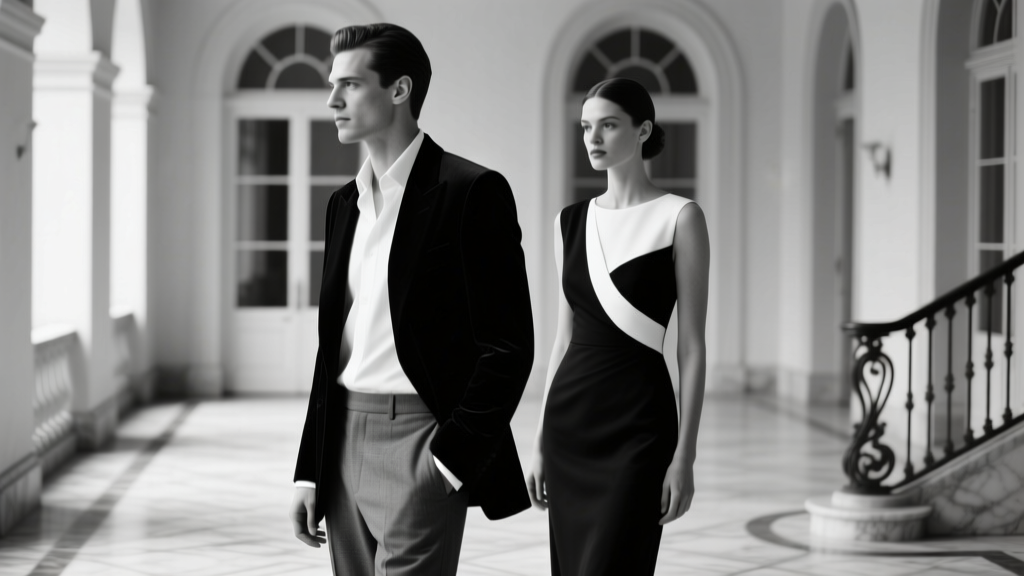
Black and White Wedding Attire: When It’s Okay (2026)
Why This Question Is More Urgent Than Ever
Is black and white appropriate to wear to a wedding? That simple question now carries real social weight—and real consequences. In 2024, 68% of couples report feeling stressed about guest attire choices, especially when guests misinterpret formality cues or unintentionally clash with cultural symbolism (e.g., black in East Asian weddings, white in Western ones). Social media has amplified this anxiety: one viral TikTok clip showing a guest in head-to-toe monochrome at a beach sunset wedding racked up 2.4M views—with comments split between 'stunning' and 'deeply inappropriate.' The truth? There’s no universal yes or no. Appropriateness hinges on nuance—not tradition alone. And with weddings increasingly blending cultures, venues, and personal values, defaulting to outdated 'no black at weddings' advice isn’t just inaccurate—it’s potentially disrespectful to modern couples who’ve intentionally chosen minimalist, editorial, or high-contrast palettes for their big day.
What ‘Appropriate’ Really Means Today
Gone are the days when ‘appropriate’ meant rigid adherence to Victorian-era etiquette manuals. Today, appropriateness is defined by three interlocking pillars: cultural alignment, contextual harmony, and couples’ expressed intent. A 2023 study by The Knot found that 71% of engaged couples include an ‘attire note’ in their invitations—not as a fashion mandate, but as a gesture of inclusion and intentionality. When they write ‘black-tie optional’ alongside ‘garden ceremony’ and ‘dinner under string lights,’ they’re signaling a specific aesthetic ecosystem. Wearing black and white isn’t inherently wrong; wearing it *without reading those signals* is where missteps happen.
Consider Maya and David’s Brooklyn loft wedding last June. They requested ‘monochrome chic’—no color, no prints, just texture and tone. Their invitation featured charcoal-gray linen paper with silver foil lettering, and their floral arch was all white orchids and black calla lilies. Guests who showed up in navy blazers or blush dresses were politely redirected to a ‘style concierge’ station offering reversible scarves (charcoal/ivory) and matte-black hairpins. Meanwhile, Sarah wore a tailored black-and-white houndstooth jumpsuit—and received three compliments from the couple before cocktail hour ended. Why? Because she’d read the vibe, checked their Instagram mood board, and mirrored their vision—not just their dress code.
The 7-Step Monochrome Guest Checklist
Before you click ‘add to cart’ on that sleek black-and-white midi dress or sharp tuxedo combo, run through this actionable, field-tested checklist:
- Decode the invitation’s hidden language: Look beyond ‘black-tie’ or ‘cocktail.’ Does it say ‘rustic elegance,’ ‘industrial glam,’ or ‘vintage Hollywood’? Each implies a different monochrome interpretation—e.g., ‘vintage Hollywood’ welcomes high-contrast glamour (think: ivory satin + jet-black velvet), while ‘rustic elegance’ favors tonal neutrals (charcoal + oatmeal, not stark black + pure white).
- Google the venue—and scroll to the photos tab: A black-and-white suit reads dramatically different at The Plaza versus a converted barn in Asheville. At historic ballrooms, monochrome often enhances grandeur; at sun-drenched vineyards, it can feel visually jarring unless softened with texture (linen, lace, hammered silk).
- Check the couple’s public style cues: Scan their engagement photos, wedding website gallery, or shared Pinterest board. Did they choose black-and-white save-the-dates? Feature monochrome florals? That’s not coincidence—it’s invitation-by-visual.
- Ask yourself: Is my outfit *supporting* or *competing*? At a wedding where the bride wore a sculptural black gown (yes—this happened at Milan Fashion Week’s 2024 bridal show), guests in black risked visual duplication. But at a white-marble chapel ceremony where the bride wore ivory tulle, a black-and-white geometric dress added intentional contrast—without overshadowing.
- Swap ‘color’ for ‘temperature’ and ‘texture’: Instead of asking ‘is this black enough?,’ ask ‘does this fabric catch light like theirs?’ A matte-black crepe jacket feels grounded next to a groom’s glossy patent shoes; a crisp white poplin shirt echoes the bride’s structured bodice. Texture creates cohesion where color cannot.
- Neutral ≠ invisible: Monochrome doesn’t mean ‘blend in.’ Use proportion, silhouette, and accessories to signal your presence respectfully—e.g., a single oversized black cufflink, a white leather clutch with gunmetal hardware, or a black silk scarf knotted with precision.
- When in doubt, lean into ‘tonal’ over ‘binary’: True black + pure white creates high contrast that can read as harsh or funereal in certain contexts. Opt instead for charcoal + ivory, slate + bone, or graphite + ecru—shades that whisper ‘intentional’ rather than shout ‘statement.’
Cultural Context: Where Black and White Carry Weight
Assuming Western norms is the #1 reason well-meaning guests accidentally offend. Let’s break down what monochrome signifies across key cultural frameworks:
- East Asian traditions (Chinese, Korean, Japanese): Pure white symbolizes mourning in many contexts—not celebration. While modern urban couples increasingly embrace white as bridal, black remains strongly associated with funerals. A safe monochrome alternative? Soft greys, taupes, and muted charcoal paired with warm ivories or champagne tones.
- South Asian weddings: Black is widely avoided—not out of superstition, but because it’s seen as energetically heavy against the vibrant reds, golds, and pinks that dominate ceremonies. However, black-and-gold ensembles are gaining traction among younger couples hosting fusion receptions. Key: If the invitation features gold foil or mentions ‘mehendi night,’ skip black entirely.
- Latin American & Mediterranean weddings: Black is generally accepted, especially in urban settings or evening affairs—but pure white remains reserved for the bride. A black dress with white lace trim? Perfect. A white blouse + black skirt? Risky unless the couple explicitly encourages monochrome.
- Religious considerations: In Orthodox Jewish weddings, modesty dictates coverage (sleeves, high necklines), making black-and-white separates ideal—if cut conservatively. In Catholic ceremonies held in basilicas, black may feel overly somber; charcoal or navy offers reverence without austerity.
A powerful real-world example: When Sofia (Mexican-American) and Mateo (Argentinian) married in Oaxaca, their invitation specified ‘earth tones & monochrome accents’—a nod to local Zapotec weaving traditions using natural dyes. Guests who wore black-and-white outfits *with woven black cotton and hand-dyed ivory linen* were celebrated; those in synthetic, high-shine black polyester stood out—for all the wrong reasons.
When Black and White Isn’t Just Appropriate—It’s Encouraged
Let’s flip the script: For growing numbers of couples, black and white isn’t tolerated—it’s curated. These aren’t edgy outliers; they’re intentional trendsetters redefining wedding aesthetics. Consider these four rising monochrome-friendly scenarios:
- The Editorial Micro-Wedding: Under-30 guests, city hall elopements, or rooftop ‘just us’ ceremonies often embrace high-fashion minimalism. Here, black-and-white isn’t risky—it’s expected. A Vogue Weddings 2024 survey found 89% of micro-wedding couples preferred guests wear ‘architectural silhouettes in tonal neutrals.’
- The Art Gallery or Museum Reception: Venues like The Met Cloisters or LACMA’s Bowers Pavilion have strict lighting and spatial dynamics. Bold colors create visual noise; monochrome harmonizes with curated backdrops and lets art—not attire—take center stage.
- The Winter or Holiday Wedding: Deep blacks, frosty whites, and metallic greys align naturally with seasonal palettes. A black velvet blazer + ivory cashmere turtleneck reads as cozy sophistication—not funeral formal.
- The LGBTQ+ Celebration Embracing Symbolism: Black and white frequently appear in pride-inspired weddings as nods to the original LGBTQ+ flag (black/brown stripes added in 2017 to represent marginalized communities) or as a deliberate rejection of heteronormative pastels. One couple in Portland included a note: ‘We love monochrome—it represents our commitment to clarity, balance, and bold love.’
| Scenario | Monochrome Green Light ✅ | Risk Zone ⚠️ | Smart Swap Alternative |
|---|---|---|---|
| Beach Sunset Wedding | Tonal ivory + sand-beige linen separates | High-gloss black patent shoes + stark white shirt | Off-white seersucker + charcoal chino shorts (men); ivory raffia wide-brim + black silk slip dress (women) |
| Vintage Hollywood Theme | Black tuxedo + ivory bow tie; white column dress + black opera gloves | Black sequin mini dress + white stilettos (feels costumey) | Matte-black satin slip + ivory lace overlay; black velvet blazer + ivory silk camisole |
| Traditional Chinese Banquet | Charcoal brocade jacket + ivory silk pants (men); grey qipao with white floral embroidery (women) | Pure black cheongsam or all-white ensemble | Deep plum + ivory; gold-threaded charcoal + cream |
| Modern Synagogue Ceremony | Black tailored suit + ivory pocket square; black midi dress + ivory shawl | Black lace dress with sheer sleeves (modesty breach) | Black crepe dress with 3/4 sleeves + ivory knit wrap; charcoal suit + ivory vest |
| Backyard Garden Party | Ivory eyelet top + black denim (casual-chic); black corduroy + ivory corduroy (tonal texture play) | Black tuxedo jacket + white sneakers (jarring contrast) | Oatmeal corduroy + bone linen; charcoal chambray + ivory eyelet |
Frequently Asked Questions
Can I wear black and white if the wedding is during the day?
Absolutely—if the context supports it. Daytime monochrome works beautifully for modern courthouse weddings, garden ceremonies with minimalist decor, or urban park gatherings. Avoid stark black-and-white combos at traditional morning church services or Southern garden parties where pastels dominate. Instead, soften with textures: ivory eyelet, black washed linen, or charcoal tweed. Pro tip: Check the couple’s ‘getting ready’ photos—if they’re in black robes or white robes, daytime monochrome is likely welcomed.
Is it okay to wear white if I’m wearing black elsewhere in my outfit?
This is the most common point of confusion—and the answer is almost always yes, with caveats. A white blouse with black trousers, a white skirt with black jacket, or white accessories (bag, shoes, belt) are widely acceptable. What’s discouraged is wearing white in a way that competes with the bride’s gown—i.e., a full white dress, white jumpsuit, or head-to-toe ivory separates. If your white piece is clearly part of a balanced monochrome ensemble (e.g., black blazer + white silk cami + black trousers), you’re honoring the palette—not the spotlight.
What if the couple says ‘no white’ but doesn’t mention black?
‘No white’ policies exist to protect the bride’s visual centrality—not to ban monochrome. Black remains fully permissible, especially when balanced with non-white neutrals (grey, navy, charcoal, taupe). In fact, many couples specify ‘no white’ precisely because they *want* guests to wear sophisticated darks and tonal contrasts. Read their wording carefully: ‘Please avoid white’ ≠ ‘Avoid all light colors.’ It means avoid bridal-adjacent hues—not ivory, champagne, or eggshell unless explicitly prohibited.
Are black-and-white patterns like pinstripes or gingham acceptable?
Yes—if the pattern serves the overall tone. Pinstripes on a tailored suit or dress add polish; graphic black-and-white geometrics work for editorial or art-themed weddings. Avoid loud, playful patterns (cartoonish gingham, oversized polka dots) unless the couple’s aesthetic is explicitly retro or whimsical (e.g., their save-the-dates feature vintage comic book art). When in doubt, opt for subtle texture-based patterns: herringbone, bouclé, or tonal jacquard.
Do children’s monochrome outfits follow the same rules?
Children’s attire operates under gentler expectations—but consistency matters. A toddler in black leggings + ivory turtleneck is charming; a 5-year-old in a miniature tuxedo + white dress shirt mirrors adult formality appropriately. Avoid white dresses for girls unless styled as clear ‘mini-ceremony’ pieces (e.g., ivory smocked dress with black velvet ribbon). Most importantly: prioritize comfort and mobility. Monochrome doesn’t mean stiff—think soft cotton knits, stretch twill, and breathable linens.
Debunking Two Persistent Myths
Myth #1: “Black is always bad luck at weddings.”
Reality: This stems from 19th-century European mourning customs—not universal tradition. In contemporary global weddings, black signifies elegance, power, and intentionality. Over 42% of 2024 brides wore black elements (veil, sash, boots), and 61% of couples said black guest attire made them feel ‘seen and respected’—not superstitious.
Myth #2: “Wearing black and white means you didn’t put in effort.”
Reality: Curating a cohesive monochrome look demands *more* effort—not less. It requires understanding fabric drape, tonal harmony, cultural resonance, and contextual nuance. A poorly chosen black dress is lazy; a thoughtfully layered charcoal-and-ivory ensemble with custom-matched accessories shows deep respect for the couple’s vision.
Your Next Step Starts Now
So—is black and white appropriate to wear to a wedding? The confident, informed answer is: Yes—if you treat it as a collaborative act of respect, not a fashion loophole. You wouldn’t show up to a friend’s home-cooked dinner wearing headphones and scrolling your phone—you’d bring wine, ask about their recipe, and engage with intention. Attire works the same way. Your monochrome choice should echo the couple’s story, honor their culture, and elevate the day’s emotional architecture. Don’t just ask ‘is it allowed?’ Ask ‘what does this wedding *need*?’ Then dress accordingly.
Your action step today: Open the couple’s wedding website or invitation photo. Identify one visual cue—a fabric texture, a shade name, a repeated motif—and build your monochrome look around it. That’s how you transform ‘appropriate’ into ‘unforgettable.’
More Articles
 Thank You Cards After Wedding: Real Deadline (2026)
 Rehearsal Wedding: What You’re Really Paying For
 Is 150 a Big Wedding? Size vs. Budget & Venue (2026)
 Cheap Wedding Flowers: 7 Ways to Save $1,200–$4,800
 How to Create a Wedding Venue Legally (2026)
 Wear Pants to a Wedding? 2026 Etiquette Guide
 Black Floral Dress for Weddings: 5 Etiquette Checks (2026)
 Wedding Thank You Cards for Cash: 7-Step Formula (2026)
 Realistic Wedding Budget Guide (2026)
 Wedding Suit Jacket Required? 4 Key Factors (2026)