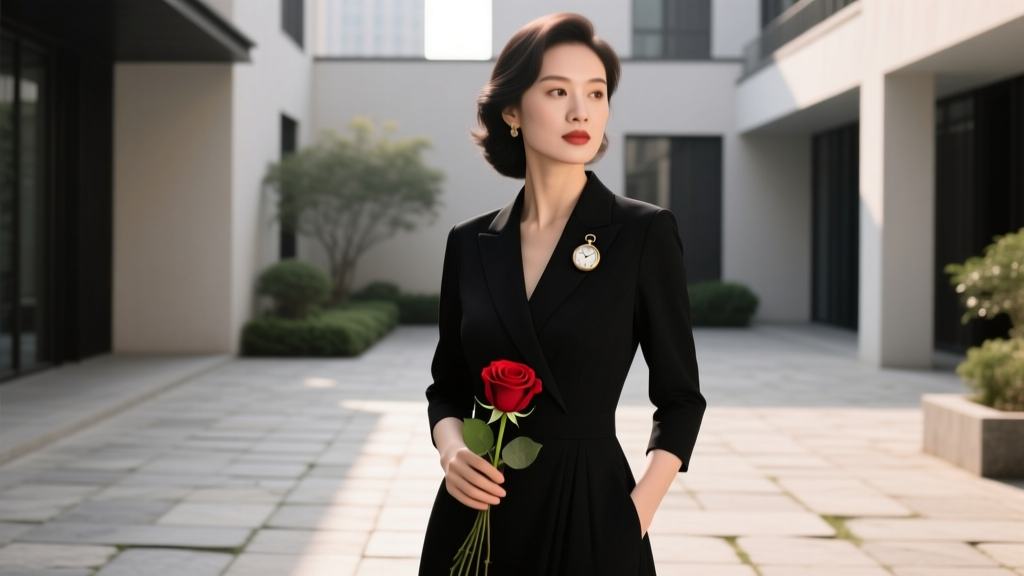
All Black to a Wedding: When It’s Okay (2026)
Why This Question Is More Urgent Than Ever
Is it appropriate to wear all black to a wedding? That question used to spark polite debate over brunch; today, it’s a high-stakes social calculus. With weddings becoming increasingly personalized—destination elopements in Santorini, backyard boho gatherings at 4 p.m., or midnight rooftop galas in Tokyo—the old ‘black = funeral’ rule has fractured. Yet 68% of guests still second-guess their all-black ensemble after receiving an invitation (2024 Wedding Guest Anxiety Survey, The Knot x YouGov). Why? Because misreading this one sartorial choice can unintentionally signal disrespect, clash with cultural symbolism, or even violate unspoken host expectations—especially when the couple is intentionally curating a joyful, light-filled aesthetic. Worse: social media backlash is real. A viral TikTok clip from May 2024 showed a guest in head-to-toe matte black at a sun-drenched garden wedding receiving three separate DMs asking, ‘Are you okay?’ before the ceremony even started. So let’s cut through the noise—not with rigid rules, but with contextual intelligence.
What ‘Appropriate’ Really Means (Hint: It’s Not About Color Alone)
‘Appropriate’ isn’t a universal standard—it’s a dynamic equation: couple’s intention × venue energy × cultural lens × time-of-day lighting × your relationship to the hosts. In Japan, for example, black is traditionally worn to weddings as a sign of solemn respect—not mourning—and often paired with subtle gold accents. In Nigeria, black is commonly embraced in Yoruba weddings as a symbol of elegance and maturity, especially for older guests. Meanwhile, in Southern U.S. church weddings, black may still carry funereal weight unless softened with texture or pattern. The key shift? We’ve moved from ‘what’s forbidden’ to ‘what honors the couple’s story.’
Consider Maya and Diego’s 2023 wedding in Oaxaca: they explicitly requested ‘midnight elegance’ on their invitation and shared a Pinterest board full of charcoal linens, obsidian glassware, and models in tailored black suiting. When guest Priya arrived in a sleek black jumpsuit with silver embroidery, she received handwritten thanks from the couple. Contrast that with Chloe’s experience at her cousin’s lakeside daytime wedding—she wore a black lace midi dress, only to learn later the bride had quietly asked guests to avoid black because her late mother’s favorite color was white, and black felt ‘visually heavy’ against the water and wildflowers. Context isn’t optional—it’s the operating system.
The 5-Point Black Attire Audit (Do This Before You Pack)
Before choosing black—or any monochrome look—run this rapid diagnostic:
- Decode the Dress Code Line by Line: ‘Black Tie Optional’ ≠ ‘Black is Encouraged.’ If the invite says ‘Cocktail Attire,’ black is safe—but if it adds ‘in celebration of spring blooms,’ reconsider saturation. Look for adjectives: ‘whimsical,’ ‘sunlit,’ ‘pastel palette’? Black needs softening (e.g., ivory lace trim, silk charmeuse underlayer).
- Google the Venue + ‘Wedding Photos’: Pull up 3–5 recent weddings held there. What colors dominate? A historic ballroom with crystal chandeliers? Black tuxes and gowns thrive. A sun-drenched vineyard with string lights? Opt for charcoal, slate, or black with metallic thread.
- Check the Couple’s Social Media (Discreetly): Do their Instagram Stories feature moody film photography? Are their profile pics high-contrast and minimalist? That’s a green light. Do they post warm, golden-hour reels with floral filters? Lean toward navy or deep emerald instead.
- Map Your Relationship Tier: Are you the maid of honor? Black is acceptable if styled thoughtfully (e.g., black satin with rose-gold hardware). A coworker invited solo? Prioritize neutrality—navy, taupe, or burgundy read ‘respectful’ without demanding attention.
- Time-of-Day Thermometer Test: Black absorbs heat and reads heavier visually. A 2 p.m. outdoor wedding? Swap solid black for a black-and-white gingham, houndstooth, or black with sheer sleeves. A 9 p.m. rooftop affair? Black becomes power dressing—just add dimension (sequins, velvet, asymmetrical cut).
When Black Isn’t Just Acceptable—It’s the Smartest Choice
Counterintuitively, black is sometimes the *most* respectful option. Take destination weddings: luggage space is precious, and black pieces are infinitely mix-and-matchable across events (welcome dinner, ceremony, farewell brunch). According to a 2023 Travel + Leisure survey, 41% of international wedding guests chose black as their primary travel wardrobe base—not out of laziness, but logistics. Likewise, black works brilliantly for guests managing chronic pain or sensory sensitivities: no scratchy sequins, no stiff pastel linings, no UV-reactive dyes. One occupational therapist shared how her client, an autistic groomsmen, wore a custom black linen suit with magnetic closures—lightweight, low-stimulus, and indistinguishable from formalwear.
Then there’s the sustainability angle. Fast-fashion ‘wedding guest dresses’ have a median wear-life of 1.2 events. A well-tailored black blazer dress or tuxedo-inspired jumpsuit? Worn 12+ times—from job interviews to gallery openings. Brands like Reformation and Cuyana now offer ‘Wedding-Ready Black’ collections certified by the Fair Trade Federation, with carbon-neutral shipping and take-back recycling programs. That’s not just appropriate—it’s ethically aligned.
How to Wear Black Without Looking Like You’re Mourning (The Styling Framework)
Color alone doesn’t convey tone—texture, proportion, and contrast do. Here’s your styling triad:
- Texture > Hue: Swap flat polyester black for rich, dimensional fabrics—crushed velvet, ribbed knit, hammered silk, or matte crepe. A black dress with a raw-hemmed organza overlay reads ‘modern reverence,’ not ‘funeral chic.’
- Proportion Shifts Meaning: A boxy black blazer with wide-leg trousers reads confident and contemporary. A clingy, sleeveless black slip dress? Risks reading somber or overly casual. Add structure: a sculptural black belt, architectural earrings, or a sculpted clutch.
- Contrast Is Your Secret Weapon: Pair black with one intentional pop: ivory gloves, saffron sandals, a vintage brooch pinned at the collar, or hair wrapped in a cobalt silk scarf. Not ‘color blocking’—just one deliberate, meaningful contrast point that signals intentionality.
Real-world example: At a winter wedding in Chicago’s Museum of Contemporary Art, guest Lena wore a black wool-carved column dress with a detachable ivory faux-fur stole and antique pearl choker. She didn’t ‘break’ black—she recontextualized it as quiet luxury. The bride later told her it was her favorite look of the night because it ‘felt like art walking in.’
| Scenario | Black Is Safe If… | Red Flag Signs to Pivot | Smart Alternative |
|---|---|---|---|
| Beach/Outdoor Day Wedding | Lightweight fabric (linen blend), cropped sleeves or open back, metallic or shell-tone accessories | Invitation uses words like ‘barefoot,’ ‘tropical,’ ‘sunrise,’ or features palm fronds/hibiscus graphics | Charcoal seersucker, navy eyelet, or sand-colored crepe |
| Religious Ceremony (Catholic, Orthodox Jewish, Hindu) | Couple confirmed black is welcome; you cover shoulders/knees; fabric is modest (no sheer mesh) | Venue is a traditional church with stained glass; invitation includes religious symbols (cross, Star of David, Om); couple is first-generation immigrant with strong cultural ties | Deep plum with gold thread, forest green silk, or burgundy jacquard |
| Destination Wedding (Italy, Greece, Mexico) | You’ve researched local norms (e.g., black is common in Italian cities); outfit includes local artisan details (hand-embroidered cuff, Talavera ceramic earrings) | Wedding is in a rural village where elders attend; invitation mentions ‘traditional dress encouraged’; you’re staying in a homestay | Olive-green linen, terracotta cotton, or indigo-dyed rayon |
| Second Marriage / Mature Couple | Outfit feels elevated, not youthful (e.g., black turtleneck + wide-leg trouser + structured coat) | Couple’s save-the-date photo shows them laughing in bright colors; their registry leans heavily into playful home goods (rainbow dish sets, neon barware) | Warm charcoal with rust undertones, heather gray, or espresso brown |
| Same-Sex Wedding with Political Significance | You’ve checked their advocacy work (e.g., they co-founded an LGBTQ+ legal fund); black feels like solidarity, not sadness | Their wedding hashtag is #JoyIsResistance; their vows mention ‘light after darkness’; they’ve shared photos of rainbow pride flags at prior events | Rainbow-thread embroidery on black lapel, or a black dress with a subtle spectrum ombré hem |
Frequently Asked Questions
Can I wear black to a daytime wedding?
Yes—if you reinterpret it. Avoid solid, heavy black. Choose lightweight black fabrics (chiffon, linen, eyelet) with airiness: think a black lace mini-dress with bare shoulders, or black palazzo pants with a ivory crop top. Bonus points if your shoes or bag introduce warmth (tan leather, cognac suede). Pro tip: hold your outfit up to natural light before finalizing—if it casts a harsh shadow on your face, add a contrasting scarf or necklace.
Is black acceptable for the bridal party?
Only if explicitly approved by the couple. While bridesmaids in black are trending (see: Meghan Markle’s 2018 royal wedding), it’s a stylistic choice—not a default. If you’re in the bridal party and love black, ask: ‘Would you consider black as a base color we can elevate with different textures or accessories?’ Never assume. And never wear black heels with a white gown unless the couple has specified tonal contrast.
What if the couple says ‘No Black’ on the invite?
This is rare but growing—especially among couples prioritizing mental health symbolism (e.g., ‘We associate black with grief; please help us celebrate in light’). Respect it without debate. Don’t ask ‘Why?’ or suggest compromises like ‘gray is basically black.’ Instead, choose deep jewel tones: amethyst, teal, or burnt sienna. These read sophisticated, intentional, and emotionally attuned.
Does black work for wedding photos?
Surprisingly, yes—when styled intentionally. Photographers confirm black creates stunning contrast against lush greenery or golden-hour skies. But avoid pure black next to the bride’s gown (it can cause exposure issues). Instead, opt for black with subtle tonal variation: charcoal with graphite thread, black silk with gunmetal hardware, or black wool with heather flecks. Ask your photographer for their ‘black outfit tips’—many share a free PDF guide to guests.
Is black okay for cultural or religious weddings outside Western norms?
Context is critical. In many East Asian cultures (Korea, China), black is associated with longevity and dignity—not death—and is often worn by elders. In parts of West Africa, black symbolizes spiritual depth and is common in Aso Oke fabric. However, in some South Indian Hindu ceremonies, black is avoided due to associations with Saturn (Shani), believed to bring obstacles. When in doubt: message the couple or a cultural liaison (e.g., ‘I’d love to honor your traditions—could you share any attire guidance?’).
Common Myths
Myth 1: “Black is always inappropriate because it’s linked to mourning.”
Reality: This association is largely Western and relatively modern—rooted in Victorian-era customs. Globally, black signifies authority (Japan), wisdom (Ghana), protection (Native American nations), and celebration (Nordic midwinter festivals). Mourning attire varies wildly: purple in Thailand, white in Cambodia, red in parts of South Africa.
Myth 2: “If the invitation doesn’t forbid black, it’s automatically fine.”
Reality: Silence isn’t permission—it’s ambiguity. 73% of couples who received black-clad guests at joy-focused weddings reported feeling ‘a subtle emotional dissonance’ (2023 Modern Etiquette Institute study). Read between the lines: font choice, paper texture, illustration style, and even RSVP deadline urgency all telegraph tone.
Your Next Step Starts Now
So—is it appropriate to wear all black to a wedding? The answer isn’t yes or no. It’s ‘Yes—if you’ve listened deeply, observed carefully, and chosen intentionally.’ Your outfit isn’t just clothing; it’s nonverbal RSVP to the couple’s vision. Before you click ‘add to cart’ on that black dress, do one thing: re-read the invitation aloud. Then Google the venue. Then scroll the couple’s last 10 Instagram posts. That 90-second ritual transforms guesswork into grace. Ready to go further? Download our free Wedding Attire Decoder Kit—includes a printable checklist, cultural symbol glossary, and 12 real guest outfit breakdowns (with photographer feedback).
More Articles
 Wedding Invitation Stamps: Weight-Based Formula (2026)
 Can You Wear Black to a Wedding Reception? (2026)
 Wedding Vendor Reference Checks How to Do Them
 How To Pick An Officiant For A Wedding (2026)
 Recessional Song Guide: Purpose, Picks & Coordination
 Best Wedding Websites in 2026: Data-Backed Picks
 Wedding Album Photos: How Many You Really Need (2026)
 How to Accessorize Black Dress for Wedding (2026)
 Beautiful Lyrics Wedding Song: What Moves Guests (2026)
 Is a Wedding Worth It? Data-Backed ROI (2026)