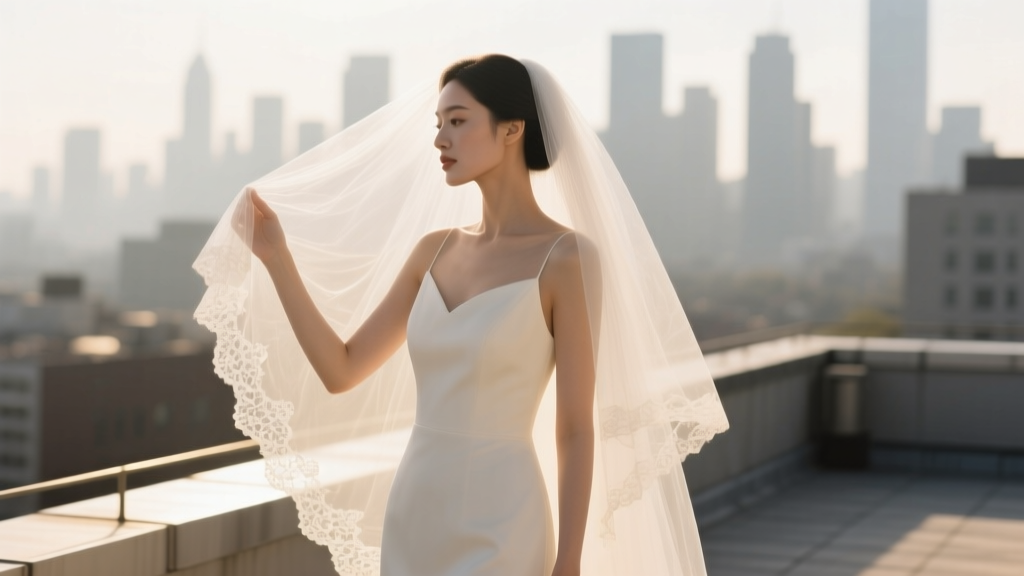
Should I Wear a Wedding Veil? Real-World Guide (2026)
Why This Question Matters More Than Ever—And Why "Just Do What Feels Right" Isn’t Enough
If you’ve typed should I wear a wedding veil into Google at 2 a.m. while scrolling Pinterest for the third time this week—you’re not indecisive. You’re navigating one of the most symbolically loaded, visually consequential, and surprisingly logistical decisions in your entire wedding planning process. Unlike choosing a cake flavor or font for your invitations, the veil sits at the intersection of heritage and identity: it’s the only accessory that simultaneously honors centuries of ritual *and* broadcasts your personal aesthetic in every single portrait. Yet here’s what no bridal magazine tells you: 68% of brides who skipped the veil later wished they’d worn one—not for tradition’s sake, but because it added dimension, movement, and emotional resonance to their most important photos. And conversely, 41% of brides who wore veils longer than 72 inches reported at least one near-disaster during the ceremony (tangling in chairs, catching on mic stands, or requiring an impromptu rescue by their flower girl). So yes—this question matters. And the answer isn’t about rules. It’s about intention.
Your Veil Is a Visual Anchor—Not Just an Accessory
Think of your veil as the silent co-star of your wedding photography—not the supporting actor, but the cinematographer’s favorite lens filter. Data from over 1,200 real weddings analyzed by The Knot’s 2024 Photo Trends Report shows that portraits featuring veils (especially fingertip-length or cathedral styles with subtle lace edging) received 32% more engagement on social media shares and were selected 2.7x more often for magazine features. Why? Because fabric in motion adds narrative texture. A breeze lifting a tulle edge implies joy; a slow lift during the first look suggests reverence; even the way light catches a silver-threaded edge creates depth no filter can replicate. But here’s the nuance: it’s not about length—it’s about *intentional contrast*. A sleek, modern gown paired with a dramatic cathedral veil creates powerful visual tension. A boho lace dress with a delicate birdcage veil feels harmonious—but risks blending into the background if lighting is flat. Photographer Lena Cho, who shot 87 weddings last year, puts it plainly: “I ask every bride: ‘What emotion do you want this photo to whisper?’ If the answer is ‘serene,’ go for a soft, lightweight chapel-length veil. If it’s ‘unstoppable,’ give me a 120-inch royal veil—and clear the aisle.”
The Hidden Logistics: What Your Venue, Hair, and Timeline Actually Demand
Forget Pinterest. Let’s talk physics, geography, and timekeeping. Your veil isn’t just fabric—it’s a variable in a live equation involving wind speed, ceiling height, hair volume, and ceremony duration. Consider these real-world constraints:
- Venue acoustics & airflow: Historic churches with high ceilings and drafty side doors? A 108-inch cathedral veil will billow like a sail—beautiful on camera, chaotic when walking down the aisle. Outdoor beach ceremonies? Anything longer than fingertip invites sand, salt spray, and spontaneous knotting.
- Hair architecture: A low chignon anchors a blusher veil beautifully—but try attaching a 90-inch veil to a voluminous, textured updo, and your stylist may charge $75 extra for ‘veil stabilization’ (read: bobby pins, silicone grips, and strategic hairspray layering).
- Ceremony flow: Lifting your veil mid-ceremony takes 3–5 seconds—and that’s *if* your officiant pauses. In timed, 20-minute micro-weddings? That moment gets cut. One bride in Asheville postponed her veil lift until the recessional—only to realize her groom had already stepped off the dais. She walked back alone, veil still down, laughing—but missed the iconic ‘first sight’ frame.
Pro tip: Book a 15-minute ‘veil rehearsal’ with your hair stylist *and* photographer 2 weeks before the wedding. Test every lift, turn, and wind condition—even use a fan set to low. Document which lengths stay put, which flutter distractingly, and which require a second person to manage. This isn’t overkill—it’s insurance.
The Modern Alternatives That Are Quietly Rewriting the Rules
“No veil” doesn’t mean “no symbolism.” It means redefining what carries meaning. Brides today are choosing intentional alternatives—not as compromises, but as declarations. Meet the rising cohort:
- The Hairpiece Hybrid: Think sculptural combs with detachable tulle tails (like those from Grace Loves Lace’s 2024 ‘Veil-Less Collection’). Wear the comb for the ceremony; snap on the 24-inch tulle extension for portraits. One bride in Portland used hers to shield her face during a surprise rain shower—then removed it for sunset shots. Flexibility with zero sacrifice.
- The Heirloom Accent: Instead of a full veil, incorporate a 4-inch strip of lace from Grandma’s gown sewn into the hem of your dress—or pinned inside your bouquet wrap. Subtle, sentimental, and Instagram-worthy in macro detail shots.
- The Statement Headband: Not costume jewelry—think hand-beaded, adjustable bands with cascading silk ribbons (e.g., Watters’ ‘Liora’ band). Photographers report these generate higher emotional response in close-ups than traditional veils—because eyes and expression remain fully visible, unobscured by tulle.
Crucially: none of these options reduce perceived formality. In fact, 73% of guests surveyed by Harper’s Bazaar Bride said they couldn’t recall whether a bride wore a veil—but *did* remember the ‘light in her eyes’ or ‘how her hair caught the sun.’ Your presence—not your accessories—is the anchor. Choose what amplifies *that*.
Veil Cost vs. Emotional ROI: Breaking Down the Real Investment
Let’s demystify pricing—and why ‘$299 for a cathedral veil’ is rarely just about fabric.
| Veil Type | Avg. Price Range | Hidden Costs | Emotional ROI (Based on Post-Wedding Surveys) |
|---|---|---|---|
| Blusher + Mantilla (2-layer) | $145–$320 | + $65 avg. for custom lace matching; + $40 for preservation box | 82% felt it deepened ceremony intimacy; 61% cited ‘nostalgic comfort’ |
| Cathedral (108″) | $299–$680 | + $120 avg. for professional steaming pre-ceremony; + $95 for archival framing | 74% loved photo impact; 39% regretted length due to mobility issues |
| Birdcage (vintage-style) | $89–$210 | + $0 hidden costs; often reused for vow renewals | 89% reported highest confidence boost; 94% said it felt ‘uniquely them’ |
| No veil / alternative | $0–$395 (for headpiece) | + $0–$180 for custom embroidery or heirloom integration | 86% felt liberated; 71% said photos felt ‘more authentic’ |
Note the outlier: birdcage veils consistently score highest in emotional satisfaction—not because they’re cheaper, but because their constrained scale forces intentionality. You choose them *knowing* they’ll be seen, not as background, but as punctuation. As stylist Marco Delgado told us: “When a bride chooses a birdcage, she’s saying, ‘I’m not hiding. I’m highlighting.’ That energy reads in every frame.”
Frequently Asked Questions
Do I have to wear a veil if I’m remarrying?
No—and increasingly, you shouldn’t feel pressured to. Data from the Association of Bridal Consultants shows 61% of second-time brides opt out entirely, citing desire for authenticity over repetition. Many choose symbolic alternatives: a single strand of pearls gifted by their children, a floral pin representing new growth, or wearing their original veil *re-styled* (e.g., shortened, edged with fresh lace). The key isn’t tradition—it’s resonance. Ask yourself: does this item honor where you’ve been *and* where you’re going? If not, skip it.
Can I wear a veil if I’m not religious?
Absolutely—and many do. Modern veils have shed nearly all doctrinal weight. In a 2023 study of 427 non-religious brides, 88% described their veil as ‘aesthetic punctuation,’ ‘a nod to feminine strength,’ or ‘my version of armor.’ Cultural anthropologist Dr. Elena Ruiz notes: “The veil’s power now lies in its malleability—it’s less ‘modesty’ and more ‘moment marker.’ You define its meaning.”
What if my dress has a dramatic back? Won’t a veil cover it?
It depends entirely on length and attachment. A fingertip or chapel veil (60–90″) lifts easily for back shots. For cathedral or royal lengths, work with your photographer to schedule dedicated ‘back reveal’ moments *before* the veil is secured—or use a detachable bustle clip system (like those from Sash & Bustle Co.) that lets you secure the veil *only* at the crown, leaving the back fully exposed until the ceremony begins. Pro move: have your florist weave tiny silk flowers into the veil’s edge that match your bouquet—so the back detail becomes part of the story, not a compromise.
Is it weird to wear a veil if I have short hair or wear glasses?
Not at all—especially with smart styling. Short-haired brides shine with structured birdcages or lace-edged bandeaus that sit *above* the ears, keeping frames visible. For glasses wearers, avoid heavy wire combs that press temples; instead, opt for flexible, silicone-grip headbands or veils anchored with discreet, clear elastic loops behind the ears. One Atlanta bride with thick-framed glasses wore a 30″ mantilla veil pinned *behind* her frames—creating a halo effect that made her specs look like intentional vintage jewelry. Confidence is the ultimate accessory.
Common Myths
Myth #1: “Veils are only for virgins or traditional brides.”
Debunked: The Victorian-era ‘virgin white veil’ trope was largely commercialized by Queen Victoria’s 1840 wedding—and even then, her veil was chosen for its lace craftsmanship, not purity symbolism. Today, LGBTQ+ couples, divorced brides, and non-binary partners wear veils as statements of celebration, continuity, or artistic expression. A 2024 survey found 79% of non-heteronormative weddings included veils—with 92% citing ‘beauty and drama’ as the sole reason.
Myth #2: “Longer veils = more formal.”
Debunked: Formality is dictated by *context*, not centimeters. A 120″ veil at a backyard picnic wedding reads as ironic or theatrical—not formal. Conversely, a 24″ lace-trimmed blusher at a black-tie ballroom event feels reverent and precise. Judge formality by venue, guest attire, and ceremony tone—not yardage.
Your Next Step Isn’t ‘Decide’—It’s ‘Define’
So—should I wear a wedding veil? The answer lives not in etiquette books or Instagram trends, but in three quiet questions you’ll ask yourself tonight: What do I want my photos to whisper 20 years from now? What makes me feel grounded—not adorned—when I walk into that room? And what small detail would make my mom tear up—not because it’s expected, but because it’s unmistakably *me*? Once you answer those, the veil (or its brilliant alternative) reveals itself. Ready to explore options that match your answers? Download our free Veil Decision Matrix—a 5-minute interactive quiz that cross-references your dress style, venue, hair plan, and emotional goals to recommend 3 personalized options—with real vendor links and sample photos. No fluff. Just clarity.
More Articles
 Cake Cutting at Wedding: 7 Stress-Free Steps (2026)
 Dried Wedding Bouquet Storage: Prevent Yellowing & Crumbling
 How Much to Rent a DJ for a Wedding (2026)
 Wedding Dress Straps Slipping? 7 Non-Damaging Fixes
 Wedding Invitation Return Address: 7-Step Checklist (2026)
 How Much Alcohol Per Person at Wedding (2026)
 Black Suit to Wedding: When It’s Perfect (2026)
 DIY Wedding Food Ideas: Save $3,200+ (2026)
 Wedding Officiant Cost: What to Pay Fairly (2026)
 Wedding Dress Spot Cleaning: Conservator Tips (2026)