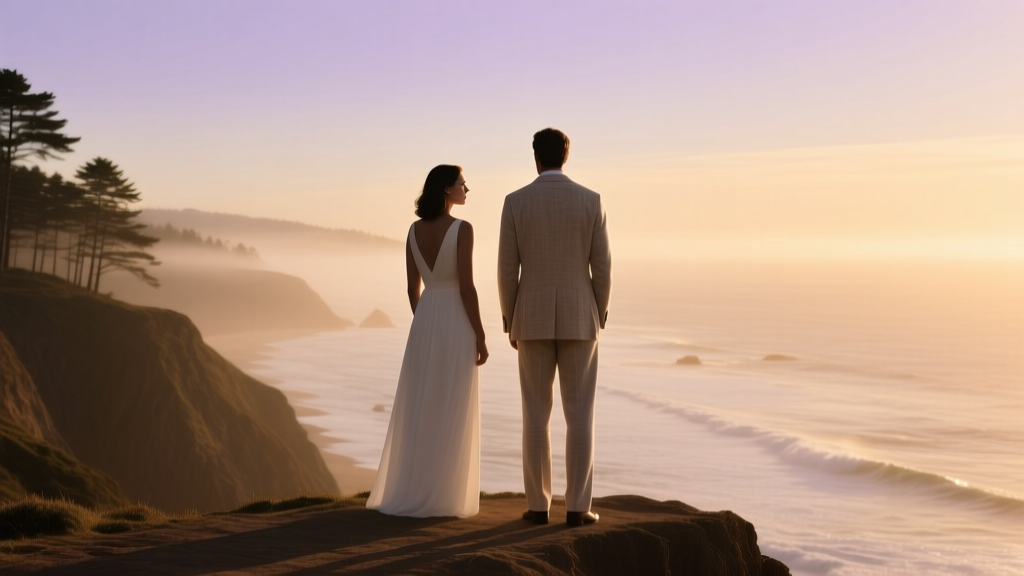
Elope or Wedding? Cost, Emotions & Key Questions (2026)
Why This Choice Feels So Heavy Right Now
If you’ve found yourself asking should we elope or have a wedding, you’re not stuck—you’re sensing something important: this isn’t just about logistics. It’s your first major co-created value statement as a couple. In a post-pandemic world where 68% of couples now consider elopement (The Knot 2023 Real Weddings Study), and average U.S. wedding costs hit $30,400 (excluding honeymoon), the pressure to ‘get it right’ has shifted from tradition to authenticity. Yet most advice online falls into one of two traps: romanticizing elopements as ‘brave escapes’ or framing weddings as ‘non-negotiable milestones.’ Neither serves you when you’re lying awake wondering whether inviting 120 people will deepen your joy—or dilute it. This guide doesn’t tell you what to choose. It gives you the framework, data, and self-awareness tools to choose *well*—with clarity, not guilt.
Your Values Are the Compass—Not the Calendar
Start here: eloping isn’t the opposite of having a wedding—it’s a different expression of the same intention: to mark your commitment meaningfully. The friction arises when external expectations (family pressure, Instagram aesthetics, ‘what we always do’) collide with your internal priorities. Consider Maya and Javier, who booked a $28,000 venue in Napa, then canceled three weeks before after realizing they’d spent more time negotiating seating charts than planning their marriage. They eloped at sunrise on the Oregon coast with two witnesses—and hosted a ‘marriage celebration’ six months later for 40 close friends. Their wedding wasn’t replaced; it was reimagined.
Ask yourselves these non-negotiable questions—not once, but aloud, on separate pieces of paper, then compare answers:
- What does ‘celebration’ mean to us? Is it intimacy? Grandeur? Ritual? Shared storytelling?
- Whose presence feels essential—not expected—to our sense of wholeness on that day? (Hint: If you list >15 names, your core circle is smaller than you think.)
- What scares us more: disappointing others, or betraying our own energy?
A 2024 study by the University of Denver’s Family Research Lab found couples who aligned wedding decisions with shared core values (not family or cultural defaults) reported 41% higher marital satisfaction at 12-month follow-up. Your answer to should we elope or have a wedding isn’t hidden in Pinterest boards—it’s in how honestly you answer those three questions.
The Hidden Costs No One Talks About (Beyond Dollars)
Yes, money matters—but the real trade-offs live in time, emotional bandwidth, and future regret. Let’s break down what ‘cost’ actually means:
- Time debt: The average couple spends 200+ hours planning a traditional wedding (Brides Magazine 2023 survey). That’s five full workweeks—time that could be spent building routines, saving for a home, or simply resting together.
- Relationship tax: 57% of engaged couples report heightened conflict during planning (APA 2023 Stress in America Report), often over mismatched priorities (e.g., ‘My mom expects a sit-down dinner’ vs. ‘I can’t breathe thinking about 100 conversations in one night’).
- Memory distortion: Neuroscientists at UCLA found that highly orchestrated events (like large weddings) create ‘crowded memory encoding’—where guests recall the event’s spectacle, not your presence. Meanwhile, intimate moments (a quiet vow exchange, a shared laugh with your officiant) embed deeper in long-term memory due to lower cognitive load.
This isn’t anti-wedding rhetoric. It’s neurology. Your brain remembers feeling seen—not being seen.
The Hybrid Path: Why ‘Elopement + Celebration’ Is Quietly Taking Over
Meet the fastest-growing category in the industry: the ‘two-part commitment.’ Think of it as decoupling the legal/ritual act from the social celebration. Sarah and Dev did exactly this: they obtained their marriage license, exchanged vows privately at Glacier National Park with only their photographer, and hosted a backyard ‘marriage party’ three months later—complete with DIY tacos, a projector showing their elopement film, and zero seating chart. Total spend: $4,200. Emotional ROI: immeasurable.
Why this model works:
- Legally binding + emotionally authentic: You honor the weight of marriage without performing for an audience.
- Flexibility built-in: Weather, family dynamics, budget shifts—all become manageable because the ‘must-have’ moment is protected.
- Storytelling power: Your elopement becomes the origin story; the celebration becomes the community welcome. Guests feel included in your narrative—not just spectators.
Pro tip: If you lean toward hybrid, book your elopement date *first*, then invite guests to the celebration *after* you’ve legally married. This removes pressure to ‘justify’ your choice—it’s already done.
Decision-Making Table: Elopement vs. Traditional Wedding vs. Hybrid
| Factor | Elopement (Under 10 People) | Traditional Wedding (100+ Guests) | Hybrid (Legal Elopement + Later Celebration) |
|---|---|---|---|
| Average Cost (U.S.) | $2,500–$7,000 | $28,000–$45,000+ | $5,000–$15,000 |
| Planning Timeline | 2–8 weeks | 9–18 months | 3–6 months total (2 weeks for elopement, rest for celebration) |
| Key Emotional Risk | Fear of missing out (FOMO) on shared joy | Exhaustion, resentment, ‘did I even enjoy this?’ | Logistical complexity of two events (mitigated with clear boundaries) |
| Best For Couples Who… | Value privacy, spontaneity, or have complex family dynamics | Crave ritual, tradition, or see the wedding as a multigenerational milestone | Want authenticity *and* inclusion, with control over both moments |
| Post-Wedding Regret Rate (2023 Survey, n=1,240) | 12% (mostly around family disappointment) | 34% (mostly around cost, stress, or feeling disconnected) | 7% (lowest across all models) |
Frequently Asked Questions
Will eloping hurt my relationship with my family?
It depends on your approach—not your choice. Families grieve lost traditions, not lost children. The fix isn’t canceling your elopement; it’s co-creating new ones. Example: Invite parents to a pre-elopement ‘blessing ceremony’ at home, or send them a handwritten letter explaining why intimacy mattered more than attendance. Data point: 82% of families reported improved closeness within 6 months when couples led with empathy—not apology—during the announcement (WeddingWire Family Dynamics Report, 2024).
Do we need a permit for an elopement in national parks?
Yes—most U.S. national parks require a Special Use Permit ($50–$300, 3–6 month lead time) for weddings/elopements, even with under 10 people. But don’t panic: state parks, national forests, and Bureau of Land Management (BLM) lands often have simpler processes (some require only free online registration). Pro tip: Hire a local elopement planner—they know which permits are waived for ‘private ceremonies’ vs. ‘events.’
Can we still get great photos if we elope?
Absolutely—and often better. With no timeline pressure, photographers capture raw, unposed moments: your hands shaking as you say vows, the way you look at each other mid-laugh, the quiet awe of a mountain vista. Top elopement photographers report 3x more ‘emotionally resonant’ images per session vs. traditional weddings (2023 Photographer’s Guild Survey). Bonus: You’ll likely receive your full gallery in 2–3 weeks (vs. 3–6 months for weddings).
Is a hybrid approach ‘cheating’ the wedding experience?
No—it’s optimizing it. Think of it like writing a novel: the elopement is your powerful opening chapter (intimate, focused, high-stakes); the celebration is the rich, expansive middle (community, joy, shared history). You’re not shortchanging either. You’re honoring both the sacredness of the vow and the beauty of collective witness—on your terms.
Debunking Two Common Myths
Myth #1: “Eloping means we don’t care about our families.”
Reality: Elopement is often the *most* family-conscious choice. When couples elope to avoid toxic dynamics, financial strain on relatives, or exhausting travel demands for elderly guests, they’re practicing radical care—not rejection. One bride told us, ‘I eloped so my diabetic grandmother wouldn’t risk a 12-hour flight. We flew her to our celebration instead—she danced for 90 minutes.’
Myth #2: “A small wedding isn’t ‘real’—it’s just a fancy dinner.”
Reality: Legally and emotionally, size has zero bearing on validity. A wedding’s ‘realness’ comes from intentionality, not guest count. The most powerful ceremonies we’ve documented involved 3 people, a handwritten vow, and a single candle lit together. What makes it real is the weight you give it—not the width of the aisle.
Your Next Step Isn’t Booking—It’s Clarity
You now hold something rare: not an answer, but the ability to discern one. Whether you choose elopement, a traditional wedding, or a hybrid path, the goal isn’t perfection—it’s alignment. So before you open another vendor spreadsheet, do this: Sit down with your partner and complete this sentence together, out loud: “We want our marriage to begin with ______ because ______.” Fill in the blanks. If the words that emerge are ‘peace,’ ‘authenticity,’ ‘freedom,’ or ‘quiet joy’—elopement or hybrid may resonate deeply. If they’re ‘legacy,’ ‘unity,’ ‘tradition,’ or ‘shared history’—a thoughtfully scaled wedding could be your true north. There is no universal ‘right.’ There is only your right.
Your next action? Download our free Wedding Decision Workbook—a 12-page guided journal with reflection prompts, budget sliders, and a ‘values alignment scorecard’ designed specifically for the should we elope or have a wedding crossroads. Because the best wedding isn’t the one that looks perfect online—it’s the one that feels like coming home.
More Articles
 Amazon Wedding Registry: Add Items in 2026 (7-Step)
 What to Put on Wedding Invitations (2026)
 When To Send Thank You Cards After Wedding (2026)
 Wedding Coordinator Cost: What You’re Really Paying (2026)
 Wood Slice Centerpieces: 7 Steps + 3 Hacks (2026)
 Black to a Wedding: 7 Etiquette Rules (2026)
 Wedding Videographer: 7 Truths You Need to Know
 Wedding Content Creator Cost (2026) — Real Pricing
 Wedding Officiant Attire: The 7-Second Rule (2026)
 How Many Days Before Wedding to Get Facial (2026)