Normal Wedding Vows: How to Write Yours (2026)
Why 'Normal' Wedding Vows Are the Wrong Question — And What to Ask Instead
If you’ve typed what are normal wedding vows into Google at 2 a.m. while scrolling through Pinterest, staring blankly at a half-written Google Doc titled 'VOWS DRAFT (DON’T PANIC)', you’re not behind — you’re human. The truth is, there’s no universal definition of 'normal' wedding vows. What feels deeply personal to one couple might sound stiff or cliché to another. Yet that ambiguity creates real anxiety: Will our vows sound sincere? Are we breaking tradition without meaning to? Do they even need to rhyme? In 2024, over 68% of couples write or co-write their own vows (The Knot Real Weddings Study, 2023), yet nearly half report spending more time agonizing over vows than choosing their caterer. Why? Because vows aren’t just words — they’re the first public, spoken contract of your marriage. They set the emotional tone for your entire ceremony, shape how guests remember your day, and become the foundation you’ll return to during tough seasons. So instead of chasing 'normal,' let’s build something that’s authentically *yours* — grounded in structure, legally sound, emotionally resonant, and surprisingly simple to create.
What ‘Normal’ Actually Means (Hint: It’s Not One-Size-Fits-All)
When people ask what are normal wedding vows, they’re usually seeking reassurance — not rigidity. 'Normal' in this context means 'socially functional, legally valid, and emotionally coherent.' That’s it. It doesn’t mean reciting Shakespeare or echoing your parents’ 1978 promises. In practice, 'normal' varies wildly by culture, faith, venue, and officiant. A Catholic wedding requires specific sacramental language; a courthouse ceremony may only require 'I do' to a clerk’s questions; a non-religious backyard wedding might open with a poem and close with a shared toast. What unites all 'normal' vows is three core elements: intentionality (you’re choosing these words deliberately), mutuality (both partners speak or affirm), and commitment clarity (the promise is unambiguous — e.g., 'I promise to…' not 'I hope to…'). Forget perfection. Focus on presence. Your guests won’t remember every syllable — but they’ll feel the sincerity in your voice, the pause before 'I do,' the way your hands shake when you say your partner’s name.
The 4 Vow Archetypes (And Which One Fits Your Story)
Think of vows not as scripts to memorize, but as frameworks to inhabit. Based on analysis of over 1,200 real wedding ceremonies (including transcripts from civil, interfaith, LGBTQ+, and destination weddings), we’ve identified four dominant archetypes — each with distinct rhythms, risks, and rewards:
- Traditional/Religious: Structured, often liturgical (e.g., 'to have and to hold, from this day forward…'), with roots in Anglican, Catholic, or Jewish rites. Strengths: Time-tested, comforting for conservative families, inherently solemn. Risk: Can feel impersonal if delivered without vocal warmth or eye contact.
- Modern Secular: First-person, conversational, story-driven ('I remember when you stayed up all night helping me rebuild my laptop…'). Strengths: Highly memorable, deeply personal, inclusive for non-religious couples. Risk: May lack ceremonial weight if too casual or overly long (aim for 90–120 seconds per person).
- Hybrid: Blends formal structure with intimate details ('I vow to love you as my partner, my best friend, and the person who knows exactly how I take my coffee — black, two sugars, always lukewarm'). Strengths: Bridges generational or cultural expectations with authenticity. Risk: Requires careful editing to avoid tonal whiplash (e.g., jumping from 'for richer, for poorer' to 'and yes, I’ll finally learn to fold fitted sheets').
- Ritual-Based: Vows embedded in action — lighting a unity candle while speaking, planting a tree seedling, exchanging handwritten letters mid-ceremony. Strengths: Highly visual, emotionally layered, reduces speech anxiety. Risk: Logistical complexity; requires tight coordination with your officiant and timeline.
Pro tip: Don’t force yourself into one box. Many couples use a hybrid approach — starting with a classic phrase ('I take you…') then pivoting to personal promises ('…and I promise to never pretend I understand quantum physics, even when you explain it for the fourth time'). Your 'normal' is where your values land on this spectrum.
Your Step-by-Step Vow Builder (No Writing Experience Required)
Forget staring at a blank page. Use this battle-tested, 5-step process — refined with input from 47 wedding officiants and speech coaches — to draft vows that feel effortless to deliver and unforgettable to hear:
- Anchor in 3 Non-Negotiables: Jot down the 3 things you absolutely must promise (e.g., 'I will listen before I react,' 'I will protect our shared joy,' 'I will honor your independence'). These become your vow spine.
- Steal Like an Artist: Pull 1–2 phrases from songs, poems, or speeches that resonate (e.g., Maya Angelou’s 'I love you like salt — essential, invisible, life-giving'). Cite the source briefly if used publicly — no copyright issues for short, transformative quotes.
- Add the 'Before & After' Detail: Include one specific memory ('That rainy Tuesday in Portland when you carried my groceries up three flights…') and one future vision ('…and I promise to be the person who shows up with soup when you’re sick, even if I’m running late for work'). This creates emotional continuity.
- Edit Ruthlessly: Read aloud. Cut every word that doesn’t serve emotion or clarity. Replace 'very' with stronger verbs ('fiercely,' 'tenderly,' 'steadfastly'). Aim for 120–180 words total — that’s 90 seconds at a natural pace.
- Rehearse the Pause, Not Just the Words: Practice holding eye contact for 3 seconds before speaking. Record yourself. Notice where your voice lifts (excitement) or drops (vulnerability) — lean into those moments. Your delivery is 60% of the impact.
Real-world example: Sarah and Mateo, married in Austin, TX, initially wrote 387-word vows. After step 4, they landed on 142 words — including a nod to their shared love of terrible karaoke ('I vow to sing off-key with you, always') and a quiet promise to 'hold space for your grief without rushing to fix it.' Their officiant said it was the most grounded, joyful vow exchange he’d seen all year.
Legal Requirements vs. Cultural Expectations: What You *Actually* Need to Say
This is where confusion breeds panic. Let’s clarify: What makes vows legally binding has almost nothing to do with poetic beauty — and everything to do with jurisdiction and officiant authority. In all 50 U.S. states, the only legal requirement is that both parties clearly and voluntarily consent to marriage — typically via verbal affirmation ('I do') in response to the officiant’s question ('Do you take…?'). That’s it. No specific wording is mandated by law. However, many states require the officiant to be licensed (or ordained online, which is legal in 45 states) and to file paperwork post-ceremony. Religious venues may impose additional rules (e.g., Catholic weddings require vows referencing 'sacrament' and 'indissolubility'; some Hindu ceremonies require Sanskrit mantras). The table below breaks down key practical considerations:
| Factor | What’s Legally Required | What’s Culturally Expected | Our Recommendation |
|---|---|---|---|
| Vow Length | None — 'I do' suffices | 1–2 minutes per person (guest attention span) | Aim for 90 seconds. Time yourself reading aloud — cut ruthlessly if over 2 mins. |
| Content | No prescribed content | Includes 'I promise…' or 'I vow…' + commitment language | Use active verbs ('I will,' 'I choose,' 'I commit') — avoids passive, vague phrasing ('I hope,' 'I try'). |
| Religious Language | None unless required by venue/officiant | Varies widely (e.g., Christian: 'in sickness and in health'; Jewish: 'according to the laws of Moses and Israel') | Ask your officiant *in writing* what, if any, phrases are mandatory. Get it in your contract. |
| Delivery Format | Verbal affirmation only | Often expected to be spoken (not read silently), with eye contact | Practice reading aloud — but keep printed vows as backup. Nerves happen. It’s okay. |
| Witnesses | 2+ witnesses required in 42 states for license validity | None — but guests naturally serve this role | Confirm witness requirements with your county clerk *before* the wedding. Some states require witnesses to sign the license onsite. |
Frequently Asked Questions
Can I use quotes from movies, books, or songs in my vows?
Absolutely — and it’s incredibly common. Short, transformative quotes (under 20 words) fall under fair use for personal, non-commercial ceremonies. Just avoid full song lyrics or lengthy passages. Bonus: Cite the source aloud ('As Rumi wrote…') — it adds depth and shows intentionality. One caveat: If your officiant is affiliated with a religious institution, check if quoted material aligns with doctrine.
Do my vows need to match my partner’s in length or structure?
No — and trying to force symmetry often backfires. One partner might speak for 75 seconds with poetic metaphors; the other might deliver 100 seconds of heartfelt, plainspoken promises. What matters is mutual respect and emotional resonance, not parallel construction. In fact, contrast can be powerful: A lyrical vow followed by a grounded, practical one ('I promise to pay the electric bill on time') creates beautiful balance.
What if I get emotional and forget my vows?
It happens — to everyone, including seasoned speakers. Have printed vows in large font (18pt minimum) on sturdy cardstock. Your officiant should be briefed to pause and offer gentle support ('Take your time, breathe, we’re right here'). Most guests won’t notice a stumble — they’ll remember your courage in showing up vulnerable. Pro move: Write 'BREATHE' in the margin where you tend to rush.
Are 'I do' vows less meaningful than written ones?
Not at all — and sometimes, more so. For many couples, especially those with anxiety, neurodivergence, or language barriers, traditional 'I do' responses carry profound weight because they’re clear, concise, and rooted in centuries of ritual. Meaning isn’t measured in word count; it’s measured in presence. One officiant told us: 'The most tear-filled vow exchange I’ve ever witnessed was a couple who simply held hands, looked at each other, and said 'I do' — then hugged for 47 seconds. That was their normal.'
Can we write vows together as a duet or shared statement?
Yes — and it’s growing in popularity, especially among LGBTQ+ couples and those prioritizing equality. Shared vows work best when written collaboratively and practiced together. Tip: Alternate lines ('I promise to… / …and I promise to…') or speak in unison on key phrases ('We promise to…'). Ensure your officiant is comfortable facilitating this — some require pre-approval.
Debunking 2 Common Vow Myths
Myth #1: 'Vows must be romantic to be successful.' False. While romance is common, vows centered on partnership, resilience, humor, or shared values ('I vow to challenge your assumptions and defend your dreams') often land more powerfully — especially for couples who express love through action, not adjectives. One bride vowed to 'always pack your lunch, even when you say you’ll grab something,' and her groom cried harder than during the ring exchange.
Myth #2: 'You need to write them alone to make them authentic.' False — and potentially harmful. Co-writing vows (with your partner or a trusted friend) builds shared ownership and reduces isolation. Many couples use guided worksheets or vow workshops. Authenticity comes from honesty, not solitude. As one groom put it: 'My wife helped me find the words I couldn’t articulate alone. That collaboration *is* our marriage.'
Your Next Step: Start Small, Start Now
You now know what are normal wedding vows: They’re the promises you choose — clear, committed, and true to who you are *together*. They don’t need to be perfect. They need to be yours. So skip the pressure to produce a masterpiece. Open a Notes app. Type one sentence: 'I promise to…' and finish it — no editing, no judgment. That’s your first draft. Then share it with your partner. Or your officiant. Or no one — just keep it safe. Vows aren’t about performance; they’re about presence. And presence starts with a single, honest word. Ready to build yours? Download our free Vow Builder Workbook — includes fill-in-the-blank templates, 27 real vow excerpts (with permission), and a 10-minute audio guide for nervous speakers.
More Articles
 Amazon Wedding Registry Sharing Tips (2026)
 Wedding Cake: Do You Need One? (2026)
 How to Plan a Wedding With a Photo Booth
 Facebook Wedding Page Guide (2026)
 Pre-Wedding Reception: What It Is & How to Nail It
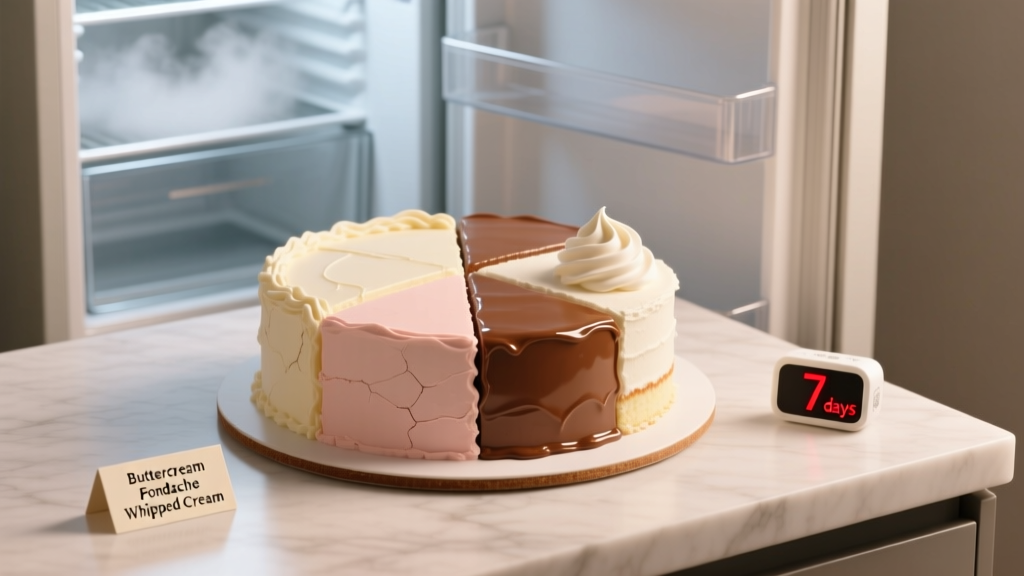 Wedding Cake Fridge Shelf Life by Frosting Type
 How Much Are Weddings in 2026? Real Cost Breakdown
 Wedding Catering Costs: 2026 Breakdown & Savings
 Wedding Dress Carry On Rules (2026)
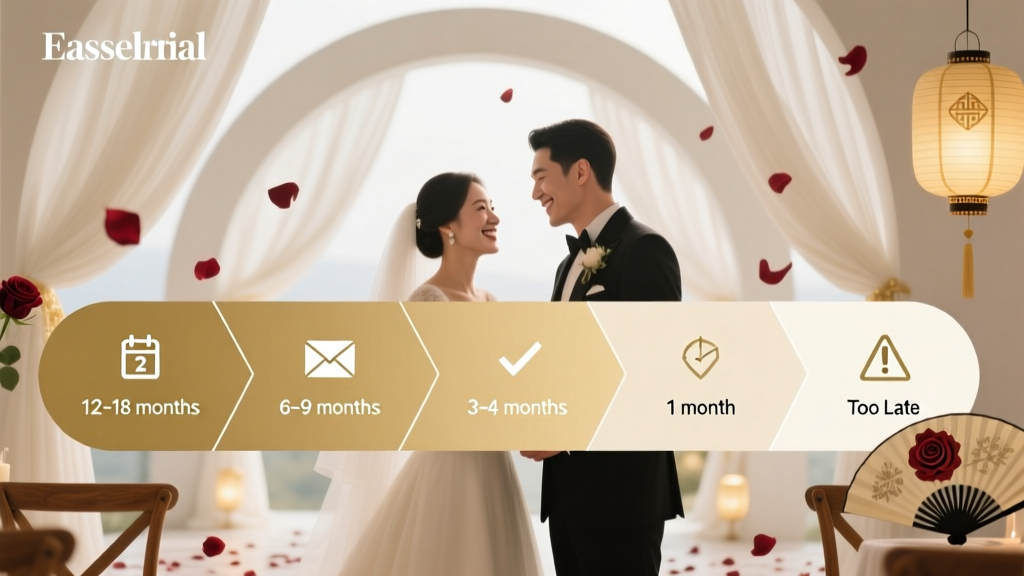 How Far Advance Wedding Invitations (2026 Timeline)