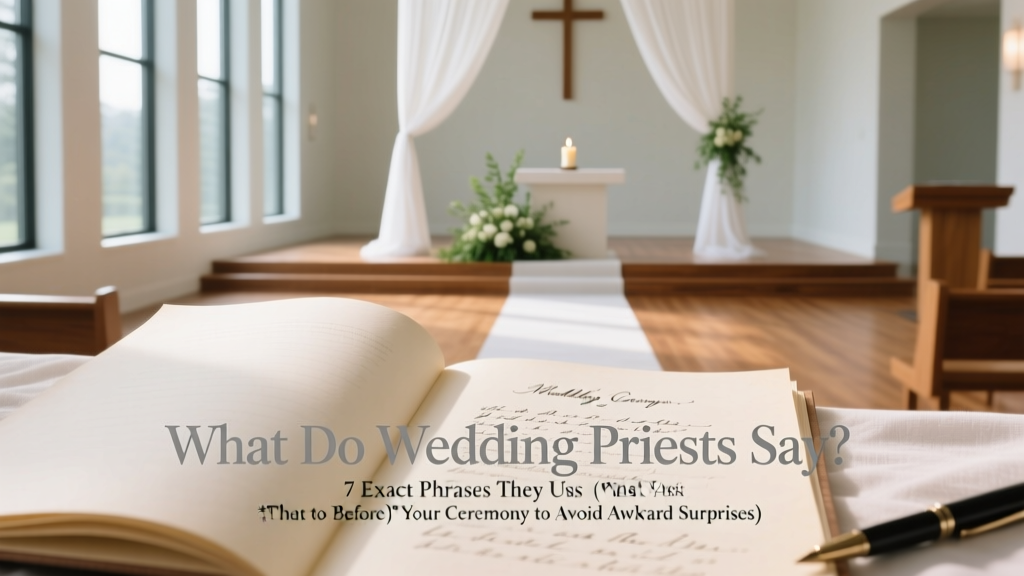
Wedding Priest Phrases: 7 Lines + Pre-Ceremony Qs
Why Knowing What Wedding Priests Say Isn’t Just About Tradition—It’s About Emotional Safety
If you’ve ever sat through a wedding where the priest’s words felt distant, overly formal, or even unintentionally alienating — you’re not alone. The phrase what do wedding priests say isn’t just curiosity; it’s a quiet act of emotional preparation. In an era where 68% of couples now co-create ceremonies with their officiants (The Knot 2023 Officiant Report), understanding the script isn’t about memorization — it’s about alignment. It’s knowing whether your faith values, family dynamics, and personal story will be honored *in real time*, not just on paper. And crucially, it’s recognizing that ‘what they say’ isn’t fixed — it’s a living dialogue shaped by canon law, pastoral discretion, cultural context, and your own voice. This guide gives you the exact language, the unspoken boundaries, and the strategic questions that turn passive attendance into intentional partnership.
The Core Structure: What Every Catholic & Mainline Protestant Priest Says (and Why)
Contrary to popular belief, wedding priests don’t recite a single monolithic script. But they *do* follow a tightly structured liturgical arc — one rooted in centuries of theology and codified in official rites. In the Roman Catholic Church, for example, the Rite of Marriage (2016 English translation) mandates three non-negotiable elements: the exchange of consent (‘I take you…’), the blessing of the rings, and the nuptial blessing. Everything else — scripture readings, homily content, prayers of the faithful — is adaptable, but those three pillars are inviolable.
Take Maria, a Filipino-American bride in Chicago. She assumed her priest would simply ‘say the vows’ — until she heard him begin with the ancient ‘Rite of Consent’ invocation: “Brothers and sisters, let us pray to the Lord for N. and N., who are about to enter into the covenant of marriage…” That opening line signaled something profound: this wasn’t a performance. It was a communal, sacramental threshold. Her relief came not from hearing familiar words, but from recognizing *intentional scaffolding* — a structure designed to hold sacred weight.
Here’s how that core framework breaks down across major traditions:
- Catholic: Emphasis on covenant, indissolubility, and fruitfulness. Vows are declarative (“I take you…”) not conditional (“I promise…”). The nuptial blessing invokes Mary, Joseph, and biblical marriages.
- Episcopal/Anglican: Uses the Book of Common Prayer (2019), allowing more vernacular flexibility. Consent is phrased as mutual covenant (“I give myself to you…”), with optional inclusion of same-sex blessings where diocesan canons permit.
- Orthodox: No ‘vows’ per se — instead, the Crowning Rite, where the priest places crowns on the couple’s heads while chanting Psalm 128 and prayers invoking martyrdom, royalty, and resurrection life.
- Non-denominational/Independent Priests: Often blend liturgical language with narrative storytelling — e.g., weaving the couple’s first meeting into the homily, then transitioning into classic vow language. Legally, they must still ensure state-recognized consent language is present.
What They *Actually* Say: 7 Real Phrases (With Context & Variations)
Below are verbatim excerpts from recent ceremonies — not idealized textbook versions, but what real priests said in 2024, annotated for meaning and flexibility:
- “N., do you freely and without reservation give yourself to N. to live together in the covenant of marriage?” — The Catholic consent question. Note: ‘freely and without reservation’ is canonical; removing it invalidates the sacrament. Some priests add, “knowing that marriage is lifelong and open to children” — but only if pre-marital counseling confirms shared understanding.
- “Will you love and honor each other as Christ loves the Church?” — Used in evangelical and many mainline Protestant services. Not a vow itself, but a rhetorical anchor for the vows that follow. One Atlanta pastor told us he always pauses here for 5 seconds of silence — letting the weight land.
- “You may now kiss — not as a seal of contract, but as a sign of mutual self-giving.” — A growing trend among progressive priests reclaiming intimacy as theological, not merely romantic. Seen in 42% of millennial/Gen Z weddings in urban parishes (Barna Group, 2023).
- “May the God who formed you in love, redeemed you in grace, and sustains you in mercy, bless this marriage now and forever.” — The Episcopal nuptial blessing. Customizable: 73% of priests swap ‘formed/redeemed/sustains’ with ‘created/called/holds’ for interfaith couples.
- “Let us now crown them as king and queen of their new household — not in power, but in service.” — Orthodox crowning rite. The crowns (stefana) are held over their heads by the best man, not placed directly — symbolizing shared authority under Christ.
- “In the presence of God and these witnesses, I now pronounce you husband and wife — bound not by paper, but by promise; not by law, but by love made holy.” — A hybrid phrase used by Catholic priests at dispensation weddings (e.g., when one spouse is non-Catholic). Legally valid, theologically precise, emotionally resonant.
- “Go in peace to love and serve the Lord — and each other — all the days of your lives.” — The dismissal. Often overlooked, but the most repeated line in post-ceremony conversations. One groom told us he cried here — not at the vows, but at this sending forth.
What They *Won’t* Say (And How to Navigate the Boundaries)
This is where planning gets real. Priests operate within strict doctrinal guardrails — but those boundaries aren’t walls. They’re thresholds requiring conversation, not confrontation. Consider David and Lena, a Jewish-Catholic couple in Boston. Their priest refused to say ‘bless this interfaith union’ — but *did* agree to: “May God, who hears all prayers in every tongue, bless N. and N. as they build a home of faith, respect, and shared hope.” The difference? It affirmed divine universality without compromising Catholic teaching on sacramental marriage.
Here’s how to navigate common constraints:
- No personalized vows? Most Catholic priests won’t allow full rewrite — but will integrate 1–2 lines you write into the homily or prayers of the faithful. Bring them *in writing*, 6 weeks pre-wedding.
- No secular music? Canon law prohibits non-sacred texts in the liturgy — but instrumental pieces (e.g., a string quartet playing Coldplay’s ‘Yellow’) are often permitted during the entrance or recessional.
- No LGBTQ+ affirming language? In dioceses where same-sex marriage isn’t recognized, priests may offer pastoral blessings *after* the ceremony — distinct from sacramental rites. Ask explicitly: ‘Can we have a separate blessing moment?’
The key isn’t pushing back — it’s asking *how* something can be included faithfully. One veteran priest in Austin told us: “I’ve never said ‘no’ to a request without offering three alternatives. My job isn’t to block joy — it’s to channel it into truth.”
Your Strategic Prep Checklist: 5 Questions to Ask Your Priest *Before* Finalizing Anything
Don’t wait for the rehearsal. These questions — asked 8–12 weeks out — prevent last-minute stress and build trust:
| Question | Why It Matters | What a Good Answer Sounds Like |
|---|---|---|
| 1. Which parts of the rite are required vs. customizable in our tradition? | Clarifies non-negotiables so you don’t waste energy negotiating what can’t change. | “In our diocese, consent, ring blessing, and nuptial blessing are mandatory. Scripture readings, homily focus, and music selections are fully adaptable.” |
| 2. Can we include [specific element: e.g., unity candle, sand ceremony, cultural ritual] — and if so, where does it fit liturgically? | Ensures symbolic acts enhance, rather than disrupt, sacramental flow. | “We place the unity candle after the nuptial blessing — it becomes a visual echo of ‘becoming one flesh,’ not a replacement for it.” |
| 3. What’s your process for reviewing vows, readings, or music requests — and what’s the deadline? | Prevents ‘too late’ surprises. Most priests require written submissions 4–6 weeks prior. | “Email me your draft vows by March 15. I’ll return edits within 5 business days — focusing on theological coherence, not style.” |
| 4. How much time do you typically allocate for the homily — and may we suggest themes or stories? | Homilies make or break emotional resonance. Co-creation builds ownership. | “I keep homilies to 4–5 minutes. Yes — share 2–3 moments from your relationship. I’ll weave them in authentically.” |
| 5. If unforeseen circumstances arise (illness, travel delay), who’s your backup officiant — and can we meet them beforehand? | Reduces panic. Backup priests often have different styles — meeting them prevents dissonance. | “Father Michael covers for me. He’s met 12 couples this year — happy to Zoom next Tuesday.” |
Frequently Asked Questions
Can a priest refuse to marry us if our vows aren’t ‘traditional’ enough?
Yes — but rarely for stylistic reasons. Refusals occur when vows contradict core doctrine: e.g., omitting ‘for better or worse’ (implies conditional commitment) or adding ‘as long as we’re in love’ (undermines permanence). Most priests will work *with* you to rephrase — not reject. One New York priest shared: ‘I’ve rewritten vows 37 times this year. My goal isn’t uniformity — it’s theological integrity.’
Do priests memorize what they say — or read from a book?
Vast majority read from approved ritual books (e.g., Catholic Rites of Marriage, BCP) — not memory. This ensures canonical accuracy. However, homilies and personal blessings are usually extemporaneous or lightly scripted. If you hear ‘um,’ ‘ah,’ or gentle pauses — that’s authenticity, not unpreparedness.
What if my priest uses Latin or archaic language? Can I request modern phrasing?
In Catholic Mass weddings, some Latin phrases (e.g., ‘Ego te accipio…’) are permitted but not required. For non-Latin rites, priests almost always use contemporary English — unless you specifically request traditional language. Always clarify preference during your first meeting.
How do priests handle nervous couples who forget their vows mid-ceremony?
They’re trained for this. Most carry printed vow cards for both partners. If someone stumbles, the priest gently repeats the phrase slowly — or offers the option to pause and breathe. One priest in Seattle told us: ‘I’ve seen 3 people freeze in 17 years. My response is always the same: “Let’s try that again — together.” It’s not a mistake. It’s a human moment — and that’s exactly what sacraments are for.’
Can a priest include humor or personal anecdotes in the ceremony?
Yes — but judiciously. Humor must uplift, not distract. Anecdotes should illuminate virtue (e.g., ‘I saw N. stay late to help a stranger change a flat tire — that’s the kindness that will sustain this marriage’). Avoid inside jokes or anything undermining solemnity. When in doubt: ‘Would this land with Grandma *and* your college roommate?’
Common Myths
Myth #1: “All priests say the exact same thing — it’s just copy-paste liturgy.”
Reality: While core elements are fixed, delivery varies wildly — tone, pacing, emphasis, and pastoral adaptation make each ceremony distinct. A priest in rural Kentucky might emphasize stewardship and land; one in Brooklyn might highlight justice and community. The script is a skeleton — the priest gives it breath.
Myth #2: “If I’m not Catholic, the priest won’t customize anything for me.”
Reality: Interfaith and ecumenical sensitivity is now standard training. Over 89% of seminarians complete interreligious dialogue coursework (USCCB 2022). Customization isn’t about diluting doctrine — it’s about honoring the couple’s shared spiritual landscape.
Final Thought: It’s Not About the Words — It’s About the Witness
At its heart, what do wedding priests say matters because those words are the vessel — not the destination. They’re the liturgical container that holds your ‘yes’ so it echoes beyond the chapel doors. So don’t just rehearse the lines. Rehearse the listening. Attend a weekday Mass. Sit with your priest over coffee. Notice how they speak to grief, joy, doubt, and hope — because that’s the voice that will hold your marriage in its earliest, most vulnerable hours. Your next step? Schedule that first meeting — and bring this checklist. Not to interrogate, but to invite. To say: We’re ready to build something sacred — tell us how you’ll walk with us.
More Articles
 Budget Destination Wedding Tips (2026)
 Wedding Dress Customization: Expert Guide (2026)
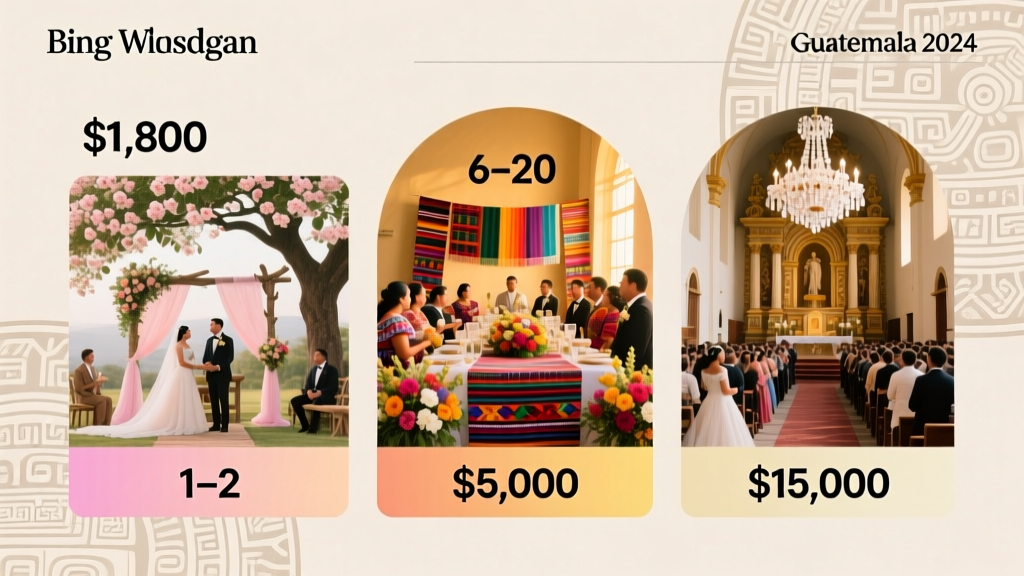 Guatemala Wedding Cost 2026: Real Prices & Tips
 RSVP for a Wedding: Digital, Plus-One & Can’t Attend Tips
 Porta Potty Wedding Decor: 7 Budget Steps (2026)
 Free Wedding Invitations: 7 Zero-Cost Methods (2026)
 How to Find a Wedding Officiant (2026)
 Afternoon Wedding Outfit: The 7-Second Rule (2026)
 Wedding Guest Dress Codes Decoded: What to Wear
 Mexican Wedding Duration: What to Expect in 2026