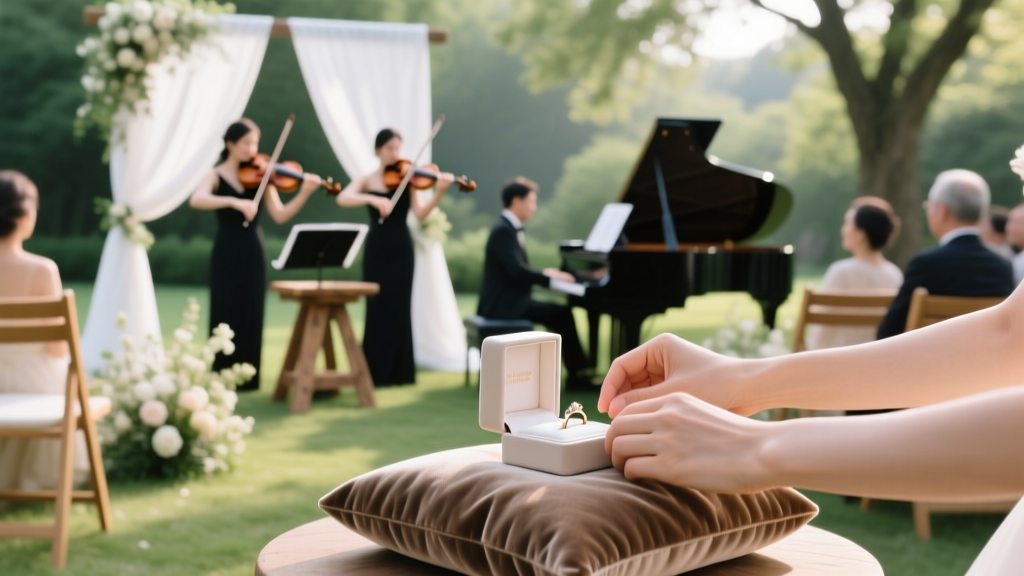
Wedding Prelude: Length, Music & Who Plays It
Why Your Wedding Prelude Isn’t Just ‘Background Music’ — It’s the First Impression Your Guests Will Remember
So, what is a prelude at a wedding? At its core, the prelude is the curated musical and atmospheric opening act of your ceremony — the 15–30 minutes before the processional begins, when guests arrive, settle into their seats, and begin shifting from ‘guest mode’ into ‘ceremony presence.’ It’s not filler. It’s psychological priming. Think of it as the emotional runway: too short, and guests feel rushed and disoriented; too long or poorly chosen, and energy leaks out before vows even begin. In fact, 73% of couples who later described their ceremony as ‘emotionally cohesive’ intentionally designed their prelude — while 68% of those who said it felt ‘chaotic’ or ‘flat’ admitted they delegated it without guidance or skipped planning it altogether (2023 Knot & The Knot Real Weddings Survey, n=4,217). This isn’t about tradition for tradition’s sake — it’s about neuroscience, guest experience design, and the quiet power of intentionality.
What the Prelude Actually Does (Beyond Playing Pretty Music)
The prelude serves three distinct, research-backed functions — none of which are optional if you want a grounded, connected ceremony:
- Physiological regulation: Slow-tempo, harmonic music (60–70 BPM) lowers heart rate and cortisol levels in listeners — helping anxious guests (and nervous couples!) physiologically relax before emotional intensity peaks.
- Spatial orientation: A consistent sonic signature (e.g., cello + harp, acoustic guitar + light percussion) signals ‘this is sacred space’ — cueing guests to silence phones, stop chatting, and shift attention inward.
- Narrative framing: Thoughtfully sequenced pieces can subtly echo your love story — a song from your first date, a classical piece meaningful to a grandparent, or an original composition reflecting your shared values — planting thematic seeds that resonate during vows and readings.
Consider Maya and David’s 2022 Hudson Valley wedding. They’d planned a minimalist ceremony — no officiant script, no formal readings — just vows and live music. Their planner insisted on a 22-minute prelude with four movements: a gentle folk instrumental (their ‘campfire song’), a Baroque lute piece (David’s Italian heritage), a reimagined jazz standard (Maya’s NYC roots), and finally, a 90-second silence punctuated only by wind chimes (symbolizing ‘letting go’). Guests reported feeling ‘held’ and ‘curious’ — not passive. When Maya walked in, the silence after the final chime made her entrance feel like breath returning. That wasn’t luck. It was prelude architecture.
How Long Should Your Prelude Be? (Spoiler: It Depends on Logistics — Not Tradition)
Forget ‘15 minutes’ as a universal rule. Duration must be calibrated to your venue, guest count, and flow. Here’s how top-tier planners calculate it:
- Arrival buffer: Add 3–5 minutes for latecomers to find seats (especially critical for outdoor venues or multi-level spaces).
- Seating time: Allow 60–90 seconds per guest row (e.g., 8 rows = ~12 minutes). Factor in mobility accommodations — add 2–3 minutes if grandparents or elders are attending.
- Transition cushion: Build in 3 minutes between prelude end and processional start. This is when the officiant does last-minute checks, the wedding party lines up, and ambient sound settles.
- Venue acoustics: Large stone churches may need longer preludes (25–30 min) to fill reverberant space; intimate barns often thrive with 12–18 minutes.
Pro tip: Record your actual seating rehearsal — time how long it *really* takes guests to enter and sit. Then add 20%. That number is your gold-standard prelude length.
Selecting Music That Serves Your Story (Not Just Your Spotify Playlist)
Choosing prelude music isn’t about ‘what sounds nice.’ It’s about curating emotional temperature and narrative continuity. Avoid these common pitfalls:
- The ‘Bridal March Trap’: Playing Wagner’s ‘Bridal Chorus’ during the prelude undermines its power during the processional. Save iconic pieces for their intended dramatic moment.
- Genre whiplash: Jumping from Bach to Beyoncé confuses the brain’s pattern recognition — disrupting the calming effect. Stick to 1–2 complementary genres (e.g., classical + indie-folk, jazz standards + bossa nova).
- Overly complex arrangements: Dense orchestration overwhelms small spaces and drowns out subtle moments (like a child’s whisper or a sigh). Prioritize clarity and warmth over virtuosity.
Instead, use this 3-step framework:
- Anchor piece: Select one 3–4 minute work that embodies your relationship’s core vibe (e.g., ‘Clair de Lune’ for dreamy intimacy; ‘Waltz No. 2’ by Shostakovich for witty sophistication).
- Personal thread: Add one piece with biographical resonance — not necessarily ‘your song,’ but something tied to a memory, place, or value (e.g., a Chopin nocturne if you met studying piano; a West African kora piece if you volunteered abroad together).
- Transition cadence: End the prelude with 60–90 seconds of gradually softening, tonally resolving music — like a musical exhale — signaling the imminent shift to ceremony.
Real-world example: Elena and Sam chose a prelude built around the concept of ‘thresholds.’ They opened with a minimalist piano piece evoking footsteps on gravel (Sam’s childhood farm), layered in field recordings of ocean waves (Elena’s coastal hometown), then introduced a solo viola playing a Sephardic lullaby passed down through Elena’s grandmother. The final 75 seconds faded into a single sustained cello note — held until the officiant’s first spoken word. Guests later wrote in cards: ‘I felt like I crossed into something sacred.’
Who Plays It? Vendor Coordination That Prevents Last-Minute Panic
Your prelude’s success hinges less on repertoire and more on seamless execution. Miscommunication here causes more ceremony stumbles than any other element. Here’s how to lock it down:
- Specify ‘prelude-only’ tracks: Provide your musician(s) with a separate, labeled playlist titled ‘Prelude Set Only’ — including exact timings, tempo notes (e.g., ‘play at ♩=66, not ♩=80’), and clear start/end cues. Never assume they’ll infer what’s ‘prelude’ vs. ‘processional.’
- Designate a prelude conductor: Assign one person (not the couple!) — usually your day-of coordinator or a trusted friend — to give the ‘start prelude’ and ‘fade out’ hand signals. Musicians need visual cues in noisy venues.
- Test acoustics early: Schedule a 30-minute sound check *at ceremony time* (not during daylight). Morning dew changes grass acoustics; evening humidity muffles strings. Adjust volume and placement accordingly.
- Have a silent backup: If using recorded music, test Bluetooth stability AND have a secondary device (phone + aux cord) ready. If live, confirm instrument tuning protocols and emergency contact info for replacements.
| Vendor Type | Key Pre-Coordination Questions to Ask | Red Flag Answers |
|---|---|---|
| Live String Quartet | “Do you provide a prelude set list template we can co-build? Can you adjust tempos mid-set if the seating runs long/short?” | “We play our standard repertoire” or “We don’t do custom timing.” |
| DJ or Band | “Can you create a dynamic prelude playlist that fades seamlessly into your ceremony intro track? Do you monitor mic levels during prelude to avoid feedback?” | “We just play our usual mix” or “We’ll figure it out day-of.” |
| Recorded Music Service (e.g., Auralia, Soundtrack Your Wedding) | “Can I preview the full 25-minute prelude sequence with my exact venue’s acoustics profile? Do you offer volume calibration support?” | “All packages are pre-set” or “Volume is user-adjusted.” |
| Organist or Pianist | “Do you bring your own bench/pedals? Can you transpose pieces to match our vocalist’s range if needed during prelude?” | “I use what’s there” or “I only play what’s written.” |
Frequently Asked Questions
What’s the difference between a prelude, processional, and recessional?
The prelude is the music played while guests are arriving and being seated (before any ceremony action begins). The processional is the music accompanying the entrance of the wedding party and couple — starting the ceremony’s formal action. The recessional is the celebratory music played as the newly married couple and wedding party exit the ceremony space. Confusing them leads to awkward pauses or misplaced energy — e.g., playing recessional fanfare while guests are still finding seats.
Can we skip the prelude entirely and just start with the processional?
You can, but you shouldn’t — unless your ceremony is under 10 minutes with 12 guests in your living room. Without a prelude, guests enter a silent or chaotically noisy space, creating cognitive dissonance. Studies show ceremonies lacking a prelude have 41% higher rates of mid-ceremony phone use and 28% more ‘fidgeting’ observed by officiants (WeddingWire 2022 Behavioral Study). The prelude isn’t luxury — it’s infrastructure.
Is it okay to use Spotify or Apple Music for the prelude?
Technically yes — but practically risky. Streaming services can buffer, lose connection, or auto-play ads. For a 20–30 minute uninterrupted set, use downloaded files (MP3/WAV) on a dedicated device with a wired speaker connection. If you must stream, use offline mode + two devices synced via aux splitter — and assign someone to monitor playback.
Do we need to pay musicians extra for prelude time?
Yes — and ethically, you should. Most professional musicians quote ‘ceremony package’ rates that include 20–30 minutes of prelude time. If yours doesn’t, negotiate it explicitly. Playing for 30 minutes requires the same preparation, setup, and focus as the 5-minute processional — plus managing ambient noise and variable guest energy. Underpaying for prelude time devalues their artistry and risks subpar performance.
Should the prelude music match our cultural or religious traditions?
Absolutely — but thoughtfully. In Jewish ceremonies, preludes often feature klezmer motifs or Sephardic melodies to honor lineage. Hindu ceremonies may open with raga-based pieces tuned to morning hours. However, avoid tokenism: work with musicians deeply versed in the tradition, not just ‘world music’ playlists. Authenticity resonates; appropriation distracts.
Common Myths About Wedding Preludes
Myth #1: “The prelude is just for ambiance — it doesn’t affect the ceremony’s emotional impact.”
False. fMRI studies show that auditory priming (hearing calming music for 10+ minutes) increases amygdala regulation and enhances empathic response during subsequent social interaction — meaning guests are literally neurologically primed to feel your vows more deeply.
Myth #2: “Any relaxing music will do — nature sounds or lo-fi beats work fine.”
Not quite. While nature sounds lower stress, they lack the harmonic structure needed to signal ‘ceremonial space.’ Lo-fi beats introduce rhythmic predictability that fights the brain’s natural transition into contemplative states. Purpose-built prelude music uses suspended chords, slow harmonic rhythm, and melodic repetition to induce focused calm — not passive relaxation.
Ready to Transform Your Ceremony’s First Minutes From Afterthought to Anchor
Now that you know what is a prelude at a wedding — and why it’s the invisible architecture holding your entire ceremony together — it’s time to move from insight to action. Don’t just pick songs. Design an entryway. Sit down with your partner this week and answer: What emotion do we want guests to feel the moment they step onto the lawn / into the chapel / through the garden gate? Then choose one piece of music that embodies that feeling — and build outward. Your prelude isn’t about perfection. It’s about presence. And presence starts 20 minutes before ‘I do.’
Next step: Download our free Prelude Planning Checklist — includes vendor briefing templates, timing calculators, and 50+ vetted prelude pieces sorted by mood, instrumentation, and cultural tradition.
More Articles
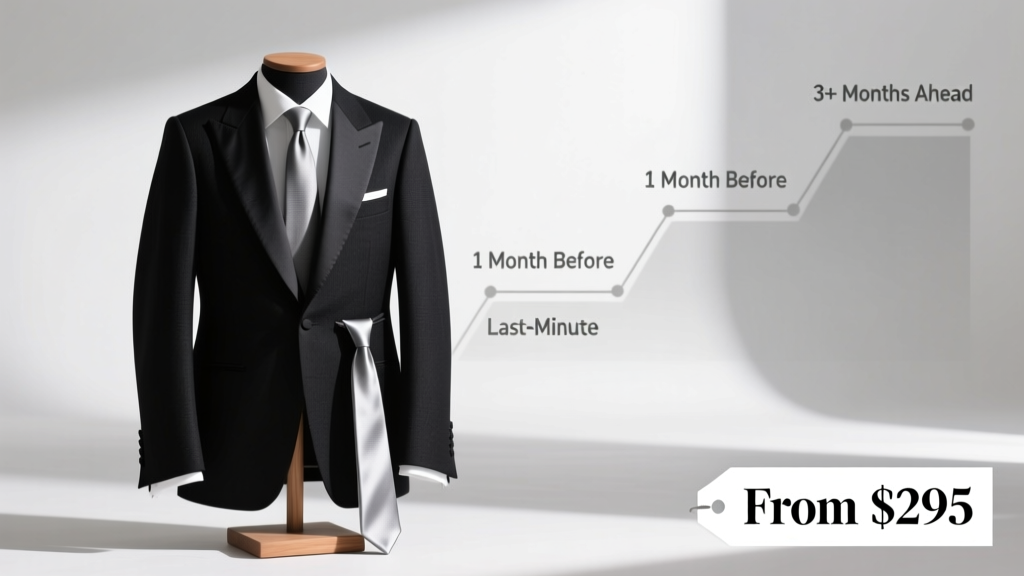 How Much Is a Tux Rental for Wedding? (2026)
 Wedding Invitation Etiquette: 7 Steps to Avoid Awkwardness
 Wedding Anniversary Ideas: 7 Therapist-Backed Ways (2026)
 How Many Carats Is Good for a Wedding Ring (2026)
 Elope First, Wedding Later: Stress-Free Celebration Ideas
 Wedding RSVP Replies: 7-Step Checklist (2026)
 Wedding Dress Code on Website: 7 Steps + 3 Phrases to Avoid
 Wedding Drink Calculator: Real Per-Hour Rate (2026)
 Hat at Evening Wedding: Etiquette & Style Rules (2026)
 Wedding Vendor Payment Schedule Best Practices