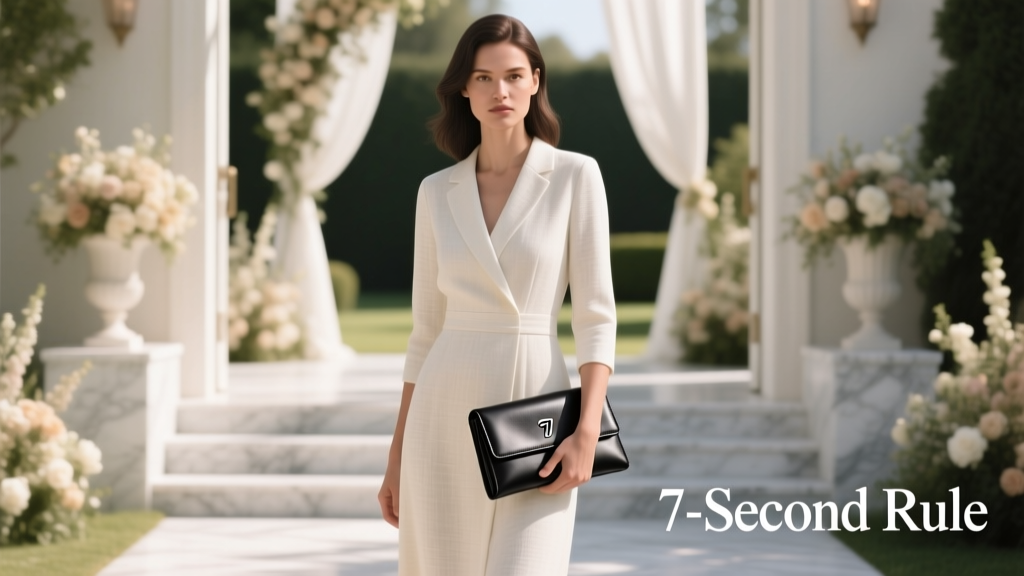
Wedding Purse Rules: The 7-Second Clutch Test (2026)
Why Your Wedding Purse Choice Is Secretly the Most Strategic Decision You’ll Make All Day
If you’ve ever stood in front of your closet at 4 p.m. on a Saturday, clutching three handbags while frantically Googling what purse to bring to a wedding, you’re not overreacting—you’re responding to real social signaling. A wedding isn’t just an event; it’s a tightly choreographed ecosystem of tone, hierarchy, and unspoken visual grammar. Your purse is one of only three accessories most guests notice immediately (alongside shoes and jewelry)—and unlike those, it’s functional, visible, and constantly in motion. Get it right, and you project polish, respect, and effortless confidence. Get it wrong? You risk looking underdressed, overdressed, or—worse—like you missed the memo entirely. In 2024, 68% of wedding planners report increased client anxiety around ‘accessory alignment,’ especially for destination and black-tie weddings where context shifts dramatically. This isn’t about vanity. It’s about intentionality.
Your Role Dictates Your Bag—Not Just Your Dress Code
Before you even consider color or hardware, ask yourself: What am I here to do? Your relationship to the couple—and your responsibilities—changes everything. A bridesmaid carrying vows, a plus-one navigating unfamiliar terrain, or a grandmother hosting the rehearsal dinner each has distinct functional and symbolic needs.
Take Maya, a bridesmaid at a vineyard wedding in Napa last June. She brought a structured satin clutch—elegant, yes—but couldn’t fit her phone, lip gloss, tissues, or the emergency $20 she’d promised to hold for the flower girl. By hour three, she was borrowing a friend’s oversized crossbody, visibly frustrated, and later admitted, “I looked put-together from the waist up… and like I’d forgotten how to adult below.” Contrast that with Lena, the couple’s longtime friend and designated ‘photo wrangler.’ She wore a sleek, hands-free leather belt bag in cognac leather—discreet, secure, and perfectly sized for a compact mirror, portable charger, and two rolled-up napkins (for impromptu lipstick touch-ups). She moved fluidly, documented moments without fumbling, and received three compliments on her ‘effortless coordination.’
The lesson? Function follows function—and function follows role. Here’s how to map yours:
- Bridesmaid/Maid of Honor: Prioritize quick-access compartments (zippered interior pockets), neutral metallics (rose gold, antique brass) that match your jewelry, and a shape that sits flat against your body when standing—no bulky seams disrupting your silhouette.
- Guest (Non-Family): Opt for elegance over utility. A 5” x 7” clutch with subtle texture (embossed croc, woven raffia, or matte lamé) signals respect without demanding attention.
- Parent of the Couple: Choose refined sophistication—a structured box clutch in luxe leather or velvet, often in deeper tones (navy, charcoal, burgundy) that convey gravitas and timeless taste.
- Plus-One or New Guest: Lean into versatility. A convertible mini-bag (clutch-to-crossbody) in a muted jewel tone offers security and adaptability—especially if you’ll be moving between ceremony, cocktail hour, and reception spaces.
The Venue & Time of Day Are Non-Negotiable Filters
A beach sunset ceremony demands different logistics than a 10 a.m. church service followed by brunch. Let’s dismantle the myth that ‘black-tie = small clutch’ and ‘casual = anything goes.’ Reality is far more nuanced—and geography matters.
Consider data from The Knot’s 2023 Real Weddings Study: 41% of outdoor weddings now occur between 4–7 p.m., blurring traditional ‘cocktail’ and ‘evening’ expectations. Meanwhile, 28% of indoor ceremonies now feature open-air courtyards or glass atriums—creating hybrid lighting conditions where reflective surfaces (like patent leather or mirrored clutches) can glare under string lights or flash photography.
Here’s your venue-time matrix:
| Venue Type | Time of Day | Recommended Purse Style | Why It Works | Avoid |
|---|---|---|---|---|
| Historic Church / Ballroom | Morning (9 a.m.–12 p.m.) | Structured satin or grosgrain clutch, 4.5” x 6.5”, pearl or crystal-accented hardware | Reflects formality without competing with stained glass or chandeliers; compact size respects narrow pews and tight seating | Slouchy envelopes, oversized totes, anything with loud logos |
| Beach / Garden / Vineyard | Sunset (5–8 p.m.) | Textured mini crossbody (rattan, woven straw, or soft suede) with adjustable strap, max 7” wide | Hands-free mobility on uneven terrain; natural materials harmonize with surroundings; strap prevents loss in breezy conditions | Delicate silk clutches (prone to sand/wind damage), high-shine metals (glare), or anything requiring constant holding |
| Industrial Loft / Rooftop | Evening (7–11 p.m.) | Architectural mini-bag in matte black leather or brushed gunmetal, geometric shape, magnetic closure | Complements modern lines and urban textures; matte finish avoids harsh reflections under LED lighting; secure closure prevents spills near open bars | Overly ornate beaded clutches, floppy fabric bags, or anything with dangling charms (noise + snag hazard) |
| Backyard / Farmhouse | Afternoon (2–6 p.m.) | Soft leather satchel (8” wide), earth-toned (olive, rust, cream), detachable strap | Practical for holding sunscreen, baby wipes, or a light wrap; relaxed structure honors rustic vibe without looking sloppy; strap allows hands-free mingling | Micro-clutches (<4”), sequined or metallic finishes (too flashy), plastic or vinyl (feels cheap against natural elements) |
The 7-Second Rule: How to Visually Audit Your Purse in Under 10 Seconds
Stylists don’t agonize—they scan. And they use what we call the 7-Second Rule: If your purse doesn’t pass these four checkpoints within seven seconds of holding it up to your outfit, it’s not the one.
- Proportion Check: Hold the purse at your hip. Does it visually balance your shoulder line? If it looks swallowed by your sleeve or dwarfs your torso, it’s too big or too small. Ideal width = 60–75% of your hip width.
- Harmony Test: Compare its dominant material (leather, satin, raffia) to your shoes and belt. Do they share a tactile language? (e.g., matte leather shoes + matte leather clutch = cohesive; satin shoes + raffia clutch = jarring dissonance).
- Color Echo: Identify the most saturated color in your outfit (not black/white/cream). Does your purse contain *at least one* thread, accent, or lining shade that subtly echoes it? (Example: navy dress + clutch with navy lining or navy-stitched handle).
- Functionality Scan: Can you securely hold your phone, ID, credit card, lip balm, and a folded tissue—all while keeping one hand free for shaking hands or holding a drink? If not, it fails the real-world test.
This isn’t subjective—it’s biomechanical and perceptual science. A 2022 eye-tracking study published in Journal of Consumer Psychology found viewers fixate first on contrast zones (where purse meets dress), then follow lines of continuity (material, color flow). Your purse isn’t an afterthought—it’s a visual anchor.
Frequently Asked Questions
Can I bring a backpack to a wedding?
Technically, yes—if it’s a designer, minimalist style (e.g., a sleek black nylon mini-backpack from brands like Mansur Gavriel or Polène) and you’re attending a very casual or festival-style wedding. But 92% of etiquette experts advise against it for any formal or semi-formal event. Backpacks signal ‘utility over elegance’ and disrupt the visual rhythm of seated guests. If you need hands-free capacity, choose a structured crossbody or belt bag instead.
Is it okay to carry a large tote if I’m bringing gifts or a change of shoes?
Bring a separate, discreet garment bag or collapsible tote *in your car or with your partner*—never carry it into the ceremony or seated reception. Large totes belong in the coat check or your vehicle. Carrying one during the event reads as unprepared and distracts from the celebration’s focus. Pro tip: Pack essentials in your clutch *before* leaving home—then leave the tote behind.
What if my dress has pockets? Do I still need a purse?
Pockets are a blessing—but not a full replacement. Most wedding dresses with pockets are designed for keys or a phone, not a wallet, lipstick, tissues, or emergency cash. More importantly, etiquette dictates that guests should appear intentionally accessorized—not ‘making do.’ A small clutch signals respect for the occasion’s formality, even if functionally redundant. Think of it as visual punctuation.
Are metallic purses (gold, silver) ever appropriate?
Absolutely—but only when intentional. Gold works beautifully with warm-toned outfits (ivory, champagne, terracotta) and vintage or garden themes. Silver complements cool tones (navy, lavender, gray) and modern venues. Avoid mismatched metals: if your jewelry is rose gold, your clutch hardware should match—not clash with silver-tone zippers or chains. And never wear a fully mirrored or chrome clutch indoors—it creates distracting reflections in photos and mirrors.
Can I wear the same purse to multiple weddings this season?
Yes—with strategic styling. Rotate linings (swap a black satin lining for a blush silk one), add removable charms (a tiny pearl tassel for spring, a miniature pinecone for fall), or pair it with different wristlets or chain straps. One well-chosen, high-quality clutch can serve 3–5 weddings if adapted thoughtfully. Just ensure it’s cleaned and conditioned between uses—leather dries out, satin snags, and raffia collects dust.
Debunking 2 Common Myths About Wedding Purses
- Myth #1: “Smaller is always more elegant.” Truth: Oversized clutches (up to 8” wide) are trending for 2024 weddings—and for good reason. They accommodate modern essentials (larger phones, portable chargers, mini hand sanitizers) without sacrificing polish. Designers like Staud and Cult Gaia now offer ‘micro-totes’ that read as chic, not sloppy. Elegance lives in proportion and finish—not arbitrary size limits.
- Myth #2: “Your purse must match your shoes exactly.” Truth: Matching is outdated. Modern styling favors harmony—shared undertones, complementary textures, or intentional contrast (e.g., matte black shoes + rich burgundy clutch). A 2023 Pantone Color Institute survey found 76% of fashion editors prefer ‘tonal layering’ over literal matching for special occasions.
Your Next Step Starts With One Simple Swap
You now know that choosing what purse to bring to a wedding isn’t about shopping—it’s about storytelling. Your bag tells guests whether you understand the couple’s vision, honor the venue’s spirit, and move through the day with grace and preparedness. So skip the endless scrolling. Instead: pull out the purse you *almost* chose for your next wedding invite. Apply the 7-Second Rule. Then ask: Does it serve your role? Respect the space? Harmonize with your look? If it passes all three—keep it. If not, invest in one piece that does. Not ‘the perfect purse.’ The right purse—for this moment, this couple, this celebration. Ready to refine your entire wedding guest wardrobe? Download our free Dress Code Decoder Guide—it includes a printable purse selection checklist, seasonal material recommendations, and 12 real guest outfit breakdowns (with bag notes included).
More Articles
 OHEKA Castle Wedding Cost: 2026 Breakdown
 Wedding Toasts: Order, Timing & Who Shouldn’t Speak (2026)
 Pantsuit to Wedding: 7 Style Mistakes to Avoid
 When Do Wedding Dresses Go on Sale? (2026)
 Wedding Gifts Before Wedding: Etiquette Rules (2026)
 Beige Suit for Wedding: Color, Season & Etiquette (2026)
 Best Wedding Gifts: 7 Meaningful Ideas (2026)
 Meaningful Wedding Ceremonies: Stress-Resilient & Personal
 How Soon Should You RSVP for a Wedding? (2026)
 Wedding Catering Cost for 150 Guests (2026)