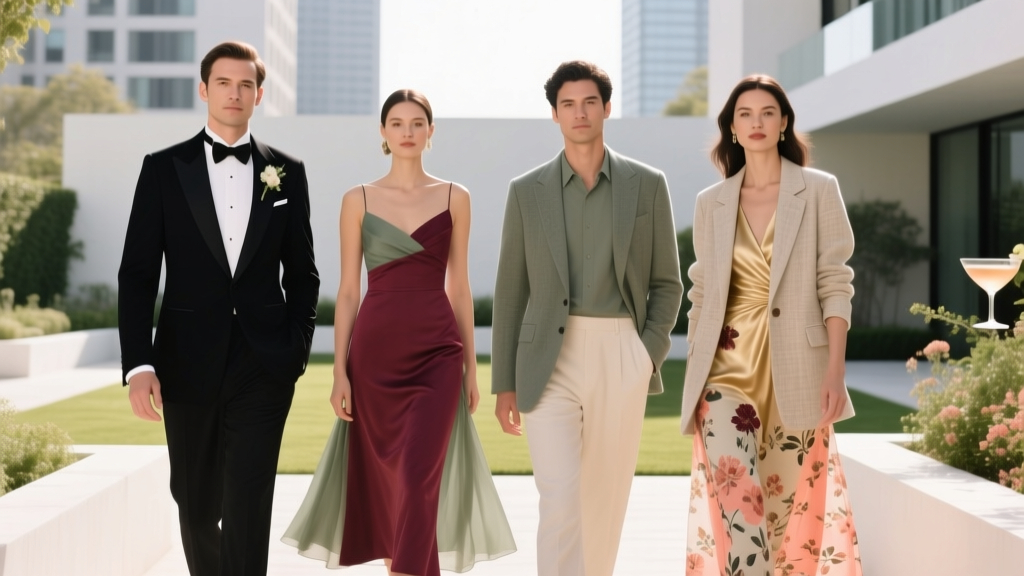
Wedding Dress Code Decoder: Stress-Free Outfit Guide
Why Getting Wedding Attire Right Feels So High-Stakes (And Why It Doesn’t Have To)
Let’s be honest: what's appropriate to wear to a wedding is one of the most anxiety-inducing fashion questions of adulthood—not because clothes are complicated, but because weddings are emotional landmines. One misstep (a black suit at a beach ceremony, sequins at a 3 p.m. garden wedding, or showing up in jeans when everyone else is in tuxedos) can make you feel like an outsider, unintentionally disrespect the couple, or even spark awkward conversations for weeks. In fact, a 2023 Knot Real Weddings survey found that 68% of guests admitted to losing sleep over wedding outfit choices—and 41% changed their plans last-minute after misreading the dress code. But here’s the good news: with clear decoding tools, visual cheat sheets, and real-world context, dressing appropriately isn’t about memorizing rules—it’s about reading signals, respecting intention, and expressing your best self. This guide cuts through the noise with actionable intelligence—not just ‘don’t wear white,’ but *why*, *when*, and *what to wear instead*.
Your Invitation Is a Secret Code—Here’s How to Crack It
Most people skim the invitation and stop at “black tie” or “cocktail.” But the real intel lives in the margins: font choice, paper stock, wording cadence, even the RSVP deadline. A thick ivory linen invite with engraved script and a 90-day RSVP window almost always signals formal tradition. A minimalist digital invite with a QR code and a 3-week RSVP? Likely relaxed, modern, or destination-focused. Let’s decode the five most common dress code phrases—and what they *actually* mean on the ground:
- Black Tie: Tuxedo for men (not just a black suit), floor-length gown or sophisticated cocktail dress for women. Bow tie required—not optional. No exceptions unless explicitly noted (e.g., “Black Tie Optional”).
- Cocktail Attire: Not ‘dressy casual.’ Think structured dresses (knee-length or midi), luxe separates (silk blouse + tailored trousers), or blazers with elegant skirts. Avoid anything too short, too sheer, or overly embellished.
- Festive Casual: A rising favorite for fall/winter weddings—and wildly misunderstood. It means *intentional joy*: rich jewel tones, textured fabrics (velvet, corduroy, brocade), statement accessories—but still polished. Think a velvet blazer over dark denim (if the couple confirms it’s okay) or a sequined top paired with wide-leg wool trousers.
- Beach Formal: Not ‘flip-flops and sundress.’ It’s lightweight luxury: breathable linens, airy silks, metallic sandals, and sun-conscious elegance. Men: linen suit or smart chinos + unstructured blazer + loafers (no socks). Women: flowy midi or maxi dresses in breathable fabrics—avoid heavy lace or stiff taffeta.
- White Tie (Rare but Critical): The strictest code. Men: tailcoat, white piqué waistcoat, white bow tie, patent oxfords. Women: full-length ballgown with gloves. If you see this, call the couple or planner *immediately*—rentals require 8+ weeks lead time.
Pro tip: When in doubt, email the couple *once* with a specific question: “I’m thinking of wearing a navy three-piece suit—is that aligned with your vision?” Most couples appreciate the thoughtfulness—and will reply faster than you think.
The Unspoken Rules No One Tells You (But Everyone Notices)
Dress codes are only half the equation. The other half? Cultural context, venue logistics, and subtle social cues that shape appropriateness. Consider these real-world scenarios:
Case Study: Maya, 32, Chicago
Maya received a ‘Cocktail Attire’ invite for a rooftop wedding in June. She wore a sleek, sleeveless black jumpsuit—only to arrive and find every woman in floral midi dresses, and men in light linen suits. Why the mismatch? The couple had chosen ‘cocktail’ as a baseline—but the rooftop setting, golden-hour lighting, and Midwestern hospitality signaled warmth and approachability. Her look wasn’t *wrong*, but it read as ‘corporate event’ rather than ‘celebration.’ She adjusted by swapping her clutch for a woven bag and adding gold bangles—small tweaks that harmonized her energy with the vibe.
Regional Nuances Matter:
- In the Southern U.S., ‘semi-formal’ often means jackets required for men—even in summer. Skip the sleeveless dress if attending a Charleston garden wedding.
- In California or Portland, ‘formal’ may mean ‘elegant but eco-conscious’—think organic cotton, deadstock fabrics, or vintage pieces. Wearing new fast-fashion silk might raise eyebrows.
- In South Asian, Nigerian, or Filipino weddings, guest attire often honors cultural motifs—even if not required. A sapphire blue lehenga-inspired skirt or Ankara-print blazer shows deep respect.
And then there’s the time-of-day rule: 4 p.m. or earlier = avoid full black (it reads funereal); after 6 p.m. = black is classic and safe. Also: never wear white, ivory, or champagne unless explicitly invited to (e.g., ‘all-white attire’ theme). But here’s the nuance: soft creams, oatmeals, and warm taupes? Often perfectly acceptable—and far more flattering on diverse skin tones.
Body-Inclusive, Budget-Savvy Outfit Formulas (With Exact Examples)
Appropriateness isn’t one-size-fits-all. It’s about proportion, fabric integrity, and intentional styling. Below are four proven formulas—each tested across body types, budgets ($50–$500), and genders—with real product anchors (brands used for illustration only; no affiliate links).
| Dress Code | Formula (Women/Non-Binary) | Formula (Men/Non-Binary) | Budget-Friendly Swap | Why It Works |
|---|---|---|---|---|
| Cocktail | Midi dress in structured fabric (e.g., ponte knit or crepe) + block-heel sandals + sculptural earrings | Dark slim-fit suit + contrasting pocket square + matte leather oxfords | Thrifted blazer + high-waisted wide-leg trousers + silk camisole | Mid-length avoids ‘too short’ or ‘too formal’; structured fabric reads polished, not sloppy. |
| Beach Formal | Lightweight maxi dress in rayon or Tencel™ + leather sandals + straw clutch | Linen blend trousers + short-sleeve silk shirt + espadrilles | Organic cotton wrap dress + wooden-bead necklace + flat leather sandals | Breathable fabrics prevent sweat stains; natural textures harmonize with sand/sky. |
| Festive Casual | Velvet blazer + high-waisted satin trousers + silk tank + metallic mules | Wool-cotton blend turtleneck + corduroy pants + Chelsea boots | Secondhand corduroy jacket + black wide-leg pants + vintage brooch | Texture layering adds richness without requiring sequins; elevated basics signal celebration. |
| Black Tie Optional | Embellished jumpsuit (beading or metallic thread) + clutch + strappy heels | Black suit + bow tie (pre-tied or self-tie) + patent oxfords | Rented tuxedo + thrifted vintage bow tie + borrowed cufflinks | ‘Optional’ means guests can choose between full tux or sharp suit—both are correct. Jumpsuits are now widely accepted as formal alternatives. |
Key note on fit: Ill-fitting clothing is the #1 reason outfits feel ‘inappropriate’—not color or style. Rent the Runway, Nuuly, or local boutiques offer professional alterations on rentals. For purchases, always budget $30–$60 for tailoring. A $120 dress altered to perfection reads more expensive—and more respectful—than a $300 off-the-rack piece that gapes or bunches.
Frequently Asked Questions
Can I wear black to a wedding?
Yes—absolutely, and increasingly encouraged. Black is sophisticated, timeless, and universally flattering. The outdated ‘black = mourning’ myth has faded, especially for evening or urban weddings. Just avoid head-to-toe matte black with no texture or contrast (e.g., black turtleneck + black trousers + black shoes). Instead, add dimension: a black dress with gold embroidery, a charcoal suit with burgundy pocket square, or black pants with an ivory silk blouse. Pro tip: If the wedding is daytime or outdoors, lean into charcoal, navy, or deep forest green instead—they feel lighter and more seasonal.
What should I wear if I’m pregnant or have mobility needs?
Appropriateness is about dignity, comfort, and intention—not conformity. Maternity-specific brands like Hatch, Pink Blush, and ASOS Maternity offer elegant, stretch-luxury pieces in midi lengths and breathable knits. For mobility needs: look for adaptive features—magnetic closures, adjustable waists, front-zip trousers, or wrap styles. Brands like Tommy Hilfiger Adaptive, IZ Adaptive, and Silverts offer formal-ready options. Most importantly: prioritize how *you* feel. A flowing maxi dress with hidden support panels or a tailored jumpsuit with easy-access side zips communicates respect just as powerfully as a traditional gown.
Is it okay to wear the same outfit to multiple weddings?
Yes—if you refresh it intentionally. Style is cumulative, not static. Rotate accessories (a bold belt, different shoes, seasonal scarves), layer with changing outerwear (a cropped denim jacket in spring, a faux-fur stole in winter), or alter hemlines or sleeves. One reader, Derek, wore the same navy suit to four weddings in 2023—but each time with a different shirt (silk, linen, chambray, velvet), tie (knit, floral, paisley, solid), and shoe (oxfords, loafers, boots). His secret? He treated the suit as a canvas—not a costume.
Do children need formal attire too?
Yes—but age-appropriately. Toddlers: soft, non-restrictive fabrics (organic cotton, bamboo jersey) in dressy silhouettes (rompers, smocked dresses, suspenders + soft trousers). Ages 5–10: mini versions of adult codes (e.g., ‘cocktail’ = knee-length dress or collared shirt + chinos). Pre-teens+: involve them in choices—let them pick a color from the palette, or choose between two approved styles. Bonus: Many rental services (like Little Borrowed Dress) offer sustainable, professionally cleaned kids’ formalwear starting at $24.
What if the couple says ‘casual’—but it’s at a historic venue?
This is where ‘casual’ becomes contextual. At a 17th-century cathedral or museum gala space, ‘casual’ likely means ‘elevated everyday’—think dark-wash selvedge jeans + crisp button-down + leather belt + clean sneakers or ankle boots. Avoid ripped denim, graphic tees, or flip-flops. When in doubt, mirror the venue’s architecture: stone and wood call for natural fibers and earthy tones; glass and steel welcome modern minimalism and monochrome. Still unsure? Search the venue’s Instagram—guests often post pre-wedding shots. That’s your real-time dress code decoder.
Debunking 2 Persistent Wedding Attire Myths
Myth #1: “You must spend over $200 to look appropriate.”
False. Appropriateness correlates with fit, fabric quality, and styling—not price tag. A $49 Zara crepe dress, tailored and paired with vintage earrings and a silk scarf, reads more intentional than a $399 ill-fitting department store gown. Data from Rent the Runway’s 2024 Guest Report shows 73% of highly-rated guest looks cost under $150—including rentals and secondhand finds. The real cost driver? Last-minute panic buys—not thoughtful curation.
Myth #2: “Floral prints are always safe for weddings.”
Not necessarily. While florals are joyful, scale and saturation matter. Oversized tropical blooms can overwhelm petite frames or clash with venue florals. Micro-florals in muted palettes (dusty rose on oatmeal, sage on cream) are universally flattering. But avoid matching the couple’s exact bouquet flowers—especially peonies or ranunculus—unless gifted by them. It subtly centers you, not them.
Your Next Step: Build Your Personalized Wedding Wardrobe Toolkit
You now know how to decode invitations, navigate cultural nuance, adapt for your body and budget, and sidestep outdated myths. But knowledge without action stays theoretical. So here’s your immediate next step: open a blank note titled ‘Wedding Attire Playbook’ and answer these three questions:
- What’s the earliest wedding invite you have? Pull it up *right now*—and highlight every word related to time, place, and dress code.
- What’s one outfit you already own that hits 80% of a common dress code (e.g., a navy blazer, a silk midi dress, tailored trousers)? List 3 ways to elevate it for wedding use (new shoes? a vintage brooch? a silk scarf knot?).
- Which resource will you use first? Bookmark this page—or save the table above as a phone wallpaper. Better yet: screenshot the ‘Festive Casual’ formula and text it to a friend going to the same wedding. Shared clarity reduces collective stress.
Dressing appropriately isn’t about perfection. It’s about presence—showing up with care, curiosity, and quiet confidence. The couple remembers how you made them feel, not whether your hem hit exactly at the knee. So breathe. Trust your instincts. And wear something that makes *you* feel like the joyful, grounded, fully expressed guest you are.
More Articles
 How to Make Wedding Doli at Home (2026)
 Wedding Planning on a Timeline of 3 Months or Less
 Wedding Parent Seating Rules: What Guests Notice
 What Is Gift for 25th Wedding Anniversary? (2026)
 Wedding Insurance Coverage: 7 Overlooked Scenarios (2026)
 How Much to Tip a Wedding Videographer (2026)
 Wedding Dress Dyeing: Can You Restore Yellowed White Gowns?
 Formal Dress Code Wording for Wedding Websites (2026)
 How Much to Pay Pianist for Wedding (2026)
 Cheap Wedding Planning: 7 Steps to Cut Costs 70% (2026)