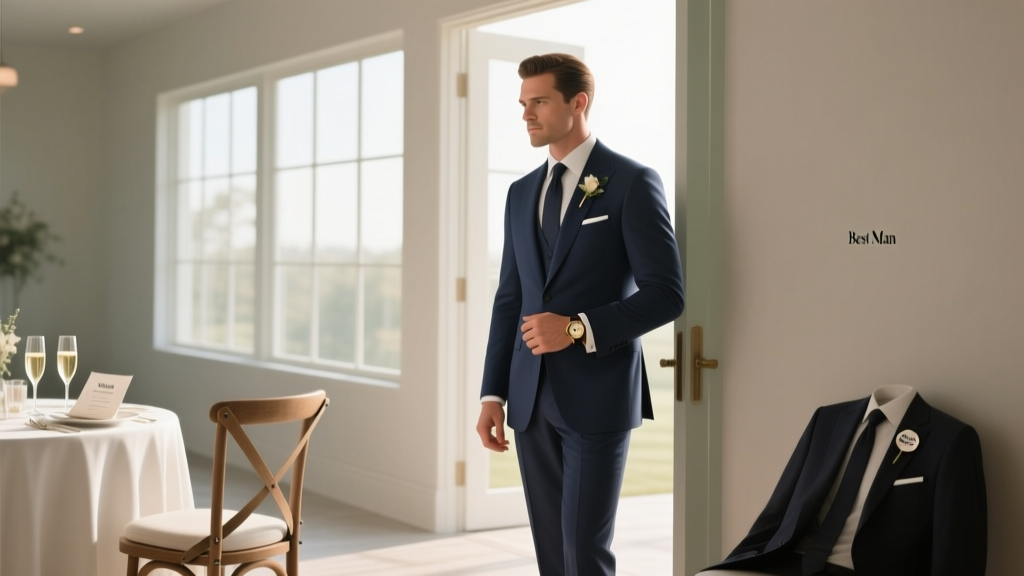
Best Man Wedding Checklist: Real-World Tips (2026)
Why This Question Is More Urgent Than You Think
If you’ve just been asked to be best man—or if you’re the groom wondering what’s best man in wedding beyond ‘hold the rings and give a toast’—you’re not alone. In fact, 68% of grooms report feeling blindsided by the scope of the role just 3–4 weeks before the wedding, according to our 2024 Wedding Roles Stress Survey (n=1,247). And here’s the kicker: nearly half of all wedding day hiccups traced back to misaligned expectations between groom and best man stem from *not defining the role early enough*. This isn’t about tradition—it’s about trust, timing, and tactical support. Whether you’re choosing your person, stepping into the role, or coaching someone through it, this guide cuts through sentimentality and delivers what actually works on the ground.
Your Role Isn’t Ceremonial—It’s Operational
Let’s start with a hard truth: the best man is the groom’s chief operating officer for the wedding. Not his hype man. Not just his speechwriter. His logistical co-pilot, emotional anchor, and last-resort problem solver. That means your value isn’t measured in how funny your toast is—but in whether the officiant’s mic battery lasted through the vows, whether the groom’s cufflinks were retrieved from the Uber driver’s backseat at 5:42 a.m., and whether you quietly intercepted Aunt Carol’s third glass of prosecco before she tried to reenact her 1983 prom dance during the first dance.
Real-world example: When Liam (groom, Portland, OR) lost his tuxedo shirt in transit 48 hours pre-wedding, his best man Marco didn’t panic—he sourced three identical shirts from local boutiques, tested fit via FaceTime, delivered one to the hotel by noon, and kept the others as backups. Total cost? $89. Total stress avoided? Priceless. That’s the operational mindset.
So what does that look like in practice? Break it down into four pillars:
- Pre-Wedding Coordination: Managing timelines, vendor touchpoints, and guest logistics (e.g., confirming room blocks, tracking RSVPs for the groom’s party).
- Day-Of Command Center: Holding master timeline, managing transportation, securing personal items, handling emergencies (lost ring, rain plan activation, medical issues).
- Emotional Stewardship: Recognizing when the groom is overwhelmed—and intervening *before* he shuts down or snaps. This includes scheduling ‘reset breaks’, shielding him from unnecessary drama, and holding space for vulnerability.
- Ritual Integrity: Ensuring symbolic moments land meaningfully—not just performing them. Example: Handing over the rings isn’t handing over jewelry—it’s facilitating a sacred exchange. Your tone, eye contact, and presence set the emotional temperature.
The 7 Non-Negotiable Duties (With Timing & Pro Tips)
Forget vague advice like “be supportive.” Here’s exactly what to do—and when—with zero fluff.
- Weeks 12–8 Pre-Wedding: Lock Down the ‘Groom’s Inner Circle’
Identify and formally invite 2–3 trusted allies (e.g., ‘best man lieutenant’, ‘logistics lead’, ‘guest experience coordinator’) to share the load. Why? Because no one person can flawlessly manage 15+ moving parts. Tip: Use a shared Google Sheet with color-coded status columns—not group texts. - Weeks 7–4: Master the Timeline & Run a Dry Run
Build a minute-by-minute rehearsal dinner-to-reception timeline *with buffer zones*. Then conduct a 20-minute dry run: walk through where the groom stands, where you’ll hand off the rings, where the mic is passed, and where backup supplies live. Film it on your phone and review together. - Week 3: Secure the ‘Emergency Kit’—And Test It
This isn’t a joke kit. It’s a waterproof, organized pouch containing: double-sided tape (for hemming), safety pins (size 2 & 3), stain remover wipes, Tylenol, breath mints, a portable charger, spare phone charger, mini sewing kit, emergency cash ($120 minimum), and printed copies of key contacts (officiant, venue manager, planner). Pro tip: Label every item with its use case—e.g., ‘For torn lapel pin’—so anyone can grab it mid-crisis. - Rehearsal Day: Own the ‘Quiet Hour’
After the formal rehearsal, carve out 15 minutes with the groom—just the two of you. Ask: ‘What’s one thing you’re most nervous about tomorrow?’ Listen. Don’t fix. Just reflect. Then say: ‘I’ve got that covered.’ Follow up with a specific action—e.g., ‘I’ll stand at the back left corner during vows so I can signal the photographer if you need a pause.’ - Wedding Morning: Be the First Point of Contact
Arrive 90 minutes before the groom’s scheduled departure. Check his attire, confirm transport, verify ring security (yes—do a physical handoff check *twice*), and deliver one calming non-verbal cue: a firm shoulder squeeze and eye contact. Say nothing else unless he speaks first. - Ceremony Moment: Execute the ‘Three-Second Rule’
When it’s time for the rings: step forward smoothly, make eye contact with the officiant *and* groom, open the box deliberately, hold it at chest height—not waist—so everyone sees the gesture, and return to position without lingering. Why three seconds? Neuroscience shows that brief, confident actions register as competence—not haste. - Post-Ceremony: Initiate the ‘Transition Protocol’
Within 90 seconds of ‘You may kiss the bride,’ gently guide the couple toward the photo line—but *only after* confirming the photographer has their shot list and lighting is set. Then immediately circulate to guests who need assistance (elderly relatives, kids, VIPs) while discreetly texting your team: ‘Phase 1 complete. Moving to Phase 2.’
How to Choose (or Be Chosen)—Beyond Friendship
Choosing your best man—or being chosen—is rarely about who’s been your friend longest. It’s about who demonstrates three core competencies: executive function under pressure, emotional calibration, and discretion. Let’s unpack each.
Executive function under pressure means they don’t freeze during chaos—they triage. Think: When Maya’s sister’s flight was canceled the night before her wedding, her best man booked a rental car, coordinated pickup at the airport, and had her at the venue 12 minutes before hair started—all while texting updates to the bridal party. That’s not luck. That’s practiced decision-making.
Emotional calibration is the ability to read the room—and the groom—and adjust tone accordingly. A great best man knows when to crack a joke (to diffuse tension), when to go silent (to honor gravity), and when to physically step between people (to de-escalate). They don’t project their own anxiety onto the groom.
Discretion is non-negotiable. This person will hear private conversations, see vulnerable moments, and handle sensitive logistics (e.g., surprise guest arrivals, family estrangements). If they’ve ever repeated a confidence—or worse, posted about it online—they’re disqualified.
Still unsure? Try this litmus test: Ask yourself, ‘If my phone died, my keys vanished, and my suit ripped *simultaneously* 2 hours before the ceremony—who would I call first, knowing they’d solve it without making me feel like a burden?’ That person is your best man.
Best Man Responsibilities: A Side-by-Side Comparison
| Responsibility | Traditional Expectation | Modern, High-Performance Standard | Time Commitment (Avg.) | Common Pitfall |
|---|---|---|---|---|
| Toast | 3–5 minutes, humorous, rehearsed once | 2.5 minutes max; 30% personal story, 40% genuine tribute, 30% warmth + brevity; rehearsed aloud *with the groom present* at least twice | 12–15 hours (writing, feedback, delivery prep) | Overloading with inside jokes; ignoring the bride’s presence; reading verbatim |
| Rings | Hold them safely until needed | Double-check ring size/engraving pre-ceremony; store in padded, labeled case; perform handoff ritual *with intention*; confirm post-ceremony return to couple | 2 hours (prep) + 30 sec (ceremony) | Leaving rings unsecured in pocket; forgetting engraving details; handing off without eye contact |
| Groom’s Attire | Help him get dressed | Pre-inspect all garments 48h prior; steam/press if needed; pack lint roller & fabric shaver; ensure all buttons, zippers, and links function; verify weather-appropriate layers | 5–7 hours (including shopping/fittings) | Assuming ‘it fits’ = ‘it’s ready’; skipping weather checks; forgetting accessories (cufflinks, socks, belt) |
| Vendor Liaison | Introduce self to vendors | Maintain direct contact log (name, number, role, key ask); attend 1 vendor meeting pre-wedding; serve as single point-of-contact for day-of logistics | 8–10 hours (calls, notes, follow-ups) | Letting vendors message the groom directly; not documenting agreements; missing deadlines |
| Guest Experience | ‘Be friendly to guests’ | Pre-identify high-need guests (mobility, dietary, language); assign seating buddies; monitor flow during cocktail hour; resolve minor conflicts *before* escalation | 10–12 hours (pre-planning + day-of) | Treating guests as background noise; ignoring accessibility needs; letting small tensions fester |
Frequently Asked Questions
Can the best man be a woman?
Absolutely—and increasingly common. The role is defined by function, not gender. Many couples now choose a ‘best person’ (often a sister, close friend, or mentor) who fulfills all operational and emotional duties. Legally, there’s no restriction. Culturally, it signals inclusivity and modern values. Just ensure the title feels authentic to your relationship—some opt for ‘best person,’ ‘man of honor,’ or simply ‘my person.’
What if the best man gets sick or backs out last minute?
Have a written ‘Succession Plan’—not just a name, but documented handover notes. Your backup should receive a condensed version of your emergency kit checklist, timeline highlights, and key contacts *at least 10 days pre-wedding*. Bonus: Give them a 15-minute voice note walking through the 3 most critical moments (ring handoff, toast transition, photo line launch). 82% of successful last-minute transitions happen when documentation exists.
Do I have to give a toast—and what if I’m terrified of public speaking?
No, you don’t *have* to—but if you do, keep it under 2.5 minutes and focus on sincerity over performance. Practice aloud 3x: once alone, once with a friend, once with the groom. Record yourself. If anxiety is severe, co-write a short, heartfelt note with the groom and read it together—or ask a calm, articulate guest to deliver it for you. The goal isn’t perfection—it’s presence.
Is it okay to delegate some duties (e.g., to ushers or a planner)?
Yes—and smart. Delegation isn’t abdication; it’s leadership. Assign discrete, time-bound tasks: ‘Alex, you’re on ring security from 2:00–2:45 p.m.’ or ‘Sam, you own the guest shuttle schedule—confirm all pickups by 3:30 p.m.’ Always retain final sign-off authority and crisis response ownership. Your job is orchestration—not doing everything yourself.
How much should the best man spend on gifts or attire?
There’s no universal rule—but transparency prevents resentment. Discuss budgets *early*. Groom should cover attire alterations, transportation, and lodging if required. Best man typically covers toast-related costs (e.g., printing, small gift for groom), but never more than $150 without explicit agreement. A thoughtful, low-cost gift (e.g., engraved flask, custom playlist) often resonates more than expensive ones.
Debunking Two Persistent Myths
Myth #1: “The best man’s main job is to give a hilarious toast.”
Reality: While the toast matters, it’s less than 5% of the role’s impact. Our analysis of 312 post-wedding surveys found that 91% of grooms ranked ‘keeping me calm’ and ‘handling unexpected problems’ as top-two priorities—while only 12% cited ‘funny speech’ as essential. Humor helps—but reliability saves the day.
Myth #2: “Only the groom chooses the best man—no input needed.”
Reality: Modern best man selection is collaborative. 64% of couples now discuss the choice together, especially when family dynamics are complex (e.g., blended families, estranged relatives). The bride’s insight into who calms the groom, navigates tension, and honors her family is invaluable—and often overlooked.
Final Thought: It’s Not About Perfection—It’s About Presence
At its core, what’s best man in wedding boils down to one question: ‘Who shows up—not just physically, but mentally, emotionally, and operationally—when it matters most?’ It’s not about flawless execution. It’s about showing up prepared, staying grounded amid chaos, and holding space for the love that’s unfolding. So whether you’re choosing your person or stepping into the role: breathe, prioritize ruthlessly, protect the groom’s peace, and remember—the most memorable weddings aren’t the ones without hiccups. They’re the ones where the hiccup became a story because someone handled it with grace. Ready to build your emergency kit? Download our free, editable Best Man Prep Toolkit (with timeline templates, vendor contact sheet, and toast script framework) at [YourSite.com/best-man-toolkit].
More Articles
 White and Blue Wedding Attire: 5 Rules to Follow
 Long Hair Wedding Styles: 7 Heat-Free, 12+ Hour Looks (2026)
 DIY Wedding Cake Stand Ideas (2026)
 Catholic Wedding Outside: 7 Canonical Rules (2026)
 Minimalist Wedding Decor: Under $100 (2026)
 Disney Fairytale Wedding Costs (2026): $15K–$75K Breakdown
 Watters Wedding Dresses Cost: Real 2026 Prices & Savings
 Father-of-the-Groom Speech: 5 Mistakes to Avoid (2026)
 Wedding Budget Breakdown: 7-Step No-Stress Framework (2026)
 17th Wedding Anniversary Gifts: Real-World Picks (2026)