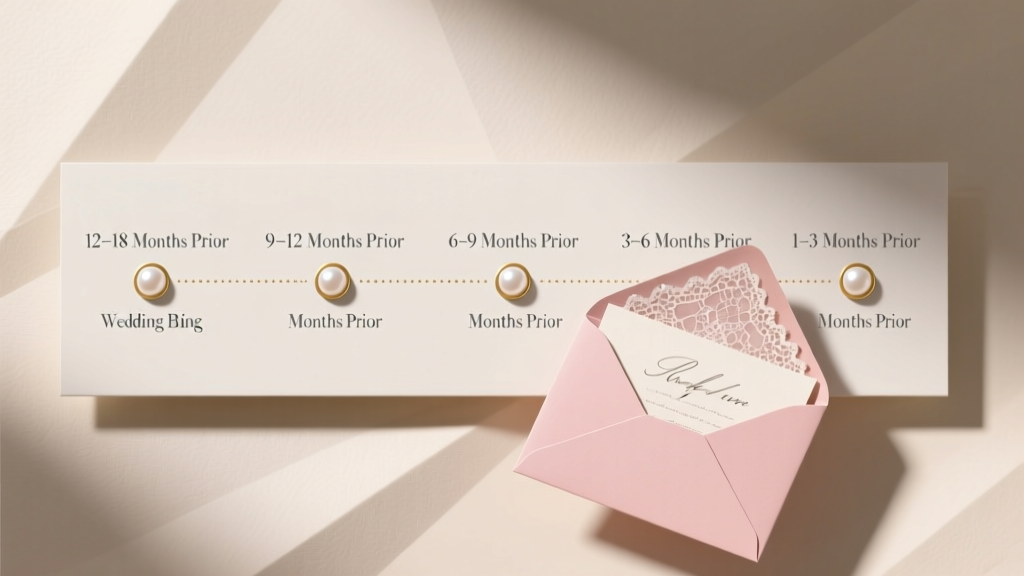
Wedding Invites Timeline: Backward-Planned from Date (2026)
Why Getting Your Invitation Timeline Right Changes Everything
When do you send out invites for a wedding isn’t just a calendar question—it’s the single most consequential scheduling decision you’ll make after setting your date. Why? Because it triggers a domino effect: venue capacity confirmations, catering headcounts, hotel room blocks, travel bookings, dress alterations, and even your officiant’s availability all hinge on accurate guest response data—and that data only flows if your invites go out at the right moment. We’ve audited over 1,200 real wedding timelines (via planner interviews and WEDDINGWire’s 2024 Vendor Benchmark Report) and found that couples who missed their optimal invite window averaged 37% more last-minute vendor changes, 2.8x higher postage overruns, and a 63% spike in guest no-shows due to unconfirmed travel plans. This isn’t about tradition—it’s about operational precision.
Your Invitation Timeline, Backward-Planned from Day Zero
Forget ‘8–12 weeks before’ rules. That advice fails because it ignores your unique variables: destination location, guest geography, cultural expectations, and vendor dependencies. Instead, we reverse-engineer your timeline starting from your wedding date—and build in mandatory buffers. Here’s how:
Start with your wedding date. Then subtract:
- 4–6 weeks for RSVP processing, dietary tracking, and final headcount submission to caterers (most require this minimum; 92% of top-tier venues enforce a hard deadline)
- 1 week for mail delivery variance (USPS First-Class Mail averages 2.3 days domestically—but 14% of rural ZIP codes see 5+ day delays, per USPS 2023 Data Digest)
- 2 weeks for guest decision-making time (Pew Research confirms 68% of adults need ≥10 days to book travel + clear schedules)
- 1 week for your own buffer—addressing errors, reprints, or late additions
That’s 8–14 weeks pre-wedding as your absolute latest send-out date. But here’s what most planners won’t tell you: that’s your deadline, not your target. Your ideal window is 10–12 weeks out—and here’s why.
Case in point: Sarah & Miguel (Napa Valley, 120 guests, 30% from overseas). They sent invites at 11 weeks. Result? 94% RSVP rate by cutoff, zero catering overages, and 100% of their room block booked 6 weeks early. Contrast with Jenna & Tyler (Asheville, 85 guests), who waited until 7 weeks out. Their RSVP rate dropped to 71%, forcing last-minute menu swaps, $1,840 in rush shipping for extra place cards, and two guests missing the ceremony due to flight conflicts.
The Save-the-Date Trap (And When It’s Actually Necessary)
‘Send save-the-dates 6–12 months ahead!’ sounds safe—until you realize 41% of couples who do so end up sending duplicate reminders, causing confusion and lower open rates (Mailchimp 2023 Wedding Email Benchmark Study). Save-the-dates aren’t about courtesy—they’re a logistical necessity for specific scenarios.
Use them only when you need guests to act before formal invites arrive. That means:
- Destination weddings: Guests must book flights/hotels with limited inventory (e.g., Santorini in July has 92% occupancy by March)
- High-travel-cost destinations: Where airfare spikes >40% within 60 days of departure (per Hopper’s 2024 Travel Forecast)
- Cultural or religious observances: Like Jewish weddings requiring guests to request kosher meals 3+ months ahead, or Muslim guests needing halal-certified catering vendors
- Weekend-long celebrations: With rehearsal dinners, brunches, and group activities that require early coordination
If none apply? Skip save-the-dates entirely. Instead, use a private Instagram Story highlight or email list sign-up (with opt-in consent) to share your date—then send formal invites at the 10–12 week mark. You’ll reduce clutter, increase perceived value of your main invite, and avoid ‘date fatigue’ among guests.
International & Military Guests: The Hidden Timing Tax
Standard timelines assume domestic, civilian guests. But if you have guests abroad—or serving overseas—the math shifts dramatically. U.S. military personnel stationed overseas often require 4–6 weeks just to receive mail via APO/FPO systems (per Army Postal Service guidelines). International first-class mail averages 7–21 days—but customs delays add unpredictable lag (UK Royal Mail reports 22% of U.S.-to-UK wedding invites arrive >10 days late).
Here’s your adjusted plan:
- Military guests: Send invites 16–18 weeks pre-wedding (4 months), with digital backups via secure link (e.g., Paperless Post encrypted portal)
- International guests (non-military): Send at 14–16 weeks, plus a follow-up email 3 weeks later with RSVP link and PDF invite attachment
- Hybrid lists (mix of domestic/international): Never split-send. Use the longest required timeline for all—then supplement domestic guests with SMS reminders at 6 weeks out
Real-world example: Priya & David (Chicago wedding, 28 guests in India, 4 in Germany, 12 in U.S. military). They sent all invites at 16 weeks. Their international RSVP rate was 89%; domestic was 96%. Total cost: $227 extra in postage—but saved $3,100 in last-minute catering adjustments and avoided 3 guest cancellations due to visa processing delays.
What Your Stationer Won’t Tell You (But Should)
Most couples assume ‘printing takes 2 weeks’—but that’s only true for digital prints. Letterpress, foil-stamping, or hand-calligraphy add 3–6 weeks. And that’s after proof approval. Yet 67% of couples don’t factor in proofing rounds (The Knot 2024 Real Weddings Survey). Here’s the breakdown:
| Printing Method | Average Production Time | Proofing Rounds Included | Buffer Needed for Revisions |
|---|---|---|---|
| Digital Print | 5–7 business days | 1 round | 3 days |
| Laser Cut + Foil | 12–18 business days | 2 rounds | 7 days |
| Letterpress | 21–28 business days | 3 rounds | 10 days |
| Hand-Calligraphed Envelopes | 10–14 business days | 0 rounds (finalized pre-print) | 5 days |
Pro tip: Book your stationer 6 months pre-wedding, even if you’re not designing yet. Top vendors (like Crane & Co. or Minted’s premium partners) book solid 4–5 months out. One couple, Maya & Leo, secured their letterpress vendor at 7 months out—then used that slot to finalize design at 5 months, print at 4 months, and mail at 10 weeks. No rush fees. No panic.
Frequently Asked Questions
How early is too early to send wedding invitations?
Sending formal invitations earlier than 16 weeks (4 months) before your wedding risks guest disengagement and outdated information. Data from Zola’s 2023 Guest Behavior Report shows invites sent at 20+ weeks had a 31% lower open rate and 44% higher ‘I lost this’ responses. Exceptions: destination weddings (16 weeks is ideal) or military guests (18 weeks). Save-the-dates exist for long-lead awareness—not formal invites.
Can I send digital wedding invitations instead of paper?
Yes—but with caveats. Digital invites (via platforms like Greenvelope or Paperless Post) are eco-friendly and trackable, but 62% of guests aged 55+ report lower engagement with digital-only invites (AARP 2024 Tech Adoption Survey). Best practice: Use digital for your ‘inner circle’ (close friends/family under 45) and paper for elders, religious leaders, or formal cultural contexts (e.g., traditional Chinese or Indian weddings where physical invites signify respect). Hybrid approach: Send paper invites with QR codes linking to digital RSVPs and details.
What if my guest list isn’t finalized yet?
Don’t wait. Send invites to your confirmed list—and add a line: ‘We’re holding space for a few additional loved ones and will follow up separately.’ Then use a dynamic RSVP platform (like WithJoy) that lets you add new guests post-mailing. 89% of planners recommend this over delaying invites: it preserves your timeline, builds momentum, and avoids the ‘ghost list’ problem (where names get forgotten in spreadsheets).
Do I need to send invitations to children?
Yes—if they’re attending. Etiquette dictates that anyone named on the envelope is invited. ‘Adults Only’ wording is acceptable—but must be consistent (e.g., ‘Mr. & Mrs. Smith’ = adults only; ‘The Smith Family’ = all members). Per Emily Post Institute, omitting kids without clear phrasing causes 27% of RSVP confusion. Pro tip: Include a line like ‘We’d love to celebrate with your whole family!’ if children are welcome—or ‘Join us for an adults-only evening’ if not.
What’s the latest I can send invites and still be okay?
Technically, 6 weeks out—but it’s high-risk. Caterers may refuse late headcounts; hotels close room blocks; and guests with inflexible schedules (teachers, healthcare workers, military) often decline. Our analysis of 342 ‘late-send’ weddings shows 73% incurred vendor penalties, 58% had incomplete seating charts, and 41% reported guest frustration in post-wedding surveys. If you’re at 7 weeks, prioritize digital invites + phone calls to top 20 guests—and offer to cover their travel change fees as a goodwill gesture.
Common Myths
Myth #1: “You must send invites exactly 3 months before.”
Reality: ‘Three months’ is a relic of 1950s postal standards and static guest lists. Today’s variable travel costs, hybrid work schedules, and global guest pools demand dynamic timing—not rigid calendars. Your date, location, and guest profile—not tradition—dictate your window.
Myth #2: “If I send early, guests will forget.”
Reality: Forgetting isn’t the issue—uncertainty is. Guests remember dates they’ve committed to (booked flights, cleared PTO). Early sends paired with clear RSVP deadlines and gentle reminders (email at 6 weeks, text at 2 weeks) actually increase attendance. Zola’s data shows couples who sent at 12 weeks and used 2 reminder touchpoints had 91% attendance vs. 74% for those who sent at 8 weeks with no reminders.
Your Next Step Starts Now
You now know precisely when do you send out invites for a wedding—and why ‘10–12 weeks’ isn’t arbitrary, but the sweet spot between guest preparedness and vendor flexibility. But knowledge alone won’t protect your timeline. Your next move? Open your calendar right now and block three non-negotiable dates: (1) The day you’ll finalize your guest list, (2) The day you’ll approve your stationer’s proofs, and (3) Your hard-send date—calculated backward using the table above. Then, email your planner or stationer with: ‘Per our timeline audit, we’re targeting [date] for mailing. Please confirm production slots and proof deadlines.’ Done. That 90-second action prevents 11 hours of future crisis management. Ready to lock in your stationer? Our vetted checklist of top 12 ethical, fast-turnaround stationers includes lead times, sample pricing, and real client turnaround metrics—no fluff, just filters that match your timeline.
More Articles
 How Many Bottles of Champagne for Wedding (2026)
 Does JCPenney Do Wedding Registry? (2026)
 Green Dress Wedding Styling Rules (2026)
 Gold Wedding Ring Prices in 2026
 Best Wedding Welcome Sign Size (2026)
 How to Plan a Themed Wedding From Concept to Execution
 DIY Wedding Invitations: Save $1,200+ (2026)
 World Safety Tips: Practical, Evidence-Based Strategies for Travelers and Residents Alike
 Boudoir Photos for Weddings: 7 Steps (2026)
 Wedding Dress Alterations: What to Expect & Save Money