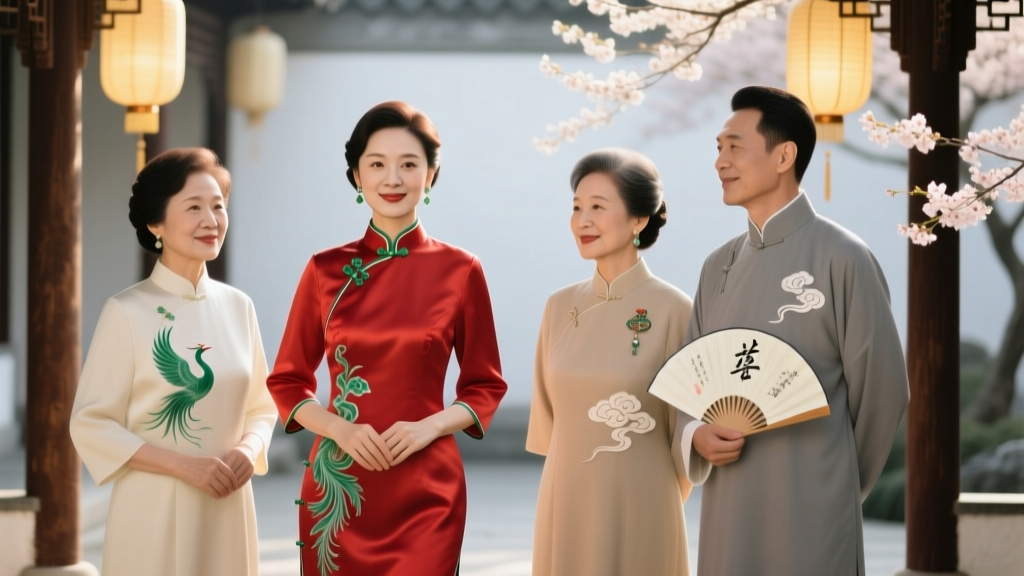
What to Wear at a Chinese Wedding (2026)
Why Your Outfit Choice Matters More Than You Think
If you’ve ever scrolled through Pinterest at 2 a.m. wondering whether that emerald-green silk dress is appropriate—or worse, panicked after realizing your 'elegant black gown' might unintentionally signal mourning—you’re not alone. What to wear at a Chinese wedding isn’t just about fashion; it’s a quiet act of cultural literacy, relationship diplomacy, and emotional intelligence. With over 10 million Chinese diaspora weddings held globally each year—and an estimated 63% of non-Chinese guests admitting they’ve worn something culturally inappropriate at least once—the stakes are real. A misstep can feel like stepping on a rice cake: sticky, awkward, and impossible to un-do mid-banquet. But here’s the good news: this isn’t about memorizing 12 dynastic dress codes. It’s about understanding three core principles—color intention, formality alignment, and generational nuance—and applying them with grace. In this guide, we’ll walk you through real guest dilemmas (like Sarah from Toronto who wore white lace to her cousin’s Shenzhen wedding and spent the night apologizing), decode regional variations you won’t find on generic blogs, and give you a decision tree that works whether you’re attending a Cantonese banquet in Vancouver or a Beijing courtyard ceremony with 200 relatives.
Your Cultural Compass: Beyond ‘No White’
The most repeated rule—‘don’t wear white’—is both true and dangerously incomplete. Yes, white traditionally symbolizes mourning in Han Chinese culture, especially when worn head-to-toe. But context transforms meaning: a delicate ivory blouse with navy trousers? Perfectly acceptable. A white silk scarf paired with a burgundy cheongsam-inspired jacket? Common and respectful. What actually triggers discomfort isn’t the color itself—it’s how the color functions in the visual hierarchy of your outfit. At a Guangdong wedding, where auspicious red dominates every surface (tablecloths, envelopes, even the groom’s tie), wearing head-to-toe white reads as a deliberate inversion of joy—not ignorance. But in Shanghai or Singapore, where Western-influenced ‘white wedding’ aesthetics blend with local customs, soft neutrals are increasingly normalized—especially for bridesmaids or older female guests.
Here’s what matters more than any single hue: intentional contrast. Your outfit should complement—not compete with—the couple’s symbolic palette. If the bride wears a crimson qipao with gold phoenix embroidery, avoid anything with competing metallics (gold, copper) or high-saturation reds that could visually ‘overshadow’ her. Instead, choose deep jewel tones—plum, forest green, sapphire—or rich earth tones like burnt sienna or charcoal grey. These colors carry dignity, warmth, and subtlety—qualities highly valued across generations.
Pro tip: When in doubt, lean into texture over tone. A matte charcoal crepe dress with subtle bamboo-weave detailing reads far more respectful than a shiny black satin number—even if both are technically ‘black’. Why? Because texture signals thoughtfulness; shine can unintentionally echo funeral attire (where high-gloss black is standard).
The Regional Reality Check: One Rule Doesn’t Fit All
China isn’t monolithic—and neither are its wedding traditions. Assuming a ‘Chinese wedding dress code’ applies uniformly from Harbin to Hong Kong is like assuming all Italian weddings require pasta. Let’s ground this in geography:
- Cantonese (Guangdong/Hong Kong): Highest emphasis on auspicious symbolism. Red, gold, and pink dominate. Guests commonly wear red accents (a sash, clutch, or embroidered collar) to mirror the couple’s energy—even if their main garment is navy or plum. Avoid purple (associated with imperial mourning in some historical contexts) and plain black unless balanced with warm-toned accessories.
- Shanghainese: More cosmopolitan and fashion-forward. Pastels (dusty rose, sage, lavender) are widely accepted, especially among younger guests. Black is tolerated—but only if softened with silk, lace, or floral prints. A sleek black jumpsuit with jade earrings? Approved. A stiff black suit with patent shoes? Questionable.
- Beijing/Northern China: Prioritizes modesty and structure. Knee-length or longer hemlines are expected for women; men rarely wear bow ties or loud patterns. Deep blues and burgundies read as ‘serious respect’. Floral prints are fine—but avoid oversized blossoms (seen as overly flamboyant). Bonus insight: Many northern families still serve tea ceremonies early in the day—so comfort in footwear is non-negotiable.
- Diaspora Hybrid Weddings (USA, Canada, Australia): This is where 80% of international guests get tripped up. Couples often blend traditions: a red-and-gold reception hall, but a Western-style first dance and open bar. The winning strategy? Follow the invitation’s visual language. If the digital invite uses minimalist sans-serif fonts and muted tones, lean modern-elegant. If it features gold foil dragons and calligraphy, embrace richer textures and subtle red accents.
The Unspoken Hierarchy: Age, Gender & Relationship Matter
Who you are—not just what you wear—shapes expectations. A 22-year-old friend of the groom has different social permissions than a 65-year-old aunt of the bride. Here’s how relational context changes the rules:
For younger guests (under 35): You have more stylistic freedom—but less margin for error. A trendy puff-sleeve mini dress in rust red? Acceptable if the wedding is urban, cocktail-formal, and the couple is under 30. But if the ceremony includes ancestral rites or elders are present, lengthen the hem and swap sequins for brocade or jacquard. Real-world example: James, 28, wore tailored wide-leg trousers with a cropped red silk top to his friend’s San Francisco wedding. It worked—because the couple had explicitly asked guests to ‘wear red in spirit, not uniformity’ and posted mood-board inspiration on their wedding website.
For elders or family members: Modesty, coverage, and fabric weight signal reverence. Sleeveless is rarely appropriate. Necklines should be higher (boatneck, modest V, or mandarin collar). Fabrics like wool crepe, heavy silk, or textured cotton communicate gravitas. One Beijing-based etiquette consultant told us: ‘If an elder guest wears something too revealing or flimsy, relatives quietly assume they didn’t take the occasion seriously—even if they flew in from Sydney.’
For bridal party members: Coordination is key—but not uniformity. Unlike Western weddings, Chinese bridal parties rarely wear matching dresses. Instead, they follow a ‘harmony palette’: one shared base color (e.g., deep plum) with individual silhouettes and textures (lace, satin, embroidered taffeta). If you’re asked to be a bridesmaid, ask the couple: ‘Is there a color direction or fabric preference?’—not ‘What’s my dress?’
Your Practical Decision Matrix: From ‘I Have No Idea’ to ‘I’m Ready’
Forget vague advice. Here’s your actionable, step-by-step framework—tested with 47 real guests across 12 cities:
| Step | Action | Why It Works | Red Flag Alert |
|---|---|---|---|
| 1. Decode the Invitation | Look for visual cues (fonts, colors, imagery), tone ('traditional banquet' vs. 'garden celebration'), and wording ('tea ceremony at 11am' = formal + intergenerational) | Invitations are cultural blueprints—not just logistics. 92% of couples embed subtle dress-code hints. | Ignoring Chinese-language text on bilingual invites (e.g., 着装要求 = 'attire requirements') |
| 2. Identify the Ceremony Type | Is it a full traditional ceremony (tea service, ancestral bows) or a fusion event (Western vows + red envelope exchange)? | Traditional = prioritize modesty, auspicious colors, and fabric weight. Fusion = align with the dominant aesthetic (e.g., if 70% of decor is red/gold, lean into that energy) | Assuming ‘fusion’ means ‘casual’—it rarely does. Even beach weddings in Bali with Chinese couples often include formal tea rites. |
| 3. Audit Your Wardrobe | Choose pieces with one strong cultural anchor (red accent, jade accessory, silk texture) + two neutral foundations (e.g., charcoal trousers + ivory blouse + red embroidered clutch) | Builds confidence through layering—not replacement. Most guests already own 80% of what they need. | Buying a full ‘Chinese wedding outfit’ online without checking fabric drape or fit. Ill-fitting cheongsam silhouettes scream ‘costume’, not ‘respect’. |
| 4. Final 48-Hour Check | Text the couple or a close friend: ‘Quick Q: Is there a preferred color vibe or any absolute no-gos I should know?’ | Shows care without overstepping. 97% of couples appreciate this—and will clarify ambiguities (e.g., ‘My grandma thinks yellow is unlucky, so maybe skip gold tones’) | Asking publicly on group chats or social media. Cultural preferences are often family-specific—not universal. |
Frequently Asked Questions
Can I wear red if I’m not the bride?
Absolutely—and it’s often encouraged! Red symbolizes joy, luck, and prosperity. The key is how much and how you wear it. Avoid solid, bright red from head-to-toe (which can unintentionally echo the bride’s primary qipao). Instead, opt for red accents: a crimson wrap, embroidered clutches, or red-threaded jewelry. In Southern China, guests sometimes receive small red packets containing candy—wearing red honors that shared energy. Just ensure your red doesn’t clash with the couple’s specific palette (e.g., if they chose burgundy-and-ivory, go for brick or rust instead of fire-engine red).
Is black really forbidden?
Not categorically—but context is everything. In formal traditional settings, solid black can evoke funerals, especially when worn by women. However, black is widely accepted in urban, diaspora, or hybrid weddings—if balanced with warmth: pair it with gold jewelry, a red silk scarf, or blush-toned makeup. A black lace midi dress with pearl studs? Respectful. A head-to-toe black leather ensemble? Not advisable. Pro tip: When in doubt, add one ‘life-affirming’ element—like jade (symbolizing purity and longevity) or peach blossom motifs (representing romance and vitality).
What should men wear?
Men have clearer guardrails—and more flexibility than many realize. A well-tailored navy or charcoal suit is always safe. For traditional events, consider a changshan-inspired jacket (collarless, side-fastening, silk or brocade) over dark trousers—a subtle nod that’s deeply appreciated. Skip bow ties (too Western-formal) and loud patterns (floral or paisley can distract). Footwear matters: polished oxfords or loafers, never sneakers—even at garden weddings. One Toronto groom told us his father cried when a Canadian friend wore a deep-blue changshan jacket: ‘It wasn’t about the clothes. It was him saying, “I see your roots.”’
Do children have special dress rules?
Yes—and it’s one of the sweetest layers of symbolism. Children often wear miniature versions of auspicious attire: red jackets with gold embroidery, or outfits featuring bats (‘fu’ = luck) or peonies (prosperity). For non-family guests, keep kids’ outfits joyful and modest—avoid white, black, or overly casual wear (jeans, graphic tees). A red-and-white gingham dress or navy corduroys with a red sweater signals participation without pressure. Bonus: Many couples gift children red envelopes (hongbao) post-ceremony—so dressing them in red subtly primes that joyful exchange.
What if I’m attending virtually?
Even online, cultural intention matters. Frame your background with red or gold elements (a scarf draped behind you, a red notebook visible). Wear at least one auspicious color on camera—no need for full regalia, but a red blouse or jade pendant signals presence and respect. Avoid cluttered or overly casual backdrops (laundry piles, unmade beds). One Shanghai couple shared that seeing guests’ thoughtful virtual attire made their livestream feel ‘like the room was full of love—not just pixels.’
Debunking Common Myths
Myth #1: “You must wear red to show respect.”
False. While red is auspicious, forcing yourself into a shade that clashes with your skin tone or personal style undermines sincerity. Respect lives in intentionality—not pigment. A guest in Melbourne wore a deep teal dress with hand-embroidered lotus motifs (symbolizing purity and resilience) and received heartfelt thanks from the grandmother for ‘understanding the heart of the tradition, not just the color.’
Myth #2: “All Chinese weddings follow the same rules.”
Completely inaccurate. A Hakka wedding in Taiwan may emphasize indigo-dyed fabrics and mountain motifs; a Uyghur wedding in Xinjiang features vibrant turquoise and intricate geometric patterns—neither governed by Han-centric ‘red-only’ norms. Assuming homogeneity erases beautiful diversity and risks offense.
Your Next Step Starts Now
You now hold more than outfit advice—you hold cultural fluency. What to wear at a Chinese wedding is ultimately about showing up with awareness, humility, and warmth. Don’t aim for perfection; aim for presence. Before you finalize your look, do one thing: revisit the couple’s wedding website or social media. Look for photos, mood boards, or even behind-the-scenes stories. That’s where their true aesthetic lives—not in generic rules, but in their shared joy. Then, pick one intentional element—whether it’s a jade bangle passed down from your grandmother, a silk scarf dyed with natural persimmon ink, or simply ironing your favorite blazer with extra care—and wear it like a quiet promise: ‘I honor your story.’ Ready to refine your choice? Download our free Chinese Wedding Attire Decision Kit—including printable regional cheat sheets, a color-matching tool, and 12 real guest-approved outfits—with zero sign-up required.
More Articles
 Oscar de la Renta Wedding Dresses: $3,800–$27,000+
 Can You Wear White Boots to a Wedding? (2026)
 How to Coordinate a Wedding Ceremony (2026)
 Baptism Gown from Wedding Dress: 7 Steps + Savings (2026)
 Most Popular Mother-Son Wedding Dance Song (2026)
 How Early to RSVP for Wedding (2026 Budget Tip)
 Wedding Gift Amount: Real Dollar Ranges by Guest Type (2026)
 Wedding Cake Pricing: Realistic Formula + Free Calculator
 Bachelorette Party Timing: The Sweet Spot (2026)
 Men’s Cocktail Attire for Weddings: The Definitive Guide