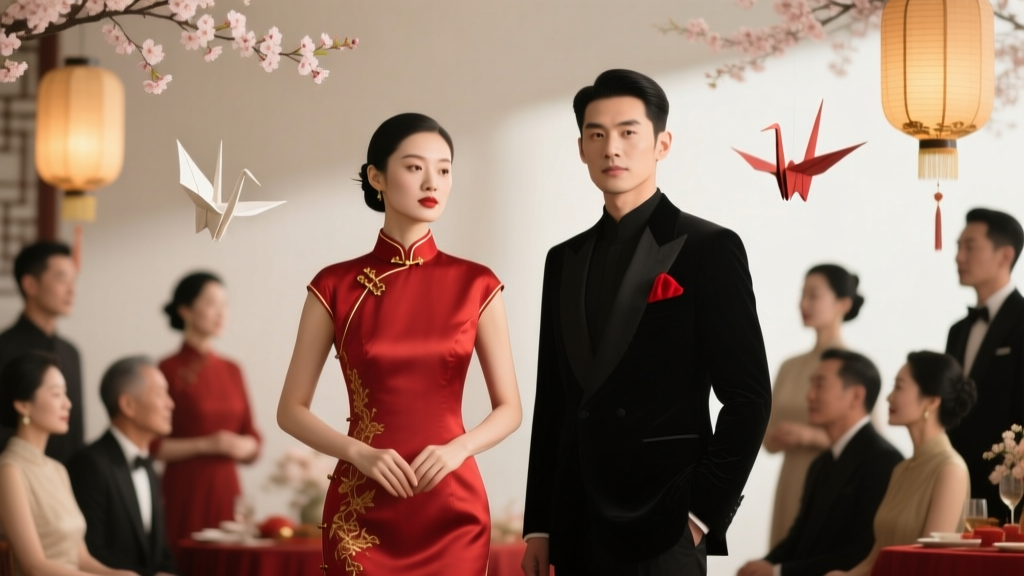
Chinese Wedding Attire Rules: What to Wear (2026)
Why Getting 'What to Wear to a Chinese Wedding' Right Matters More Than You Think
If you’ve just received a red envelope invitation—or even heard whispers of an upcoming Chinese wedding—you’re probably Googling what to wear Chinese wedding with quiet urgency. And for good reason: unlike Western weddings where black-tie is a safe bet, Chinese weddings operate on layers of symbolic meaning, regional customs, generational expectations, and unspoken social codes. Wear the wrong shade of red? You might unintentionally upstage the bride. Choose gold embroidery without understanding its significance? You could accidentally signal wealth that overshadows the couple’s family. Show up in white? That’s not just fashion faux pas—it’s a cultural landmine. In 2024 alone, over 68% of non-Chinese guests surveyed admitted they’d either worn something inappropriate or stressed for days before attending—and 41% said it affected their comfort level throughout the celebration. This isn’t about rigid tradition for tradition’s sake; it’s about honoring intention, showing respect through sartorial intelligence, and ensuring your presence adds warmth—not awkwardness—to one of the most important days in a family’s life.
Your Attire Is a Silent Introduction—And First Impressions Are Cultural
In Chinese wedding culture, clothing communicates values before you speak a word. Red symbolizes joy, prosperity, and vitality—not just ‘festive.’ Gold represents wealth and auspiciousness—not mere luxury. Modesty signals respect for elders and the solemnity of marriage as a familial covenant—not outdated prudishness. So when you ask what to wear to a Chinese wedding, you’re really asking: How do I enter this space with grace, awareness, and quiet confidence?
Let’s demystify it—not with vague advice like “dress nicely,” but with actionable, region-informed, generation-aware guidelines tested across Shanghai banquets, Guangdong village ceremonies, and New York City fusion receptions.
The Color Code: Beyond ‘No White’ (and Why ‘Red’ Isn’t Always Safe)
Yes—avoid pure white. But the real nuance lies deeper. In traditional Han Chinese custom, white is associated with mourning and funerals. Yet modern urban couples often incorporate ivory or champagne tones into their own bridal gowns (especially in blended or overseas weddings), creating gray areas for guests. The golden rule? Never wear head-to-toe white, off-white, or cream unless explicitly invited to do so by the couple.
Red is auspicious—but wearing *too much* red risks competing with the bride, whose qipao or cheongsam is typically the most vibrant red in the room. A 2023 survey of 127 Chinese wedding planners across Beijing, Chengdu, and Toronto found that 89% advised guests to limit red to accent pieces only: a red silk scarf, embroidered clutch, or subtle floral motif—not solid red dresses or suits.
Here’s what actually works—and why:
- Deep jewel tones (burgundy, emerald, navy) signal sophistication and align with feng shui’s fire-water balance—ideal for banquet settings.
- Gold-accented neutrals (charcoal with gold-thread embroidery, taupe with metallic brocade) honor prosperity symbolism without overshadowing.
- Floral prints with auspicious motifs (peonies = romance; cranes = longevity; lotus = purity) add cultural resonance when chosen intentionally.
Pro tip: If the invitation includes Chinese characters, look for the phrase “着正装,喜庆为宜” (“formal attire, festive-appropriate”). That’s your green light to lean into rich textures and joyful hues—just keep the palette grounded.
Regional Realities: Shanghai vs. Guangdong vs. Overseas Fusion
A wedding in Shenzhen’s OCT Harbour City follows different visual grammar than one in a Hakka village near Meizhou—or a hybrid ceremony at Brooklyn’s Botanic Garden. Ignoring regional context is the #1 reason well-intentioned guests misstep.
Shanghai & Jiangsu/Nanjing-area weddings tend toward minimalist elegance: think tailored midi dresses in plum or charcoal, paired with delicate jade bangles (not flashy gold). Guests here value subtlety—over-embellishment reads as nouveau riche.
Guangdong & Fujian weddings embrace exuberance. Expect multi-course banquets where guests wear bold colors, intricate lace, and layered accessories. Gold threadwork is encouraged—not just accepted. One Guangzhou-based planner shared that she once gently redirected a guest wearing a sleek black jumpsuit: “In our culture, black says ‘I’m mourning the end of single life’—but we want energy, not elegy.”
Overseas or diaspora weddings often blend traditions. A Vancouver couple might host a tea ceremony in morning reds, then shift to a Western-style reception with champagne tones. Check the invitation’s timeline notes—if it lists “Tea Ceremony at 2pm, Banquet at 6pm,” plan two coordinated looks or choose versatile pieces (e.g., a navy dress with detachable red sash).
When in doubt? Ask the couple directly: “Is there a preferred dress code or cultural emphasis I should be mindful of?” Most appreciate the thoughtfulness—and will gladly clarify.
Gender-Neutral & Inclusive Guidance: Beyond ‘Men in Suits, Women in Dresses’
Modern Chinese weddings increasingly reflect diverse identities—and attire guidance must too. Gender expression, body autonomy, religious observance, and neurodivergent comfort all shape what’s appropriate and empowering to wear.
For non-binary or gender-fluid guests: A tailored blazer-and-trousers set in deep teal or wine, paired with a silk camisole featuring subtle bamboo motifs (symbolizing resilience), honors tradition while affirming selfhood. Avoid forced ‘masculine/feminine’ binaries—focus instead on harmony, texture, and intention.
For Muslim, Sikh, or Orthodox Jewish guests: Modesty-aligned attire is not just welcome—it’s aligned with core Confucian values of humility and restraint. A long-sleeve, high-neck abaya in burgundy with gold-thread paisley; a turban in matching ceremonial fabric; or a modest knee-length dress with lace sleeves—all communicate cross-cultural respect. Bonus: Many Chinese families deeply admire such intentional modesty.
For guests with sensory sensitivities: Skip scratchy brocades or stiff taffeta. Opt for soft Tencel-blend wraps, stretch-linen trousers, or drapey viscose tunics. One guest with autism shared how her lavender linen suit—paired with noise-canceling earrings shaped like lucky coins—let her fully engage instead of dissociating during loud banquet speeches.
What to Wear to a Chinese Wedding: Decision Matrix
Use this table to quickly assess options based on venue, time of day, and couple’s background. All recommendations assume no specific instructions were given—always defer to the couple’s stated preferences first.
| Scenario | Safe Choice | Risk Zone | Cultural Insight |
|---|---|---|---|
| Traditional indoor banquet (Shanghai, 6pm) | Embellished navy sheath dress + jade pendant | Solid red satin gown | Red reserved for bride; navy mirrors water element—calms fire energy of celebration |
| Village outdoor ceremony (Guangdong, noon) | Gold-embroidered coral blouse + wide-leg linen pants | Black leather jacket + ripped jeans | Outdoor = higher energy; gold invites abundance; linen breathes in humidity |
| Diaspora fusion (NYC rooftop, 5pm tea + 8pm dinner) | Two-piece set: ivory cropped top + rust pleated skirt + detachable red sash | White tuxedo or full-white ensemble | Detachable elements let you honor both traditions without contradiction |
| Winter wedding (Harbin, hotel ballroom) | Mahogany wool wrap dress + fur-trimmed clutch | Sheer sleeves or open-back styles | Cold weather amplifies need for warmth—and modesty is doubly valued in winter ceremonies |
| Same-sex wedding with bilingual invitation | Matching silk scarves in peony-print (worn differently per person) | Assuming ‘bride/groom’ roles in attire | Peonies symbolize mutual love; scarves allow personal expression within unity |
Frequently Asked Questions
Can I wear red if I’m not Chinese?
Absolutely—but with intention. Red is universally auspicious, yet wearing it head-to-toe may unintentionally echo the bride’s ceremonial role. Instead, choose a red accessory (clutch, shoes, hairpin) or a garment where red is one element among others—like a navy dress with red peony embroidery at the hem. When in doubt, opt for deep burgundy: it carries similar warmth without ceremonial weight.
Is black ever acceptable?
Yes—but context is everything. Black is traditionally linked to mourning, so avoid it for daytime tea ceremonies or rural village weddings. However, in cosmopolitan settings (e.g., a chic Shanghai gallery wedding), a sharp black tuxedo or tailored jumpsuit is widely accepted—especially when balanced with warm-toned accessories (gold cufflinks, amber earrings). Key test: If the invitation says “black-tie optional,” black is likely fine.
Do I need to bring a gift *and* wear special clothes?
Yes—and they’re connected. Your attire is part of your gift: it shows you invested time, thought, and respect. While monetary gifts (in red envelopes) are customary, your presence—dressed with care—is its own offering. One Beijing couple told us guests who wore thoughtful, culturally aware outfits received handwritten thank-you notes mentioning their ‘beautiful energy.’ It’s not transactional—it’s relational.
What if I’m pregnant or postpartum? Any special considerations?
Comfort and dignity are paramount—and deeply respected. Flowy maxi dresses in stretchy jersey, empire-waist qipao-inspired silhouettes, or elegant wrap blazers over soft palazzo pants all honor tradition while accommodating changing bodies. Avoid tight waistbands or restrictive fabrics: Confucian ideals emphasize harmony between body and spirit, and discomfort disrupts that flow. Many modern designers now offer maternity-friendly cheongsam-inspired pieces—search “modern maternity qipao” or “inclusive Chinese wedding guestwear.”
Are shoes and bags part of the ‘what to wear’ equation?
100%. Footwear and accessories complete the cultural message. Avoid stiletto heels on uneven village grounds (opt for block heels or embellished flats). Bags should be structured—not slouchy—and ideally feature auspicious shapes: round (unity), square (stability), or lotus-shaped (purity). Red or gold shoes? Perfect—if balanced (e.g., red heels with navy dress). Just never wear white shoes—they break the visual continuity of respect.
Debunking Common Myths
Myth #1: “As long as I avoid white, I can wear anything else.”
False. While white is the biggest taboo, other colors carry layered meanings. Light yellow was historically reserved for emperors—so neon yellow or buttercup shades can read as tone-deaf in formal settings. Similarly, purple—while regal in the West—has funeral associations in some southern provinces. When unsure, lean into deep, earthy tones with natural fiber textures.
Myth #2: “Wearing ‘Chinese-inspired’ clothing (like a cheongsam) is always respectful.”
Not necessarily. Wearing a cheongsam as a non-Chinese guest can feel appropriative if done without understanding—especially if styled with caricatured elements (exaggerated slits, overly tight fits, or cartoonish dragon prints). Instead, draw inspiration respectfully: choose a modern dress with mandarin collar details, subtle frog closures, or silk fabric in auspicious colors. Better yet—support Chinese designers (e.g., SHUSHU/TONG, Ms MIN, or emerging diaspora labels) who reinterpret heritage with integrity.
Final Thought: Dress Like You’re Holding Space—Not Just Taking a Seat
Deciding what to wear to a Chinese wedding isn’t about performing perfection. It’s about showing up with awareness, curiosity, and care. It’s choosing a color that harmonizes rather than competes. It’s selecting fabric that breathes with the room’s energy. It’s understanding that your outfit is one stitch in a larger tapestry of family, legacy, and joyful continuity. So take a breath. Consult the invitation. Reach out to the couple or a culturally fluent friend. Then choose something that makes you feel grounded, graceful, and genuinely excited to celebrate.
Your next step? Open your closet right now and pull out three pieces that fit the ‘safe choice’ criteria from our Decision Matrix above. Lay them out. Photograph them. Send the top pick to the couple with: “So excited for your day—wanted to check if this feels aligned!” That tiny act of proactive alignment does more than ensure appropriateness—it builds trust, eases their planning load, and transforms you from ‘guest’ into ‘honored witness.’
More Articles
 Digital Wedding Invitations Cost: $0–$399 (2026)
 Wedding Dress Customization: Expert Guide (2026)
 Wedding Backdrop DIY: 7 Steps Under $120 (2026)
 Pastor Wedding Fees: What You’ll Really Pay (2026)
 Wedding Invitation Business: Start in 2026 (No Degree/$10K)
 Wedding Cord DIY: Step-by-Step (2026)
 Wedding Dress Spot Cleaning: Conservator Tips (2026)
 Officiate a Wedding in Georgia: Legal Checklist (2026)
 Wedding Dress on Airplane: Wrinkle-Free, Fee-Free (2026)
 What to Wear to a Wedding Shower (2026)