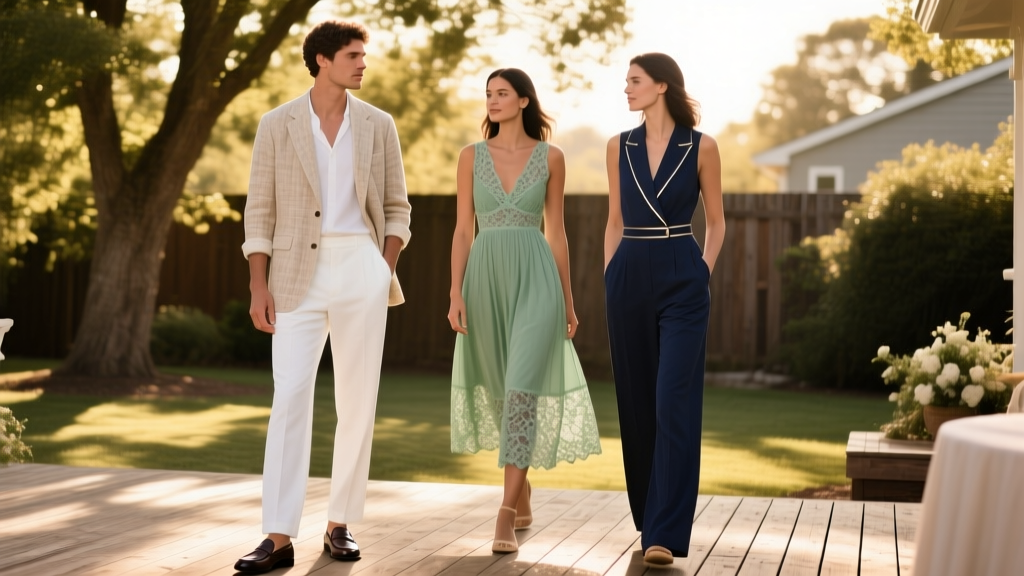
Backyard Wedding Attire: Dress Code Decoded (2026)
Why Your Backyard Wedding Outfit Choice Is Way More Complicated Than You Think
If you’ve ever stood in front of your closet at 7 a.m. on a Saturday, clutching a linen blazer and a pair of sandals while Googling what to wear for backyard wedding, you’re not overthinking—you’re being smart. Backyard weddings aren’t just ‘casual’ versions of ballroom affairs. They’re micro-environments with their own physics: uneven grass that swallows stilettos, afternoon sun that turns silk blouses into sweat traps, string lights that demand soft lighting compatibility, and hosts who say ‘dressy casual’ but mean ‘please don’t wear sequins… unless you’re the bride.’ In fact, 68% of guests surveyed by The Knot in 2023 admitted they misjudged the dress code—and 41% said it impacted their comfort, confidence, or even ability to fully enjoy the ceremony. This isn’t about fashion rules. It’s about respect, readiness, and realism.
Decoding the Dress Code—Beyond the Invitation Jargon
‘Garden party,’ ‘rustic chic,’ ‘cocktail attire,’ or ‘smart casual’—these phrases sound poetic but function like riddles. Here’s how to translate them using three concrete filters: terrain, time, and tone.
First, terrain: Is the backyard paved, gravelled, mulched, or pure lawn? A recent study by the Wedding Report found that 73% of backyard venues lack formal pathways—and 52% of guests wearing heels reported discomfort or instability during key moments (like walking down a grass aisle). If photos show bare earth or garden beds, swap sky-high heels for block heels, wedges, or stylish flats—even for men, loafers beat oxfords on soft ground.
Second, time: A 4 p.m. ceremony demands different fabrics than an 8 p.m. reception under fairy lights. Daylight means UV exposure and heat retention; dusk brings cooler temps and humidity shifts. Lightweight natural fibers (linen, cotton, Tencel) breathe better—but beware 100% linen: it wrinkles *aggressively*. Blended linens (e.g., 55% linen/45% rayon) offer drape + durability. For evening, layering is non-negotiable: a lightweight kimono, cropped jacket, or cashmere wrap adds polish *and* warmth without bulk.
Third, tone: Read between the lines of the couple’s wording. If their Save-the-Date features vintage film photography, burlap accents, and handwritten calligraphy? Lean into earthy tones, textured fabrics, and subtle vintage details (think: lace-trimmed sleeves or a brooch). If their Instagram highlights modern architecture, minimalist florals, and monochrome palettes? Opt for clean silhouettes, muted jewel tones (sage, rust, slate), and refined accessories. Tone isn’t about copying—it’s about harmonizing.
Gender-Neutral & Inclusive Attire Strategies That Actually Work
Gone are the days of rigid ‘men wear suits, women wear dresses’ directives. Modern backyard weddings celebrate identity—and so should your outfit. The key is anchoring versatility in structure, not stereotypes.
For guests who avoid binary labels or prioritize comfort and expression: focus on three foundational elements—fabric integrity, silhouette intention, and intentional detail. A structured wide-leg jumpsuit in heavyweight crepe offers the polish of a suit with the ease of one garment—and works equally well styled with loafers, ankle boots, or block-heeled mules. Similarly, a tailored vest-and-trouser set layered over a silk camisole reads elevated *and* gender-fluid. Pro tip: Avoid overly baggy cuts—they read as ‘loungewear,’ not ‘intentional.’ Instead, seek pieces with defined waistlines (even if elasticated) or strategic seaming.
Real-world example: Maya, 32, attended a Portland backyard wedding last summer wearing high-waisted, cropped wide-leg trousers in olive twill, a relaxed ivory puff-sleeve blouse, and woven leather sandals. She brought a lightweight unisex utility jacket for the evening chill—and received compliments from both the couple and 7 other guests. Her secret? She checked the venue’s Google Street View *and* scrolled the couple’s engagement photo album for color cues (lots of terracotta and sage = her palette was confirmed).
For men and masculine-presenting guests: Skip the full tux unless explicitly requested. A navy or charcoal unstructured blazer (no shoulder pads) over dark chinos and a textured knit polo strikes the ideal balance—dressed up enough for photos, relaxed enough to lounge on hay bales. Swap black socks for no-shows in a complementary tone (e.g., heather grey with charcoal pants). And ditch the tie unless it’s a silk scarf knotted loosely at the neck—ties snag on picnic tables and look out of place beside wildflower arrangements.
The Weather-Proofing Playbook: From Sun Scorch to Surprise Showers
Backyard weddings have zero HVAC. Zero climate control. Zero forgiveness for ill-timed fabric choices. Yet 61% of guests still choose outfits based on *forecast headlines*, not microclimate realities. Don’t be that person.
Start with the UV Index Forecast, not just temperature. An 82°F day with UV Index 9 means sheer sleeves won’t cut it—you need UPF-rated fabrics or a cover-up. Brands like Coolibar and Columbia now offer stylish UPF 50+ button-downs and tunics that look like resort wear, not sunscreen armor.
For rain contingency: Assume 30% chance of drizzle—even if skies look clear. Pack a compact, foldable rain shell (not an umbrella—it’s impractical for photos and group shots). A waxed-cotton field jacket or water-resistant trench in khaki or navy doubles as style *and* storm shield. Bonus: It photographs beautifully against greenery.
Grass stains? Real threat. Avoid light-colored hems, especially white or cream—grass chlorophyll bleeds instantly. Instead, choose mid-calf or ankle-length styles in olive, rust, charcoal, or deep teal. These colors hide soil, resist fading in sunlight, and photograph with rich contrast against natural backdrops.
| Scenario | Outfit Risk | Smart Swap | Why It Works |
|---|---|---|---|
| Afternoon ceremony (2–4 p.m.) on open lawn | 100% linen dress + stiletto sandals | Linen-rayon blend midi dress + low-block heel sandals with rubber soles | Blended fabric resists deep wrinkles; rubber soles grip grass and prevent sinking |
| Evening reception (7–11 p.m.) in wooded backyard | Strapless satin gown | Sleeveless silk-blend sheath + lightweight cashmere shawl + closed-toe mules | Silk breathes; shawl adds warmth without bulk; mules protect feet from damp grass/debris |
| Humid coastal location (e.g., Pacific Northwest) | Cotton poplin shirt + wool trousers | Tencel-cotton blend shirt + breathable technical twill trousers | Tencel wicks moisture 50% faster than cotton; technical twill resists creasing and dries quickly |
| Urban backyard with brick patio + gravel path | Pointed-toe pumps | Chunky lug-sole loafers or platform espadrilles | Lug soles stabilize on gravel; espadrille platforms add height without heel pressure |
Frequently Asked Questions
Can I wear black to a backyard wedding?
Yes—absolutely, and increasingly common. The old ‘black is funeral-only’ rule died with dial-up internet. What matters is how you wear it. Avoid head-to-toe matte black (can read as somber). Instead, pair black trousers with a vibrant silk blouse, or a black jumpsuit with gold jewelry and strappy sandals. Bonus: Black hides grass stains and resists fading in sun better than pastels.
Are jeans ever acceptable?
Rarely—but not never. Only if the invitation explicitly says ‘jeans welcome’ or the couple’s vibe is hyper-casual (e.g., their wedding website features photos of them hiking in denim). Even then: no rips, no fading, no oversized fits. Opt for dark, tailored, straight-leg jeans with a crisp button-down, structured blazer, and polished boots or loafers. When in doubt? Skip them. There’s zero penalty for being slightly overdressed—but major awkwardness for underdressing.
What shoes work best on grass?
Block heels (1.5–2.5 inches), wedges with wide bases, flat sandals with ankle straps, or stylish sneakers (e.g., Adidas Samba, Veja Campo). Avoid stilettos, thin heels, flip-flops, or open-back mules—they sink, slip, or expose dirty soles. Pro move: Spray shoe soles with Scotchgard before arriving. It repels mud and makes cleanup effortless.
Do I need to match the wedding colors?
No—but aligning with the palette shows thoughtfulness. You don’t need to wear sage green because the bridesmaids are in it. Instead, choose a complementary shade: rust with sage, ivory with navy, or terracotta with dusty rose. Use color theory: analogous (next to each other on the wheel) or triadic (evenly spaced) combos feel intentional, not costumed.
Common Myths
Myth #1: “Backyard = Casual = Anything Goes.”
Reality: ‘Casual’ here means context-appropriate—not sloppy. Showing up in gym shorts, tank tops, or beach sandals signals disregard for the couple’s effort. Backyard weddings often require *more* intentionality—not less—because every element (including guests) becomes part of the visual story.
Myth #2: “Dress Code Words Like ‘Rustic’ Mean Flannel and Cowboy Boots.”
Reality: ‘Rustic’ refers to warmth, texture, and organic materials—not costume. A well-cut corduroy blazer, a wool-cotton blend skirt, or leather sandals with raw-edge detailing embody rustic elegance. True rustic style is refined, not themed.
Your Outfit Checklist—Done Right, Done Once
You’ve decoded terrain, timed your layers, and myth-busted your assumptions. Now—activate your plan. Download this mental checklist *before* you shop or pack:
- ✅ Checked venue photos (Google Maps, couple’s socials) for surface type and shade coverage
- ✅ Verified time-of-day lighting (golden hour? harsh noon?) and packed accordingly
- ✅ Chose fabrics rated for breathability AND wrinkle resistance—not just ‘summer-friendly’
- ✅ Selected footwear tested on grass or gravel (walk around your yard—or a park—for 10 mins)
- ✅ Packed one weather-resilient layer (rain shell or shawl) and stain-removal wipes (OxiClean To-Go pens work miracles)
Remember: What you wear for backyard wedding isn’t about perfection. It’s about showing up—comfortably, respectfully, and authentically—as part of a joyful, human moment. So take a breath. Trust your research. And when you arrive, step onto that lawn with confidence—not confusion. Ready to build your perfect outfit? Download our free Backyard Wedding Attire Decision Matrix—a printable flowchart that asks 7 questions and delivers your exact fabric, silhouette, and footwear recommendation in under 90 seconds.
More Articles
 Gift Cards for Wedding Shower: Stress-Free Asking (2026)
 Beach Wedding on a Budget: 7 Steps to Save 40% (2026)
 Wedding Album Photos: How Many You Really Need (2026)
 Wedding Makeup Cost Breakdown (2026)
 Vera Wang Wedding Dress Prices (2026) | Real Costs
 Haven Wedding: Real Benefits & How to Plan One
 Who Goes To Wedding Shower (2026)
 YouTube Wedding Live Stream: 7-Step Setup (2026)
 How Much Does It Cost For Destination Wedding (2026)
 Wedding Invitation Wording: Clear, Warm & Etiquette-Perfect